Previous 2026 New Releases
Legislators receive agricultural economic update from experts
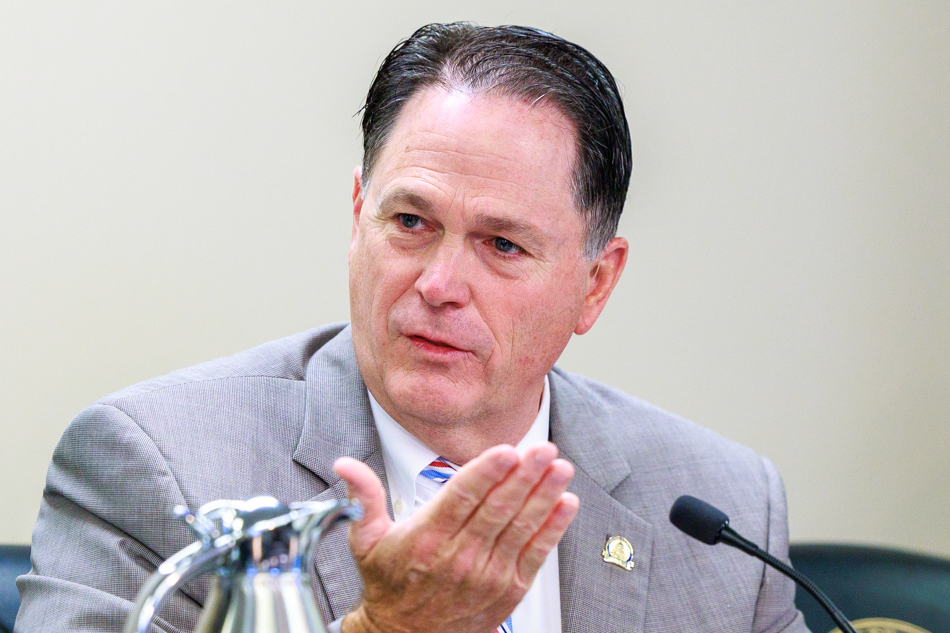
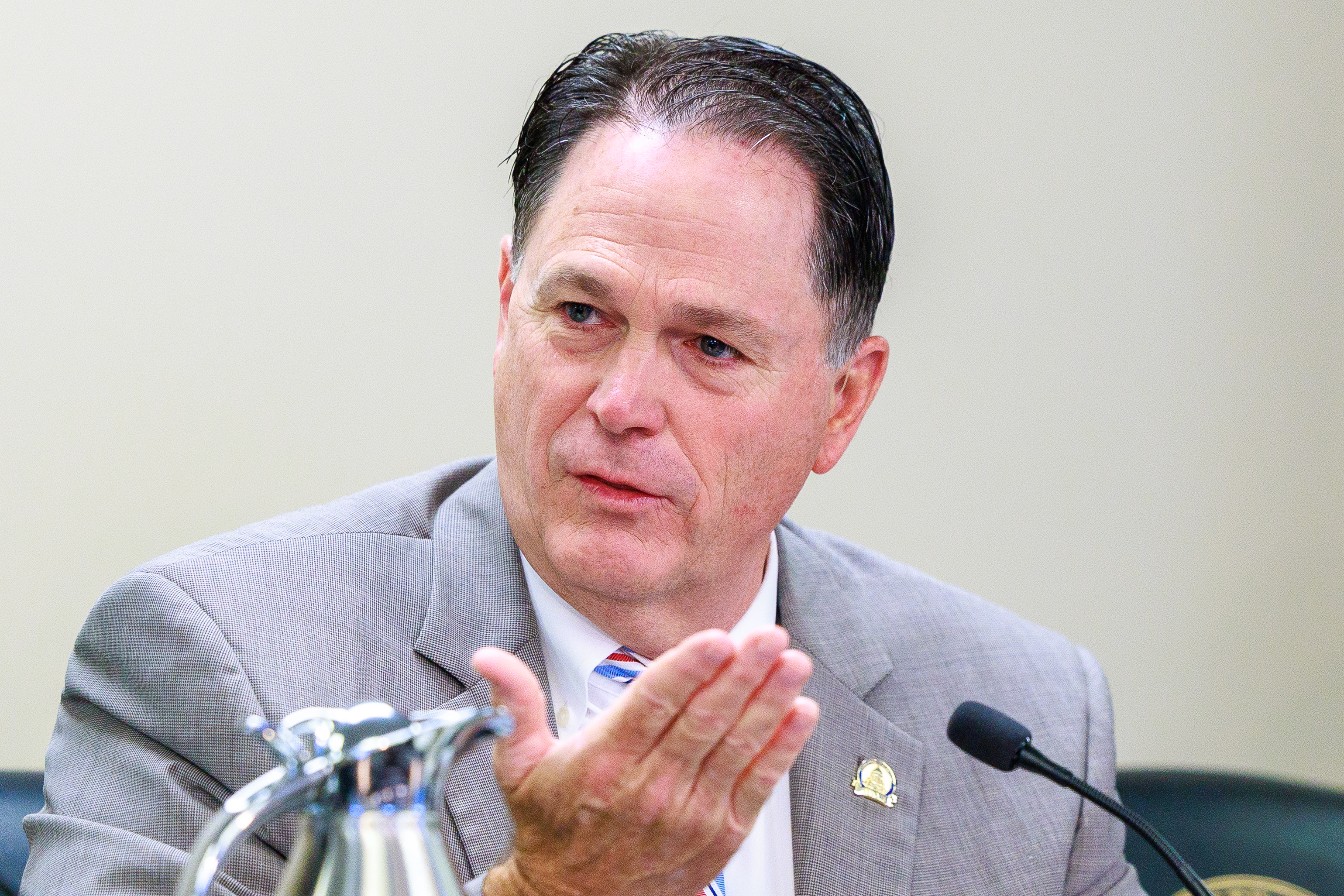
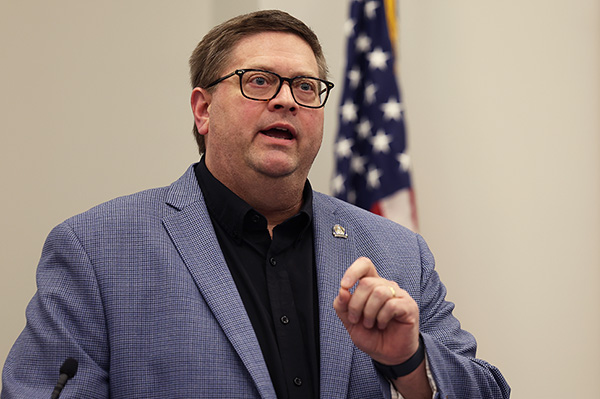
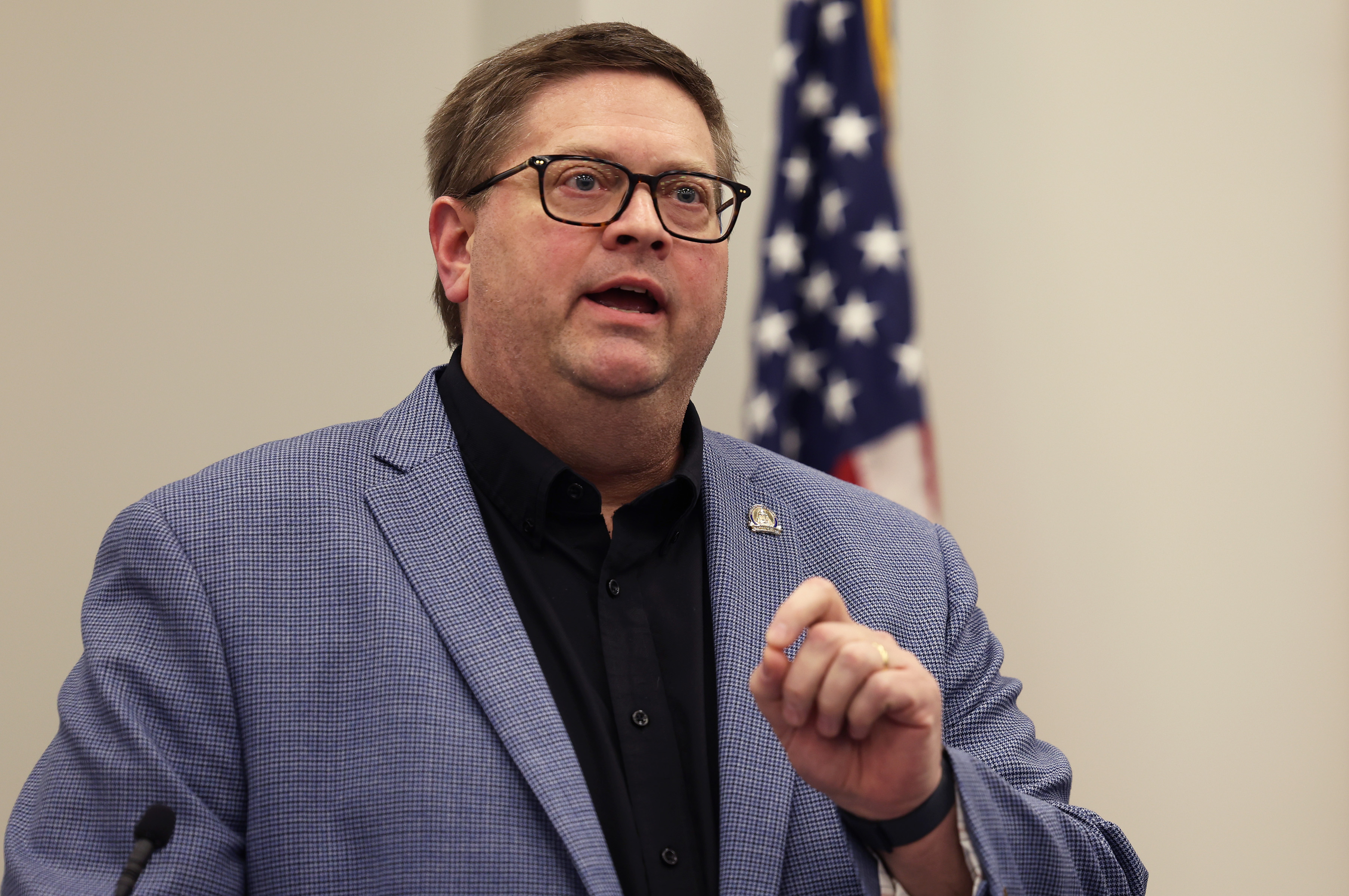
Sen. Jason Howell, R-Murray, co-chair of the Interim Joint Committee on Agriculture, speaks Thursday during a meeting regarding agricultural economics and lending in Kentucky. A high-resolution photo can be found here.
FRANKFORT — During Thursday’s meeting of the Interim Joint Committee on Agriculture, legislators heard from agricultural economists and a lending expert in Kentucky and learned about strengths, challenges and risks facing the agriculture community today.
Kenny Burdine and Jonathan Shepherd of the Martin-Gatton College of Agriculture, Food and Environment at the University of Kentucky’s Department of Agricultural Economics, along with Mark Barker, senior vice president of agricultural lending for Farm Credit Mid-America, offered a wide variety of information and answered questions from legislators.
Shepherd said some of the strengths in the state’s agriculture sector include land and asset values, cattle prices, agritourism, biofuels and average farm balance sheets.
Challenges include declining working capital, uncertainty in fuel and fertilizer costs, interest rates, entry barriers for young farmers and weak relative grain prices. Shepherd also pointed to geopolitical challenges, asset devaluation, liquidity pressures and margin compression as risks.
Burdine said every year Kentucky farm cash receipts are forecasted concerning things such as sales of cattle, poultry and grain. He called it a massive number that doesn’t include things such as fertilizers, chemicals and fuels.
“This is kind of the way we measure productivity and income at the farm level,” he said. “We are forecasting a little over $8 billion for 2025 and we’re forecasting about the same thing – we’re estimating for 2025 and forecasting for 2026 – about the same level in 2026.”
Committee Co-Chair Sen. Jason Howell, R-Murray, said agriculture is vital to Kentucky’s economy, and it impacts rural and urban areas alike.
“The support that our ag economics gives to those communities, but also to the entire state because we do have an integrated economy. And a lot of the things that we’re going to try to do in this interim is try to fill in some of those gaps of understanding,” he said. “I’ll be honest; I’ve studied this a lot, and in the last month of kind of preparing for this interim, I’ve learned a lot of things that I didn’t know about how integrated our economy is where farms in Fulton County, which is as far away from here as you can get, produce jobs in Jefferson County and how we’re all integrated together.”
Co-chair Rep. Myron Dossett, R-Pembroke, said diversification is important for producers and that agriculture is much more than an individual riding a tractor. He said collaboration between legislators is also important as they work to help the agriculture community across Kentucky.
Rep. Sarah Stalker, D-Louisville, said farming has always been linked to the health of the planet, and she thinks disasters and climate change should be included under “challenges” and “risks.”
“We have had an increase of natural disasters – so floods, droughts, wildfires, hurricanes. Drought has been mentioned a few times throughout here,” she said. “We’ve got temperatures that will continue to rise, which will increase new pests and disease, right? That will impact crop fields and quality. And we know that long-term climate change will also affect the quality of our food.”
House Minority Whip Joshua Watkins, D-Louisville, said he represents an urban area, but his family is from Hopkinsville. He asked what grade Shepherd would give to Kentucky agriculture and why.
“I think we have really resilient and really great farmers in this state, I really do. I would give them an A+ from the farm side, absolutely,” Shepherd said.
Rep. Ryan Bivens, R-Hodgenville, said he’s highly concerned about farmland loss and about how the average age of farmers continues to increase.
Barker answered there isn’t “one silver bullet” to fix the problem.
“Any time we see a farm sale, there’s typically a reason why and it may be that if there’s multiple siblings, they can’t agree on what’s going to happen so the farm just sells. Well, now it’s open to developers or anybody else that comes in and buys that,” he said.
Legislators receive an update on work zone enforcement cameras
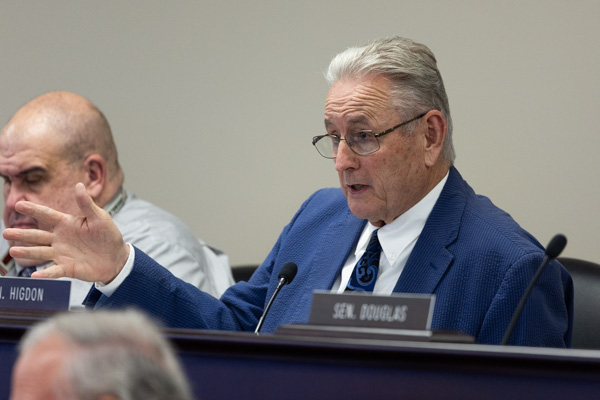
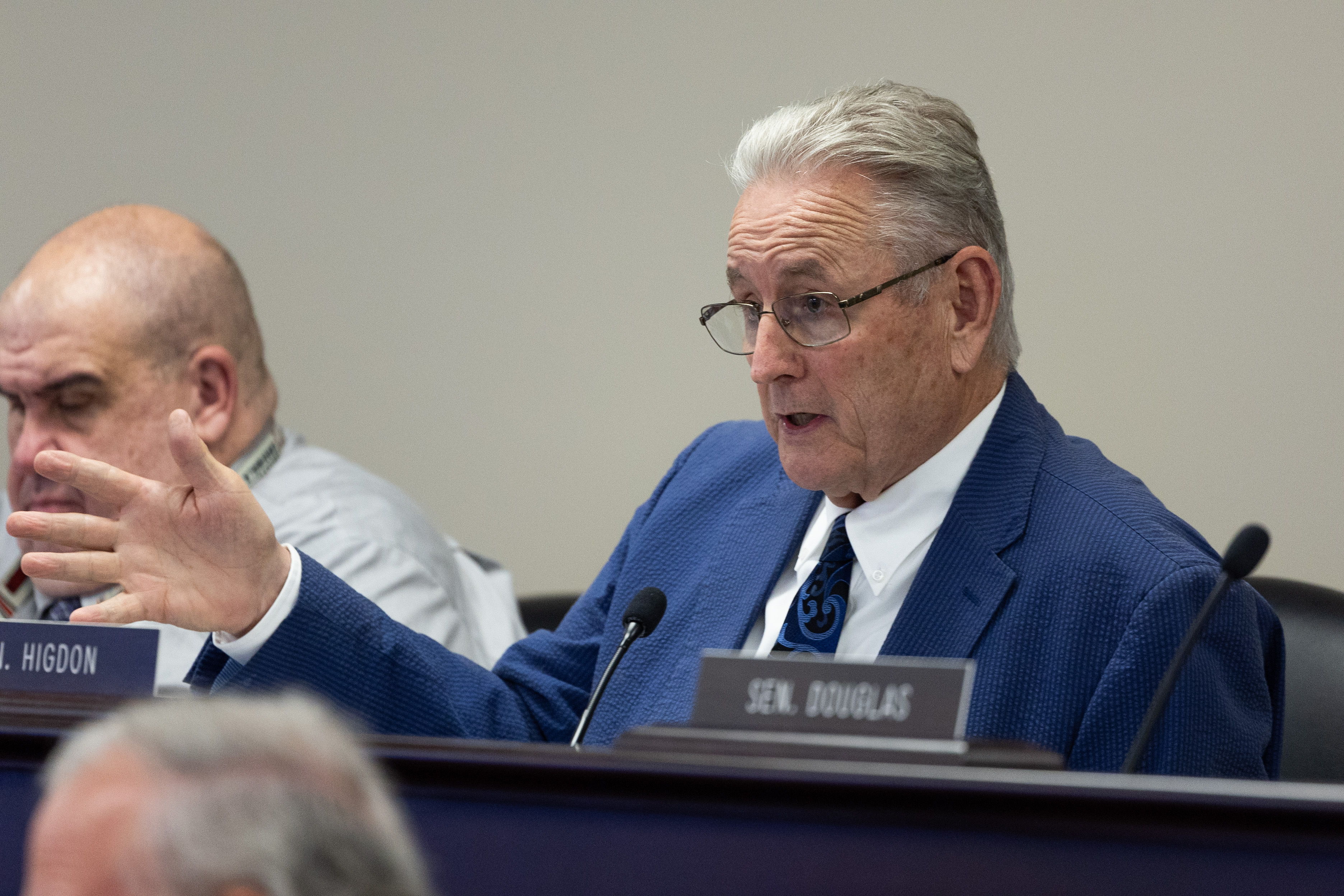
Sen. Jimmy Higdon, R-Lebanon, comments on a pilot program that uses cameras to help curb speeding in work zones. The Interim Joint Committee on Transportation received an update on the program Tuesday. A high-resolution photo is available here.
FRANKFORT — Legislators on the Interim Joint Committee on Transportation heard an update Tuesday about a pilot program that uses cameras to help combat speeding in work zones.
John Moore, deputy state highway engineer for the Kentucky Transportation Cabinet (KYTC), presented data on the Camera Assisted Speed Enforcement (CASE) pilot program. The initiative used automated cameras to reduce speeding in work zones in Shelby, Lawrence, Whitley, Martin and Fayette counties in fall 2025.
The program is the result of House Bill 664, which the Kentucky General Assembly passed last year. It allows police to issue citations when automated cameras detect that a driver is traveling 10 mph over a posted speed limit in a work zone.
The Kentucky bill was modeled after a program in Arkansas and does not use a mail-in ticketing system. Instead, encrypted data is sent to a law enforcement officer stationed near the work zone. Then, the “law officer is required to pull you over and cite you on the side of the road,” Moore said.
The cabinet worked closely with the Kentucky State Police and the Association of Highway Contractors to implement the CASE pilot program and to determine the best technology solutions to fit the needs of the state, according to the presentation.
Moore said the cabinet received feedback from transportation officials in 20 different states, which helped identify five potential vendors.
The solar-powered cameras are mounted 13 feet up and can track multiple lanes simultaneously. Moore said signs advise motorists that cameras are in use and beacons denote when bona fide workers are present on the site.
“No personal information is gathered or retained within the system. Only a picture of the vehicle and the license plate is sent downstream to the officer,” Moore said.
KSP is currently the only law enforcement entity participating in the program, but other local police agencies have expressed future interest.
Over the past nine months, the cabinet has been collecting speed data in the work zones, and an initial review demonstrates that drivers are slowing down, Moore said.
In Shelby, Whitley and Martin counties, data showed a 20% decrease in the number of vehicles traveling more than 10 mph above the speed limit.
Data was not collected in Lawrence County since cameras were not yet installed, and construction was wrapping up during the time of data collection in Fayette County.
Lead sponsor of the bill, Rep. John Blanton, R-Salyersville, said “when we're reducing those speeds — which obviously it's doing in those zones — we know for a fact it's going to reduce accidents. We know for a fact that will reduce injuries. We know for a fact that will reduce fatalities.”
Moore said less than one year of safety data has been collected to date, and it will likely be June 2027 before any definitive safety metrics and crash analyses can be reported.
Blanton requested that when officials are collecting data over the course of the next year, they compare accidents, injuries and fatalities between work zones with cameras and those without cameras.
Sen. Jimmy Higdon, R-Lebanon, said “no doubt this piece of legislation will save lives, and I commend Chairman Blanton for his work.”
The state is currently working on adding 12 more camera units, “with the potential to grow that to a total of 24 within the contract life,” Moore said.
Legislators receive literacy outcomes update
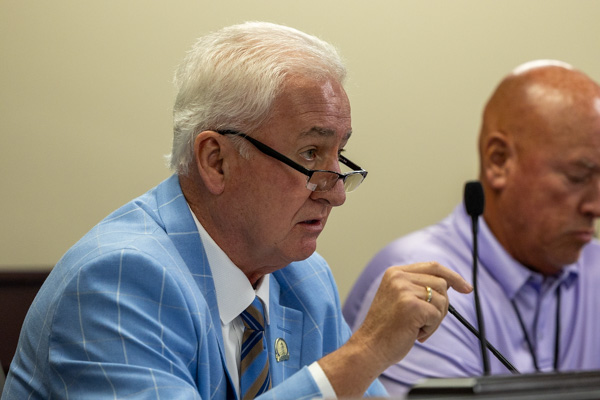
Rep. Kevin Jackson, R-Bowling Green, speaks Tuesday about literacy during the Interim Joint Committee on Education meeting. A high-resolution photo can be found here.
FRANKFORT — The Interim Joint Committee on Education received an update on literacy outcomes from officials with the Kentucky Department of Education on Tuesday.
Chief Academic Officer Micki Marinelli and Director of Early Literacy Christie Biggerstaff gave lawmakers an overview of “investment to impact.” Both speakers serve in the department’s Office of Teaching and Learning.
“Our purpose today in this presentation is to share how your investment of literacy – and the Read to Succeed Fund specifically – is leading to increased outcomes for Kentucky students,” Marinelli said.
Marinelli shared the most recent findings from the Education Scorecard study, a collaboration between Harvard University, Stanford University and Dartmouth College. It looked at how well students have recovered in key academic areas since COVID-19.
According to the study, Kentucky’s students rank fifth in reading recovery and eighth in math recovery among other states. Not all states were included in the study due to data quality issues in one or more years.
“It does put us as a top performer across the nation,” Marinelli said. “After the pandemic, most states saw an improvement or a rebound in math achievement relatively quickly. But we are just now beginning to see in 2025 the turnaround for reading.”
The recovery in reading appears to be related to state early literacy reforms, she said, adding that all the states that improved in reading between 2022 and 2025 were implementing comprehensive ‘science of reading’ reforms.
Kentucky’s Read to Succeed Act – which became law in 2022 – advanced several initiatives to enhance literacy outcomes, including academies for teaching reading, such as LETRS. Other initiatives include the Kentucky Early Literacy Leadership Network, partnership schools for the literacy coaching model and the Kentucky Reads to Succeed Annual Conference.
Marinelli said LETRS reading training has helped move students toward the “proficient” level and reduce the number of “novice” level students. She also pointed to courses from the AIM Institute for Learning & Research Pathways as evidence-based professional learning for educators.
The next steps designed to help boost literacy include sharing success stories and encouraging high-performing schools to inform statewide best practices. Additionally, launching the high-quality instructional resources repository per 2025’s Senate Bill 207 to reduce cost variability and increase the use of approved K-12 reading and writing resources across districts will be beneficial, Marinelli said.
Rep. Kevin Jackson, R-Bowling Green, who worked in education for approximately 40 years, said he is pleased about the collaboration to improve literacy in Kentucky.
“I don’t think I’ve ever seen any other initiative that’s had the collaboration between the legislature, KDE, the school systems, the whole nine yards, parents, everybody,” Jackson said. “So, it’s amazing to see that collaboration and to think what we can do when we all work for the same goal, pulling the same direction.”
Rep. Steve Bratcher, R-Elizabethtown, thanked Marinelli and others from KDE for sharing information, but he pointed out that Kentucky needed improvements before the COVID-19 pandemic.
“You said we were fifth in the nation, but that’s fifth in the nation of recovery. That’s not fifth in the nation of math. So out of the 35 different states that after COVID went into a recovery, because we were so low in reading, we rank fifth in the improvement,” he said. “Based on some of those other numbers, we still are not at the levels we were before COVID.”
Biggerstaff said that the statewide improvements are “amazing,” but it will take “a little while” to get to the desired data outcomes.
Committee Co-Chair Rep. James Tipton, R-Taylorsville, said he agrees with Biggerstaff about the time needed to see more improvements.
He said when Senate Bill 9 passed in 2022, he acknowledged that “this was going to be a process. It’s going to take some time to implement.”
Interim joint committee meetings begin in June

Kentucky legislators will return to Frankfort next week for the start of the 2026 interim period. Committees are scheduled to meet in the Capitol Annex. A high-resolution photo is available here.

FRANKFORT — Kentucky lawmakers will return to Frankfort next week for the start of the 2026 interim period – a time when legislators host committee meetings, research issues facing the state and begin to outline proposals for the next legislative session.
Meetings are scheduled to begin June 1 and continue through mid-December.
An interim joint committee is composed of all members of a Senate standing committee and all members of a House standing committee. Interim joint committees meet between sessions as a subcommittee of the Legislative Research Commission. Statutory and special committees may also meet during the interim period.
For the full 2026 interim calendar, visit https://legislature.ky.gov/Documents/2026%20Interim%20Calendar.pdf. Please note, the calendar is subject to change.
Unless otherwise indicated on the calendar, most interim joint, statutory and special committee meetings are scheduled to take place in the Capitol Annex building in Frankfort.
Livestreams of the committee meetings will be provided by Kentucky Educational Television (KET) and the Legislative Research Commission. For links to the livestreams, go to https://legislature.ky.gov/Public%20Services/PIO/Pages/Live-Streams.aspx.
Each week, the legislative calendar on the Legislative Research Commission website will be updated with information on which committees are meeting for the week. The calendar is available at https://apps.legislature.ky.gov/LegislativeCalendar.
For more information on interim joint committees, visit https://legislature.ky.gov/Committees/interim-joint-committee.
For more information on statutory committees, visit https://legislature.ky.gov/Committees/statutory-committee.
For more information on special committees, visit https://legislature.ky.gov/Committees/special-committee.
To view materials such as info sheets, handouts and PowerPoint presentations that are compiled for lawmakers to review at committee meetings, click on the “Meeting Materials” tab on the right side of each committee’s page. Meeting agendas are also posted on this page.
To share feedback on an issue with lawmakers, call the General Assembly’s Message Line at 1-800-372-7181. Kentuckians with hearing loss can use Kentucky Relay by dialing 7-1-1.
To directly reach a lawmaker’s office, call 502-564-8100. An operator will transfer the call to the office of the lawmaker you want to reach.
If you have a question about the lawmaking process or legislative resources, the LRC Public Information can be reached by calling 502-564-8100 ext. 59105.
This Week at the State Capitol (4-16-26)
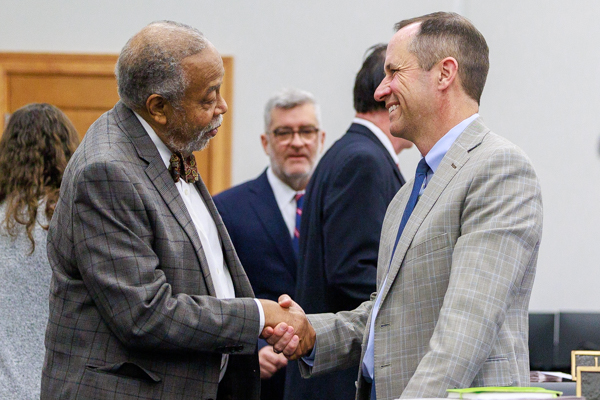
From left, Senate Democratic Floor Leader Gerald A. Neal, D-Louisville, shakes hands with Sen. Christian McDaniel, R-Ryland Heights, during Senate floor proceedings Tuesday. A high-resolution photo is available here.
FRANKFORT — The 2026 Regular Session of the Kentucky General Assembly gaveled to a close this week after lawmakers overrode more than two dozen vetoes and passed a handful of additional bills that were lingering on the roster this year.
Lawmakers had adjourned on April 2 for a 10-day recess, and the governor issued vetoes on more than 30 measures during that time. But the House and Senate overrode nearly all the governor’s actions when legislators reconvened on Tuesday.
That means major bills on Medicaid reform, gaming, school district governance, firearms and elections will all become law this year along with a series of bills related to the state’s next two-year spending plan.
Before adjourning close to midnight on Wednesday, lawmakers passed additional measures on impaired driving, physician shortages and nuclear research that now go to the governor for his consideration.
The Senate – in a much-watched move – also passed a resolution suspending the impeachment proceedings against Fayette Circuit Judge Julie Muth Goodman and calling on the Judicial Conduct Commission to conduct open proceedings into allegations against her.
The resolution specifies that suspending the proceedings does not constitute a decision about the allegations or relinquish the right of lawmakers to render a decision in the future.
Sen. Brandon J. Storm, R-London, said Wednesday that, if necessary, the matter can proceed to another legislative session.
This year marked the first time since 1910 that lawmakers have convened a regular session outside of the Kentucky State Capitol, which is undergoing an extensive, multi-year renovation. But other than a change in setting, the year unfolded in a fairly conventional fashion.
Most of the major bills that won final passage began moving early and maintained a steady pace going forward. Surprises were few, and debates, while rigorous at times, were kept to a moderate volume.
Some may have been uncertain about the legislature’s new meeting space – a temporary structure on the Capitol campus that will serve as home to general assembly until the Capitol project is complete. But lawmakers adjusted quickly when they convened in January and passed more than 190 bills over the ensuing months.
Like every year in the general assembly, legislation touched on virtually all the major issues facing the commonwealth.
The landmark Medicaid reform – House Bill 2 – will result in a broad overhaul of Kentucky’s program, aligning it with the One Big Beautiful Big Act that Congress passed last year.
Lawmakers also passed a sweeping revamp of regulations related to Kentucky’s child care sector, along with far-reaching changes to the state’s wagering and gaming laws.
Significant measures on the education front won support, including legislation that seeks to transform Kentucky State University into a polytechnical institution with an emphasis on technical, industry-based applied learning.
Lawmakers also took up measures that will result in major changes to the governance structure at Jefferson County Public Schools, and another bill that will allow Kentucky to participate in a new federal tax credit program that helps pay for education-related expenses.
The House and Senate also broke through some long-standing impasses in 2026.
A measure that will prohibit non-disclosure agreements when school employees are disciplined for abusive conduct toward students cleared a final vote.
In addition, a proposed constitutional amendment that would limit gubernatorial pardons around election time earned a final tap of the gavel after years of deliberation.
Some of the biggest debates this year focused on firearms legislation, including a bill that will allow Kentuckians aged 18 to 20 years old to obtain a provisional concealed carry permit. Another will prevent gun manufacturers from facing lawsuits when guns are used in the commission of a crime.
But lawmakers also found many points of unity on issues like child protection, mental health care, affordable housing and energy.
Here’s a look at some of the vetoes that were overridden this week followed by list of some of the other bills that won final passage this year.
Concealed Carry – House Bill 312 will allow Kentuckians aged 18 to 20 years old to obtain a provisional concealed carry permit after undergoing a background check and firearms training. Lawmakers overrode a veto of the bill Tuesday.
Death Penalty Regulations – Senate Bill 251 will give the Kentucky Department of Corrections the option to implement execution protocols and procedures through internal policy, memorandum or similar action. Right now, the department is required to promulgate administrative regulations to prescribe and implement execution protocols. Supporters say the change could help resolve long term delays surrounding Kentucky’s death penalty regulations. Lawmakers overrode the governor’s veto of the measure on Tuesday.
Elections – House Bill 139 includes provisions from three other elections bills this year. Among other goals, the final legislation aims to remove felons and non-citizens from appearing on voting rolls in Kentucky, and it will align Kentucky’s campaign contribution limits to match the federal limits. It will also remove Social Security cards and food stamp cards from the list of secondary identification options that voters can use at the polls if they do not have a standard photo ID. The governor vetoed the bill, but the veto was overridden Tuesday.
Firearms Liability – House Bill 78 will codify federal standards outlined in the Protection of Lawful Commerce in Arms Act of 2005. That will prevent firearms manufacturers and sellers from facing lawsuits when guns are used in the commission of a crime. The general assembly overrode a veto of the bill Tuesday.
Gaming – House Bill 904 will implement a broad reform in Kentucky’s wagering and gaming laws. Among many provisions, HB 904 will increase the age to participate in sports wagering from 18 to 21 and prohibit anyone on the attorney general’s child support arrearage list from betting on online platforms. The bill will also create a comprehensive licensing and regulatory framework around fantasy sports and forbid negative outcome bets – also known as “under” bets – on college athletes that play on in-state teams. Another section will prevent fantasy operators or betting companies from contracting with a prediction market that operates in Kentucky. HB 904 will also give racetracks the option to offer fixed-odds wagering to help address public perception around computer-assisted bets that change the odds suddenly before a race. Additionally, it will create a purse stabilization fund to ensure that any wagers from fixed odds still support the horse industry. Other sections relate to tote system modernization, charitable middlemen restrictions, and charitable gaming governance, fees and caps. The governor vetoed the legislation, but the veto was overridden Tuesday.
Ibogaine Research – Senate Bill 77 calls for creation of an ibogaine research and intellectual property fund to be administered by the Department of Agriculture. It will allow the department to partner with a drug developer to conduct clinical trials on using ibogaine to treat substance use disorders and other neurological and mental health conditions. Lawmakers overrode the governor’s veto of the bill on Tuesday.
Medicaid Reform – House Bill 2 seeks to align Kentucky’s Medicaid program with the One Big Beautiful Big Act that Congress passed last year. Among many provisions, the bill will implement federal community engagement requirements for certain able-bodied adults. Other sections of the bill address cost-sharing, eligibility reviews, non-emergency transportation services, accountability for managed care organizations and delivery of dental services. HB 2 also aims to enhance transparency by creating a performance dashboard and requiring regular program audits. The governor vetoed portions of the bill, but lawmakers overrode the veto on Tuesday.
Postsecondary Employment – House Bill 490 allows the governing boards of public postsecondary institutions to remove faculty members for bona fide financial reasons such as financial exigency, low enrollment or misalignment of revenue and costs. The governor vetoed the bill, but the veto was overridden.
School District Governance – Senate Bill 1 will effectively revamp the governance structure of Jefferson County Public Schools by creating more specific responsibilities for superintendents and boards of education in large, complex school districts. The legislation also seeks to lay out a legal justification for why the general assembly has a compelling interest in intervening in large districts like Jefferson County. It follows a similar measure that passed the legislature in 2022, but was later struck down in the courts. The governor vetoed the measure, but the general assembly overrode the veto Tuesday.
School Leadership – Senate Bill 4 will create a new training program that provides leadership development and mentorship opportunities for new school principals in Kentucky. Under the final version of the bill, an employee of any Kentucky school district could not run for a school board seat in a large school district. The legislation will also reduce the number of school board members in Jefferson County from seven to five. The bill was vetoed by the governor, but lawmakers overrode the veto Tuesday.
Tax Money – Senate Bill 59 prohibits tax dollars from being used to advocate for or against a public question on the ballot. It also establishes criminal and civil penalties for violators. The governor’s veto of this measure was overridden Tuesday.
Other bills that received final passage in 2026 include:
Affordable Housing – House Bill 333 will allow faith-based organizations to build small-scale affordable housing units on property located near religious institutions. The bill received the governor’s signature on April 7.
Alternative Diplomas – House Bill 562 will create a new alternative diploma option for high school students with intellectual disabilities, allowing the students to be considered graduates rather than dropouts. It also calls for the state Department of Workforce Development to create a one-stop shop that identifies all employers in Kentucky that will recognize the new alternative diploma as a valid high school diploma. The bill was signed by the governor on April 3.
Alternative Sentencing – Senate Bill 122 aims to keep families intact when a parent is convicted of a felony. It will require Kentucky courts to consider alternative sentences for certain nonviolent felony convictions when the defendant is a primary caretaker of a dependent child. The bill was signed into law on April 10.
Autism Trust Fund – Senate Bill 69 will create an autism spectrum disorder trust fund administered by the Kentucky Cabinet for Health and Family Services. The fund could accept grants, appropriations and other types of contributions to support research and services. The governor signed the bill into law on April 3.
Campaign Finance – House Bill 136 will allow the use of campaign funds to pay for the “reasonable costs” of security measures for candidates, office holders and family members. The bill was signed into law on April 3.
Child Care Modernization – House Bill 6 calls for a broad overhaul of the regulatory framework for Kentucky’s child care sector. Specifically, it seeks to modernize the system, enhance data collection, and improve access and quality of services. The bill was amended to include other provisions that would provide more flexibility to state agencies that oversee Kentucky’s child care industry, allowing officials to consider certain mitigating factors before issuing a plan of correction, suspension or revocation of a license to a child care center. Another provision calls on the University of Kentucky to establish the Kentucky Kindergarten Readiness Performance-Based Child Care Incentive Pilot Program, which will gauge the effectiveness of using financial incentives to encourage kindergarten readiness. The legislation became law on Tuesday without the governor’s signature.
Child Pornography – House Bill 366 will expand child pornography prohibitions to include computer-generated images of a minor. It will also require someone convicted of possessing or viewing child pornography to serve 85% of their criminal sentence. The governor signed the bill on Monday.
Child Welfare – House Bill 778 will create multiple changes to Kentucky law related to child welfare. It seeks to ensure safe and adequate foster care placements and that children in foster care are not placed with someone on the sex offender registry. Also under HB 778, child injuries caused by ingestion or inhalation of a controlled substance will be included in the definition of neglect, and neglect will be added to the child abuse statute. HB 778 received the governor’s signature on April 10.
Crystal Rogers Act – House Bill 305 seeks to preserve the integrity of grand jury proceedings by strengthening penalties for illegally recording or sharing information on a grand jury proceeding. The bill was signed Monday by the governor.
Eating Disorders – House Bill 169 calls on health insurance plans that provide behavioral or mental health care coverage to also provide coverage for the diagnosis and treatment of feeding or eating disorders. The bill was signed into law Monday.
Eminent Domain – House Bill 542 seeks to improve communications and transparency between landowners and officials seeking to condemn property. The governor signed the bill on Monday.
Energy Costs – Senate Bill 172 allows the Public Service Commission to mitigate large spikes in fuel adjustment charges that appear on electric bills. Under the legislation, the charges could be spread out over time rather that appearing on a single bill – if the changes are requested by an energy provider. The bill was signed into law Feb. 19.
Federal Education Opportunity Program – House Bill 1 will clear the way for Kentucky to participate in the new federal educational tax credit program established by U.S. Congress last year in the One Big Beautiful Bill Act. The program allows taxpayers to contribute up to $1,700 to scholarship organizations that assist K-12 students in public and private schools. Families can use the funds for a wide range of education-related expenses, and taxpayers can receive a matching federal tax credit for contributions. The governor vetoed the bill, but lawmakers overrode the veto in March.
Fishing in Private Waters – Senate Bill 39 will exempt private landowners from statewide fishing regulations related to creel, possession, size or method while fishing on their own property. It also clarifies that Kentucky residents are exempt from licensure while fishing on their own land even if they don’t live on that land. The governor signed the bill on April 10.
Food is Medicine Initiatives – Senate Joint Resolution 23 declares Kentucky as a “Food is Medicine” state and directs state agencies to advance Food is Medicine initiatives. The governor signed the measure on Monday.
Fraudulent Contractors – Senate Bill 153 will help protect Kentucky homeowners from abusive and fraudulent contractors following severe weather. It will clarify that vandalism committed for the purpose of an insurance claim is fraud. It will also create a post-disaster registry for roofing, siding and tree-removal businesses, and it will prohibit door-to-door solicitations during declared emergencies. The bill was signed by the governor on April 8.
Grooming – House Bill 4 will criminalize efforts to manipulate a minor into sexual contact with an adult, a practice known as “grooming.” The bill was signed into law April 10.
Gubernatorial Pardons – Senate Bill 10 proposes to amend the state constitution and limit the governor’s ability to grant pardons and commutations for 90 days surrounding a gubernatorial election. The bill has received final passage in the general assembly and will now head to the ballot for consideration by Kentucky voters.
Impaired Driving – Under Senate Bill 66, a suspect in an impaired driving case who refuses to submit to a blood test will have their driver’s license suspended at the time of arraignment. If the person is convicted, their license will be subsequently suspended by the state Transportation Cabinet. The bill will require the cabinet to maintain records of moving traffic convictions for 10 years. It will also add clonazepam, cyclobenzaprine and fentanyl to the list of drugs that, when detected in a driver’s blood, could lead to an impaired driving conviction. The bill won final passage on Wednesday.
Impeding a First Responder – Senate Bill 104 seeks to prevent interference or harassment of first responders. It will create a 25-foot safe zone around police, firefighters and others while they are performing their official duties. Individuals who remain in the zone could face criminal charges if they ignore an initial warning to move back and intend to impede, threaten or harass a first responder. SB 104 became law without the governor’s signature on April 12.
Interstate Compacts – House Bill 36 will allow Kentucky to participate in interstate licensure compacts for respiratory therapists, athletic trainers and dieticians. The goal is to make it easier for people in these professions to locate to and practice in Kentucky. HB 36 was signed into law on April 6.
Kentucky-Grown Agricultural Products – Senate Bill 5 will make it easier for Kentucky schools to purchase locally-grown food for student meals. It seeks to lift some procurement requirements and better connect students with the agricultural economy. The bill was signed into law March 27.
Kentucky State Police – Senate Bill 278 calls for the commissioner of Kentucky State Police to allow state troopers to participate in approved, off-duty law enforcement work for public entities, entities that receive state funding and certain ticketed events. SB 278 became law on April 9 without the governor’s signature.
Kentucky State University – Senate Bill 185 aims to transform KSU into a four-year residential polytechnical institution, emphasizing technical, industry-based applied learning. KSU will continue to provide liberal arts courses aligned with the state’s workforce needs and the institution’s historical mission as the state’s only public historically Black college and university. Other provisions seek to stabilize the university’s finances and give the Kentucky Council on Postsecondary Education additional oversight as KSU implements the transition. The governor signed the bill on Monday.
License Plate Readers – House Bill 58 will limit the use of license plate readers largely to public safety purposes, such as regulating parking, controlling access to secured areas, deterring crime and conducting criminal investigations. The state Transportation Cabinet could also use readers for toll and revenue collection and certain enforcement needs. HB 58 also will require data captured by automatic license plate readers to be deleted after 90 days, with limited exceptions for criminal investigations and other needs. The governor signed the bill April 10.
Literacy and School Employee Misconduct – House Bill 422 will clarify the insanity defense in criminal law. It will also prevent juries and courts from applying the insanity defense inconsistently when returning verdicts for multiple counts arising from a single course of conduct. In addition, HB 422 will make repeat violent offenders ineligible for mandatory reentry supervision. The bill was filed after Ronald Exantus, the man who killed 6-year-old Logan Tipton in 2015, was released early from prison last year on mandatory reentry supervision. The governor signed the bill April 2.
Logan’s Law – House Bill 422 will clarify the insanity defense in criminal law. It will also prevent juries and courts from applying the insanity defense inconsistently when returning verdicts for multiple counts arising from a single course of conduct. In addition, HB 422 will make repeat violent offenders ineligible for mandatory reentry supervision. The bill was filed after Ronald Exantus, the man who killed 6-year-old Logan Tipton in 2015, was released early from prison last year on mandatory reentry supervision. The governor signed the bill April 2.
Medicaid Delivery Study – Senate Concurrent Resolution 9 calls for a study of accountable care models used for Medicaid programs in other states. The study will also look at opportunities to implement such a model in Kentucky through a pilot program. The effort seeks to control costs and improve health outcomes. The governor signed the measure on Monday.
Mental Health Care – House Bill 178 aims to support the psychiatric collaborative care model, allowing primary care providers, care managers and consulting psychiatrists to work together on a patient’s mental health care. The governor signed the bill on Monday.
Nuclear Energy – Senate Bill 57 will create the Nuclear Reactors Site Readiness Pilot Program to help energy providers obtain licenses and permits related to site work for nuclear power projects. The program will provide up to $25 million in grant funding to each of three projects in Kentucky. The governor signed the measure April 8.
Nuclear Research – Senate Concurrent Resolution 66 urges the University of Kentucky and the University of Louisville to explore opportunities to participate in federal nuclear-related programs. It also urges the institutions to offer courses and degree paths related to the construction and operation of nuclear energy facilities. The measure received final passage Wednesday.
Pesticide Labeling – Under Senate Bill 199, pesticides that display a warning label approved by the U.S. Environmental Protection Agency will have met legal standards concerning the duty to warn consumers about potential health effects. The final version of the bill applies only to products that have an agricultural use label. The governor vetoed the measure, but the veto was overridden April 1.
Prior Authorization – House Bill 176 seeks to streamline the prior authorization process for health insurance claims by creating exceptions for certain health care providers. The governor signed the bill on Monday.
Prison Education Programs – House Bill 5 will establish the Kentucky Community and Technical College System Prison Education Program, seeking to reduce recidivism and support workforce development. KCTCS will partner with the state Department of Corrections to build and operate a vocational training campus at Northpoint Training Center. The legislation was signed into law April 9.
Provisional Physician Licenses – Senate Bill 137 will allow the state Board of Medical Licensure to issue a provisional license to a physician who completed residency in a foreign country and can meet other requirements. The applicant will need to provide an offer of employment from a licensed health care provider located in an underserved area. The governor signed the bill April 10.
Prostheses and Orthoses Coverage – Senate Bill 97 seeks to expand existing prosthetics and orthotics insurance coverage to include devices designed specifically for physical activity such as running, swimming or biking. The legislation received the governor’s signature on April 7.
Public Utilities – Senate Bill 8 seeks to revamp the Kentucky Public Service Commission. Among many provisions, it will expand the commission from three to five members and establish professional qualification standards for members. SB 8 also stipulates that the commission is an independent department with sole discretion as to which functions are deemed necessary. The bill became law on Tuesday without the governor’s signature.
Physician Shortages – Senate Joint Resolution 116 directs the University of Kentucky, the University of Louisville and Eastern Kentucky University to coordinate in a search for actionable solutions to physician shortages and to explore and expand health care opportunities in medically underserved areas. The legislation received final passage Wednesday.
Real Estate Fraud – House Bill 264 seeks to combat real estate scams. It will create a legal presumption of fraud when someone advertises residential or commercial property for sale, lease or rent without ownership or authority. The measure was signed into law Monday.
School Administrator Salaries – Senate Bill 2 would prohibit school administrators from receiving a percentage pay increase that is greater than the percentage pay increase provided to classroom teachers in that district unless the increase is due to a significant change in job duties. The bill includes a waiver process for certain circumstances. SB 2 was signed March 27 by the governor.
School Communications – House Bill 67 seeks to clarify a law adopted last year regarding communications between school employees and students. The bill received the governor’s signature Monday.
School Bus Safety – House Bill 7 will allow school districts to install traffic cameras on school buses to help enforce laws against stop-arm traffic violations. The governor signed the measure on April 9.
Sexual Assault Nurse Examiners – House Bill 134 aims to expand the availability of sexual assault nurse examiners across Kentucky. It calls for a statewide coordinator to recruit nurses, facilitate training and improve collaboration between hospitals, law enforcement and rape crisis centers. The legislation received the governor’s signature April 10.
Stalking – House Bill 521 seeks to modernize state stalking laws to align with contemporary legal standards and better address behaviors that occur through electronic communications and social media. The governor signed the measure on April 10.
Status Offenders – Senate Bill 170 will create a four-year pilot program in up to 10 school districts to help address barriers to school attendance. It also aims to strengthen diversion of status offenders using Responsive Interventions to Support and Empower (RISE) teams and increased family involvement. The governor signed the measure April 10.
Storm Shelter Rebates – Senate Bill 11 will create a residential safe room rebate pilot program that helps homeowners pay for building emergency storm shelters. The goal is to provide matching grants using money from the Federal Emergency Management Agency. The rebate fund would not include state appropriations. SB 11 was signed into law on March 23.
Student Violence – Senate Bill 101 will mandate that school boards expel students in grades 6 through 12 for at least 12 months if the student recklessly, with a deadly weapon or dangerous instrument, or intentionally caused or attempted to cause physical injury to a school district employee on school property or at a school function. The bill includes some exceptions for students with disabilities. The bill was signed into law April 7.
Organ Donors – House Bill 510 aims to protect patients during the organ donation process by requiring additional verification steps before organ procurement can begin. It will also clarify that donor consent must be properly documented and that a patient must be formally declared dead before organs are donated. The legislation was signed April 7.
Veteran Post-Traumatic Stress Disorder – House Bill 369 will create provisions in state law that make veterans eligible to receive hyperbaric oxygen therapy in response to post-traumatic stress disorder. The bill was signed into law Monday.
Virtual Currency Kiosks – Senate Bill 189 seeks to combat virtual currency scams in Kentucky by creating a licensing and regulatory framework for virtual currency kiosks. The governor signed the bill on Monday.
Unless called into a special session, the general assembly will not convene again until January 2027. But lawmakers will begin holding interim committee meetings in June, and Kentuckians are urged to check general assembly's calendar for updates.
Kentuckians can also review bills using the Legislative Record Webpage and share their views on issues with lawmakers by calling the general assembly’s toll-free message line at 1-800-372-7181.
This Week at the State Capitol
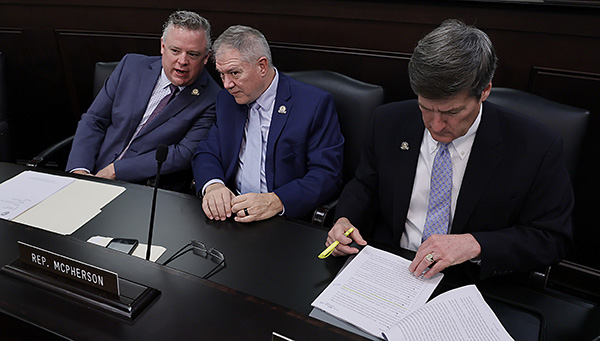
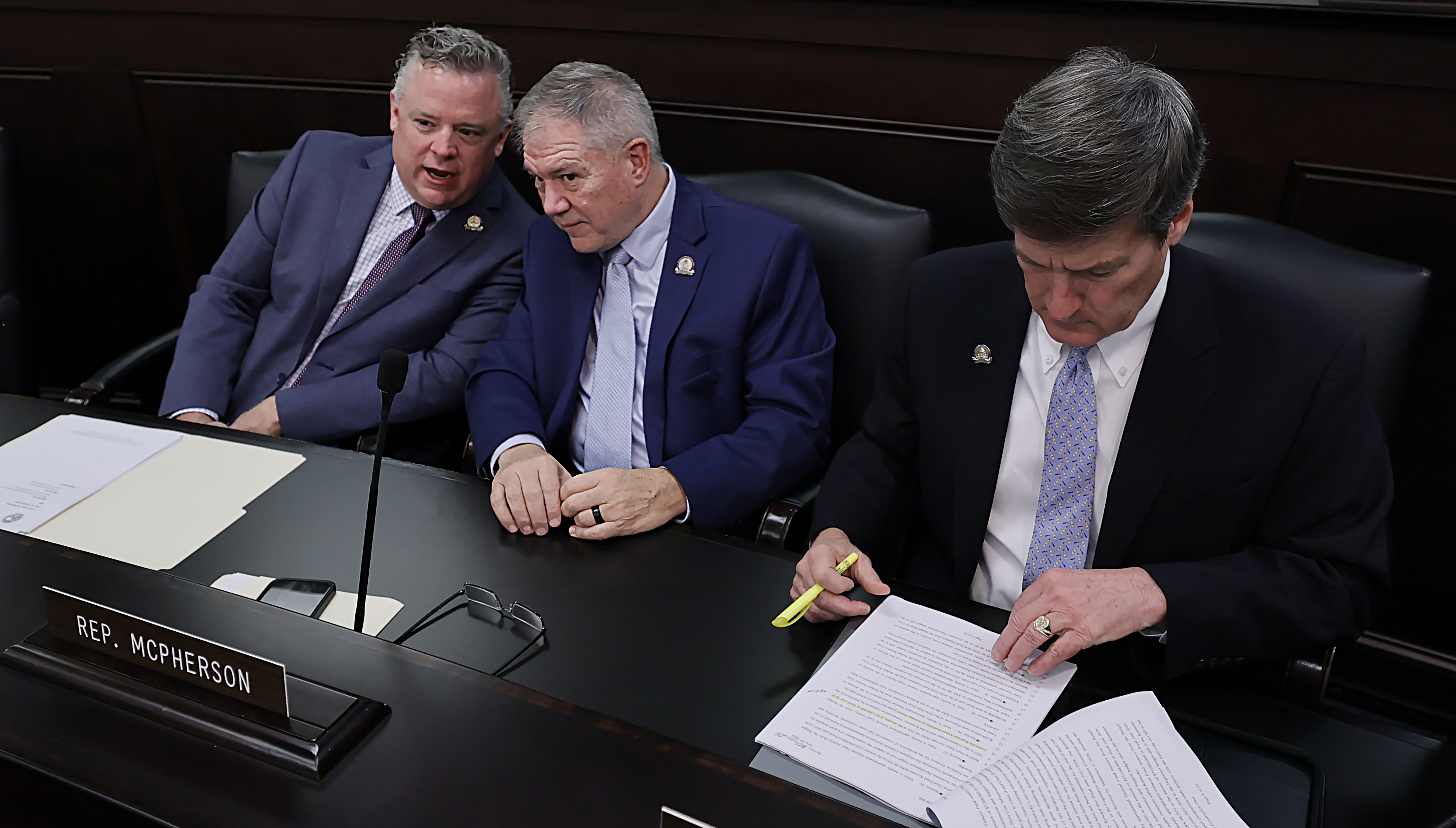
From left, Rep. Matt Lockett, R-Nicholasville; Rep. Shawn McPherson, R-Scottsville; and Rep. Ken Fleming, R-Louisville, prepare for a committee hearing Wednesday on Senate Bill 185, legislation related to Kentucky State University. A high-resolution photo is available here.
FRANKFORT — A new state budget and major reforms to Medicaid, gaming and child care all received a final tap of the gavel this week as lawmakers navigated a two-day marathon of House and Senate proceedings and sent more than 100 bills to the governor’s desk.
The convoy of legislation focused on dozens of prominent issues, including grooming, firearms, elections, literacy, health care, criminal justice and gubernatorial pardons, among many others. Significant measures on the governance structure and conduct within Kentucky school districts also won final passage.
The governor now has 10 days to sign or veto bills or allow them to become law without his signature. Lawmakers will remain gaveled out during that period – referred to as the “veto recess” – and reconvene for the final two session days on April 14 and 15 to override vetoes and pass any legislation that remains on the docket.
A House and Senate conference committee kicked off the week Monday by unveiling a final deal on the state’s next two-year spending plan, which includes budgets for the executive, judicial and legislative branches of state government. The package also includes a transportation budget and a blueprint for upcoming road projects.
The executive branch budget, by far the largest of the three branches, focuses on disciplined fiscal management and prioritizing needs over wants, according to supporters of the plan. Some critics, however, raised concerns about funding for Medicaid, juvenile justice and other areas before the bill cleared the chamber floors Wednesday.
Meanwhile, lawmakers struck a collegial note on another major bill Wednesday that would implement a broad overhaul of Kentucky State University.
Senate Bill 185 would transform KSU into a four-year residential polytechnical institution, emphasizing technical, industry-based applied learning. KSU would continue to provide liberal arts courses aligned with the state’s workforce needs and the institution’s historical mission as the state’s only public historically Black college and university.
Other provisions aim to stabilize the university’s finances and give the Kentucky Council on Postsecondary Education additional oversight as KSU implements the transition.
The final version of the bill advanced through both chambers with broad support and was sent to the governor.
Lawmakers also reached an accord on a sweeping bill related to gaming in the final hours before the veto recess
House Bill 904 would implement a broad reform in Kentucky’s wagering and gaming laws. Among many provisions, HB 904 would increase the age to participate in sports wagering from 18 to 21 and prohibit anyone on the attorney general’s child support arrearage list from betting on online platforms.
The bill would also create a comprehensive licensing and regulatory framework around fantasy sports and forbid negative outcome bets – also known as “under” bets – on college athletes that play on in-state teams. Another section would prevent fantasy operators or betting companies from contracting with a prediction market that operates in Kentucky.
HB 904 would also give racetracks the option to offer fixed-odds wagering to help address public perception around computer-assisted bets that change the odds suddenly before a race. Additionally, it would create a purse stabilization fund to ensure that any wagers from fixed odds still support the horse industry.
Other sections relate to tote system modernization, charitable middlemen restrictions, and charitable gaming governance, fees and caps.
HB 904 now heads to the governor along with a battery of other bills. Here’s a look at some of the measures that won final passage this week.
Grooming – House Bill 4 would criminalize efforts to manipulate a minor into sexual contact with an adult, a practice known as “grooming.”
School Bus Safety – House Bill 7 would allow school districts to install traffic cameras on school buses to help enforce laws against stop-arm traffic violations.
License Plate Readers – House Bill 58 would limit the use of readers to largely public safety purposes, such as regulating parking, controlling access to secured areas, deterring crime and conducting criminal investigations. The state Transportation Cabinet could also use readers for toll and revenue collection and certain enforcement needs. HB 58 also would require data captured by automatic license plate readers to be deleted after 90 days, with limited exceptions for criminal investigations and other needs.
Firearms Liability – House Bill 78 would codify federal standards outlined in the Protection of Lawful Commerce in Arms Act of 2005. It would prevent firearms manufacturers and sellers from facing lawsuits when guns are used in the commission of a crime.
Sexual Assault Nurse Examiners – House Bill 134 aims to expand the availability of sexual assault nurse examiners across Kentucky. It calls for a statewide coordinator to recruit nurses, facilitate training and improve collaboration between hospitals, law enforcement and rape crisis centers.
Elections – House Bill 139 was amended to include provisions from three other elections bills. Among other goals, the final legislation aims to remove felons and non-citizens from appearing on voting rolls in Kentucky, and it would align Kentucky’s campaign contribution limits to match the federal limits. It would also remove Social Security cards and food stamp cards from the list of secondary identification options that voters can use at the polls if they do not have a standard photo ID.
Literacy and School Employee Misconduct – House Bill 253 would end the use of the three-cuing method, a system used to teach reading, in Kentucky schools by the 2029-30 academic year. The bill seeks to replace that model with evidence-based reading approaches that emphasize techniques like phonics, vocabulary and fluency. The latest version of the bill also includes a provision that would prohibit schools from entering into non-disclosure agreements with employees related to abusive misconduct involving a minor or student. Another section calls on schools to share information on disciplinary actions related to abusive conduct when applicants are considered for a job at another school.
Alternative Diplomas – House Bill 562 would create a new alternative diploma option for high school students with intellectual disabilities, allowing the students to be considered graduates rather than dropouts. It also calls for the state Department of Workforce Development to create a one-stop shop that identifies all employers in Kentucky that will recognize the new alternative diploma as a valid high school diploma.
Provisional Physician Licenses – Senate Bill 137 would allow the state Board of Medical Licensure to issue a provisional license to a physician who completed residency in a foreign country and can meet other requirements. The applicant would need to provide an offer of employment from a licensed health care provider located in an underserved area.
Impeding a First Responder – Senate Bill 104 seeks to prevent interference or harassment of first responders. It would create a 25-foot safe zone around police, firefighters and others while they are performing their official duties. Individuals who remain in the zone could face criminal charges if they ignore an initial warning to move back and intend to impede, threaten or harass a first responder.
Fishing in Private Waters – Senate Bill 39 would exempt private landowners from statewide fishing regulations related to creel, possession, size or method while fishing on their own property. It also clarifies that Kentucky residents are exempt from licensure while fishing on their own land even if they don’t live on that land.
Prostheses and Orthoses Coverage – Senate Bill 97 seeks to expand existing prosthetics and orthotics insurance coverage to include devices designed specifically for physical activity such as running, swimming or biking.
Alternative Sentencing – Senate Bill 122 aims to keep families intact when a parent is convicted of a felony. It would require Kentucky courts to consider alternative sentences for certain nonviolent felony convictions when the defendant is a primary caretaker of a dependent child.
Prior Authorization – House Bill 176 seeks to streamline the prior authorization process for health insurance claims by creating exceptions for certain health care providers.
Real Estate Fraud – House Bill 264 seeks to combat real estate scams. It would create a legal presumption of fraud when someone advertises residential or commercial property for sale, lease or rent without ownership or authority.
Child Pornography – House Bill 366 would expand child pornography prohibitions to include computer-generated images of a minor. It would also require someone convicted of possessing or viewing child pornography to serve 85% of their criminal sentence.
Prison Education Programs – House Bill 5 would establish the Kentucky Community and Technical College System Prison Education Program, seeking to reduce recidivism and support workforce development. KCTCS would partner with the state Department of Corrections to build and operate a vocational training campus at Northpoint Training Center.
Eating Disorders – House Bill 169 calls on health insurance plans that provide behavioral or mental health care coverage to also provide coverage for the diagnosis and treatment of feeding or eating disorders.
Mental Health Care – House Bill 178 aims to support the psychiatric collaborative care model, allowing primary care providers, care managers and consulting psychiatrists to work together on a patient’s mental health care.
Eminent Domain – House Bill 542 seeks to improve communications and transparency between landowners and officials seeking to condemn property.
Veteran Post-Traumatic Stress Disorder – House Bill 369 would create provisions in state law that make veterans eligible to receive hyperbaric oxygen therapy in response to post-traumatic stress disorder.
Child Welfare – House Bill 778 proposes multiple changes to Kentucky law related to child welfare. It seeks to ensure safe and adequate foster care placements and that children in foster care are not placed with someone on the sex offender registry. Also under HB 778, child injuries caused by ingestion or inhalation of a controlled substance would be included in the definition of neglect, and neglect would be added to the child abuse statute.
Child Care Modernization– House Bill 6 proposes a broad overhaul of the regulatory framework for Kentucky’s child care sector. Specifically, it seeks to modernize the system, enhance data collection, and improve access and quality of services. The bill was amended to include other provisions that would provide more flexibility to state agencies that oversee Kentucky’s child care industry, allowing officials to consider certain mitigating factors before issuing a plan of correction, suspension or revocation of a license to a child care center. Another provision calls on the University of Kentucky to establish the Kentucky Kindergarten Readiness Performance-Based Child Care Incentive Pilot Program, which would gauge the effectiveness of using financial incentives to encourage kindergarten readiness.
Stalking – House Bill 521 seeks to modernize state stalking laws to align with contemporary legal standards and better address behaviors that occur through electronic communications and social media.
Interstate Compacts – House Bill 36 would allow Kentucky to participate in interstate licensure compacts for respiratory therapists, athletic trainers and dieticians. The goal is to make it easier for people in these professions to locate to and practice in Kentucky.
Logan’s Law – House Bill 422 would clarify the insanity defense in criminal law. It would also prevent juries and courts from applying the insanity defense inconsistently when returning verdicts for multiple counts arising from a single course of conduct. In addition, HB 422 would make repeat violent offenders ineligible for mandatory reentry supervision. The bill was filed after Ronald Exantus, the man who killed 6-year-old Logan Tipton in 2015, was released early from prison last year on mandatory reentry supervision.
Virtual Currency Kiosks – Senate Bill 189 seeks to combat virtual currency scams in Kentucky by creating a licensing and regulatory framework for virtual currency kiosks.
School District Governance – Senate Bill 1 would effectively revamp the governance structure of Jefferson County Public Schools by creating more specific responsibilities for superintendents and boards of education in large, complex school districts. The legislation also seeks to lay out a legal justification for why the general assembly has a compelling interest in intervening in large districts like Jefferson County. It follows a similar measure that passed the legislature in 2022, but was later struck down in the courts.
School Communications – House Bill 67 seeks to clarify a law adopted last year regarding communications between school employees and students.
Gubernatorial Pardons – Senate Bill 10 proposes to amend the state constitution and limit the governor’s ability to grant pardons and commutations for 90 days surrounding a gubernatorial election.
School Leadership – Senate Bill 4 would create a new training program that provides leadership development and mentorship opportunities for new school principals in Kentucky. Under the final version of the bill, an employee of any Kentucky school district could not run for a school board seat in a large school district. The legislation would also reduce the number of school board members in Jefferson County from seven to five. SB 4 also includes provisions to boost civics education at the University of Kentucky and the University of Louisville.
Ibogaine Research – Senate Bill 77 calls for creation of an ibogaine research and intellectual property fund to be administered by the Department of Agriculture. It would allow the department to partner with a drug developer to conduct clinical trials on using ibogaine to treat substance use disorders and other neurological and mental health conditions.
Postsecondary Employment – House Bill 490 allows the governing boards of public postsecondary institutions to remove faculty members for bona fide financial reasons such as financial exigency, low enrollment or misalignment of revenue and costs.
Kentucky Medicaid Reform Act – House Bill 2 seeks to align Kentucky’s Medicaid program with the One Big Beautiful Big Act that Congress passed last year. Among many provisions, the bill would implement federal community engagement requirements for certain able-bodied adults. Other sections of the bill address cost-sharing, eligibility reviews, non-emergency transportation services, accountability for managed care organizations and delivery of dental services. HB 2 also aims to enhance transparency by creating a performance dashboard and requiring regular program audits. Supporters say the goal is to streamline operations, improve outcomes, combat fraud and ensure that the program prioritizes those Kentuckians who most need services. Lawmakers amended the final version of the bill to better align with the federal implementation timelines.
Medicaid Delivery Study – Senate Concurrent Resolution 9 calls for a study of accountable care models used for Medicaid programs in other states. The study would also look at opportunities to implement such a model in Kentucky through a pilot program. The effort seeks to control costs and improve health outcomes.
Death Penalty Regulations – Senate Bill 251 would give the Kentucky Department of Corrections the option to implement execution protocols and procedures through internal policy, memorandum or similar action. Right now, the department is required to promulgate administrative regulations to prescribe and implement execution protocols. Supporters say the change could help resolve long term delays surrounding Kentucky’s death penalty regulations.
Food is Medicine Initiatives – Senate Joint Resolution 23 would declare Kentucky as a “Food is Medicine” state and direct state agencies to advance Food is Medicine initiatives.
Public Utilities – Senate Bill 8 seeks to revamp the Kentucky Public Service Commission. Among many provisions, it would expand the commission from three to five members and establish professional qualification standards for members. SB 8 also stipulates that the commission is an independent department with sole discretion as to which functions are deemed necessary.
Two days remain in the 2026 legislative session, and Kentuckians are urged to check the general assembly's calendar for updates.
Kentuckians can also track the action through Legislative Record Webpage, which allows users to read bills and follow their progression through the chambers.
Citizens can also share their views on issues with lawmakers by calling the general assembly’s toll-free message line at 1-800-372-7181.
Comprehensive gaming bill wins final passage in general assembly
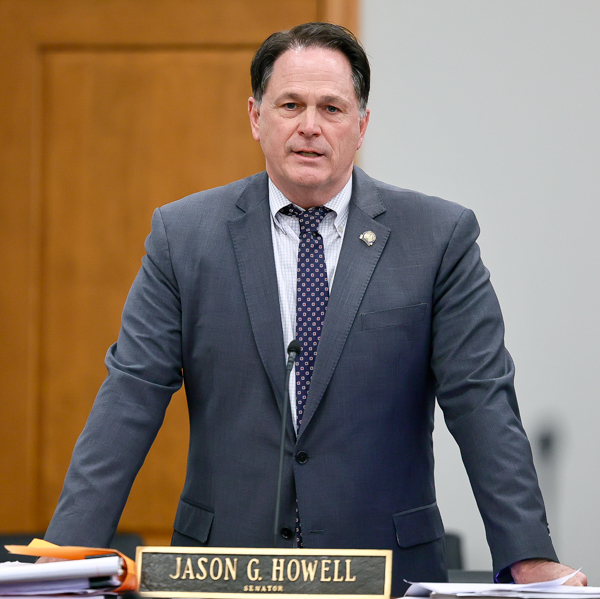
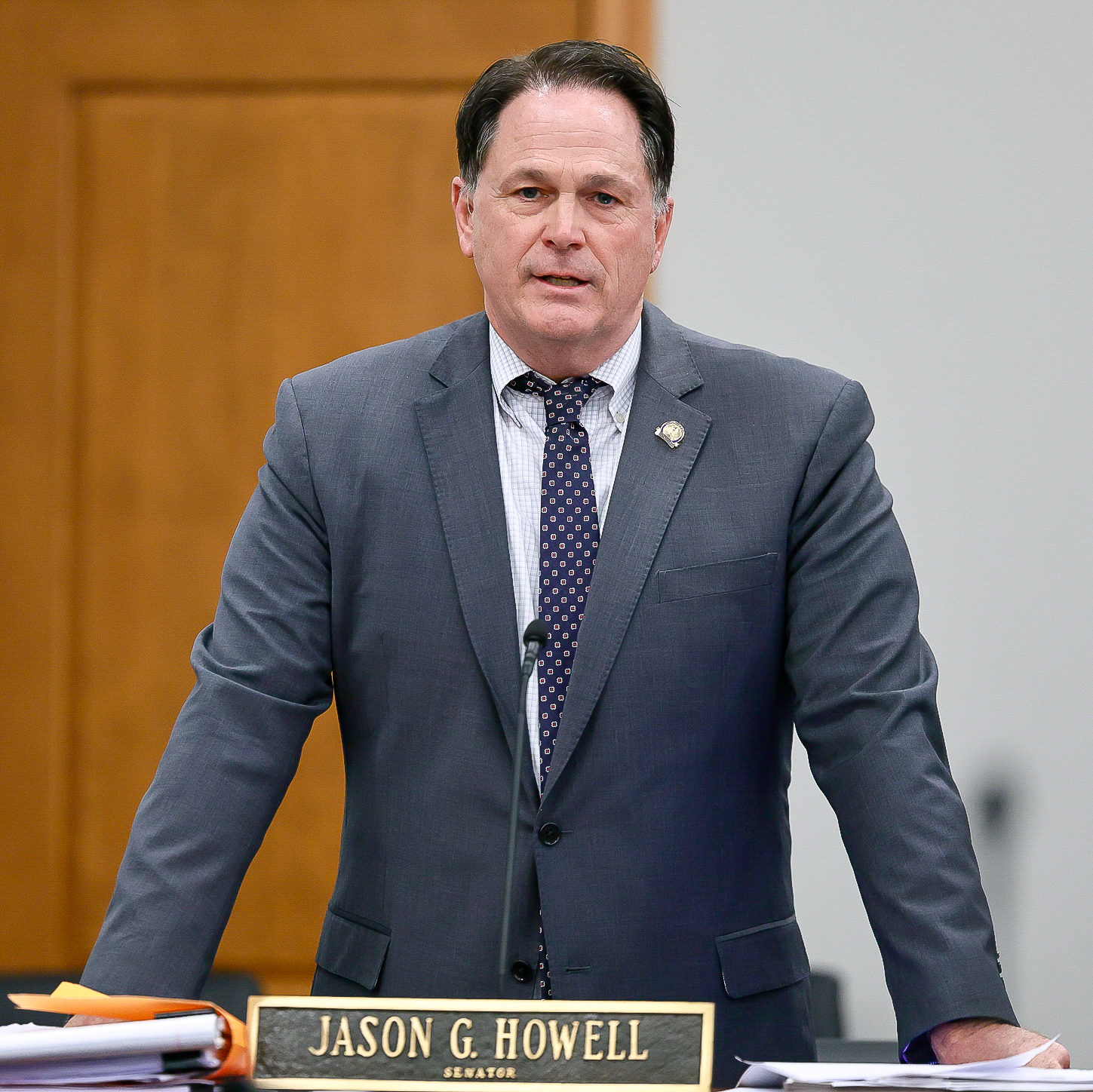
Sen. Jason Howell, R-Murray, speaks Wednesday on the Senate floor about gaming legislation, House Bill 904 A high-resolution photo can be found here.
FRANKFORT — Wagering in Kentucky has changed vastly over the years, and a comprehensive bill to address many facets of modern wagering won final passage Wednesday in the 2026 legislative session.
Rep. Michael Meredith, R-Oakland, and Rep. Matthew Koch, R-Paris, are sponsoring House Bill 904 and testified on the measure with Sen. Jason Howell, R-Murray, in the Senate Licensing and Occupations Committee Wednesday morning.
The bill cleared the House and Senate floors later in the day.
Meredith called the bill “a comprehensive piece of legislation dealing with nearly every area that is regulated by the Kentucky Horse Racing and Gaming Commission to make sure that waging in Kentucky is safe and protected.”
Among the many provisions, HB 904 would increase the age to participate in sports wagering from 18 to 21 and prohibit anyone on the attorney general’s child support arrearage list from betting on online platforms.
The bill would also create a comprehensive licensing and regulatory framework around fantasy sports and forbid negative outcome bets – also known as “under” bets – on college athletes who play on in-state teams.
Another section would prevent fantasy operators or betting companies from contracting with a prediction market that operates in Kentucky.
HB 904 would also give racetracks the option to offer fixed-odds wagering to help address public perception around computer-assisted bets that change the odds suddenly before a race. Additionally, it would create a purse stabilization fund to ensure that any wagers from fixed odds still support the horse industry.
Other sections relate to tote system modernization, charitable middlemen restrictions, and charitable gaming governance, fees and caps.
On the Senate floor, Howell said a lot of lawmakers have reluctance about gambling, but “gambling is here.”
“We have two choices,” he said. “We can do nothing and let the proliferation of some of the problems we have go unchecked, or we could step up and do the best we can to protect people of Kentucky. I believe that’s what this bill does.”
Some critics in the Senate questioned if the bill would prohibit racetracks from contracting with certain service providers that advertise and if that would prevent Churchill Downs from broadcasting the Kentucky Derby on national television.
Senate Minority Whip Cassie Chambers Armstrong, D-Louisville, said she supports the provisions on charitable gaming and raising the gambling age. But she voted against the bill after citing concerns about the impact on Churchill Downs.
“That’s a very big issue, and I cannot in good conscience vote for this bill at this moment in time,” she said.
Sen. Donald Douglas, R-Nicholasville, said the bill includes good provisions along with less desirable aspects. But he voted for the bill and said he has confidence that his colleagues will iron out the issues.
“I really can’t find the avenue where this expands gambling that other people have found. I’m not defending the bill, but I am defending some of the protections that it will be bringing to our younger public. I don’t want to see our younger public get into gambling early as they can now, and we are supposed to be the adults in the room,” he said.
The bill cleared the Senate on a 24-13 vote and won final passage on the House floor 64-19. It now heads to the governor’s desk.
Kentucky General Assembly sends biennial budget to governor’s desk
Rep. Jason Petrie, R-Elkton, speaks on House Bill 500 on the House floor on Wednesday. The legislation lays out the state’s executive branch spending plan for the next two fiscal years. A high-resolution photo can be found here.
FRANKFORT — After months of deliberation, the Kentucky General Assembly gave final passage to the state’s spending plan for the next two fiscal years on Wednesday.
Rep. Jason Petrie, R-Elkton, and Sen. Christian McDaniel, R-Ryland Heights, serve as the House and Senate Appropriation and Revenue Committee chairs, respectively, and presented the final numbers on the chamber floors.
Petrie told House members that House Bill 500 – the proposed executive branch budget – is tailored toward “disciplined fiscal management.”
“After much discussion, I’m happy to report that we still have a shared commitment across both chambers of the general assembly to a disciplined fiscal management, prioritizing needs over wants, making sure we live within our revenue means and focusing on core public needs,” Petrie said.
HB 500 makes investments in public education, health care, infrastructure and public safety, according to Petrie.
The legislation also makes a commitment to implementing spending reductions across most state agencies to improve efficiencies and curb any excess, Petrie said. He said this directive shows a strong commitment to ensuring the budget reserve trust fund remains well-funded.
Additionally, HB 500 proposes,
- Investing $6.2 billion in the general fund over the biennium toward Medicaid with an additional $290 million allocation reserved for future use if necessary.
- Increasing public pension and retirement system contributions and reducing long-term liabilities.
- 2% salary raises for state employees in both the 2026-27 and 2027-28 fiscal years.
- Funding the Dolly Parton Imagination Library with a focus on prioritizing children in foster care.
- Increasing the funding formula for schools, also known as SEEK, to $4,626 per pupil in the 2026-27 fiscal year and to $4,792 per pupil in the 2027-28 fiscal year.
On the Senate floor, McDaniel spoke on the long, sometimes stressful, budget drafting process.
“If there’s one reason … that this task can get done, it is because of the phenomenal work of the staff here affiliated with it,” he said.
In the House, several members spent more than an hour asking questions and expressing concern about funding pertaining to health care, mental health care, juvenile justice, foster care and more.
Rep. Lisa Willner, D-Louisville, said she was grateful to see funding for student mental health in the legislation, but noted the appropriation had not seen an increase since 2020.
Willner also spoke on her desire to have seen funding for a juvenile justice facility for high acuity youth in a mental crisis.
“Many of these kids are essentially in solitary confinement in a juvenile justice facility,” she said. “No hospital can take them because they’re too aggressive, too violent. And I really felt that having this facility in place was going to be very, very important for addressing some of the other challenges within juvenile justice. So it’s disappointing we keep kicking that can down the road. Those costs are only going to continue to rise.”
House Minority Floor Leader Pamela Stevenson, D-Louisville, said HB 500 does not adequately fund Medicaid, despite the state having the proper funds to do so.
“We are marching towards getting rid of Medicaid,” she said. “This budget has a known gap of $400 million. We know it’s a gap. We know people are going to go without … This is not a situation where we don’t have the money.”
House Speaker Pro-Tempore David Meade, R-Stanford, disagreed.
“The money is adequate for this program, plus the backstop that is put in,” he said.
The Senate voted 38-0 on HB 500, and the House voted 73-21. Petrie reiterated the legislation funds priorities in the commonwealth.
“Restraining the growth in spending is not a cut,” he said.
The Kentucky General Assembly also passed House Bill 501, the proposed transportation cabinet budget; House Bill 503, the proposed legislative branch budget; and House Bill 504, the proposed judicial branch budget on Wednesday.
All four bills are now on the governor’s desk for his consideration.
Bill calling for polytechnic focus at KSU wins final passage
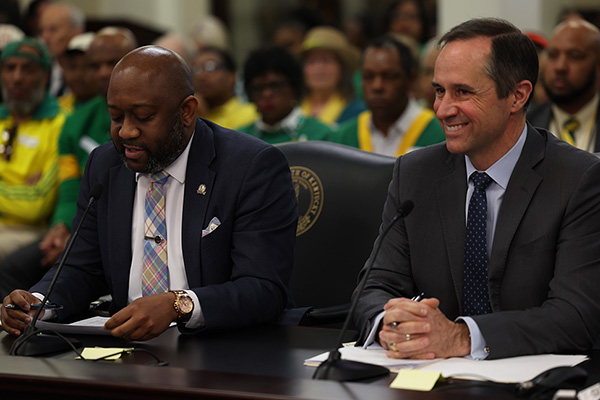
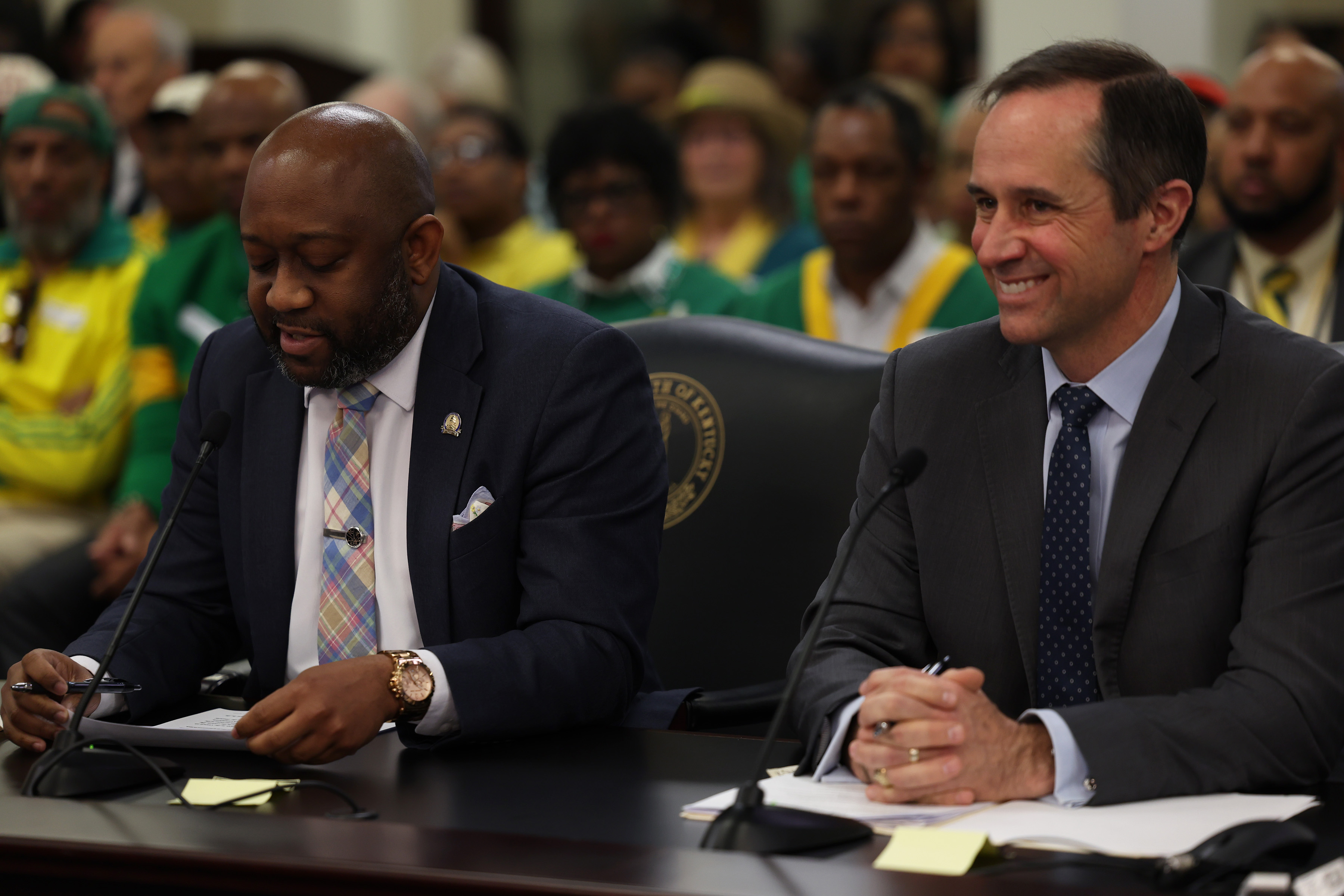
Sen. Christian McDaniel, R-Ryland Heights, and House Minority Whip Joshua Watkins, D-Louisville speak on Senate Bill 185 during Wednesday’s meeting of the House Appropriations and Revenue Committee. A high-resolution photo can be found here.
FRANKFORT — The Kentucky General Assembly passed a sweeping overhaul of Kentucky State University on Wednesday in a bid to strengthen the institution while preserving its historic mission as the commonwealth’s only public Historically Black College and University.
Senate Bill 185, sponsored by Sen. Christian McDaniel, R-Ryland Heights, proposes significant changes to the university’s structure, including a shift toward a workforce-focused, polytechnic model and increased financial oversight.
Lawmakers said they had questioned closing the university following a shooting on the campus last year along with concerns over ongoing financial mismanagement. Instead, they focused legislation on stabilizing the university’s finances and aligning academic programs with statewide workforce needs.
McDaniel said legislators met with KSU President Koffi Akakpo “and after hearing his recognition of the great days of Kentucky State and his vision for the future of Kentucky State, we became convinced that now was not the time to explore closure of Kentucky State, but rather to be a partner in the redefinition of this institution and what it means to the commonwealth.”
McDaniel said the bill recognizes the importance of having a vibrant public HBCU in Kentucky and the belief that high standards will lead to great outcomes.
The bill passed the House Committee on Appropriations and Revenue and cleared the House floor 90-1. It received final passage in the Senate with a 37-0 vote.
Lawmakers reworked several key provisions in the final version of the bill ahead of Wednesday’s action.
House Minority Whip Joshua Watkins, D-Louisville, said the revisions incorporated community feedback to address public concerns, demonstrating successful collaboration between legislators, the community, and KSU students.
“This is a very important piece of legislation that shows an example of what collaboration between the general assembly, both parties, the community, the faculty and staff, and the students of Kentucky State University can do once we all work together,” he said.
The final version of the bill aims to preserve key elements of KSU’s identity and history.
KSU would operate as a four-year residential polytechnic institution emphasizing technical, industry-based applied learning. It would also continue to provide liberal arts courses aligned with the state’s workforce needs and the institution’s historical mission.
The legislation tightens the university’s fiscal oversight. The Council on Postsecondary Education will review all financial transactions over $20,000 and receive monthly reports to help stabilize finances during a five-year financial exigency.
Enrollment standards in the original bill required a 2.5 GPA on a 4.0 scale and an 18 on the ACT or a corresponding SAT score. The new version does not change these requirements but adds language to include dual-credit students, veterans, and other nontraditional students.
The bill also calls on the campus to faculty and staff necessary to support enrollment of at least 1,000 students, giving the university flexibility to grow its residential student body.
The bill includes debt collection measures, including referring debts of more than $1,000 to the Department of Revenue, intercepting state and federal tax refunds, and requiring detailed reporting on overdue student balances.
The final bill also protects students with approved payment plans, ensuring they are not disproportionately affected by stricter debt enforcement and may continue their enrollment.
Finally, the bill preserves KSU’s HBCU status and supports campus life by allowing recognized fraternities and sororities in good standing to remain on campus.
Lawmakers emphasized KSU’s historic role in educating African Americans prior to integration.
“Kentucky State was formed during segregation when African-Americans could not attend predominately white institutions,” Rep. George Brown Jr., D-Lexington, said. “Kentucky State was formed in 1886 and has proceeded to educate young African-Americans in this state and beyond.”
Senate Democratic Floor Leader Gerald A. Neal, D-Louisville, an alum from the university, spoke in support of the House changes to the bill.
“I’m encouraged by where we are today and the fact the legislature has the opportunity now, today, to step up in such a significant way, to establish a framework by which it not only reaffirms its original mission – which it is a HBCU, it comes out of the 1890 legislation back in the day – but it’s also carving out a bright future in terms of meeting those things that we know are important.”
House Majority Floor Leader Steven Rudy, R-Paducah, emphasized that this legislation will positively impact the future of the university.
“I believe whole heartedly that this president and his administration down at Kentucky State University is going to turn this institution around and make it the great institution it once was,” he said.
The bill has been delivered to the governor and awaits his final decision.
Senate committee advances Medicaid bill

Sen. Julie Raque Adams, R-Louisville, speaks Tuesday during a Senate Health Services Committee meeting. A high-resolution photo can be found here.

FRANKFORT — The Senate Health Services Committee on Tuesday unanimously advanced an amended bill designed to overhaul the state’s Medicaid program.
The legislation – House Bill 2 – aims to bring state Medicaid law in alignment with House Resolution 1, or the One Big Beautiful Bill Act, that the U.S. Congress passed last year. It would also implement recommendations from the state Medicaid Oversight and Advisory Board.
Broad goals of the legislation include enhancing transparency, streamlining program operations and delivery, strengthening program oversight and accountability, and reducing fraud, among others.
Rep. Ken Fleming, R-Louisville, is sponsoring the measure. Sen. Julie Raque Adams, R-Louisville, and Sen. Craig Richardson, R-Hopkinsville, testified about details and offered updates on the latest changes to the legislation during Tuesday’s meeting.
Richardson said the bill will allow Kentucky to approach Medicaid with transparency, maintaining integrity in the program and allowing for flexibilities with federal guidelines. Changes to the bill Tuesday are designed to allow the federal framework to operate within the state program and clear up any due process issues that may arise, he said.
Some of the approved changes include extending the deadline for implementing cost-sharing to correlate with federal requirements and reducing some of the cost-sharing dollar amounts.
The latest version of the bill would also remove language that limits state officials from requesting a waiver on community engagement requirements for counties with high rates of unemployment. It would also remove a prohibition on self-attestation and allow self-attestation as a last resort with the aim of eliminating due process concerns.
Adams said the program has grown tremendously, and changes are necessary. She said the legislation is now in a “strong place to move forward.”
“We know that this program has exploded. We know that we need to figure out better ways to make this program more efficient so that it’s there for the long term for those who need it most. And so, this was really almost an overwhelming task and Representative Fleming has done an outstanding job,” she said.
Committee Chair Sen. Stephen Meredith, R-Leitchfield, described the bill as a “Herculean effort,” and said it represents what needed to be addressed, but nothing further than that.
“What we’re attempting to do is make sure we’re in compliance with House Resolution 1, and I’ll just remind everyone that we won’t get it perfect this time. But we will be back in about nine months, and we’ll continue to work on this. This is a work in progress, will be probably for a couple, three years,” he said.
Sen. Karen Berg, D-Louisville, said she’s extremely happy with the changes she’s seen so far, but getting the bill to this point wasn’t easy.
“I think our version here will allow us time as a state to figure out how will we best implement those requirements in the One Big Beautiful Bill and bring them into our state in a way that will hurt the fewest number of people that are eligible and will be most cost effective for us to implement, which is another whole, huge thought process,” she said.
She said she’s concerned about provisions that require recertification for recipients because she’s being told there are several databases that don’t align automatically.
Sen. Keturah J. Herron, D-Louisville said Medicaid is probably one of the largest, most complicated issues the general assembly tackles.
“It is definitely an issue that I am still learning about, and so I do want to thank you all for your expertise and willingness to come together and meet with folks and get this bill into a better place” she said.
House passes bill to change execution regulations process
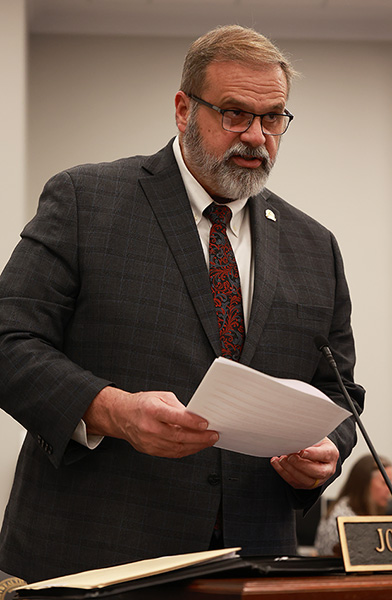
Rep. John Hodgson, R-Fisherville, speaks on Senate Bill 251 on the House floor on Tuesday. The legislation would change how the state Department of Corrections can implement execution protocols. A high-res version is available here.
FRANKFORT — A bill that would change how the state Department of Corrections can implement execution protocols passed the Kentucky House on Tuesday.
Senate Bill 251 is sponsored by Sen. Stephen West, R-Paris. Rep. John Hodgson, R-Fisherville, presented the bill on the House floor.
Hodgson said the legislation does not change the existing law on the death penalty, but would align Kentucky’s process with the law and other states.
Under SB 251, the Department of Corrections could prescribe and implement execution protocols and procedures for inmates on death row by internal policy, memorandum or other forms of action.
The department is currently required to promulgate administrative regulations to prescribe and implement execution protocols, Hodgson said.
“This requirement is very unique,” he added. “No other state mandates that its execution procedures be tied to a formal, regulatory framework in quite the same way. As a result, we have a system that is far more vulnerable to prolonged legal challenges.”
The current administrative regulations process and the legal challenges that often follow has delayed justice for victims, Hodgson said.
“Senate Bill 251 is about restoring balance. It’s about ensuring that justice is not endlessly postponed,” he said.
During discussion of the legislation, Rep. Mary Lou Marzian, D-Louisville, shared her concerns on the death penalty, including how sometimes people are convicted and sentenced to death for crimes they did not commit.
“I’m going to vote no on this bill and hope we get to a place where we are kinder, we seek justice in a better way, we better fund our public defenders, and the poorest of the poor are not given sentences unfairly,” Marzian said.
Rep. James Tipton, R-Taylorsville, also spoke in opposition to the death penalty, citing the possibility of wrongful convictions and executions.
“I don’t think an execution can bring peace to a family who’s lost a loved one for a heinous crime,” he added. “For several years, I’ve co-sponsored bills that would abolish the death penalty.”
Although he is against the death penalty, Tipton filed a floor amendment to SB 251 that would add transparency to the new process if the bill becomes law.
Under House Floor Amendment 2, the Department of Corrections would be required to publish any policy adopted related to execution protocols to the department's website for public view.
“(The amendment) doesn’t change the process that’s being adopted here today,” Tipton said.
The House voted to adopt the floor amendment.
House Majority Whip Jason Nemes, R-Middletown, also shared his feelings about the death penalty and asked Hodgson a question about the bill.
“Does the right of the defendant to challenge the constitutionality of the death penalty protocols remain after this passes?” Nemes asked.
Hodgson said the bill does not change any rights of the defendant to legally challenge the protocols and procedures of execution.
In response, Nemes said he is against the death penalty, but would still vote for SB 251.
“The law of the commonwealth is to have the death penalty, but because of judicial rulings that are technicalities or technical problems, we have not enforced the death penalty,” he said. “I want to get rid of it – I’ll say that again. But all this does is follow the law that exists and allow the death penalty to be enforced.”
Rep. Kim King, R-Harrodsburg, said she also supports the goal of SB 251.
“The way I read 251 is this does not even address the death penalty law here in Kentucky,” she said. “It just seeks to kind of put activist judges between guardrails and keep them on track.”
The House passed SB 251 by a 68-23 vote. The legislation will now go back to the Senate for concurrence.
House committee weighs death penalty-related bill
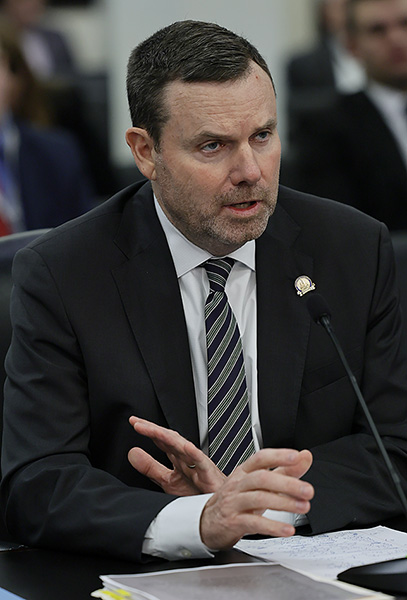
Sen. Stephen West, R-Paris, testifies on Senate Bill 251 during Thursday’s House State Government Committee meeting. The bill would change how the state Department of Corrections can prescribe and implement execution protocols. A high-res version is available here.
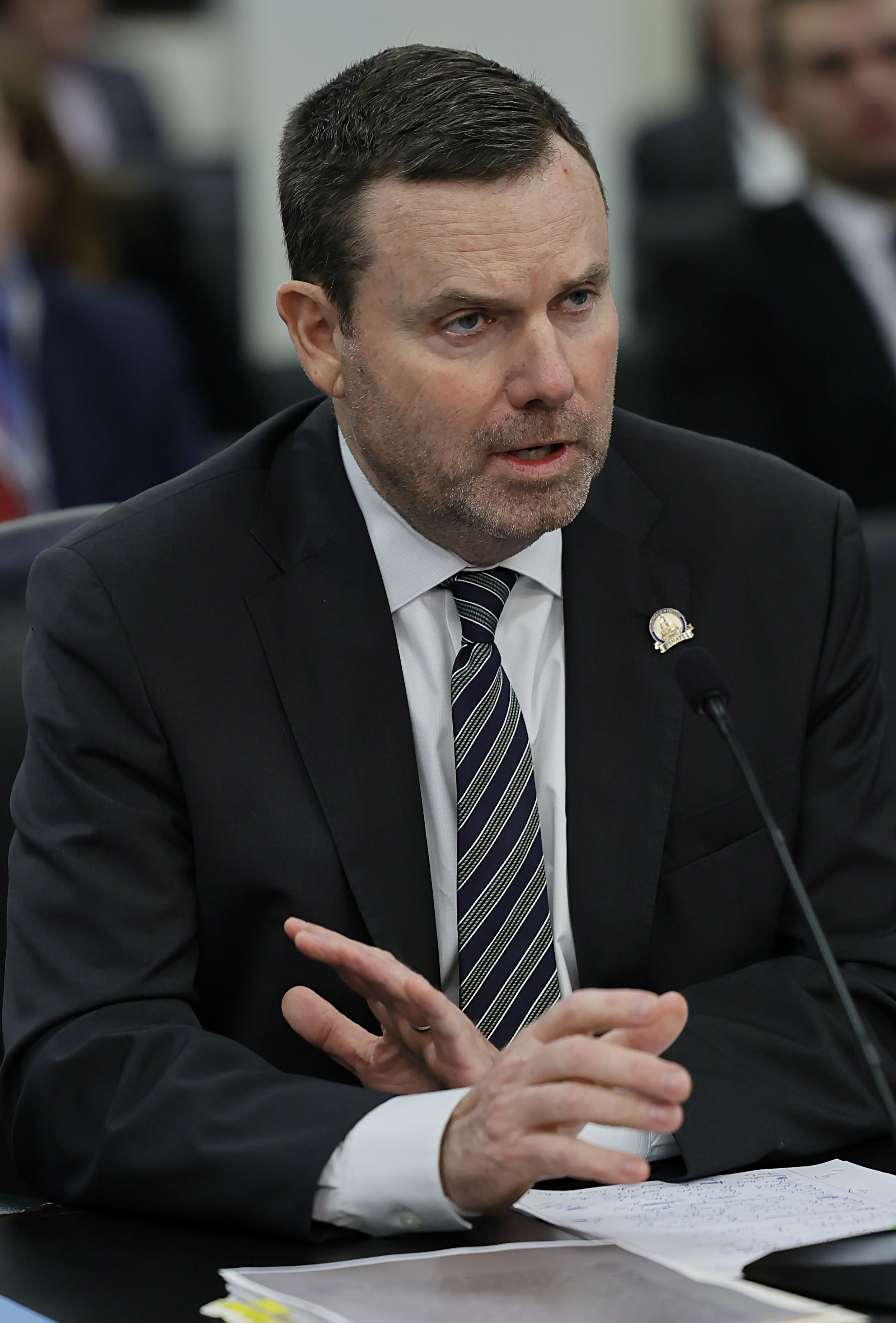
FRANKFORT — — The House State Government Committee advanced Senate Bill 251 on Thursday.
Sponsored by Sen. Stephen West, R-Paris, the legislation would allow the state Department of Corrections to prescribe and implement execution protocols and procedures for inmates on death row by internal policy, memorandum or other forms of action.
The department is currently required to promulgate administrative regulations to prescribe and implement execution protocols.
West said SB 251 is not a death penalty bill.
“This bill is less about the death penalty and more about the rule of law and the powers between the branches in Kentucky,” West said.
West told the committee the legislation is needed due to the lengthy administrative regulations process that often leads to litigation.
“You have this revolving door of litigation, and so this bill attempts to address that issue,” West said. “… All this does is allows the administration, the Department of Corrections, to implement execution protocols if they choose to.”
Wil Schroder, senior counsel in the Kentucky Attorney General’s Office, shared a letter of support from a family member who is related to both victims of Ralph Baze. Baze has been on Kentucky’s death row for more than 30 years.
“I wholeheartedly support anything, including Senate Bill 251, that will cut down on the intolerable delay in seeing that justice is served for my brother and brother-in-law. My family and I want justice. My family and I need justice, and we have been waiting on it for over three decades,” the individual wrote in the letter.
Members of the House State Government Committee carefully considered the legislation, with several members sharing their moral opposition to the death penalty.
Rep. James Tipton, R-Taylorsville, said he’s filed legislation multiple times to abolish the death penalty in Kentucky. He expressed sympathy for the victims, but said his concern about wrongful convictions and his personal pro-life, Christian beliefs are the reasons why he’s against the death penalty.
“Sometimes the courts, the juries make mistakes, and I know Rep. Nemes had a bill a few years ago to provide for people who are wrongfully convicted – to provide them benefits. I don’t know what you could do for someone who is wrongfully executed,” Tipton said.
Additionally, Tipton asked West if there is another way to address the length of time it takes to promulgate administrative regulations.
“I know one of the concerns that has been raised to me is that if we go with this process, it will not be transparent … Would it not be just as simple to require the Department of Corrections to issue regulations in a more timely manner to prevent these delays from happening in the future?” Tipton asked.
Jack Heyburn from the Kentucky Attorney General’s Office said that would not fix the issue. He shared an example of a recent Department of Corrections regulation that will become final in two weeks nearly a year after Franklin County Circuit Court found part of the regulation unlawful.
“I think that the bill addresses that because it gives DOC more flexibility to respond quickly and expeditiously to a court order like that,” Heyburn said.
On the transparency issue, Schroder said a defendant’s attorney would still have the right to review and challenge the department’s policies if SB 251 becomes law.
“It can be a much quicker process, but they’ll still be transparent in the sense that they’ll have that access to see what it is and challenge it if they feel that there is a legal challenge to do so,” he added.
Rep. Anne Gay Donworth, D-Lexington, said she still has transparency concerns when she voted “no” on SB 251.
“We are talking about life and death, and of all times when we need to be open about what we are doing here as a government, I think this is the most critical time we can possibly do it,” she said.
Rep. Wade Williams, R-Earlington, who is a retired police chief, said he’s personally witnessed heinous crimes, which is why he supports the legislation.
“I do believe that that person could have everlasting life, but there’s also an amount of accountability that we society and those victims are owed too,” he said.
SB 251 is now before the full House for consideration after a 13-6 vote.
Committee advances bill on gubernatorial pardons
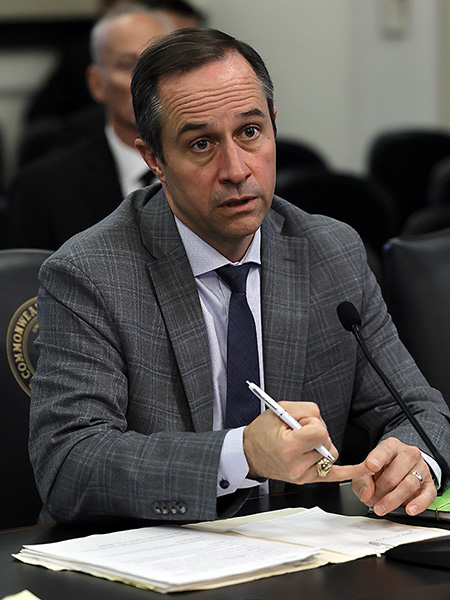
Sen. Christian McDaniel, R-Ryland Heights, testifies on Senate Bill 10 before the House Elections, Constitutional Amendments and Intergovernmental Affairs Committee. A high-res version is available here.
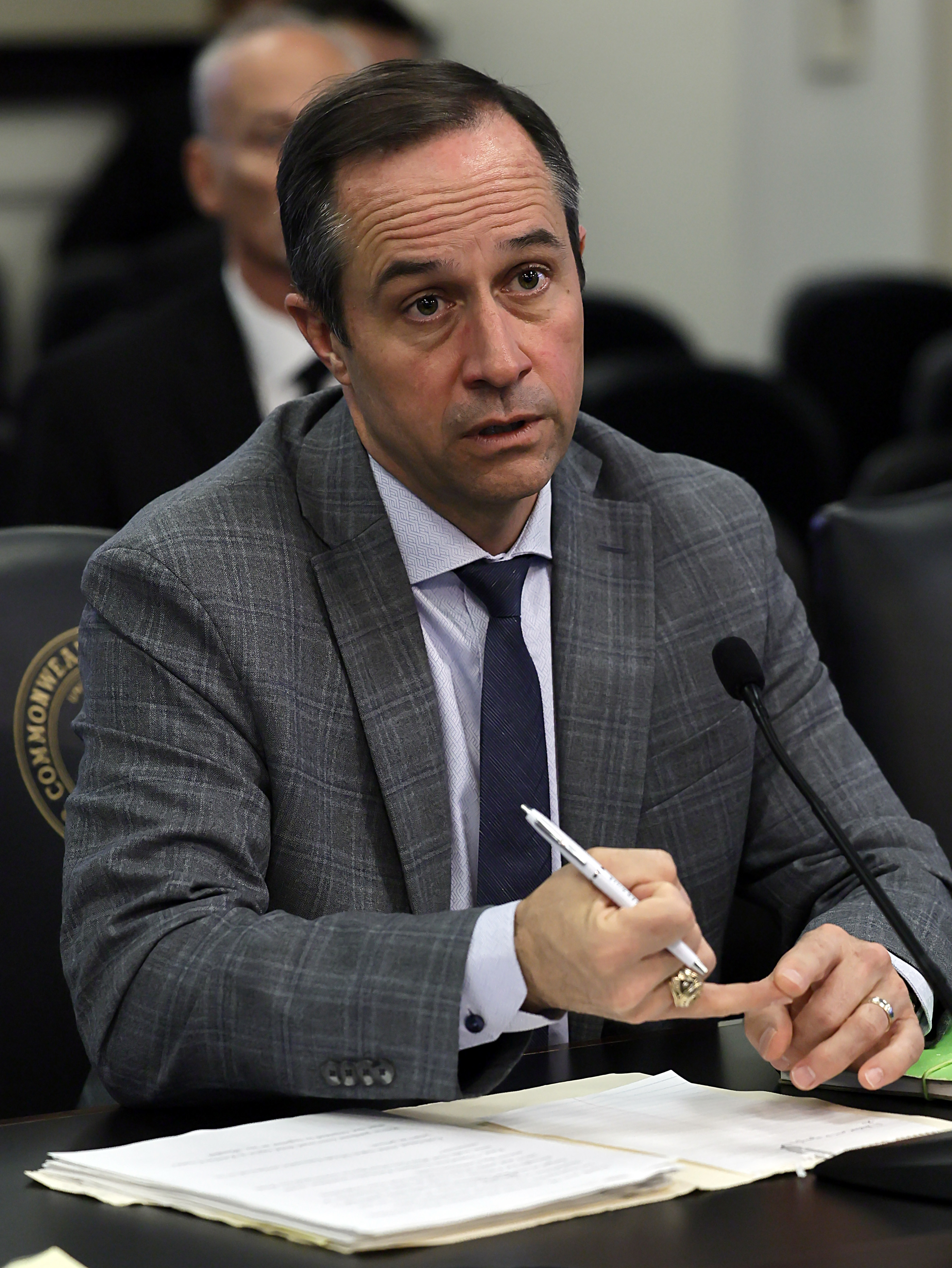
FRANKFORT — Legislation that would propose a constitutional amendment to limit the governor’s pardoning power during election periods advanced in the House Elections, Constitutional Amendments and Intergovernmental Affairs Committee on Thursday.
Senate Bill 10, sponsored by Sen. Christian McDaniel, R-Ryland Heights, proposes a constitutional amendment to limit the Kentucky governor's ability to grant pardons and commute sentences, prohibiting the exercise of that power during the 60-day period preceding a gubernatorial election through the fifth Tuesday following the election.
“In essence, 90 days out of every 4 years, there is no power to pardon vested in the governor. That way, if a governor believes in a pardon strongly enough, he or she can stand in front of the voters, or have their party stand in front of the voters to decide their opinion of the pardon,” McDaniel said.
Rep. Josh Calloway, R-Irvington, asked McDaniel’s thought on restricting the governor’s pardoning power based on categories of crime rather than a specific time period.
McDaniel said he settled on a time limitation because that approach simply gives notice to voters when pardons take place. “The whole intent of this to ensure the voters are informed of the person or party they are casting their vote for,” he said.
Rep. John Hodgson, R-Fisherville, asked what the amendment would affect outside of pardons.
“We’ve talked about pardons, but I believe the language of the constitution would also include commutations. Would it also include expungements and lifting the restrictions that come with a felony conviction?” Hodgson asked.
“That is an excellent question,” McDaniel replied. “I don’t believe expungements would fall under this heading. It does cover commutations and pardons, but I do not believe it covers expungements.”
Rep. T.J. Roberts, R-Burlington, expressed concern that the bill might have some unintended blowback.
“My concern is that there are times where innocent people are convicted and the community is absolutely convinced that they did do it, and an issue of granting a pardon at any other time other than immediately after the election would lead to blowback, even if the person was not guilty,” he said.
Roberts asked McDaniel if he would be open to an amendment to the bill that would allow for pardons to take place through some other method during the 90 days the governor would not be able to issue a pardon.
In response, McDaniel said that while he saw Roberts’s concern, he believed there were enough safeguards in place for the bill to not need an amendment.
“There are other safeguards in place to handle the situation that you’re describing. While I appreciate the motive behind it, I believe there are sufficient safeguards in place at this point in time to allow the innocent person to move into a new administration who could review their pardon.” McDaniel said.
SB 10 now goes before the House. If the bill becomes law this year, Kentucky voters would still need to ratify the proposed amendment through a ballot vote before the change could take effect.
House bill advances limiting civil actions against gun makers
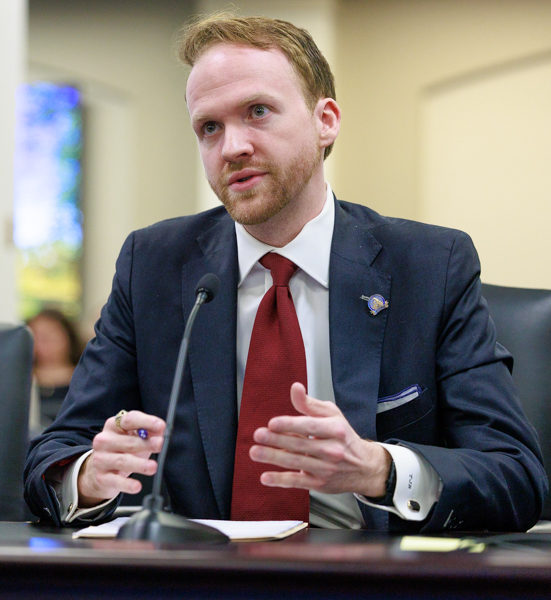
Rep. T.J. Roberts, R-Burlington, testifies on House Bill 78 before the Senate Judiciary Committee. A high-resolution photo can be found here.
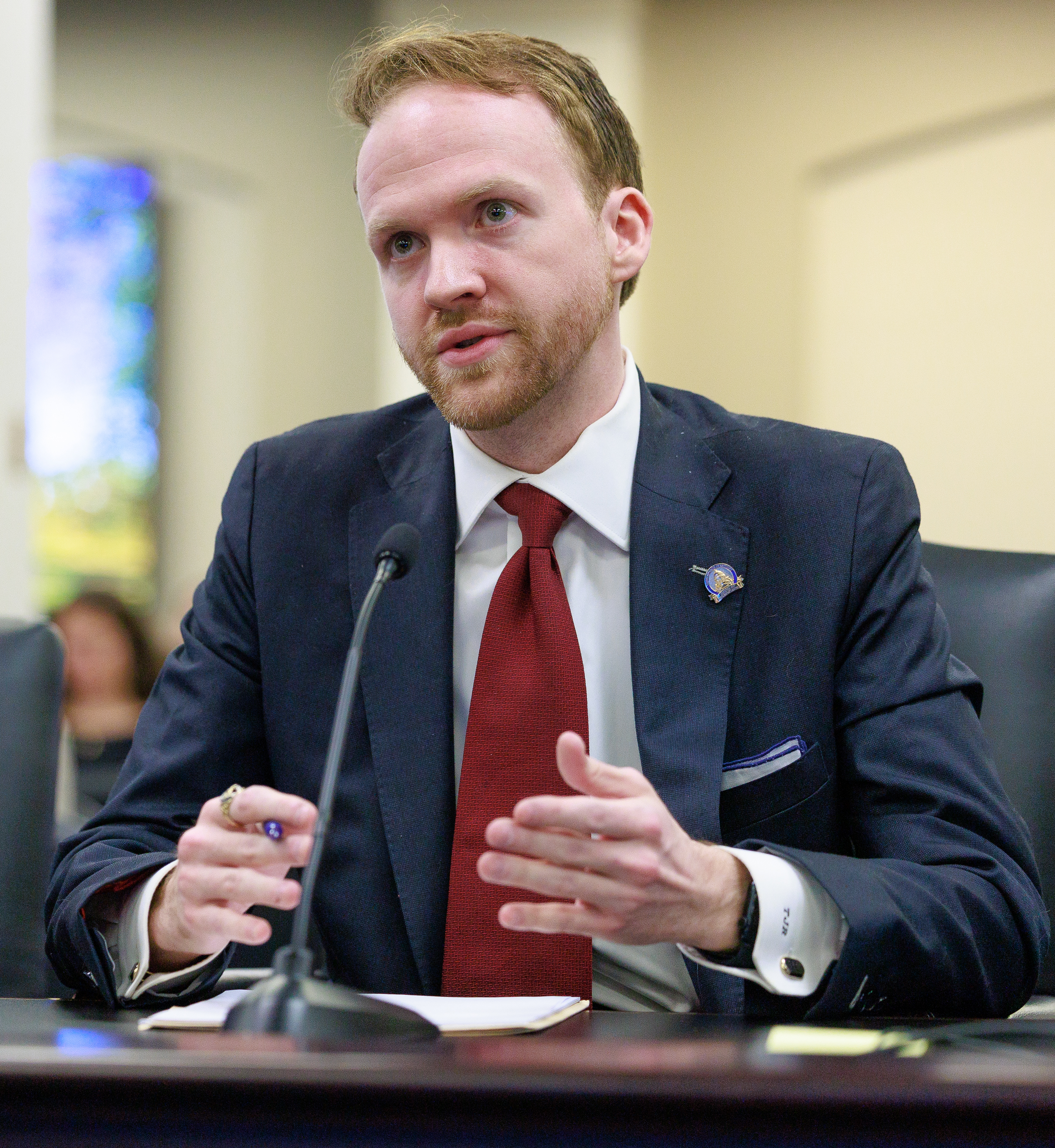
FRANKFORT — Legislation insulating gun manufacturers and sellers from qualified civil liability actions advanced out of the Senate Judiciary Committee on Thursday.
House Bill 78, sponsored by Rep. T.J. Roberts, R-Burlington, would make Kentucky law on firearms civil liability consistent with federal protections under the Protection of Lawful Commerce in Arms Act. It would prevent state courts from imposing liability on firearms manufacturers, sellers, and trade associations if a firearm is used in the commission of the crime.
"House Bill 78 is based on the same fundamental premise that we accepted when we adopted HB 222 in 2022, which is that no level of government and no branch of government can be used to nullify a constitutional right," Roberts said.
Sen. Aaron Reed, R-Shelbyville, testifying alongside Roberts, spoke in favor on common sense grounds.
"This is an extremely common-sense bill. The issue is like if we were allowed to sue Ford for a drunk driver causing an accident with their vehicle. I hope we can all support this," Reed said.
HB 78 carves out exceptions to this immunity for sellers who negligently entrusted a firearm to someone they knew, or reasonably should have known, would use it in a dangerous manner.
Additionally, under HB 78, manufacturers do not have immunity in cases where a defective product caused injury while being used lawfully as intended.
Sen. Danny Carroll, R-Paducah, raised concerns about the bill's effect on the constitutional right to a jury trial.
"My primary concern with the bill is not its intent, but a person's constitutional right to a trial. Under this legislation, the basic finding that a petitioner would be seeking from a court through a jury trial is basically being determined up front by a judge. On that issue, what is your response?" Carroll said.
Roberts responded that the legislature makes the law and that a judge's role is to determine whether a petitioner's allegations, if true, constitute a violation.
"This bill does not infringe upon the right to a trial by jury. We have a right to a jury trial, yes, but we also have the right to free speech, and the right to bear arms. I do not believe we can use one right to nullify another," Roberts added.
Senate Minority Caucus Chair Reginald L. Thomas, D-Lexington, voted no, arguing the bill granted gun manufacturers blanket immunity regardless of wrongdoing.
"What this bill does is just give a blanket immunity to gun manufacturers regardless of any flaws in a gun's design or whether they're subject to improper uses. I am not one who believes in immunity to manufactures because the court system should be open to anyone who feels that they have a just claim of being wronged," Thomas said.
House Bill 78 now goes to the Senate floor.
Senate committee advances bill to treat veterans’ PTSD
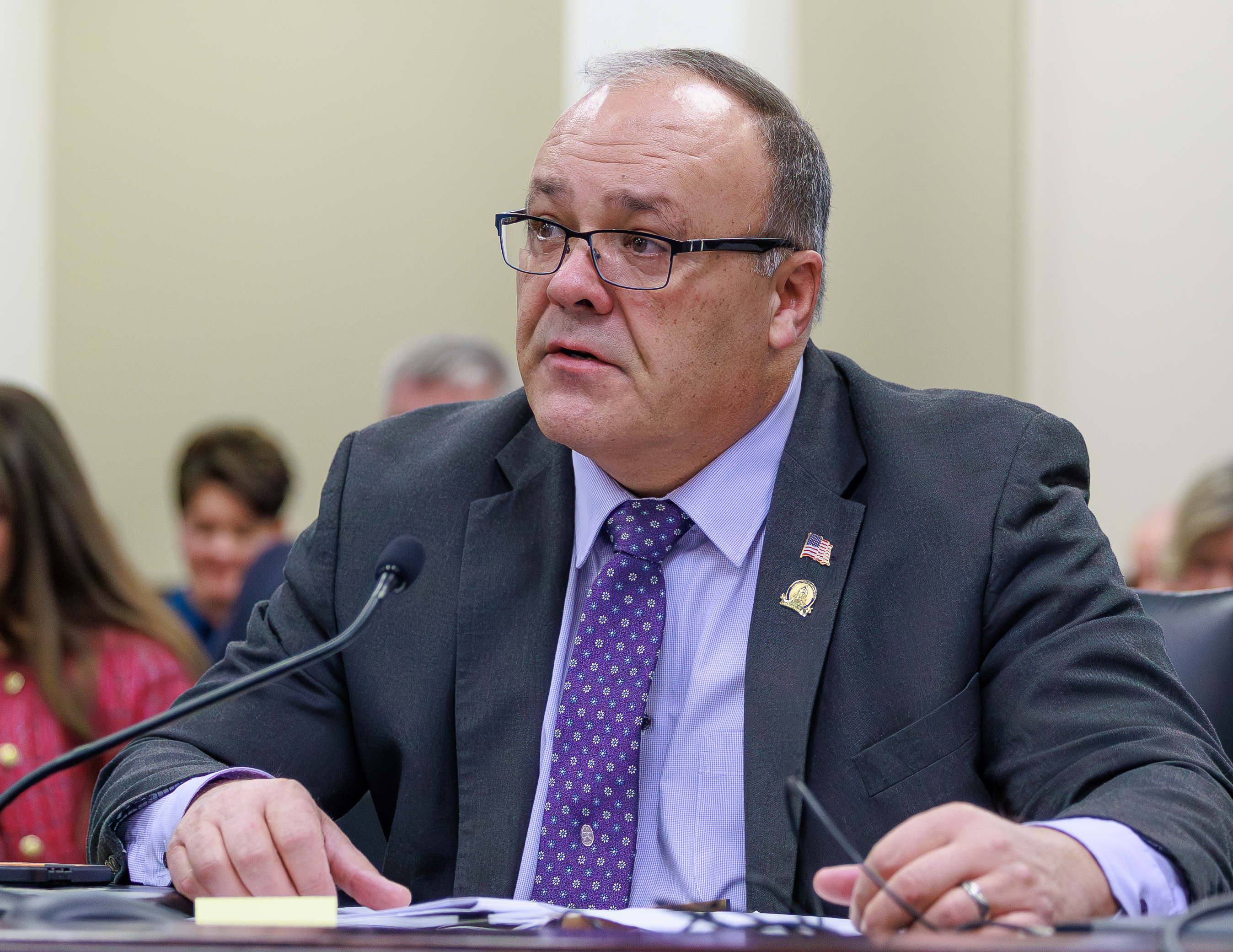
Rep. Scott Sharp, R-Ashland, testifies Thursday on House Bill 369 during a Senate Veterans, Military Affairs and Public Protection Committee meeting. A high-resolution photo can be found here.
FRANKFORT — During Thursday’s meeting of the Senate Veterans, Military Affairs and Public Protection Committee, legislators advanced a bill to further assist military veterans who are struggling with post-traumatic stress disorder.
House Bill 369 would create provisions in state law for veterans to receive hyperbaric oxygen therapy, said Rep. Scott Sharp, R-Ashland. “We’re trying to help veterans with the post-traumatic stress disorder using these chambers.”
The bill defines post-traumatic stress disorder and makes a veteran eligible for hyperbaric oxygen therapy if he or she has a diagnosis of PTSD that is attested to by the patient’s health care provider.
Sharp, a U.S. Army veteran, said the measure would not cost the state anything, but would provide a new option for veterans.
With Sharp was Eric Koleda, a U.S. Air Force veteran and president and cofounder of Hyperbaric Oxygen Treatment for Kentucky Veterans.
Koleda testified that in 2018, the legislature passed a bill giving veterans with traumatic brain injuries access to the therapy. But at the time, there wasn’t enough research on hyperbaric oxygen treatment for PTSD.
“Since that passage, there have been over 28 clinical trials completed. There’s been a meta- analysis on eight of those 28, definitively defining medical evidence showing that hyperbaric oxygen therapy is healing up PTSD vets,” he said.
Sen. Aaron Reed, R-Shelbyville, said he’s a retired Navy SEAL, and he has several friends who have, “done this type of therapy and swear by it.”
Committee Chair Sen. Matthew Deneen, R-Elizabethtown, thanked Koleda for traveling to Frankfort to testify. He said that hyperbaric oxygen therapy chambers are being used at Baptist Health Hardin in Elizabethtown and they are doing a “wonderful job.”
HB 369 now heads to the full Senate.
Committee passes bill aimed at preventing child marriage

Sen. Julie Raque Adams, R-Louisville, speaks on Senate Bill 156 during Thursday’s meeting of the House Families and Children Committee. A high-resolution photo can be found here.

FRANKFORT — Legislation aimed at eliminating child marriage in Kentucky advanced Thursday from the House Families and Children Committee.
Senate Bill 156 would raise the legal age for marriage to 18 without exception, closing a provision in current law that allows 17-year-olds to marry in certain cases. Supporters say the change would strengthen protections for minors and prevent situations involving coercion, abuse or exploitation. Under existing law, a 17-year-old may marry with judicial consent following an investigation into potential abuse. Lawmakers backing the bill argue that this process still leaves room for vulnerable minors to be placed in harmful situations and creates inconsistencies in how cases are handled. Bill sponsor Sen. Julie Raque Adams, R-Louisville, said the proposal builds on earlier efforts to address child marriage in Kentucky. “This bill builds on the foundation we laid in 2018. It strengthens enforcement. It increases accountability. It improves training and clarity for officials responsible for issuing and recording marriage licenses, and it closes the gaps that predators continue to exploit,” she said. Advocates told lawmakers that, while reforms have been made in recent years, underage marriage continues to occur. The legislation would remove remaining loopholes by requiring all individuals to be at least 18 to marry, regardless of circumstances. Donna Simmons, founder of the Revive Collective, testified before the committee and shared her experience with multi-generational child marriage. Simmons described how her mother was married at a young age, a cycle that continued into her own life. Starting at 14, Simmons said she was placed in situations involving an adult man and later married him in Tennessee with parental consent at 16. She told lawmakers the relationship led to a miscarriage, exploitation and long-term legal challenges after she left, including losing custody of her child and being required to pay child support. “My credibility, my education, my body and my income, and even my child has been ripped away from me and given to my rapist, who’s hidden his offenses behind a marriage license legally.” Simmons said that it isn’t right for children to miss out on childhood and education due to abusive situations involving adults. “Let us not continue to legally allow children to be subjected to an interruption in their process of development, and let us begin giving them full childhoods that they do not have to spend decades of life recovering from,” she said. Rep. Kim Holloway, R-Mayfield, asked how the bill would apply in cases involving teen pregnancy or emancipated minors. Adams said emancipated minors would be treated separately, as they are granted the legal rights of adults. Simmons added that the bill would prevent marriage as a response to teen pregnancy, which she said can trap young people in harmful situations. “When I was 16 and I had the miscarriage, I was not able to consent to my own medical care as a married minor. I had to wait for my husband, who again was in his 30s, to decide that I could get medical treatment, and therefore I almost died,” she said. “So many survivors have shared the same experience. They didn’t have access to child protective services because they’re no longer considered a minor, but they also do not have enumerated rights as an adult. So, they fall into this legal gray area without any protection.” Adams emphasized that underage marriage is still occurring in Kentucky despite existing laws and said removing the exception for 17-year-olds would ensure stronger, more consistent protections for minors. “What we did back in 2018, we thought that we had sufficiently covered it with that caveat that if you are 17, you can get married if you go before a court and you meet certain parameters,” she said. “Unfortunately, what we have found is that Kentucky is not doing those things, which is why we’re having to close that 17-year-old loophole.” Rep. Michael Sarge Pollock, R-Campbellsville, noted that his parents married at 16 and 17 due to a teen pregnancy but said couples who truly want to marry can wait until adulthood. “When you share the purpose and intent behind this bill, and that is to protect our children,” he said, “obviously, if they’re truly loving each other, they can wait another 6 months or 8 months or whatever the case might be.” Rep. Daniel Elliott, R-Danville, asked how many other states have enacted similar laws. Simmons pointed to growing national efforts to end child marriage and emphasized the importance of Kentucky aligning with those changes. “We bring this up because a bill is only going to be as good as proximity to the states around it, and that is one of the reasons it is so critical for us to place focus on achieving this in Kentucky,” she said. “Yes, for Kentuckians, but for children of neighboring states who may not be able to get that license there but may try to take advantage of lax laws in other areas.” The bill passed the committee on a 13-0 vote and now heads to the House floor.Senate committee advances bill to transform Kentucky State University
Committee Chair Sen. Christian McDaniel, R-Ryland Heights, testifies Wednesday on Senate Bill 185 during a special-called meeting of the Senate Appropriations and Revenue Committee. A high-resolution photo can be found here.
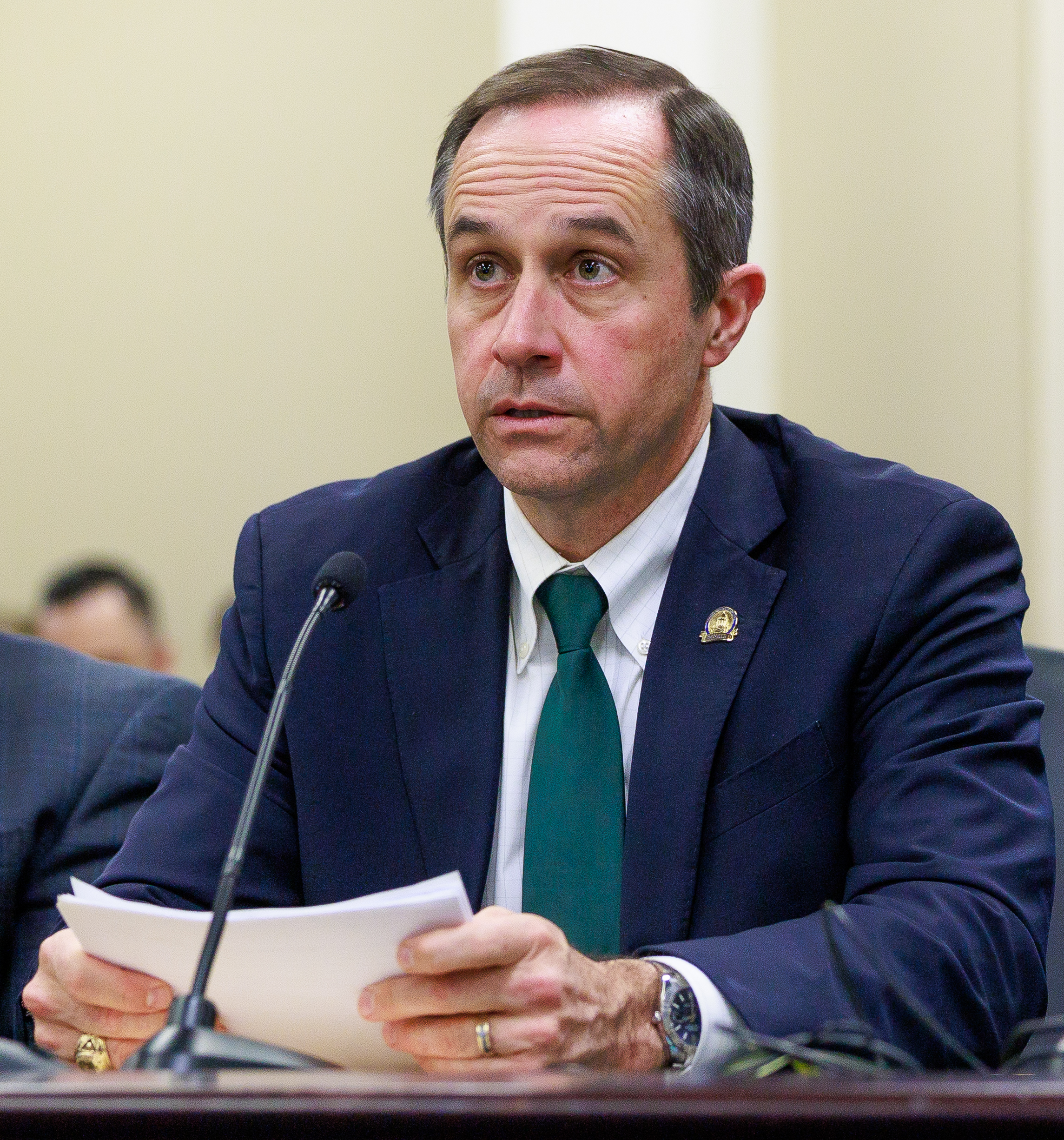
FRANKFORT — In 1886, state legislators authorized the creation of what would become Kentucky State University in the state’s capital city. On Wednesday, legislators advanced a bill crafted to transform it into a polytechnic institution.
During a special-called meeting of the Senate Appropriations and Revenue Committee, Committee Chair Sen. Christian McDaniel, R-Ryland Heights, testified that over the past decade, the university had caused frustration, and crime on campus led some to thoughts of its closure.
However, over the course of the past few months, when legislators returned to Frankfort, several of them met with KSU President Koffi C. Akakpo, and listened to him talk about his vision for the school and its past, great days.
“We became convinced that now was not the time to explore closure of Kentucky State, but rather to be a partner in the redefinition of this institution and what it can mean for the commonwealth,” McDaniel said.
McDaniel testified that Senate Bill 185 calls for KSU to transition to a new mission and become a polytechnic university over the next five years, offering polytechnic, STEM and education degree-related classes in person. There will be no cuts made in the biennium to the KSU budget, he said.
Under SB 185, exigency is declared, any employment provisions are suspended and employment status will be determined by the university president. The minimum GPA for admission will be raised to a 2.5 with a score of 18 on the ACT, McDaniel said.
McDaniel said that under another provision, no student with more than $1,000 in debt shall be enrolled beyond 30 days of the date that the amount is due.
In addition, all fraternities and sororities must reapply for their charters, any in-state person owing KSU money shall have a tax return intercepted by the state Department of Revenue, and any liberal arts degrees will be largely moved to an expanded online offering except for education. The Kentucky Council on Postsecondary Education will continue to provide oversight of operations.
McDaniel said the legislation presented Wednesday wouldn’t have been possible without Aaron Thompson, president of the Kentucky Council on Postsecondary Education and his staff, and Akakpo and his staff.
“This work is a recognition of the importance of a vibrant HBCU in the commonwealth,” McDaniel said. “It is a recognition that high standards will lead to great outcomes, and it is a vote of confidence in Dr. Akakpo’s leadership of the university and our belief that with our partnership, the university can return to the glory for which it is known.”
Thompson also thanked those who worked on the legislation.
“It’s important to have a vibrant HBCU in this state that’s public. It’s important for us to have a vibrant 1890s land grant institution. That’s the base of this conversation,” he said.
Looking ahead, Thompson said the changes won’t be just about KSU’s finances, but how leaders can be proactive beyond being an HBCU and land grant institution. He said the school should become an important driver to help the state boost economic development with a highly educated workforce that KSU can provide.
To be successful, Akakpo said continued support from the legislature will be needed, and he can guarantee that good things will stem from the university.
“I’m here speechless. I want to first thank the leadership of the Senate, the leadership of the House, several of you, Chairman McDaniel, for us to get to this point,” he said. “I know the discussion in the very beginning was very heated, but we have found a way to move forward.”
Senate President Pro Tempore David P. Givens, R-Greensburg, said the legislation presents great challenges, and he encouraged alumni to be champions for the university by supporting it financially and otherwise.
“This is a new start, a revisioning for Kentucky State University in my opinion. The schedule is aggressive, and that’s been cited by some of the questions on the panel,” he said. “And I’m going to reflect on the fact that I think the aggressive schedule is necessitated by the alternative. The alternative that we had some frank conversations about was closure.”
Senate Democratic Floor Leader Gerald A. Neal, D-Louisville, said the proposed changes are complicated, and he had a very short time to review the bill on Wednesday.
He asked McDaniel to consider some changes related to expenditure limits, flexibility on retaining faculty and increased discretion concerning student debt. However, he ultimately voted for the measure in committee.
“I think this a huge opportunity here, and I’m looking at this and I think we’ve got the right leader in place here. We’ve got the right support in terms of CPE and we have now to have the right policies that give the ability to get to the objectives I think we all embrace,” he said.
Legislation intended to increase school safety passed the House

Senate Bill 101 would require school boards to expel students who assault school staff.
FRANKFORT — Legislation intended to protect teachers and school staff from violent students passed the Kentucky House on Wednesday, advancing a measure that would require stricter disciplinary action and expand reporting requirements in schools.
Under Senate Bill 101, sponsored by Sen. Matt Nunn, R-Sadieville, school boards would be required to expel students in grades 6 through 12 for at least 12 months if the student “recklessly” with a deadly weapon or dangerous instrument, or intentionally caused or attempted to cause physical injury to a school district employee on school property or at a school function.
Rep. Patrick Flannery, R-Olive Hill, carried the legislation in the House. He highlighted previsions in the bill on how the legislation applies to students with disabilities, noting that protections remain in place under federal law.
“If the student has an IEP and the assault is determined to be a manifestation of their disability they are exempted, the student will be given educational services in an alternative setting as long as they can be provided safely.”
In addition to mandatory expulsions, the bill would strengthen reporting requirements for school personnel. Teachers or staff who fail to report incidents that occur on school property or at school-sanctioned events, when there is probable cause, could face misdemeanor charges, with penalties increasing for repeated failures.
Lawmakers adopted multiple floor amendments that broaden the scope and implementation of the measure.
House Floor Amendment 2, filed by Rep. Daniel Grossberg, D-Louisville, expands the bill’s language to include school bus stops as locations where misconduct could trigger expulsion. The change follows concerns about incidents occurring outside traditional school property.
Grossberg cited an incident in his district to illustrate the need for the amendment.
“In my district there has been a number of incidents that have taken place at school bus stops, including violence so bad that children who are new to our country and struggle with the English language were beaten so badly that they had to go to the hospital.” He said “Their parents had no recourse because Jefferson County Public School said that the bus stops were not their responsibility and LMPD said it was not their responsibility during school hours.”
He added that ensuring student safety must extend beyond school buildings.
“If we can’t keep our kids safe including at mandatory bus stops, if we can’t keep them alive, we are all failing.”
House Floor Amendment 3 filed by Rep. Chad Aull, D-Lexington, creates a pathway for expelled students to return to school. Under the amendment, an expulsion could end after 26 weeks if certain conditions are met, including writing a letter to anyone injured in the incident, completing 15 hours of community service, and earning a 3.0 GPA on coursework completed during the expulsion period, along with any additional requirements set by the local school board.
House Floor Amendment 5, filed by House Majority Whip Jason Nemes, R-Middletown, would require local law enforcement to be notified when a school has knowledge of a threat of violence or that a firearm is present on school property.
Flannery said educators should not have to fear for their safety while doing their jobs.
“It is not fair to teachers who merely want to earn a living. They shouldn’t be fearful at work and shouldn’t be assaulted. This risk often leads to teachers leaving the profession and their career because they fear for their own safety.”
Rep. Lisa Willner, D-Louisville, also emphasized the strain placed on educators, though she ultimately opposed the bill on the House floor.
“We’ve left our teachers vulnerable; our teachers should be focused on educating kids and I think we all agree on that, and instead they are in the trenches every single day bearing the brunt of every community problem, that becomes a school problem and it’s not fair.”
Willner initially voted in favor of the measure in committee but later changed her position after speaking with educators in her district.
“Teachers concerns about safety were too often not taken seriously by school administrators. Teachers were simply not heard, they weren’t protected.” She Said “A teacher would report that a student was dangerous. The student was briefly removed and then returned to the classroom”
Rep. Tina Bojanowski, D-Louisville, said while the bill addresses safety concerns, lawmakers should also consider long-term outcomes for students who are removed from school.
“As we have these children that are expelled from our school systems that we need to figure out what supports they need so that they so they’re not just thrown out and not thought about and you know we get them out of our schools it alleviates the problem but what about the child.”
The legislation passed the House 84-5 and now returns to the Senate for concurrence on the amended version of the bill.
Grandparent visitation bill advances from committee
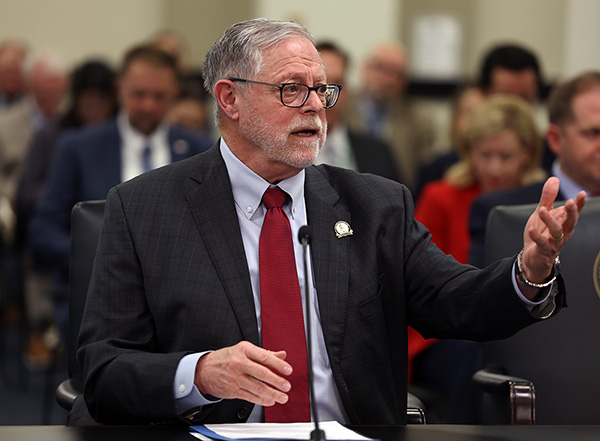
Sen. Rick Girdler, R-Somerset, speaks on Senate Bill 281 during Wednesday’s meeting of the House Judiciary Committee. A high-resolution photo can be found here.
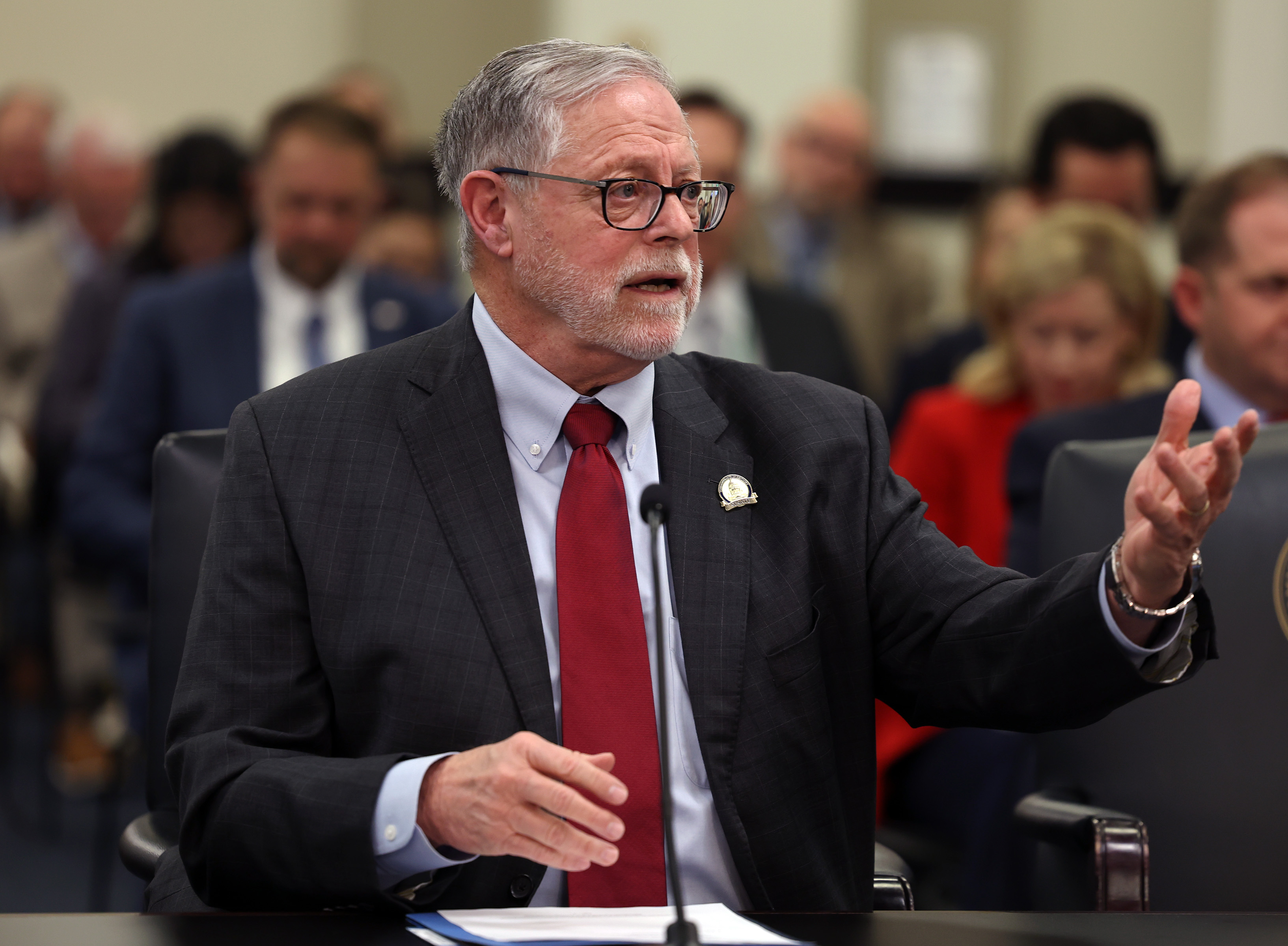
FRANKFORT — Legislation that would change how courts determine grandparent visitation rights passed the House Judiciary Committee on Wednesday.
Sen. Rick Girdler, R-Somerset, said the legislation stems from a 2020 decision by the Kentucky Supreme Court, which ruled that Kentucky’s grandparent visitation statute violated the rights of parents.
Senate Bill 281 would replace the unconstitutional language in state law, requiring courts to apply a “clear and convincing evidence” standard while creating a more structured legal pathway for evaluating grandparent visitation rights that aligns with the supreme court’s decision.
“I’ve got nine grandkids and I can’t imagine my life without my grandkids, I really can’t,” he said. “I have some friends of mine that have grandkids that are not able to visit like I am able to and I thank God for that every day, I really do.”
Girdler emphasized the bill is not intended to alter custody arrangements, but to connect children with grandparents in certain situations.
“I’m not trying to take my grandchild from my daughters or my son, but I do want the ability to be able to be seen if that grandchild is being raised by somebody else due to a death of my child or due to another reason I can’t.”
Committee members largely expressed support for the legislation, while also noting concerns about current law.
Rep. Mitch Whitaker, R-Fleming-Neon, said, as a parent, he appreciates strengthened parental rights due to challenges seen under existing statute.
“As a parent I appreciate you strengthening my rights to have my child,” he said. “I have in my practice as a lawyer seen the down side of having this presumption in the instance of a death of a parent. I’m sure you’re a great grandparent. Not all grandparents are great grandparents, and I think this clear and convincing evidence standard helps weed that out.”
Rep. Patrick Flannery, R-Olive Hill, questioned how the bill could affect fundamental parental rights.
“About five of six years ago there were a few lines of these cases that the court ruled there was a fundamental right to parents, therefore it struck down certain issues,” he said. “Is it your position that this would not run afoul of the fundamental right to be a parent because of a higher standard of clear and convincing – is that your belief on this?”
Girdler said the bill was written with those concerns in mind. He added that the bill is intended to allow grandparents to love their grandchildren, not take over parenting roles.
“I had an aunt who said the nearest thing to God’s love you’ll ever see is a grandparents love for a child. And I agree with that 100%. I don’t have to raise that child; I have to love that child.” He said “And that’s the whole purpose, don’t take these grandchildren from the people that love them the most without conditions at all.”
The bill passed committee 16-0 with one pass vote and now moves to the House floor.
Child welfare, safety bill approved by Senate committee
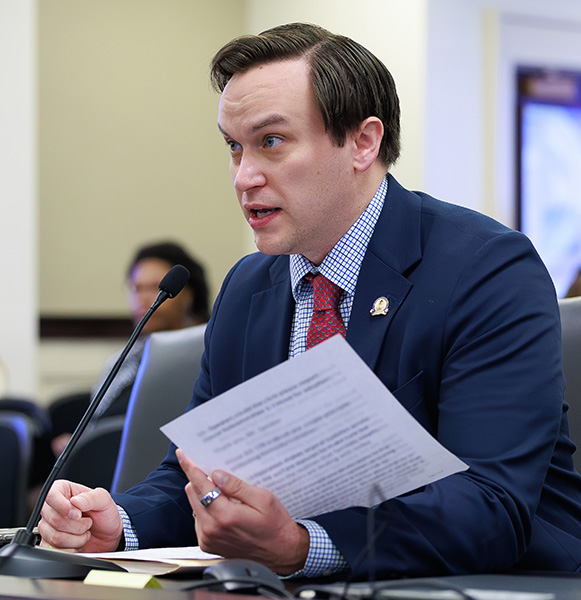
Rep. Nick Wilson, R-Williamsburg, speaks on House Bill 778 during Tuesday’s Senate Families and Children Committee meeting. A high-resolution photo can be found here.
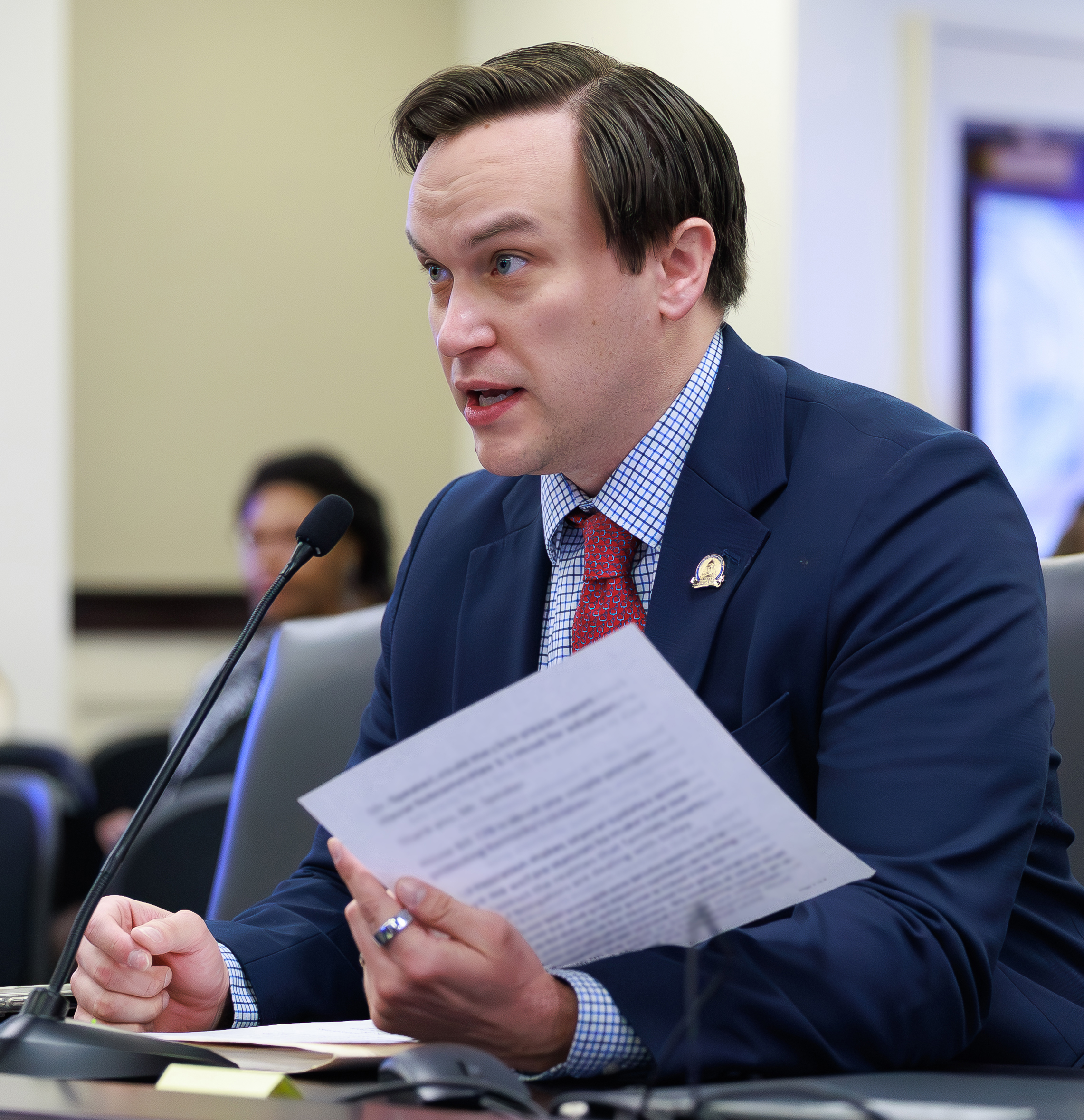
FRANKFORT — A multi-pronged bill designed to boost child welfare and safety was unanimously advanced Tuesday by the Senate Families and Children Committee.
House Bill 778, sponsored by Rep. Nick Wilson, R-Williamsburg, seeks to strengthen protections for young people in foster care, boost coordination between agencies and codify bill language regarding ingestion of controlled substances by children.
“This bill is a product of the work we’ve done through the interim on the Families and Children Committee, in the interim committee meetings as well as roundtable discussions with members of the cabinet, members of law enforcement, many interested parties,” Wilson testified.
The first goal of HB 778 is to strengthen protections in the foster care and placement system. The measure includes four sections addressing this issue.
“Currently, when a child is in the foster care system and they turn 18, they have the decision to opt out or stay in the system. Sometimes, they give it a go as an adult and realize they want to opt back in. This makes the change where they can do that up to three times until they’re 20½ years old,” Wilson said.
The second part of the bill addresses placements of children, and it states that, “each placement shall meet the need of that individual child,” Wilson said.
HB 778 seeks to ensure that children in foster care are not placed with someone on the sex offender registry. It also calls for improving coordination between agencies.
Wilson said legislators met with those from the court system, schools, investigators and child advocacy professionals to craft the legislation, and further cooperation is addressed in the bill.
A large portion of the bill addresses “modern threats to the child’s safety,” and this includes dangerous substances children accidentally ingest. Under HB 778, child injuries caused by ingestion or inhalation of a controlled substance would be included in the definition of neglect, and neglect would be added to the child abuse statute.
“We’ve codified ingestion as a part of criminal neglect. We’ve added to the criminal statute of criminal abuse, and we’ve provided for a lot of trainings that are required for many different professions – social workers, child care centers, family home child care centers, urgent care centers, the Board of Medical Licensure, basically anyone we think needs to be aware of this situation,” Wilson said.
Committee Chair Sen. Danny Carroll, R-Paducah, serves on the state’s Child Fatality and Near Fatality External Review Board. He said, through work on the panel, he learned that the numbers of ingestion are “increasing dramatically” over the last 5-7 years and therefore the topic is addressed in the bill.
Sen. Keturah J. Herron, D-Louisville, thanked Wilson for his work on the bill, especially the provisions regarding young people aging out of the foster care system.
“We know that that’s a huge problem, that when we look at homelessness in our commonwealth, a lot of those young people are kids who have aged out of the foster care system. So, I hope that those changes will definitely provide better supports for those individuals, and I look forward to seeing the impact of that,” she said.
Carroll said he also appreciates the work that was put into the bill.
“It was nice to be able to work together on a bill and pull together several different topics that will be meaningful and put it all together in one piece of legislation,” Carroll said. “I know there were several folks involved in this, and it is a great product and I’m very honored to be a part of it.”
House approves portable benefit plans for self-employed workers
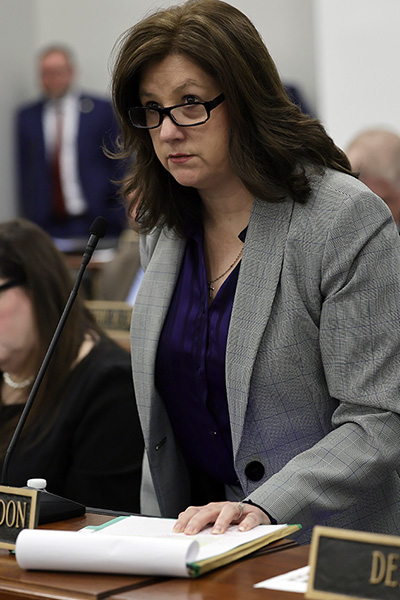
Rep. Deanna Gordon, R-Richmond, listens to a question about House Bill 732 on the House floor on Tuesday. The legislation would allow portable benefit plans for self-employed workers in the commonwealth. A high-res version is available here.
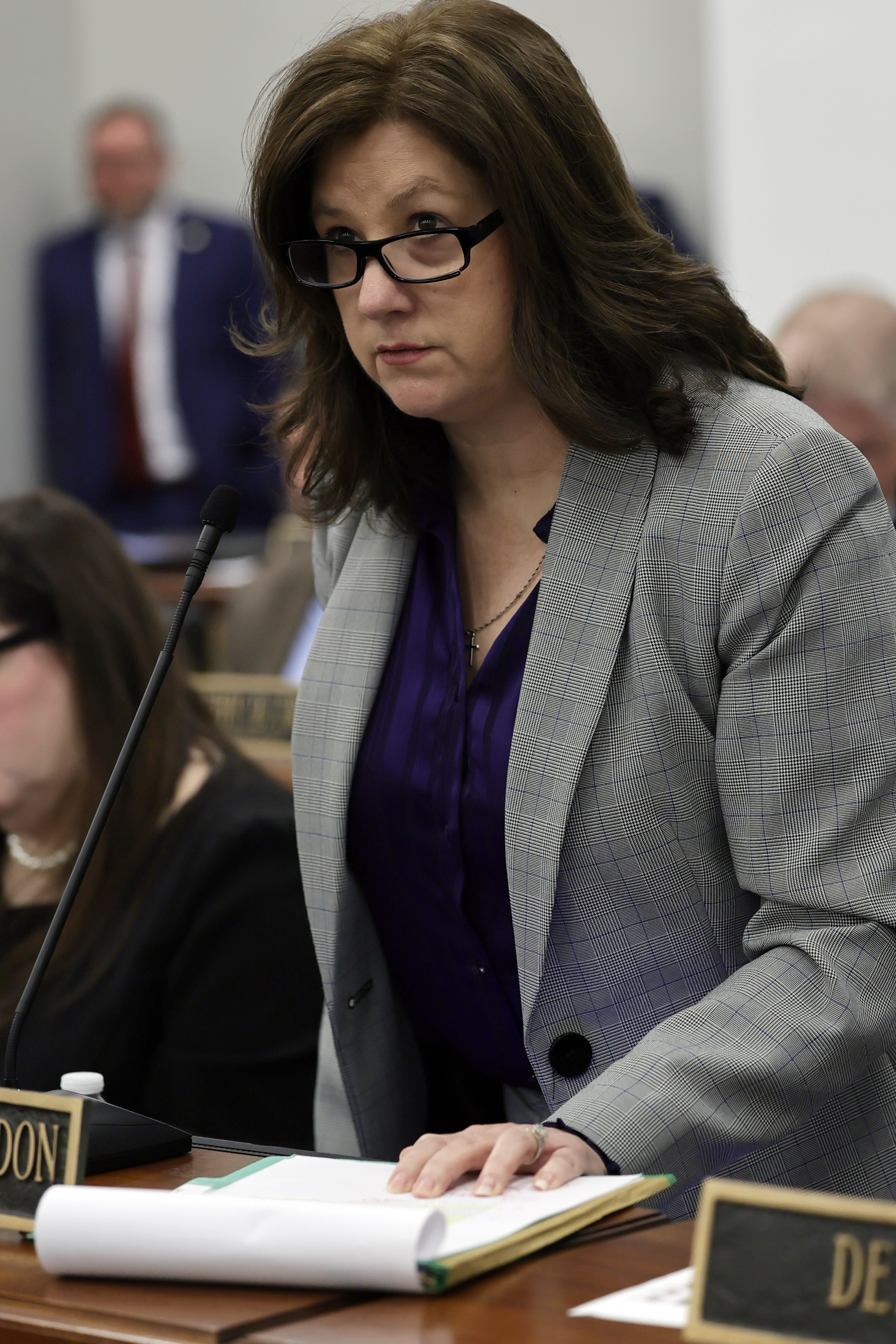
FRANKFORT — A bill hoping to give self-employed workers more access to benefits advanced off the Kentucky House floor on Tuesday.
House Bill 732 would allow portable benefit plans for self-employed workers. Rep. Deanna Gordon, R-Richmond, said Kentucky is home to more than 330,000 freelancers, contractors or self-employed professionals who contribute $18 billion annually to the state economy.
“These workers value the flexibility and independence of contract work, but many lack access to benefits, like health coverage, retirement savings or paid leave,” she said. “Current law creates a barrier. House Bill 732 addresses this by allowing portable benefit accounts, which are worker-owned that follow the worker from job to job.”
According to the bill, portable benefit plans would be provided by third-party insurance companies chosen by the self-employed worker and assigned to a beneficiary rather than to an employer or hiring party.
The bill also defines a self-employed worker as “a person who earns his or her living from an independent pursuit of economic activities, rather than from a separate company or individual.”
Companies can voluntarily contribute to portable benefit plans, and workers can use the funds for health expenses, retirement savings or paid-time off, Gordon said.
“The bill creates no mandates and does not change existing employer obligations. It simply adds regulatory certainty,” Gordon added.
House Minority Caucus Chair Lindsey Burke, D-Lexington, believes HB 732 would create a “huge gray area.”
“I would go as far as to argue that this bill incentivizes employers to misclassify their workers, undermining job quality for Kentuckians,” she said, adding it could leave self-employed workers underpaid and at-risk.
Burke proposed two floor amendments: House Floor Amendment 3 and House Floor Amendment 4.
House Floor Amendment 3 would limit the bill to marketplace contractors who earn at or below 80% of the state median income. Burke said the amendment would apply to app-based workers, like food delivery and rideshare services.
House Floor Amendment 4 would require the state to collect data and track portable benefit plans.
Neither amendment was adopted after Gordon spoke against the proposals. She said House Floor Amendment 3 would “create a narrow-scope of benefits, which does create misclassification and takes us out of alignment with federal law,” and House Floor Amendment 4 would violate the First Amendment.
Rep. Adrielle Camuel, D-Lexington, also spoke on the House floor against HB 732. She said the legislation undermines Kentucky’s workforce.
“As a member of a union, I do not see any way in which this builds benefits for workers in Kentucky,” she said. “As we continue to bring in more and more businesses and new industries, we want to be able to provide them with the strongest workforce possible, and this bill will actually undermine those efforts.”
After hearing several colleagues speak against HB 732, Rep. T.J. Roberts, R-Burlington, said he has “no idea how ensuring independent contractors have the ability to access health insurance, unemployment insurance, workers’ compensation and other benefits” is harmful to workers.
“This is about ensuring that workers, no matter what their category is, no matter how they are working, no matter what their contract is, they are still able to receive these benefits,” he added.
Rep. Josh Calloway, R-Irvington, also spoke in favor of the legislation. He said rural Kentucky is full of self-employed workers who would benefit from a portable benefit plan.
“Self-employed people are the backbone of rural Kentucky, and they deserve the opportunity to grow and to be able to have these types of benefits,” Calloway said.
The House voted 63-24 to send HB 732 to the Senate.
Lawmakers adjust General Assembly’s 2026 session calendar

The updated calendar designates Friday, March 27, as the 55th session day. The House and Senate will conduct proceedings that day on the chamber floors. A high-resolution photo is available here.

FRANKFORT — State lawmakers have amended the calendar for the 2026 Regular Session with the Kentucky General Assembly now set to convene for a session day on Friday, March 27.
Under the revised calendar, lawmakers are still planning to gavel in for two concurrence days on March 31 and April 1 before breaking for the 10-day veto recess, which starts on April 2.
The House and Senate will reconvene on April 14 and 15 for the final two days of the session.
The revised 2026 Regular Session calendar can be viewed here.
House committee approves ibogaine research bill
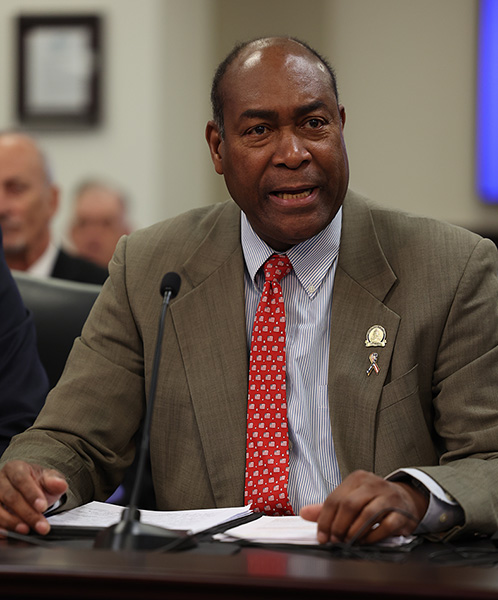
Sen. Donald Douglas, R-Nicholasville, speaks on Senate Bill 77 before the House Veterans, Military Affairs and Public Protection Committee meeting on Tuesday. The legislation would establish a framework for future ibogaine research in Kentucky. A high-resolution photo can be found here.
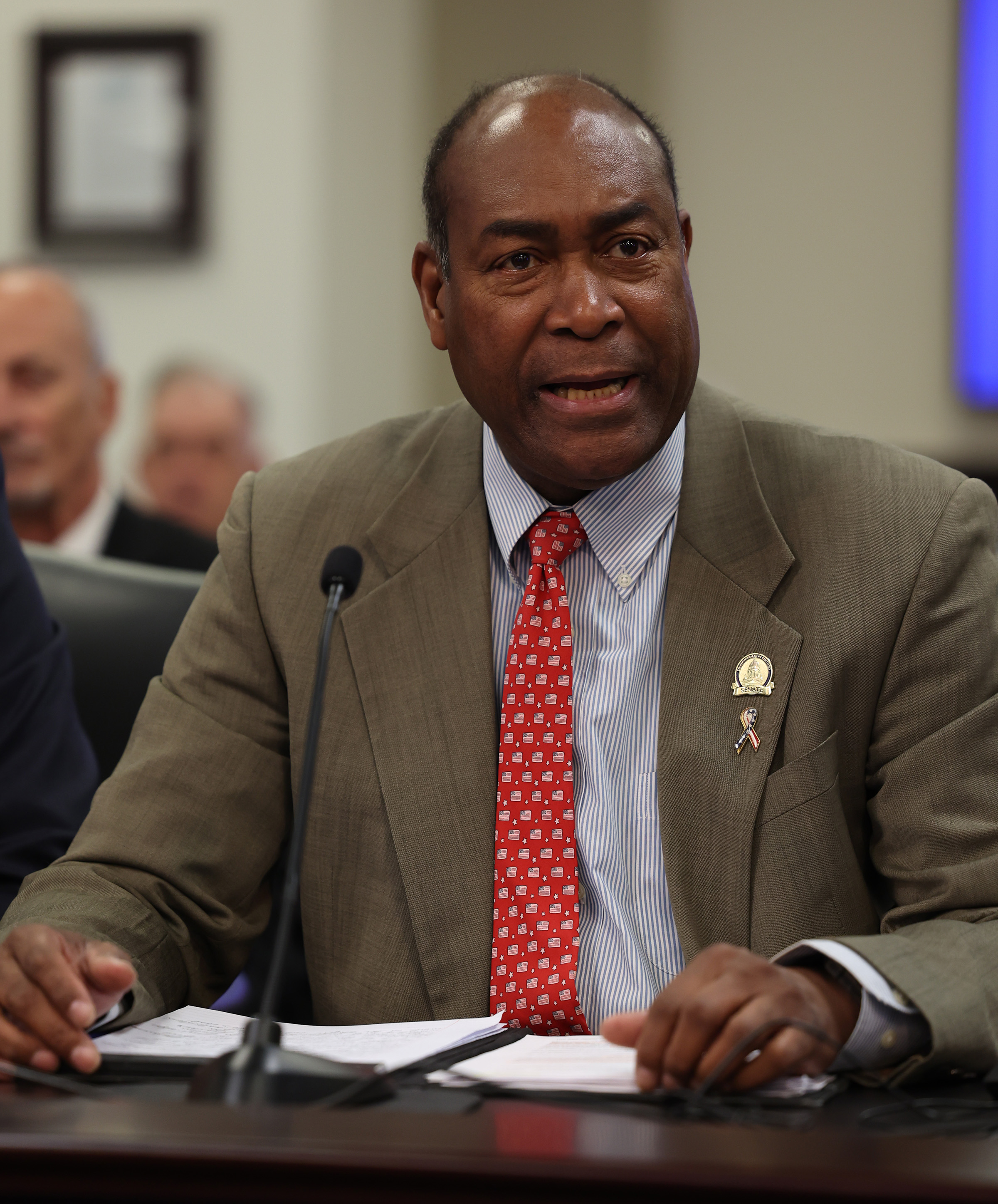
FRANKFORT — A Senate bill that would establish a framework for future ibogaine research in Kentucky advanced from the House Veterans, Military Affairs and Public Protection Committee on Tuesday.
Sen. Donald Douglas, R-Nicholasville, is the primary sponsor of Senate Bill 77. He told the committee the legislation is the “first step” toward Kentucky having a role in developing a revolutionary treatment for substance use disorder.
“This bill really describes and sets up a foundation and framework for research and for studies, including Federal Drug Administration approval, to assess the clinical and the medical uses of a crystalline substance called ibogaine,” Douglas said. “The research will also explore its medical effectiveness in treating and improving certain neurological conditions as well as chemical addictions.”
Under SB 77, the State Treasury would establish the Ibogaine Research and Intellectual Property Fund to allow Kentucky to establish a public-private partnership with a single drug developer upon FDA approval of clinical drug development trials for ibogaine.
Texas, Mississippi and West Virginia have already passed similar legislation, said Northern Kentucky physician Dr. Jean Loftus, who testified alongside Douglas.
“Once the FDA approves ibogaine, Kentucky will share in the profits, making this revenue generating,” Loftus said. “Funding can be public, private and grant dollars.”
Ibogaine, a crystalline alkaloid psychogenic compound obtained from the Tabernanthe iboga plant, is currently illegal in the U.S.
Loftus told the committee research from other countries shows ibogaine is a successful treatment for opioid use disorder, alcoholism, post-traumatic stress disorder, depression, traumatic brain injury and other substance use disorders.
Loftus said ibogaine is a powerful drug that corrects most of the brain damage caused by these conditions.
“These conditions have much in common,” she said. “They collectively affect nearly a million Kentuckians. It’s estimated that 40% of all combat veterans are afflicted by one or more of these conditions. They cause severe functional impairment, leading to a high rate of death and suicide, with veterans being affected three times more than the general public.”
Ibogaine is being utilized in six other countries, and typical treatment involves administering several ibogaine capsules over a single 8- to 12-hour period under the supervision of a physician, Loftus said.
Ibogaine is more successful than traditional treatments of substance use disorder because it greatly cuts down on withdrawal and craving symptoms, Loftus said.
Citing a Mexican study involving scientists from Stanford University, Loftus said there are also high rates of successful remission when ibogaine is used as a treatment for PTSD and depression.
Douglas said the drug has the potential to have the greatest positive impact on society since antibiotics.
If Kentucky does not pass SB 77, Loftus said the commonwealth would be delayed in offering ibogaine as a treatment to Kentuckians in need.
Rep. Adam Moore, D-Lexington, asked Douglas about a provision in the bill that states the fund “may receive state appropriations.”
“Are you just essentially opening up the opportunity that if we, down the line from now, want to fund it through budget bills, that you’re just putting it in statute there that it could? Is that what it’s there for?” Moore asked.
Douglas said he doesn’t want to prevent any funding source from going toward ibogaine research.
“I don’t want to prevent anyone from wanting to donate or put money toward the betterment of society,” Douglas said while also clarifying SB 77 does not appropriate any money into the fund.
Loftus said FDA approval can cost up to $500 million. Rep. T.J. Roberts, R-Burlington, asked how that compares to the cost of addiction in Kentucky.
“Currently, Kentucky is spending between $1 and $2 billion on treating afflicted Kentuckians,” Loftus said. “And then when you add on to that the other cost to the system, the social services, the judiciary, the police – it’s exponential.”
In explaining why he supports SB 77, Roberts said he believes the legislation is “a small price to pay” compared to the cost of addiction in Kentucky.
“This is a new hope for people who are going through something that is devastating our communities in the commonwealth,” he said.
SB 77 will now go before the full House for consideration after receiving an 18-2 vote in committee.
This Week at the State Capitol (3-20-26)
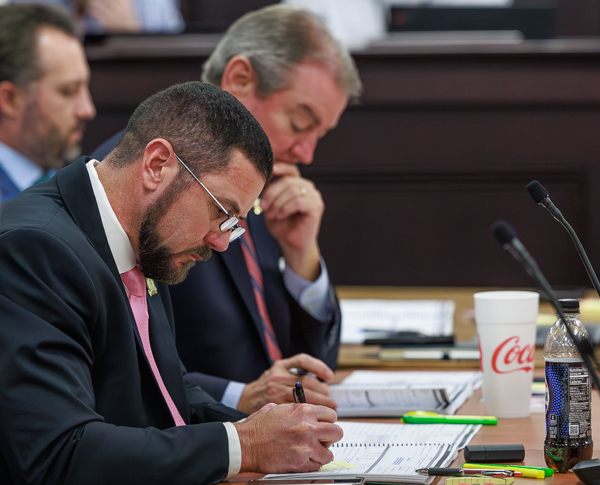
House Speaker Pro Tempore David Meade, R-Stanford, (foreground) looks over documents as a conference committee on the new state budget begins deliberations Friday. A high-resolution photo is available here.
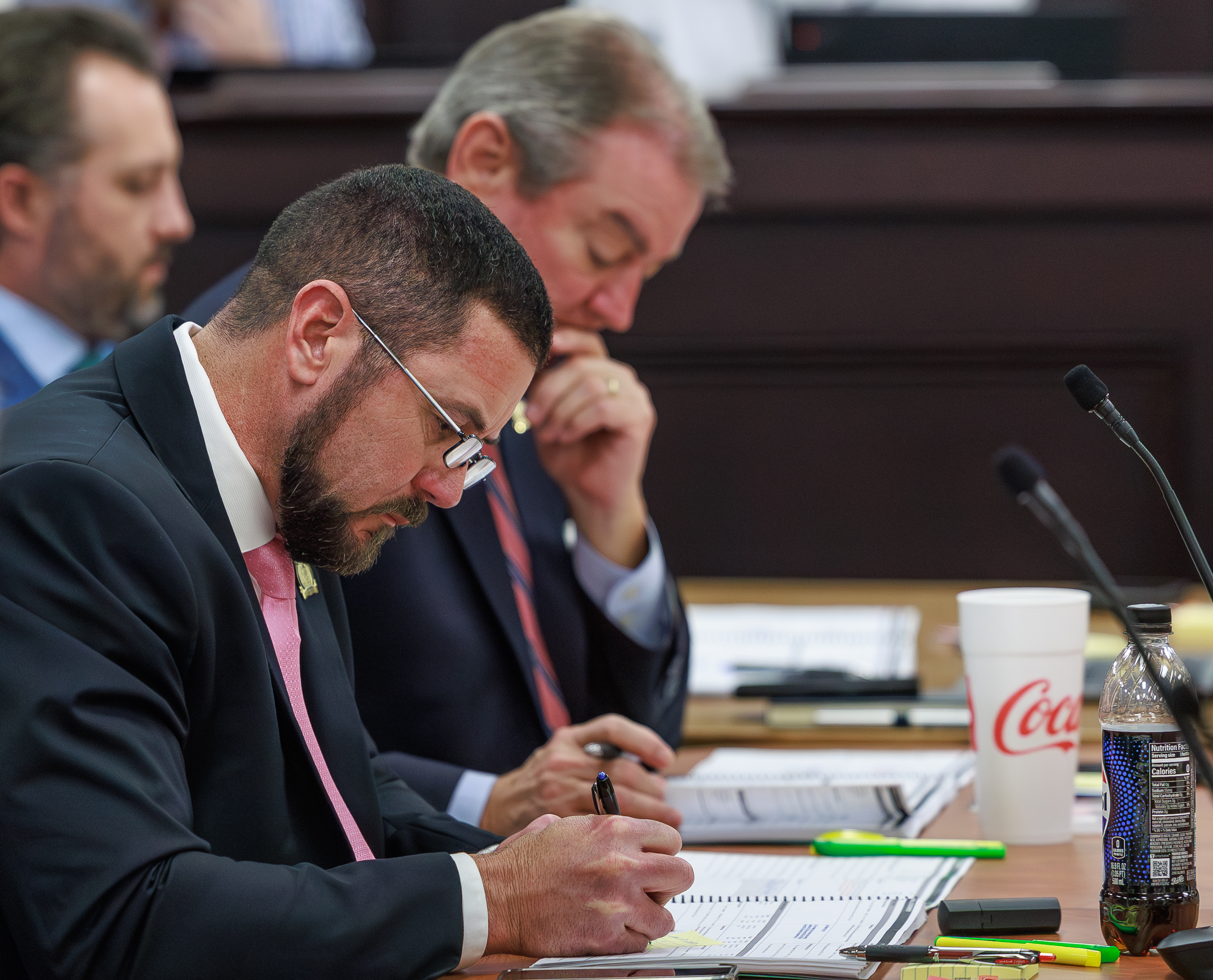
FRANKFORT — Lawmakers overrode a veto on a major education bill this week, advanced two key bills on firearms and kicked off negotiations between the House and Senate on a handful of bills related to the state’s next two-year spending plan.
The Kentucky General Assembly is inching ever closer to the veto recess – a 10-day period reserved on the calendar for the governor to consider vetoes of any recently passed legislation.
Lawmakers save two days at the end of the recess to reconvene and potentially override any vetoes the governor issued during the break.
The general assembly has already overridden two vetoes so far, including one this week on House Bill 1, which will clear the way for Kentucky to participate in the new federal educational tax credit program.
U.S. Congress created the program last year through passage of the One Big Beautiful Bill Act.
It allows taxpayers to contribute up to $1,700 to scholarship organizations that assist K-12 students in public and private schools. Families can use the funds for a wide range of education-related expenses, and taxpayers would receive a matching federal tax credit for contributions.
The House voted to override the governor’s veto on Monday and the Senate followed suit on Tuesday.
Meanwhile, both chambers moved forward on bills related to firearms that have garnered debate throughout the session.
The House on Tuesday passed House Bill 78, legislation that would codify federal standards outlined in the Protection of Lawful Commerce in Arms Act of 2005. It would prevent firearms manufacturers and sellers from facing lawsuits when guns are used in the commission of a crime.
The measure cleared the chamber 75-17 and has been sent to the Senate Judiciary Committee, which voted Thursday to advance a separate measure on Kentucky’s concealed carry law.
House Bill 312 would allow Kentuckians aged 18 to 20 years old to obtain a provisional concealed carry permit after undergoing a background check and firearms training.
The full Senate voted 30-7 to give the bill final passage on Friday following a debate over public safety, gun rights and the maturity of people in the age group. The bill now heads to the governor’s desk.
Many other high-profile bills made progress this week, including legislation on the death penalty, impeding first responders, nuclear energy, school governance, license plate readers, financial exploitation, literacy and gaming.
But for many, the state budget remains at the center of the action this year.
The Senate unveiled its versions of the state budget bills on Wednesday, passing the measures out of committee in the morning and off the Senate floor later in the day.
The House did not concur with the Senate’s changes to the bills, and the Senate refused to recede, setting the stage for a conference committee to begin meeting Friday afternoon to nail down a compromise.
The two chambers appear close on many priorities but differences remain on about two dozen points, including money for performance-based funding in higher education, payments to Medicaid managed care organizations, unfunded pension liabilities, funding for out-of-home care, raises for county sheriff’s deputies, and other provisions.
In a rare move, the House also voted 73-13 Friday to adopt articles of impeachment against Fayette Circuit Judge Julie Muth Goodman over allegations of abusing judicial discretion and authority in six court cases.
A House impeachment committee heard testimony from Goodman and her attorneys on Monday, and lawmakers debated the impeachment resolution for close to two hours before Friday’s vote.
The measure – House Resolution 124 – calls for the appointment of a committee to prosecute the articles of impeachment before the Senate.
Friday marked day 51 in this year’s session, and many other bills are making headway toward the finish line. Here’s a look some of the other bills that moved forward this week:
Motor Vehicle Racing – House Bill 425 would enhance the penalties for illegal street racing with increased fines and provisions for impounding and forfeiting vehicles used in the races. The House advanced the measure Monday.
Death Penalty Regulations – Under Senate Bill 251, the Kentucky Department of Corrections would no longer be required to promulgate death penalty regulations and could implement execution protocols and procedures through internal policy, memorandum or similar action. Supporters say the change would help end an impasse over death penalty regulations in the courts and clear the way for executions to resume in Kentucky. The Senate passed the bill Monday.
Kentucky State Police – Senate Bill 278 calls for the commissioner of Kentucky State Police to allow state troopers to participate in approved, off-duty law enforcement work for public entities, entities that receive state funding and certain ticketed events. The legislation cleared the Senate on Monday.
Missing Children – Senate Bill 289 would provide more flexibility to issue Amber Alerts when a child is missing and may be in danger. The Senate voted for the bill Monday.
KEES Scholarships – House Bill 298 would expand the eligibility requirements from the Kentucky Educational Excellence Scholarship program, allowing students enrolled in noncertified schools to obtain scholarships based on equivalent grade point averages. The House Postsecondary Education Committee passed the measure Tuesday.
Student Housing – House Bill 766 calls on Kentucky colleges and universities with on-campus living requirements to provide a formal exemption process for qualifying students. The bill seeks to allow more students to opt out of these requirements, potentially reducing overall education costs. The legislation received a nod from the House Postsecondary Education Committee on Tuesday.
Impeding a First Responder – Senate Bill 104 seeks to prevent interference or harassment of first responders. It would create a 25-foot safe zone around police, firefighters and others while they are performing their official duties. Individuals who remain in the zone could face criminal charges if they ignore an initial warning to move back. The House Veterans, Military Affairs and Public Protection Committee voted Tuesday to move the bill forward.
Hearing Aids – House Bill 164 would increase the coverage amounts that health insurance plans provide for purchasing hearing aids and related services for minors. The bill cleared the Senate Banking and Insurance Committee on Tuesday.
Nuclear Energy – Senate Bill 57 would create the Nuclear Reactors Site Readiness Pilot Program to help energy providers obtain licenses and permits related to site work for nuclear power projects. The program would provide up to $25 million in grant funding to each of three projects in Kentucky. The House Appropriations and Revenue passed the legislation Tuesday.
Autism Trust Fund – Senate Bill 69 would create an autism spectrum disorder trust fund administered by the Kentucky Cabinet for Health and Family Services. The fund could accept grants, appropriations and other types of contributions to support research and services. SB 69 received a favorable vote in the House Appropriations and Revenue Committee on Tuesday.
School Safety – House Bill 643 would allow school districts to implement a wearable panic alert system so that teachers and staff can silently notify first responders in the event of a security threat. The House voted Tuesday to move the bill forward.
Organ Donors – House Bill 510 aims to protect patients during the organ donation process by requiring additional verification steps before organ procurement can begin. It would also clarify that donor consent must be properly documented and that a patient must be formally declared dead before organs are donated. The Senate Health Services Committee passed the bill Wednesday.
Student Violence – Senate Bill 101 would mandate that local boards of education expel students for a minimum of 12 months when a student in grades 6–12 recklessly or intentionally causes or attempts to cause physical injury to a district employee on school grounds or at a school function. The measure cleared the House Primary and Secondary Education Committee on Wednesday.
Campaign Finance – House Bill 136 would allow the use of campaign funds to pay for the “reasonable costs” of security measures for candidates, office holders and family members. The Senate State and Local Government Committee advanced the legislation Wednesday.
License Plate Readers – House Bill 58 would limit the use of readers to largely public safety purposes, such as regulating parking, controlling access to secured areas, deterring crime and conducting criminal investigations. The state Transportation Cabinet could also use readers for toll and revenue collection and certain enforcement needs. HB 58 also would require data captured by automatic license plate readers to be deleted after 90 days, with limited exceptions for criminal investigations and other needs. The Senate Transportation Committee voted in favor of the bill Wednesday.
Financial Exploitation – House Bill 794 would increase the penalties for financially exploiting a person age 65 and older. The House passed the bill Wednesday.
Energy Study – House Joint Resolution 77 would direct the Kentucky Energy Planning and Inventory Commission to conduct a comprehensive assessment of coal resources and electricity affordability in the region. The study aims to provide lawmakers with research and data that could guide future energy and economic policy decisions affecting coal-producing communities. The measures cleared the House on Wednesday.
Medal of Distinction – House Bill 644 would create the Kentucky General Assembly Medal of Distinction and establish criteria and a selection process for the award. The bill won support on the House floor Wednesday.
Child Welfare – House Bill 778 proposes multiple changes to Kentucky law related to child welfare. It seeks to ensure safe and adequate foster care placements and that children in foster care are not placed with someone on the sex offender registry. Also under HB 778, child injuries caused by ingestion or inhalation of a controlled substance would be included in the definition of neglect, and neglect would be added to the child abuse statute. The House passed HB 778 on Wednesday.
Dismissed Eviction Records – House Bill 338 calls for the automatic expungement of dismissed eviction filings and would protect minors from being listed in eviction cases. The bill cleared the House on Wednesday.
School Bus Safety – House Bill 7 would allow school districts to install traffic cameras on school buses to help enforce laws against stop-arm traffic violations. The Senate Veterans, Military Affairs and Public Protection Committee passed the measure Thursday.
Public Utilities – Senate Bill 8 seeks to modernize the Kentucky Public Service Commission to better handle utility regulations, infrastructure investment and rate cases. Among many provisions, it would expand the commission from three to five members and establish professional qualification standards for members. The House Committee on Natural Resources and Energy passed the bill Thursday.
Alternative Sentencing – Senate Bill 122 aims to keep families intact when a parent is convicted of a felony. It would require Kentucky courts to consider alternative sentences for certain nonviolent felony convictions when the defendant is a primary caretaker of a dependent child. The House Families and Children Committee passed SB 122 on Thursday.
Dolly Parton’s Imagination Library – Senate Joint Resolution 54 calls on the Kentucky Department for Libraries and Archives and the state Cabinet for Health and Family Services to cooperate in exploring ways to increase enrollment in Dolly Parton’s Imagination Library. The resolution advanced out of the House Families and Children Committee on Thursday.
Expungement – Senate Bill 290 seeks to create an automatic procedure for courts to expunge convictions that meet the eligibility requirements under Kentucky’s expungement law. It would also waive a fee for requesting an expungement. The Senate Judiciary Committee voted for the bill Thursday.
Grooming – House Bill 4 would criminalize efforts to manipulate a minor into sexual contact with an adult, a practice known as “grooming.” HB 4 received a favorable vote in the Senate Judiciary Committee on Thursday.
School Communications – House Bill 67 seeks to clarify a law adopted last year regarding communications between school employees and students. The Senate Education Committee voted in favor of the bill Thursday.
Literacy and School Employee Misconduct – House Bill 253 would end the use of the three-cuing method, a system used to teach reading, in Kentucky schools by the 2029-30 academic year. The bill seeks to replace that model with evidence-based reading approaches that emphasize techniques like phonics, vocabulary and fluency. The latest version of the bill also includes a provision that would prohibit schools from entering into non-disclosure agreements with employees related to abusive misconduct involving a minor or student. Another section calls on schools to share information on disciplinary actions related to abusive conduct when applicants are considered for a job at another school. The Senate Education Committee moved the bill forward on Thursday.
Physician Residencies – Senate Bill 137 would allow the state Board of Medical Licensure to issue a provisional license to a physician who completed residency in a foreign country and can meet other requirements. The applicant would need to provide an offer of employment from a licensed health care provider located in an underserved area. The House Health Services Committee voted for the bill Thursday.
Pesticide Labeling – Under Senate Bill 199, pesticides that display a warning label approved by the U.S. Environmental Protection Agency will have met legal standards concerning the duty to warn consumers about potential health effects. The latest version of the bill applies only to products that have an agricultural use label. SB 199 cleared the House on Tuesday and received final passage in the Senate on Thursday.
Storm Shelter Rebates – Senate Bill 11 would create a residential safe room rebate pilot program that helps homeowners pay for building emergency storm shelters. The goal is to provide matching grants using money from the Federal Emergency Management Agency. The rebate fund would not include state appropriations. The bill won support in the House Veterans, Military Affairs and Public Protection Committee on Tuesday and cleared the House on Thursday. SB 11 has been delivered to the governor.
Sports and Charitable Gaming – House Bill 904 would overhaul multiple sections of Kentucky law on sports wagering and charitable gaming. Among other changes, the legislation would raise the sports wagering age from 18 to 21 and regulate fantasy contests. It would also ban proposition bets on Kentucky college athletes. The House passed the bill Thursday.
School Administrator Salaries – Senate Bill 2 would prohibit school administrators from receiving a percentage pay increase that is greater than the average percentage pay increase provided to classroom teachers in that district unless the increase is due to a significant change in job duties. The bill includes a waiver process for certain circumstances. SB 2 moved off the House floor Thursday and received final passage in the Senate on Friday.
Cannabis-Infused Beverages – Senate Bill 223 would prohibit open containers for cannabis-infused beverages in motor vehicles. It would also create a new permit that allows establishments already holding alcohol licenses to sell individual cannabis-infused beverages, by the drink, to consumers 21 and older. The Senate voted to advance the bill off the chamber floor Friday.
Sexual Assault Nurse Examiners – House Bill 134 aims to expand the availability of sexual assault nurse examiners across Kentucky. It calls for a statewide coordinator to recruit nurses, facilitate training and improve collaboration between hospitals, law enforcement and rape crisis centers. HB 134 cleared the Senate on Friday.
School Leadership – Senate Bill 4 would create a three-year training program that provides leadership development and mentorship opportunities for new school principals in Kentucky. The latest version of the bill would also create an improvement advisory process for school districts that have more than four schools identified for comprehensive support and improvement. Other sections would overhaul the governance of large school districts, designating two seats on the school board for appointees of the state treasurer, each with expertise in finance. The House Primary and Secondary Education Committee moved the bill forward on Wednesday, and the measure cleared the House on Friday.
Lawmakers are scheduled to reconvene on Tuesday for day 52 of the session.
Kentuckians can track the action through the Legislative Record webpage, which allows users to read bills and follow their progression through the chambers.
Citizens can also share their views on issues with lawmakers by calling the general assembly’s toll-free message line at 1-800-372-7181.
Senate gives final passage to firearms legislation
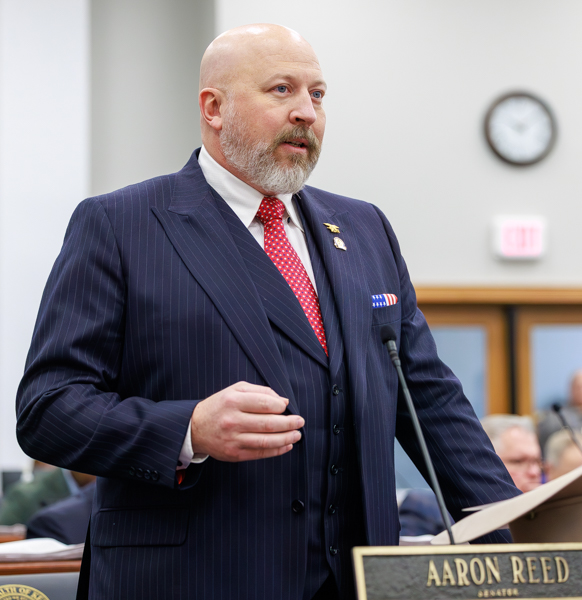
Sen. Aaron Reed, R-Shelbyville, speaks Friday on the Senate floor on House Bill 312, which relates to concealed firearms and deadly weapons. A high-resolution photo can be found here.
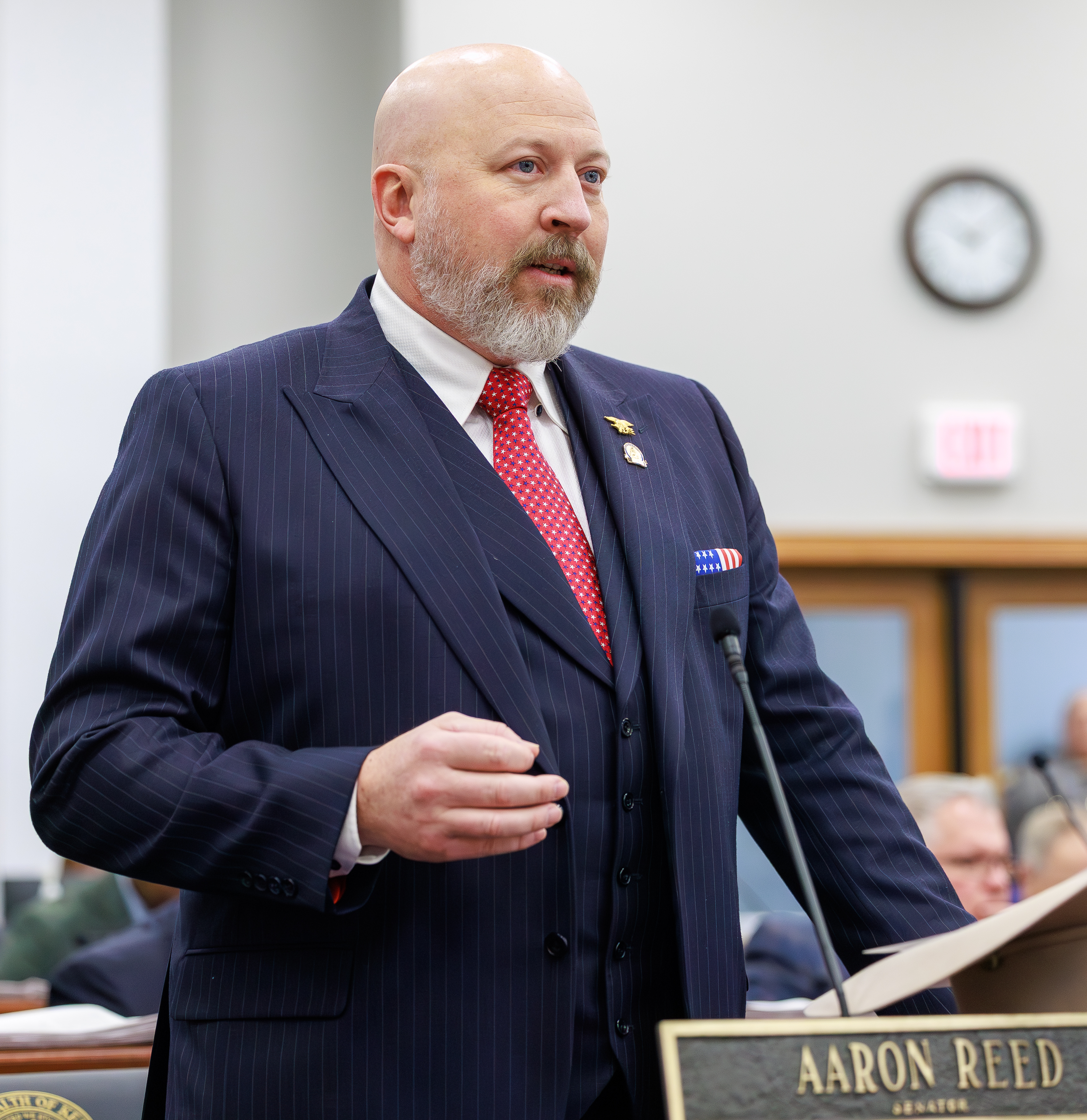
FRANKFORT — After debate on the Senate floor, legislators gave final passage to a bill Friday that would create a provisional concealed carry license for Kentuckians who are 18-20 years old, among other provisions.
Sen. Aaron Reed, R-Shelbyville, said House Bill 312 would require applicants to undergo a background check and firearms usage and legal training in full compliance with existing eligibility standards. The bill would not change purchase requirements for anyone 18-20 years old.
“Last session, this body passed Senate Bill 75, constitutional carry. It easily passed this freedom-loving Senate body, but it did not move in the House,” he said. “This year, House Bill 312 brings a more structured approach that I believe to be a fair compromise in the interest of serving our people.”
Reed said the legislation is a “responsible step forward,” and the provisional license is similar to a standard conceal carry license. The key difference is that it is valid only in Kentucky, while a standard license includes reciprocity with many other states, he said.
Reed said the bill is a “good faith step forward” that gives young adults a lawful path to exercise their rights. He pointed out that young people can join the military when they are 18 years old, and the bill would allow the same adults to carry responsibly at home.
“This matters because every adult deserves the right to defend themselves, especially our daughters who today are often left without that clear protection,” he said.
Senate Minority Caucus Chair Reginald L. Thomas, D-Lexington, spoke against the bill, noting that over the last two years, there has been a significant reduction in crime across the commonwealth and in the state’s major urban areas.
“In Louisville, in the last two years, violent crime is down 30%. The murder rate in Louisville is down about 25%. In the city of Lexington, violent crime is down over 50%. The murder rate is down about 40%,” he said.
Thomas said young adults hang out with younger children, and he expressed concern about the duration of training.
He also said the firearms training service members receive is not comparable to the “undefined amount” of training in the bill. The service members learn how to use a weapon properly, carefully and accurately, he said.
Sen. Danny Carroll, R-Paducah, also voted against the measure.
“I love freedom. I support the constitution. I support the Second Amendment, but there are simply some things that are better off left alone, and this is one of those things,” he said.
But Sen. Donald Douglas, R-Nicholasville, argued that Kentucky has an open carry law now that doesn’t require training.
“At least this bill adds background checks, mandates training and it is a provisional license only to be used in Kentucky,” he said.
Sen. Gex Williams, R-Verona, said he has 18-year-old granddaughters, and any 18-year-old can open carry now in Kentucky. But it would be safer for his granddaughters to carry a weapon in their purses, he said.
“And they can protect themselves from those 15-, 16-, 17-year-olds and 18-year-olds that are carrying concealed right now, against the law,” he said.
The bill now heads to the governor’s desk.
Provisional licenses for foreign doctors bill on the move
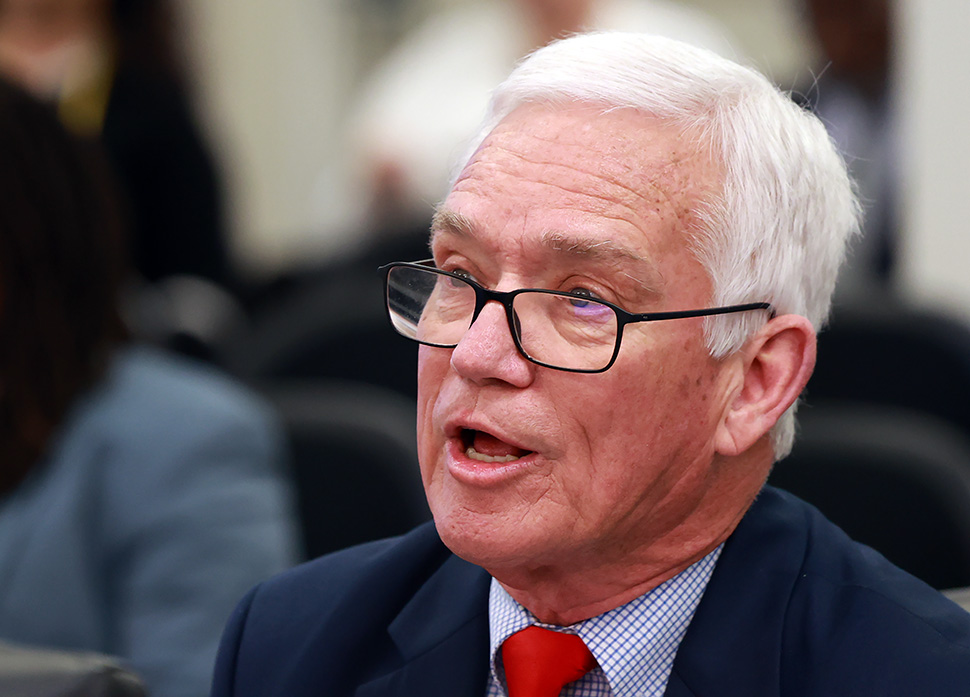
Sen. Stephen Meredith, R-Leitchfield, testifies Senate Bill 137 would create a pathway for foreign-trained doctors to practice medicine in Kentucky during Thursday’s House Health Services Committee meeting. A high-resolution photo can be found here.
FRANKFORT — A bill that would create a pathway for foreign-trained doctors to practice medicine in Kentucky advanced from the House Health Services Committee on Thursday.
Sen. Stephen Meredith, R-Leitchfield, is the primary sponsor of Senate Bill 173. He told the committee he hopes the legislation will be part of the solution to Kentucky’s physician shortage.
“It’s projected that we’re going to have a shortage of 3,000 physicians by 2030, and close to 650 of those are going to be primary care physicians,” Meredith said. “We already have eight counties that have no physicians in rural Kentucky, which is 41% of our population.”
Under SB 137, the state Board of Medical Licensure would be permitted to issue a provisional license to a physician who was educated and completed residency in a foreign country and can meet other requirements.
Specifically, the applicant for the provisional license would also need to provide an offer of employment from a licensed health care entity that is located in a medically underserved area, according to the bill.
Meredith said he worked with foreign-trained doctors during his career in health care.
“I had several foreign medical graduates who did an excellent job, not just in terms of medicine, but became a part of our community and our very fabric of life there,” he said.
Meredith told the committee foreign medical graduates graduate from accredited schools and complete accredited residency programs. To practice in the U.S., the physicians will have to be fluent in English, he added.
“They’re quite comparable to American physicians, and sometimes may even be superior,” Meredith said.
SB 137 is not the only piece of legislation this year that’s geared toward improving the physician shortage, but those efforts will require more time before Kentucky can begin to see results, Meredith said. He hopes SB 137 will be provide some more immediate relief.
Mack Howell, the chief operating officer for Owensboro Health Medical Group, testified alongside Meredith. He said Kentucky hospitals have a good vetting process when it comes to hiring physicians.
“I think it could be really a game changer for the state of Kentucky,” Howell added.
Adam Meyer, the health policy director for Cicero Action, said SB 137 would also ensure spots remain open for Kentucky medical school graduates who still need to complete a residency.
“We’re here to support Senate Bill 137 … and to stress the importance of not taking up valuable residency slots, finite residency slots for people that have already done a residency, so that clears that deck for others who may also need these residency slots,” he said.
Committee Chair Rep. Kimberly Poore Moser, R-Taylor Mill, said she appreciates Meredith’s work on SB 137.
“I think this creates a consistent, predictable path for individuals who are hoping to come to Kentucky, and we want to recruit those quality candidates,” she said.
The House Health Services Committee unanimously approved SB 137.
In explaining his “yes” vote, Rep. Robert Duvall, R-Bowling Green, said the legislation was one of the recommendations from the 2024 Workforce Attraction and Retention Task Force.
Rep. Josh Bray, R-Mount Vernon, and Rep. Mary Lou Marzian, D-Louisville, praised the bill for its potential to bring more doctors to rural areas.
“Back home, we were very fortunate that we were able to get a surgeon from a war-torn area who has been persecuted for his Christian beliefs,” Bray said. “The fact that we’ve got a general surgeon now practicing back in Rockcastle County is a game changer.”
Marzian said she hopes the bill is successful.
“I surely hope it really adds physicians and other practitioners to our rural areas, which is a desperate need,” she said.
SB 137 is now before the full House for consideration.
Committee passes bill aimed at reforming caregiver sentencing
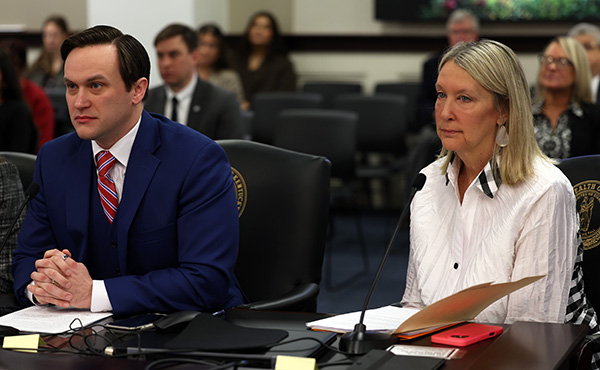
Sen. Julie Raque Adams, R-Louisville, (right) and Rep. Nick Wilson, R-Williamsburg, speak on Senate Bill 122 during Thursday’s meeting of the House Families and Children Committee. A high-resolution photo can be found here.
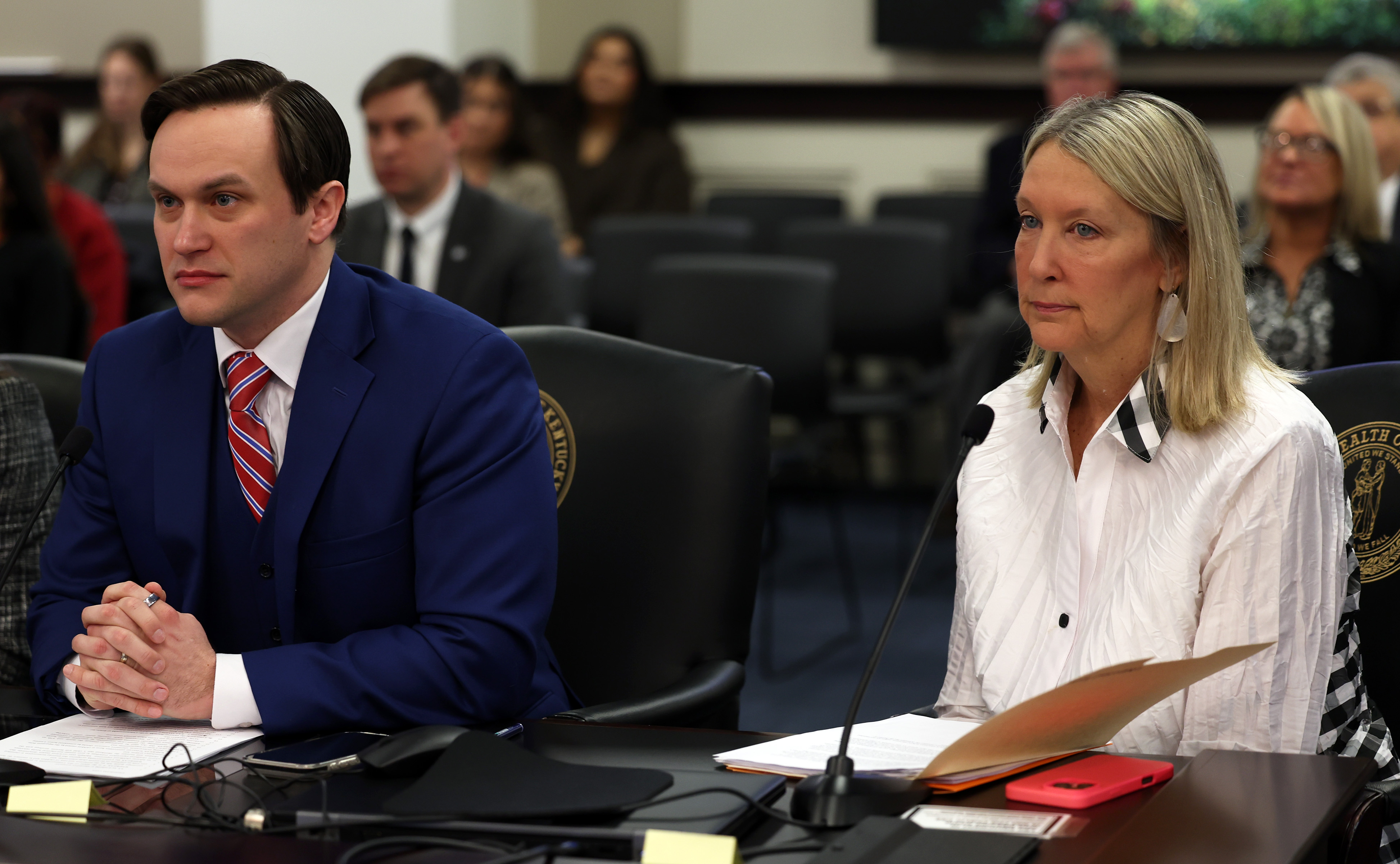
FRANKFORT — Legislation aimed at maintaining parent-child bonds for incarcerated caregivers passed the House Families and Children Committee on Thursday.
Senate Bill 122 would allow courts to consider alternative sentencing programs for individuals convicted of nonviolent offenses who are the primary caregivers of dependent children. The measure would also require participation in programs designed to support and preserve child-parent relationships during alternative sentencing.
Supporters say the bill is intended to reduce the long-term impact of incarceration on children while still holding offenders accountable through structured supervision, treatment and rehabilitation services.
Sen. Julie Raque Adams, R-Louisville, the bill’s primary sponsor, told lawmakers that while she introduced the legislation, much of the work to move it forward has been done in the House.
“Even though this has a Senate bill number attached, it’s Representative Wilson’s,” she said. “I want to give him all the credit because as a lawyer he has been able to participate in conversations that were not in my wheelhouse.”
Rep. Nick Wilson, R-Williamsburg, emphasized the importance of a quicker recovery process.
“If we can speed up that recovery process for any mothers, fathers, family members, then that would be a huge win for Kentucky.”
Lawmakers heard testimony from several Kentuckians who shared personal experiences with incarceration and its effects on families, particularly children separated from their primary caregivers.
Brittany Herrington, a mother who previously struggled with drug addiction, told the committee that access to treatment programs rather than incarceration could have significantly changed her life and her relationship with her child.
“I currently work with many mothers who aren’t getting a second chance, and their kids are currently wondering where their mothers are,” she said. “That is why this bill matters. It still holds people accountable, but it does so while keeping families together and gives parents a chance to recover before permanent damage is done to a family unit.”
Her son, Gavin Herrington, also spoke in support of the bill, describing the emotional toll of having a parent incarcerated.
“I’m lucky in one way. I was young when I lost my mom for that time, but I wasn’t so young that I forgot what it felt like to not be with her,” he said. “My mom wasn’t a bad mom, she was sick, and instead of getting help right away she was punished first.”
Another son of an incarcerated parent, Jayden Spence, told lawmakers that no child should have to experience the trauma associated with a parent battling addiction and navigating the criminal justice system.
“The trauma of it will probably never leave me, and I just don’t want others to feel the same way because it’s not necessary, it’s not needed,” he said. “These people can be helped, these children can be helped.”
Rep. Sarah Stalker, D-Louisville, shared her experience as a foster parent, describing the instability faced by children when a parent is incarcerated due to substance use.
“I remember sitting there on the side of his bed while he was crying because he didn’t understand why his mom was picking drugs over him and that’s what was causing her to be incarcerated,” she said. “It was a difficult conversation to try and explain about the powers of addiction and that’s not really what she wanted. It was heartbreaking, and anything we can do to avoid children having these really traumatic experiences, I will always be in favor of.”
Jessica Ashby, a mother who was pardoned by the governor, also spoke briefly in support of the legislation. Ashby said she remains without custody of her daughter and believes earlier access to treatment could have changed the trajectory of her life.
Wilson said the legislation is not about avoiding incarceration but about improving outcomes for families.
“Senate Bill 122 is not just about letting people out of jail; we all understand that. However, we’ve heard from two successful mothers who, given the opportunity, have turned their lives around. Senate Bill 122 is really about trying to help those opportunities happen while in probation as opposed to while in prison.”
The bill passed committee 14-0 and now moves to the House floor.
Senate committee advances school bus safety bill
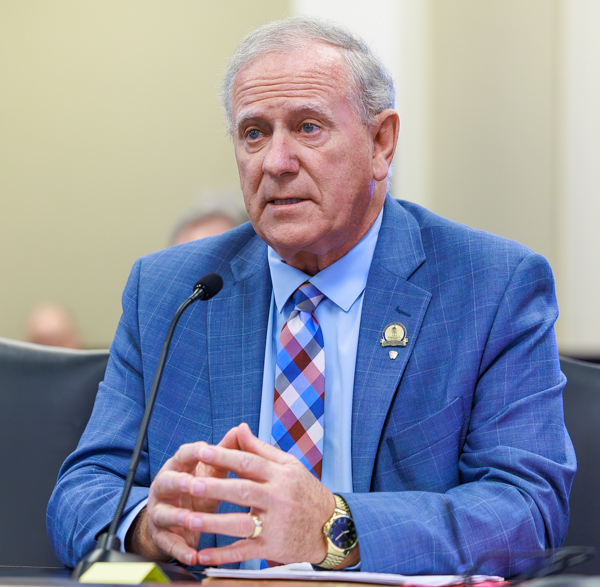
Rep. David Hale, R-Wellington, speaks on House Bill 7 during Thursday’s meeting of the Senate Veterans, Military Affairs and Public Protection Committee. A high-resolution photo can be found here.
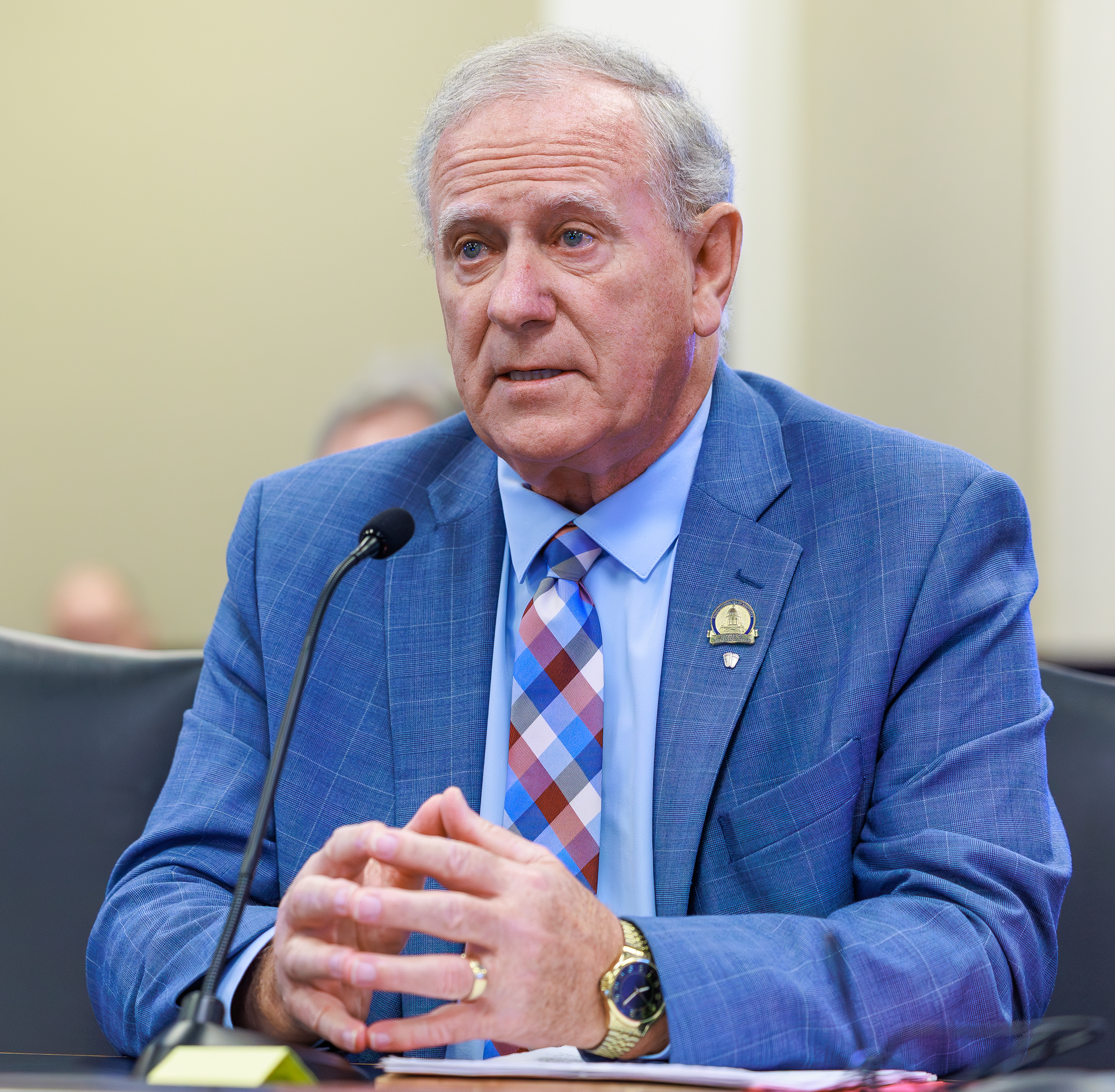
FRANKFORT — A Senate committee unanimously advanced a bill Thursday that would allow school districts to install camera systems on school buses to help curtail stop arm traffic violations.
Rep. David Hale, R-Wellington, is sponsoring House Bill 7, and he told the Senate Veterans, Military Affairs and Public Protection Committee that the school bus safety bill could lead to saving lives.
“What this bill does is it sets up an option for these districts to have these manufacturers or vendors install these cameras, which in turn then they would maintain. They would monitor. They would collect the data and the only time there would be a recording would be when the bus would be stopped,” he said.
Hale said when a bus’s stop arm is extended, the camera would record the loading and unloading processes, and once the arm retracts, the recording would stop.
Hale said HB 7 is extremely important to him because it relates to the safety of children and young people, and when he researched school bus-related violations, he became concerned.
“I’ve researched it a lot. I’ve collected a lot of data and I was alarmed. I mean I was actually astounded at the amount of violations that occur every day by people passing a school bus that is stopped, either loading or unloading children,” he said.
Hale said the state Department of Education worked a few years ago with bus drivers who completed a log one day to record how many violations occurred. The participating drivers recorded 1,600 violations that day, he said.
Hale said some districts already have stop arm cameras on their buses, but the cost is “astronomical.”
Hale said under HB 7, if there is a violation and a recorded violation is seen, that data is collected by the camera vendor and sent to local law enforcement officials.
To ensure the safety efforts are successful, Hale said law enforcement groups would have to be involved in the efforts. He said officers, deputies and others would conduct further action using license plate numbers. A letter would be sent to the person associated with the license plate number with the date, location and time of the alleged offense. He said there’s also an appeals process.
“But if not, and they wanted to pay that fine, the fine would be a $300 fine on the first offense and a $500 fine of any offense thereafter in the next three-year period,” Hale said. “That would be collected by the school. That would go to the schools, which in turn would help them pay off what the expense of these cameras would be to install, which is thousands of dollars for each bus.”
The bill stipulates that recorded images related to a violation are considered private and would be accessible only by authorized personnel.
Committee Chair Sen. Matthew Deneen, R-Elizabethtown, said changes adopted by the committee Thursday narrow down the bill to its intent, which is only related to the traffic violation of going around a school bus when the stop sign is extended.
Sen. Gary Boswell, R-Owensboro, thanked Hale for his work on the bill and said it’s long overdue.
“I’ve been watching the testimony over a long period of time. Years ago, when I was in the insurance business, one of the first, most difficult cases I had was a young man walked in front of a school bus to get on the school bus in Daviess County,” he said, noting that the individual was struck and killed.
Sen. Lindsey Tichenor, R-Smithfield, also thanked Hale for the legislation. She said it would be interesting to see the data from participating districts to determine if a fiscal note is needed and ensure more students in Kentucky would be safe.
Sen. Matt Nunn, R-Sadieville, said he had privacy concerns when the bill was first filed, but decided he would support it after looking at Thursday’s changes and hearing testimony.
“We know the severity, the potential severity if something were to occur,” he said. “But the volume in which we’re seeing it, and that’s how you measure risk. You measure severity times volume. That’s how you measure risk. And so, you helped me understand the risk here today.”
The bill now heads to the full Senate.
Budget bills advance with strong support
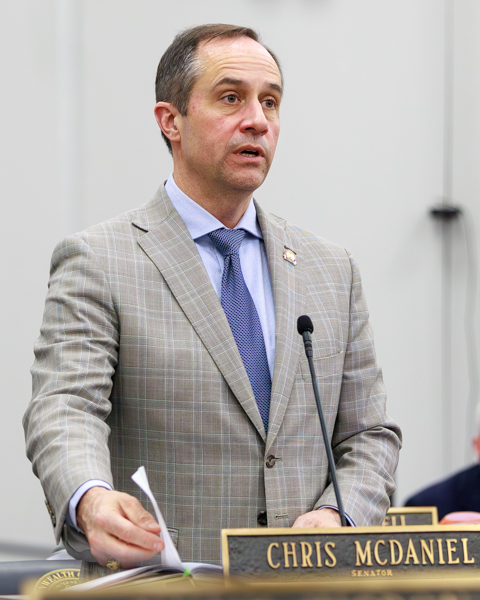
Sen. Christian McDaniel, R-Ryland Heights, speaks Wednesday on the Senate floor. McDaniel, chair of the Senate Appropriations and Revenue Committee, gave an overview of budget-related legislation. A high-resolution photo can be found here.
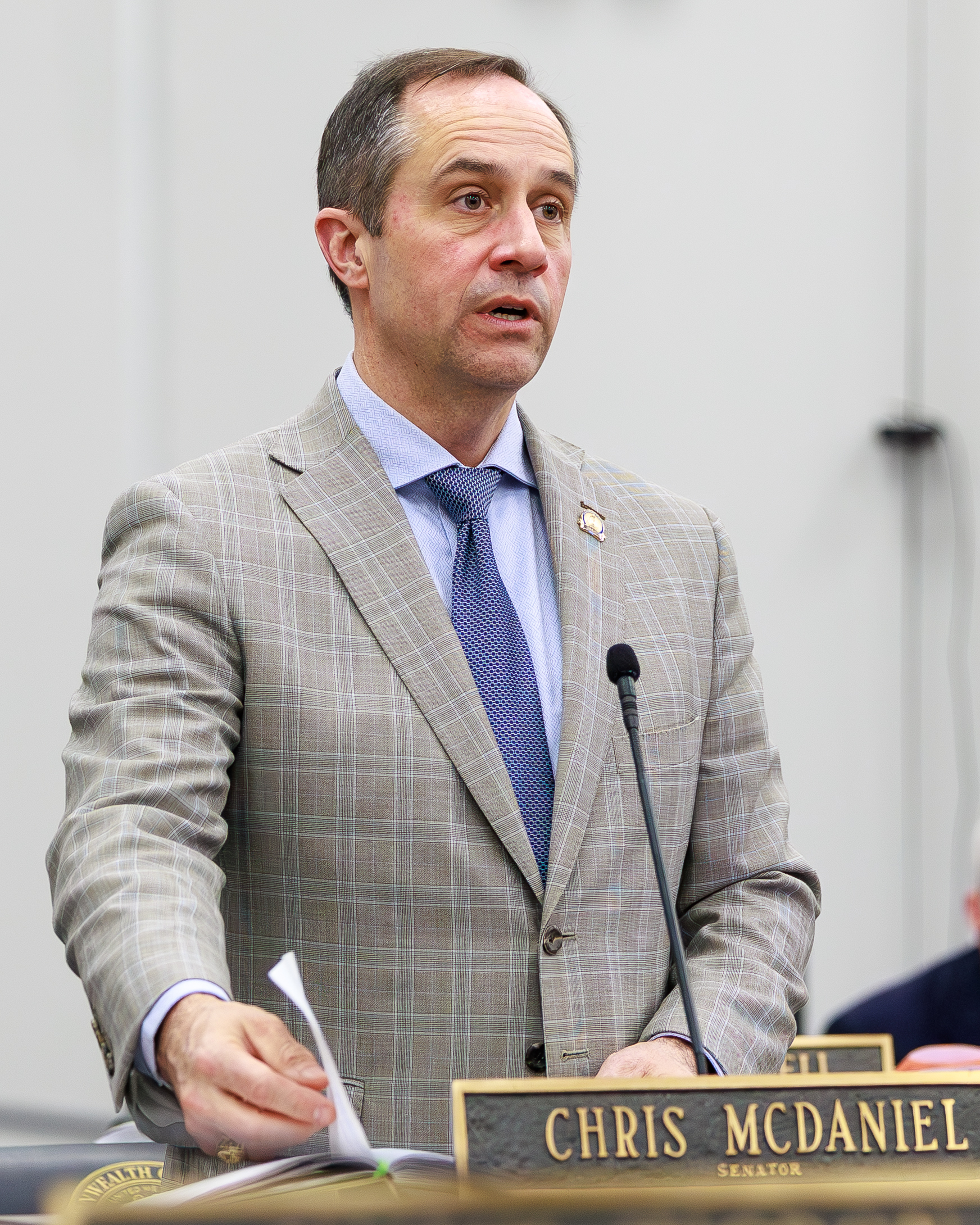
FRANKFORT — The Senate advanced four budget-related bills Wednesday with bipartisan support as legislators anticipate the next two-year spending cycle for state government.
All four bills – House Bill 500, House Bill 503, House Bill 504 and House Bill 900 – received unanimous approval from the Senate Appropriations and Revenue Committee earlier in the day. The Senate unanimously approved its versions of HB 500, HB 503, HB 504 and HB 900 in the afternoon.
Sen. Christian McDaniel, R-Ryland Heights, chairs the Senate Appropriations and Revenue Committee. He said it was a pleasure for him to unveil priorities the Senate has for the commonwealth’s spending, and it took teamwork from many people to get the budgets to this point.
“We have written these budgets at times that were exceptionally tight. We have written these budgets during the period of global pandemic and we have written these budgets as things got better,” he said on the Senate floor. “But throughout it…as a chamber, I could not be more proud of our current and past members because we did things with discipline. We made tough decisions when we had to. We crafted our budgets for the future, not just for today.”
HB 500 represents the state executive branch’s budget. The large bill includes scores of appropriations toward education, health care, social services, public safety, economic development, infrastructure and other priorities.
Some of the appropriations in HB 500 as the bill cleared the Senate include:
- Increases in the Support Education Excellence in Kentucky (SEEK) funding formula for schools. The base per-pupil guarantee would increase to $4,626 in the first year and $4,774 in the second year
- Increases of 2% per year in the Kentucky Law Enforcement Foundation Program Fund training incentive
- $5 million each year for school safety initiatives
- Full funding for actuarially required contributions to the Kentucky Teachers’ Retirement Fund
- $145 million to help address unfunded pension liabilities under the Kentucky Public Pensions Authority
- Around $80 million to provide a 13th check for qualified state retirees
- An annual salary increase of 2% per fiscal year for state employees
- $100 million to meet growing federal requirements of the SNAP program
- $42 million in bond funds for a prison education program through the Kentucky Community and Technical College System
- $44 million to support out-of-home care
The bill calls for reductions to many state agencies at 4% in 2027 and 7% in 2028.
However, there are exemptions, including for the Kentucky Department of Veterans Affairs, SEEK funding, Kentucky Educational Television, Medicaid benefits, family resource youth centers, juvenile justice, Kentucky State Police, the Department of Revenue, the Office of the Secretary of State, adult correctional institutions, the Department of Public Advocacy and the Kentucky Teachers’ Retirement System, McDaniel said.
HB 503 is the legislative branch budget, and McDaniel said it would provide a 2% raise for each fiscal year for all employees.
He said the judicial branch has not completed a comprehensive salary study from which the legislature can fund employee pay. In the first budget year, $1 million is earmarked for the study, he said.
Senate Democratic Floor Leader Gerald A. Neal, D-Louisville, said he has appreciated the budget process, discussions and exchange of information. However, he said not everyone will be satisfied, including himself.
“Today, I’ll be casting a yes vote with respect to this legislation, but I think it’s important to make it clear that this is a very complex process. There’s a lot involved here, and coming together and agreeing collectively and speaking in one voice is very important,” he said.
Sen. Shelley Funke Frommeyer, R-Alexandria, said the budget-planning process has taken countless hours.
“It is such a beneficial time that goes through the interim. We join together with our partners in the House and really puzzle through what’s working and what’s not working,” she said.
HB 504 is the judicial branch budget and includes 2% raises over the biennium along with full funding for nine judges who were added in 2022.
McDaniel said HB 900 relates to the Budget Reserve Trust Fund and is a work-in-progress. It would create a framework for the members of the Senate and House to have input from their local districts and then collaborate on state and local investments.
“We have members from across the commonwealth, across the partisan divide and across many other spectrums who have submitted requests for one-time funding. Those will continue to be addressed as this process moves along. As has been said so many times, this is a lengthy process with many stops along the way, and we will continue consultation as it relates to this bill as it moves,” he said.
Budget bills will now return to the House, and if the House does not concur with the Senate’s changes, the chambers will appoint a committee of lawmakers to hash out the differences.
Bill on financial exploitation of seniors passes the House
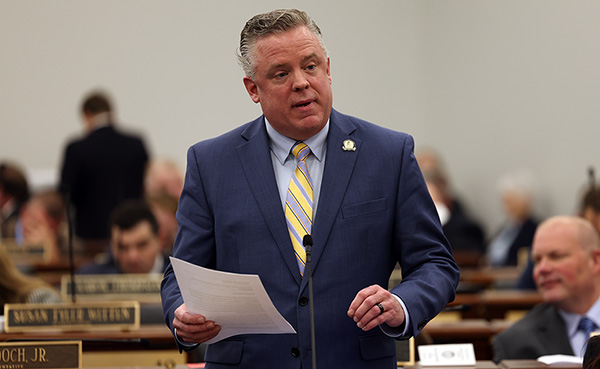
Rep. Matt Lockett, R-Nicholasville, speaks on House Bill 794 on the House floor on Wednesday. The legislation would change how the state handles financial exploitation of seniors. A high-res version is available here.
FRANKFORT — Legislation that would strengthen Kentucky laws against financially exploiting senior citizens passed the House on Wednesday.
House Bill 794 aims to protect senior citizens by increasing the felony class and punishment for people convicted of offenses related to financial exploitation of those 65 and older. It would also allow the Kentucky attorney general to file for extradition of individuals in another state who have committed financial exploitation of older Kentuckians.
The measure also seeks to implement training procedures for licensed investment advisors, requiring two hours of training that can count toward their mandated 12 hours.
Bill sponsor Rep. Matt Lockett, R-Nicholasville, highlighted the scope of financial exploitation schemes commonly conducted on seniors.
“Common scams reported by older Kentuckians involve tech support fraud, romance schemes, and grandparent government impersonation schemes,” he said. “These schemes can sometimes be very elaborate, convincing seniors to withdraw thousands of dollars from investment accounts, bank accounts and retirement accounts.”
During discussion, Rep. Sarah Stalker, D-Louisville, asked whether the bill would affect training requirements for bank tellers or apply only to licensed investment advisors.
Rep. Michael Meredith, R-Oakland, responded with insight into current training protocols for bankers and tellers.
“I think this would specifically just apply to licensed investment advisors,” he said. “However, banks and their employees are trained on these things annually as well to try and prevent these frauds.”
Stalker shared an experience involving a friend’s parents who were victims of financial exploitation.
“It stated with a simple phone call,” she said. “It was so bad that she went to the bank not once but twice to make withdraws.”
She said a bank teller recognized suspicious activity and contacted the family.
Rep. Adrielle Camuel, D-Lexington, shared a similar experience with her mother.
“She was almost a victim of a very large scheme. The scams, the stories that Kentuckians are being told are so realistic,” she said. “We don’t know how they had specific information, including bank information, her address, other personal information, and I cannot thank you enough for bringing this.”
Lockett urged members to vote yes on the measure, emphasizing the importance of protecting vulnerable groups.
The legislation “is a great step in protecting those 65 and older and from financial exploitation,” he said. “It’s time we send a very strong message to those that would pray on our senior adults.”
The bill passed 94-0 and now moves to the Senate.
Bill to expel students who assault school staff advances
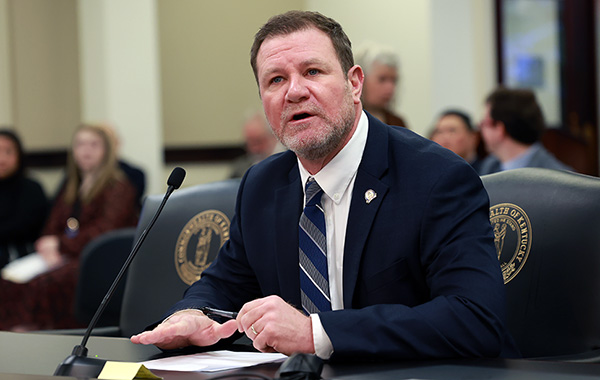
Sen. Matt Nunn, R-Sadieville, explains Senate Bill 101 would require school boards to expel students who assault school staff during Wednesday’s House Primary and Secondary Education Committee meeting. A high-res version is available here.
FRANKFORT — A Senate bill that calls on school boards to expel students who intentionally physically harm teachers advanced from the House Primary and Secondary Education Committee on Wednesday.
Sen. Matt Nunn, R-Sadieville, said he’s spent the last two years working on Senate Bill 101. He said the legislation is the result of a conversation he had with a friend who told him her physical safety was at risk at school due to violent students who do not fear authority or consequences.
“That just weighed on me,” Nunn said about the conversation. “I don’t think anybody should fear for their physical safety when they’re going to work, particularly our school teachers who do so much for our communities and young people.”
Nunn said there are around 5,000 assaults against educators reported each year in Kentucky. One constituent told Nunn her student-involved assault left her seriously injured and ended her career. The student had assaulted a pregnant teacher before and was only suspended for a few days, she said.
Under SB 101, school boards would be required to expel students in grades 6 through 12 for at least 12 months if the student “recklessly, with a deadly weapon or dangerous instrument, or intentionally caused or attempted to cause physical injury to a school district employee on school property or at a school function.”
Rep. Josh Calloway, R-Irvington, told Nunn he’s heard concerns from some people in his district about how the bill may impact students with disabilities.
“When somebody has a disability, can you talk a little bit about what that looks like? Because we know that probably a lot of those ‘assaults’ take place in those types of classes,” Calloway said.
Nunn said the disability would be taken into consideration, noting circumstances for students with an individualized education program (IEP).
“If a student has an IEP, and this behavior is considered a manifestation of that disability that led to the IEP, they’d be exempted,” Nunn said. “For example, if they don’t have a disability that would lead to physical violence, then they wouldn’t have that exemption.”
For the other students, SB 101 lays out “pretty strict” guidelines on what additional educational services can be offered to an expelled student, said Committee Chair Rep. Chris Lewis, R-Louisville.
“It has to be offered at a location other than the school the student would have otherwise attended where the teacher would be, so there could be no contact with the teacher that assault occurred on,” Lewis added. “They would be provided no transportation. If they’re that dangerous, they don’t need to be riding with other kids on the school bus.”
The bill would also prohibit expelled students from participating in extracurricular activities.
Additionally, Lewis said the new version of SB 101 “clarifies the nature of infractions that shall result in expulsion by tying them back to current statute, and a district is not limited to using only these when they expel students.”
Rep. Adrielle Camuel, D-Lexington, said she worries about the children who wouldn’t have alternative transportation if the school district doesn’t provide it.
“I do worry about the kids who are struggling with trauma and maybe acting out inappropriately in school, that denying transportation for kids who don’t have transportation or are rural will impact them disproportionately,” she said. “Just looking at an equity standpoint there.”
Nunn said he would worry about the safety of the other children if the expelled child was able to ride the bus.
“Someone who will assault a teacher, he or she will certainly assault another student,” Nunn said. “While I do have compassion for that student, I also have compassion for other people in that classroom, in that building or on the school bus.”
Lewis said there is nothing in the bill that would prohibit a school district from providing other services to the expelled students.
“I want to make that clear. In this bill, it says that if you have good services in your district that will keep this kid away from the teacher that was assaulted, the employee, whoever it might be, you can still do exactly what you were doing,” Lewis said.
SB 101 will now go before the full House for consideration after receiving a 14-1 vote in committee.
In explaining his “yes” vote, Rep. David Hale, R-Wellington, thanked Nunn for the bill.
“We need to be more concerned about the students that are behaving and protect them and their teachers than the ones that are causing all this trouble,” he added.
House passes firearm liability bill
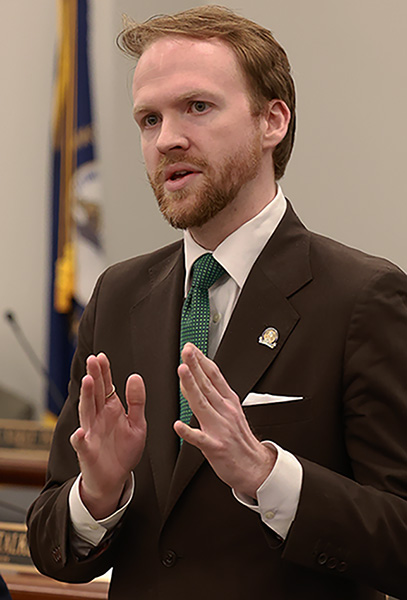
Rep. T.J. Roberts, R-Burlington, speaks on House Bill 78 on the Kentucky House floor on Tuesday. The bill would prevent firearms manufacturers and sellers from facing certain lawsuits. A high-res version is available here.
FRANKFORT — A bill that would prevent firearms manufacturers and sellers from facing certain lawsuits advanced off the Kentucky House floor on Tuesday.
Rep. T.J. Roberts, R-Burlington, said House Bill 78 codifies federal standards outlined in the Protection of Lawful Commerce in Arms Act of 2005.
Roberts said HB 78 is the opportunity to protect the Second Amendment just as House Bill 222 in 2022 was an opportunity for the House to protect the First Amendment.
The Protection of Lawful Commerce in Arms Act makes clear “that criminals should be held liable for their actions, not manufacturers, not sellers,” he added.
Manufacturers and sellers could be held liable under the legislation for product defects and if other gun laws are violated, like the Gun Control Act of 1968 or the National Firearms Act, Roberts added.
“Whenever it comes to someone who followed the law and sold a firearm and it is later used in a crime, the criminal is the person who should be held accountable,” he said. “… We have to ensure that our constitutional rights are protected from extra-legal efforts to suppress these basic rights.”
Rep. Erika Hancock, D-Frankfort, spoke against the legislation. She argued that Congress recognizes through the Protection of Lawful Commerce in Arms Act “that the courts should still be able to examine cases where there are allegations that a company violated laws governing the sale and marketing firearms.”
Hancock said she believes HB 78 would limit the ability of the courts and prevent full accountability for gun violence.
“Accountability strengthens public safety,” she said. “When negligent practices exist anywhere in the chain of conduct, our justice system should have the ability to examine it.”
Rep. Lisa Willner, D-Louisville, joined several other lawmakers in expressing opposition to HB 78. She said the bill does nothing to protect Kentuckians from gun violence.
“This bill is designed to protect gun manufacturers, but it does nothing to protect ordinary Kentuckians,” she said.
Roberts said Kentucky law already establishes the right for victims to seek accountability from criminal actions.
“If you are injured, if you suffer harm as a result of the actions of a criminal, you can sue that criminal,” he said. “Whom you should not be able to sue are the people that had ultimately nothing to do with it.”
Roberts said when someone drove a truck into a crowd in Wisconsin, he believes no one sued the truck manufacturer or dealer after the incident.
Additionally, Roberts said he believes HB 78 is designed to protect the Second Amendment.
“If there’s no industry, if there is no supply, that right may as well not even exist, and that is the point of this bill,” he said.
While explaining his “yes” vote on the legislation, Rep. Daniel Elliott, R-Danville, said he agrees with Roberts.
“These lawsuits are designed to bankrupt the gun industry,” Elliott said. “If that were to ever happen in this country, that would end the Second Amendment.”
HB 78 will now go before the Senate after a 75-17 vote.
House advances legislation on pesticide warning labels
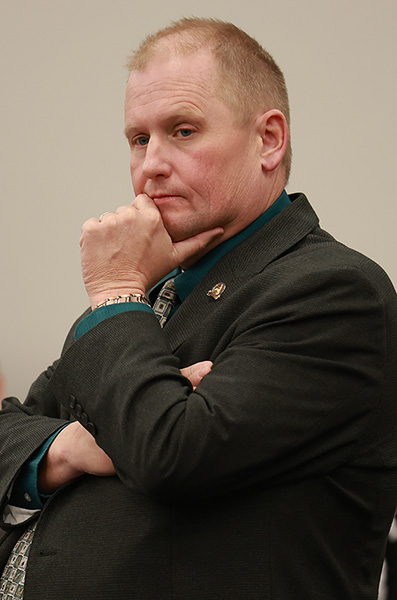
Rep. Ryan Bivens, R-Hodgenville, listens to discussion on Senate Bill 199 on the House floor Tuesday. The legislation would change legal duties related to pesticide labeling. A high-res version is available here.
FRANKFORT — A bill that would clarify legal duties around warning labels on certain pesticides advanced off the House floor Tuesday.
Under Senate Bill 199, pesticides that display a warning label approved by the U.S. Environmental Protection Agency will have met legal standards concerning the duty to warn consumers about potential health effects.
Before voting Tuesday, the House amended the legislation to limit the bill’s effect to only products that have an agricultural use label.
Rep. Ryan Bivens, R-Hodgenville, presented the measure on the chamber floor on behalf of the bill’s primary sponsor, Sen. Jason Howell, R-Murray.
Bivens said the legislation would essentially give the EPA control of warning labels for agricultural pesticides and establish “the EPA-approved label as a manufacturer’s duty to warn in a lawsuit.”
The bill precipitated significant debate on the House floor as supporters argued that the proposed law would protect much-needed agricultural products from dubious lawsuits. Critics charged that the change would prevent Kentuckians from seeking financial damages if a pesticide leads to illness.
House Majority Floor Leader Steven Rudy, R-Paducah, pointed to his farming experience, highlighting the struggles farmers face in the current economy.
“We are desperate in agriculture right now. We just want to have the products that we need to feed you,” he said. “The farmers that I know — who are heroes and are begging for this legislation — are saying, ‘just give me a fighting chance.’”
But Rep. Matthew Lehman, D-Newport, said that the bill would limit litigation from consumers harmed by potentially dangerous products.
“This bill forces a judge’s hand to dismiss the case at the very start. You can’t prove that they are hiding the truth if this law slams the door shut before you’re even allowed to look behind it,” he said. “You can sue them if you have proof, but it makes it impossible to find that proof.”
Rep. Anne Gay Donworth, D-Lexington, urged fellow legislators to vote no, saying the product should be studied before legislation is passed. She pointed to one large pesticide company that has settled nearly $20 billion in lawsuits over the past few years.
“That’s a lot of money to dole out if you don’t think you’ve done anything wrong,” she said. “We know throughout history that corporations can’t be trusted to do the right thing by the consumer. I urge you to not pass this legislation until we have more research on the products.”
House Majority Caucus Chair Suzanne Miles, R-Owensboro, emphasized using products as intended. She noted that even toothpaste labels tell consumers to seek medical advice if they swallow excessive amounts.
“That’s what we’re talking about today — simply follow the labeling directions,” she said. “We don’t know, but we’re hoping that all the tests that go into anything we consume, that we expose our loved ones to, are safe. We have burdens that we employ on these people to do our testing.”
Bivens underscored that the bill does not grant businesses immunity, but ensures that claims brought forward are valid.
“As a person who uses these products on a daily basis, if I ever discover that one of them has made me sick — my family sick or my employees sick — I can guarantee you that I’m going to go after someone,” he said. “But I have to be able to prove it.”
SB 199 will need to return to the Senate for concurrence on changes made to the legislation in the House before it can go to the governor’s desk.
Halo Act advances from House committee
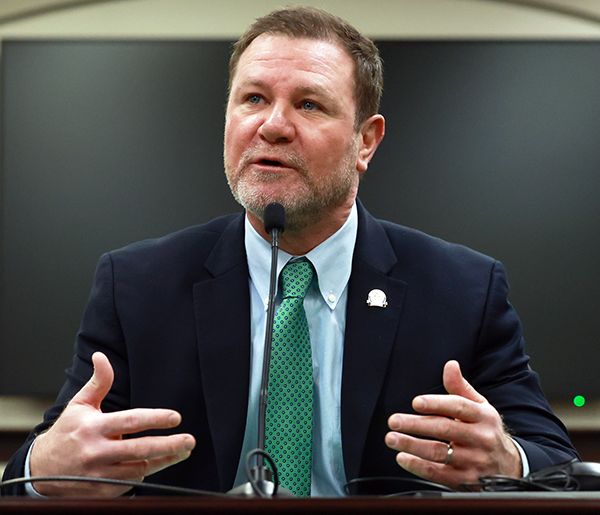
Sen. Matt Nunn, R-Sadieville, speaks on Senate Bill 104 during Tuesday’s House Veterans, Military Affairs and Public Protection Committee meeting. The bill would enforce a 25-foot safety barrier for first responders. A high-res version is available here.
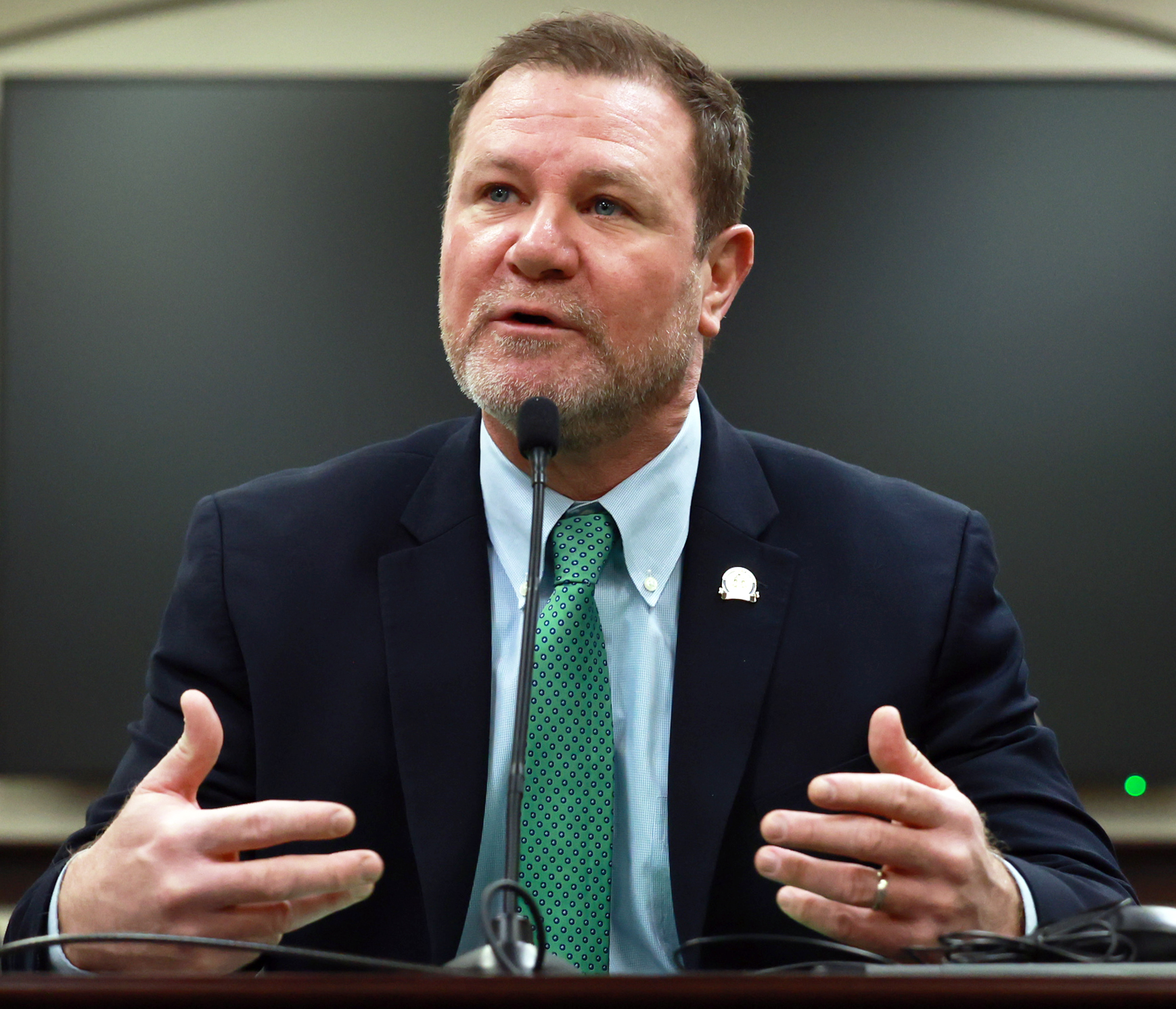
FRANKFORT — A Senate bill that would make impeding a first responder a crime advanced from the House Veterans, Military Affairs and Public Protection Committee on Tuesday.
Senate Bill 104, also known as the Halo Act, is sponsored by Sen. Matt Nunn, R-Sadieville. He said the legislation will keep first responders safer by establishing a 25-foot safety barrier while first responders are performing their official duties.
“That’s an important thing to do because we want to make sure those first responders are safe and able to perform their duties in an efficient, effective manner,” Nunn said. “We also want to make sure the people they’re protecting and serving in that moment are safe and able to receive that care and that service protection in this efficient and effective manner.”
Nunn said law enforcement may be the first thing that comes to mind when people think of SB 104, but emergency medical service responders (EMS) would also benefit from this legislation.
“I had one EMS worker from Louisville drive from Louisville to Frankfort just to personally thank me for filing this bill,” Nunn said. “He told me about how often in the course of his duties he and the other people on his crew are interfered with or impeded while they’re just trying to provide someone with life-saving care.”
Under SB 104, a first responder would issue a verbal warning to bystanders to maintain a 25-foot distance from where the first responders are working.
If the person violates that verbal warning with the intent to impede or interfere with a first responder’s duties, threaten the first responder with physical harm, or harass the first responder, then they could be charged with a crime, according to the bill.
Impeding a first responder would be a class B misdemeanor on the first offense, a class A misdemeanor on the second or third offense, and a class D felony for each subsequent offense, according to the legislation.
Rep. Steve Bratcher, R-Elizabethtown, asked Nunn how he determined 25-feet should be the minimum barrier between first responders and bystanders.
Nunn said that distance is the standard based on research into similar laws in other states.
In addition to police, fire and EMS personnel, SB 104 includes a probation or parole officer, a university police officer and an airport police officer in its definition of first responder. Rep. Adam Moore, D-Lexington, said he doesn’t think of a probation or parole officer as typical first responder.
Nunn disagreed.
“There are instances where they are performing their official duties and they have been interfered with, so we just want to make sure we widen it to protect people who are performing their duties, but also the people who are receiving that service in the moment,” Nunn said.
Moore said he also has concerns how the bill may impact a person’s ability to record law enforcement if a law enforcement officer or agency considers recording law enforcement activity as harassment.
SB 104 defines harassment as “means to intentionally engage in a course of conduct directed at a first responder which causes or is intended to cause substantial emotional distress in the first responder and serves no legitimate purpose.”
“If law enforcement officers, especially if ICE is in Kentucky and operating, and they’re being recorded peacefully by just a cell phone that we all have in our pocket, would that be viewed as harassment under this law?” Moore asked.
Nunn said it would be up to the officer, but bystanders could still have the option to record law enforcement activity from a distance.
“In that instance, it’s the officer’s judgement, and I would say in that instance the person should step away 25 feet and record from a 25-foot distance,” Nunn said. “And all of our cameras nowadays are strong enough that you can get a good image from 25 feet away.”
Nunn said bystanders who feel an officer has given them an inappropriate instruction, can get the officer’s name and badge number and report the officer to their supervisor.
Rep. John Blanton, R-Salyersville, thanked Nunn for filing SB 104, and said the legislation is especially needed in a time when many people are more concerned about posting a video on the internet for fame than helping people in need.
“This is just common sense. Let first responders do their job,” Blanton said, adding if someone feels the need to record video, do it from 25 feet away.
SB 104 is now before the full House for consideration after receiving a 12-1 vote with one pass vote.
Committee passes bill aimed at reducing college housing costs
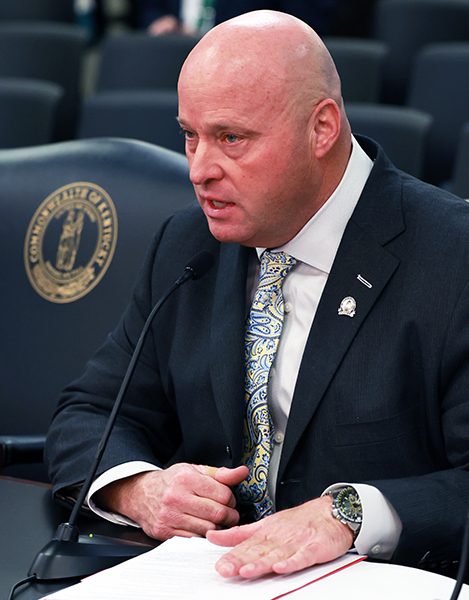
Rep. Steve Bratcher, R-Elizabethtown, speaks on House Bill 766 during Tuesday’s meeting of the House Postsecondary Education Committee. A high-res version is available here.
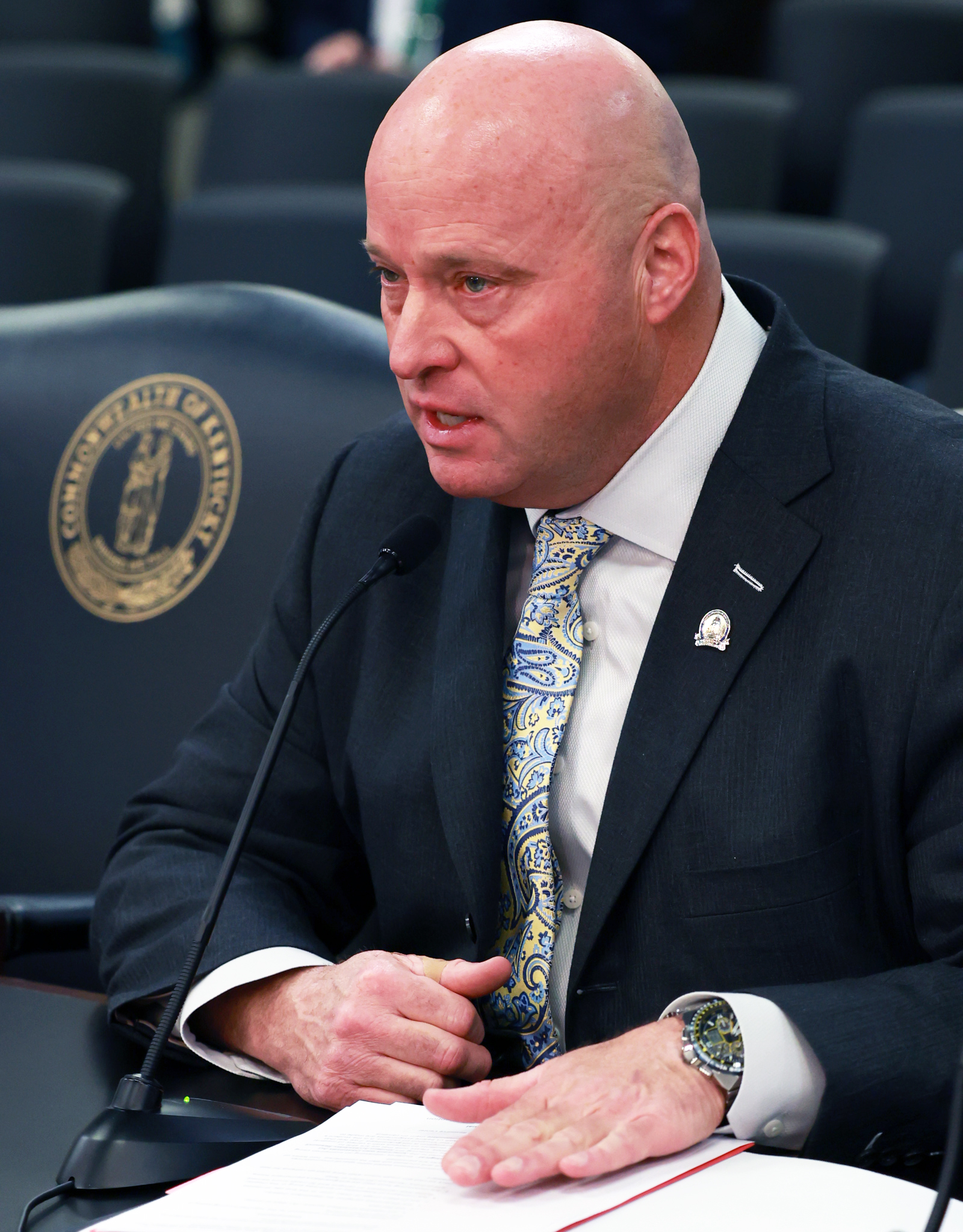
FRANKFORT — Legislation aimed at lowering college costs by expanding mandatory housing exemptions passed the House Postsecondary Education Committee on Tuesday.
House Bill 766 calls on Kentucky colleges and universities with on-campus living requirements to provide a formal exemption process for qualifying students. The bill seeks to allow more students to opt out of these requirements, potentially reducing overall education costs.
Under the proposal, exemptions would apply to students who live within a specific number of miles from campus, active-duty military members who may be deployed and other qualifying groups.
The measure would also require universities to track how many students request housing exemptions and how many are approved.
Bill sponsor Rep. Steve Bratcher, R-Elizabethtown, said mandatory campus housing can significantly increase the cost of attendance.
“In some cases, the amount you pay for a dorm is more than what you pay for tuition,” Bratcher said. “Then the schools are mandating that students live in these dorms.”
Bratcher also raised concerns about the condition of some campus housing facilities.
“In some areas, these dorms are substandard living conditions,” he said. “They have multiple code violations, and some of them date back 30 to 50 years.”
Some lawmakers questioned whether loosening housing requirements could affect student engagement and retention.
Rep. Kim Banta, R-Fort Mitchell, said universities have historically required on-campus living because it improves retention and involvement rates.
“Universities did this because they found that their retention rate was stronger if a student lived their first year on campus,” Banta said. “It wasn’t pure greed that led to this — it was a data-driven decision.”
Bratcher responded that today’s student populations are made up of more nontraditional students.
“It’s not just the traditional student who graduates high school and goes straight to college anymore,” he said. “We’re seeing a decrease in traditional students attending four-year institutions, and more are entering the workforce first and returning to school later with tuition assistance.”
Rep. Shane Baker, R-Somerset, echoed that sentiment.
“Not all students fit neatly in a box.,” he said. “Anything we can do to come along side students and help them to reach their goal, to attain their education, and to do so affordably and not saddled with a mountain of debt is a win in my opinion.”
Lawmakers also discussed how many institutions already offer exemptions.
Committee chair, Rep. James Tipton, R-Taylorsville, emphasized the importance of mandating the exemption process.
“All of them that have a requirement do have some kind of exemption process in place; however, those processes vary quite a bit,” he said.
Rep. Candy Massaroni, R-Bardstown, said the bill could also reduce costs tied to mandatory meal plans.
“When you are mandated to live in a dorm, you are also mandated to get the meal plan, which is very expensive,” she said. “I think this is going to help a lot of families.”
Bratcher said students should have the autonomy to decide where to live.
“In my opinion, you should not be mandated to live in a college dorm,” he said. “At 18 years old, you can make the decision about where to live while attending college.”
The committee approved the bill unanimously, 14-0. It now heads to the full House for consideration.
House votes to crack down on illegal street racing
Rep. Beverly Chester-Burton, D-Shively, spoke on House Bill 425 on the House floor on Monday. The bill would strengthen penalties for illegal street racing. A high-res version is available here.
FRANKFORT — A bipartisan effort to crack down on illegal street racing advanced off the Kentucky House floor on Monday.
Rep. Beverly Chester-Burton, D-Shively, is the primary sponsor of House Bill 425. She said the legislation addresses a growing problem that puts lives at risk.
“Street racing is not harmless entertainment,” Chester-Burton said. “It threatens the safety of drivers, passengers, pedestrians and entire neighborhoods. When people turn our public roads into racetracks, the consequences can be devastating.”
HB 425 seeks to strengthen the penalties for illegal street racing by increasing fines and allowing for jail time, Chester-Burton said, adding the proposed penalties match the seriousness of the behavior.
Illegal street racing would result in a $1,000 fine or up to 30 days in jail or both on the first offense, according to the legislation. Any motor vehicle used would be impounded for at least six months.
Upon a second or subsequent offense, a person found guilty of street racing would face a $2,000 fine or 30 days in jail or both. Any motor vehicle used would be forfeited to the state and be destroyed or sold at public auction, according to the legislation.
“The goal here is simple: create a real deterrent so people understand that putting lives at risk on our roads will come with serious consequences,” Chester-Burton said.
Rep. Michael Sarge Pollock, R-Campbellsville, is a cosponsor of HB 425. He said the bill is a “good piece of legislation.”
“I vote ‘absolutely’ on this bill,” Pollock added.
House Majority Caucus Chair Suzanne Miles, R-Owensboro, said she would love to vote “yes” on HB 425, but there is one provision of the legislation she does not support.
“I am not for the destruction of property, so I will be a ‘no’ today,” she said.
Rep. Deanna Gordon, R-Richmond, and Rep. Chris Fugate, R-Chavies, said they had concerns about how the bill may affect legal, recreational street racing in Eastern Kentucky.
“In the past, we have passed legislation regarding the Backroads of Appalachia and some street racing that they do. Will this affect that in anyway?” Gordon asked.
Fugate said he would vote “no” on HB 425 without a clear answer on how the legislation impacts Backroads of Appalachia.
After some quick research, House Majority Whip Jason Nemes, R-Middletown, who is also a primary cosponsor of the bill, said Backroads of Appalachia would not be impacted.
“It doesn’t affect the program my friends are worried about in Appalachia because they have a permit to engage in what they’re doing,” Nemes said. “This is something that is unlawful and that would not be unlawful.”
HB 425 will now go before the Senate for consideration after a 75-19 vote.
This Week at the State Capitol (3-13-26)
Sen. Craig Richardson, R-Hopkinsville, (left) and Sen. Brandon J. Storm, R-London, confer on the Senate floor during Friday’s proceedings. A high-resolution photo is available here.
FRANKFORT — The Kentucky General Assembly is entering the last weeks of the 2026 legislative session, and scores of bills are inching closer to final passage, including a battery of measures moving this week on child protection.
More than 250 bills have passed at least one chamber so far, and many have begun advancing on the opposite side of the legislature.
Measures on school salaries, sexual assault nurse examiners, school employee sick leave, status offenders, pesticide labeling and affordable housing are all nearing the finish line.
Others on social media, doctor shortages, impaired driving and civil rights made headway in the chambers this week before lawmakers gaveled out on Friday – day 46 of the 60-day session.
On the local level, many officials were undoubtedly watching action in the House on Tuesday when a budget proposal for the Kentucky Transportation Cabinet and separate measures on the state road plan cleared committee and advanced off the House floor.
Those proposals are now in the hands of the Senate, which is drawing up its version of the next two-year spending plan for the state executive, judicial and legislative branches of government.
Budget proposals are expected to receive significant discussion over the next two weeks as lawmakers seek an accord between the House and Senate before breaking for this year’s veto recess.
Early this week, lawmakers overrode the first gubernatorial veto of the session, allowing House Bill 314 to become law. The legislation transfers oversight of the Kentucky Communications Network Authority to the Commonwealth Office of Technology and establishes a new director and governing board.
Legislators also advanced multiple bills throughout the week that are designed to promote child welfare, improve child care or otherwise enhance legal safeguards for young people.
Among them was House Bill 6, which proposes a broad overhaul of the regulatory framework for Kentucky’s child care sector. Specifically, it seeks to modernize the system, enhance data collection, and improve access and quality of services. The Senate Families and Children Committee advanced the bill Tuesday.
On Thursday, the House Families and Children Committee advanced House Bill 778, proposing multiple changes to Kentucky law related to child welfare.
The legislation aims to ensure safe and adequate foster care placements and that children in foster care are not placed with someone on the sex offender registry. Also under the bill, child injuries caused by ingestion or inhalation of a controlled substance would be included in the definition of neglect, and neglect would be added to Kentucky’s child abuse statute.
The Senate Veterans, Military Affairs and Public Protection Committee took up Senate Bill 289 on the same day. That bill that would provide more flexibility to issue Amber Alerts when a child is missing but authorities do not have proof of an abduction.
The Senate Judiciary Committee – also on Thursday – advanced a measure on homicides that result from child abuse. Under Senate Bill 138, child abuse that results in a death would qualify as a capital offense in Kentucky law.
Other bills gaining momentum included efforts to improve school safety and combat child pornography. Another measure involves an effort to protect children from addictive features and profile-based advertising on large social media platforms.
House Bill 227 would call on platforms to use existing technology to estimate the age of young account holders and ensure parental consent. It also would require platforms to limit features designed to keep young users engaged for extended periods, such as infinite scrolling, autoplay video and certain push notifications and personal metrics.
That bill cleared the House on Monday in a sweeping show of unity across the majority and minority caucuses.
Lawmakers have 11 session days scheduled on the calendar before the veto recess, and dozens of bills are continuing to gain ground in the legislative process. Here’s a look at some of the other bills moving forward this week:
Workplace Violence in Health Care – House Bill 713 seeks to combat workplace violence in health care facilities. Among several provisions, it calls on health facilities to annually verify that they maintain workplace safety plans and assessments and provide violence prevention training to staff. The bill cleared the House on Monday.
Physician Shortages – Senate Joint Resolution 116 would direct the University of Kentucky, the University of Louisville and Eastern Kentucky University to work together in meaningful ways to alleviate physician shortages in underserved areas of the state. The Senate advanced the resolution Monday.
Medal of Distinction – House Bill 644 would create the Kentucky General Assembly Medal of Distinction and establish criteria and a selection process for the award. The House Committee on Veterans, Military Affairs and Public Protection gave the bill a go ahead on Tuesday.
Cannabis-Infused Beverages – Senate Bill 223 would create a new permit that allows establishments already holding alcohol licenses to sell individual cannabis-infused drinks to consumers 21 and older. The Senate Licensing and Occupations Committee passed the legislation Tuesday.
Intoxicating Products – House Bill 9 seeks to streamline the regulatory and taxation framework for intoxicating products, including alcohol, cannabis-infused beverages, hemp-derived cannabinoids and other products like kratom. It would also establish a new 4% regulatory retail licensing fee on alcoholic and cannabis-infused beverages beginning in July 2027. The bill advanced out of the House Appropriations and Revenue Committee and off the House floor on Tuesday.
Research Fund – Senate Bill 6 would appropriate $150 million to an endowed research fund to support research collaboration and innovation across Kentucky universities. The bill cleared the Senate on Tuesday.
Constitutional Amendments – Senate Bill 262 seeks a change to the state constitution regarding how proposed constitutional amendments appear on the ballot. Instead of printing the full text of the proposed amendment on the ballot, SB 262 seeks to have the proposal appear in the form of a ballot question or summary that clearly and accurately states the substance and effect of the amendment. The Senate advanced the measure Tuesday.
School Administrator Salaries – Senate Bill 2 would prohibit school administrators from receiving a percentage pay increase that is greater than the average percentage pay increase provided to classroom teachers in that district. The bill includes a waiver process for certain circumstances. The House Primary and Secondary Education Committee approved the bill Wednesday.
Sexual Assault Nurse Examiners – House Bill 134 aims to expand the availability of sexual assault nurse examiners across Kentucky. It calls for a statewide coordinator to recruit nurses, facilitate training and improve collaboration between hospitals, law enforcement and rape crisis centers. The legislation cleared the Senate Health Services Committee on Wednesday.
School Employee Sick Leave – Under Senate Bill 124, school districts would have the option to let employees voluntarily cash in sick days. Employees would need to maintain a minimum of 15 sick days, but could cash in additional days at 30% of their current pay rate. The bill would also allow teachers to use sick days for religious holidays that do not appear on the school calendar. The legislation won support in the House Primary and Secondary Education Committee on Wednesday.
School Safety – House Bill 643 would allow school districts to implement a wearable panic alert system so that teachers and staff can silently notify first responders in the event of a security threat. The House Primary and Secondary Education Committee advanced the legislation on Wednesday.
Sports and Charitable Gaming – House Bill 904 would overhaul multiple sections of Kentucky law on sports wagering and charitable gaming. Among other changes, the legislation would raise the sports wagering age from 18 to 21 and regulate fantasy contests. It would also ban proposition bets on Kentucky college athletes. The House Licensing, Occupations and Administrative Regulations Committee advanced the bill on Wednesday.
Motor Vehicle Racing – House Bill 425 would enhance the penalties for illegal street racing with increased fines and provisions for impounding and forfeiting vehicles used in the races. The legislation received a favorable vote in the House Judiciary Committee on Wednesday.
Status Offenders – Senate Bill 170 would create a four-year pilot program in up to 10 school districts to help address barriers to school attendance. It also aims to strengthen diversion of status offenders using Responsive Interventions to Support and Empower (RISE) teams and increased family involvement. The bill on Wednesday cleared the House Judiciary Committee.
Dismissed Eviction Records – House Bill 338 calls for the automatic expungement of dismissed eviction filings and would protect minors from being listed in eviction cases. The House Judiciary Committee voted in support of the bill Wednesday.
Pesticide Labeling – Under Senate Bill 199, pesticides that display an EPA-approved label will have satisfied state laws related to the duty to warn consumers. The bill includes an exception for manufacturers that knowingly mislead the EPA about potential health risks. The House Agricultural Committee passed the bill Wednesday.
Locally-Grown Food – Senate Bill 5 would make it easier for Kentucky schools to purchase locally-grown food for student meals. It seeks to lift some procurement requirements and better connect students with the agricultural economy. The legislation cleared the House Agricultural Committee on Wednesday.
Financial Exploitation – House Bill 794 would increase the penalties for financially exploiting a person age 65 and older. The House Banking and Insurance Committee passed the measure Wednesday.
Impaired Driving – Under Senate Bill 66, a suspect in an impaired driving case who refuses to submit to a blood test would have their driver’s license suspended at the time of arraignment. If the person is convicted, their license will be subsequently suspended by the state Transportation Cabinet. The bill would require the cabinet to maintain records of moving traffic convictions for 10 years. It would also add clonazepam, cyclobenzaprine and fentanyl to the list of drugs that, when detected in a driver’s blood, could lead to an impaired driving conviction. The Senate passed the bill Wednesday.
Civil Rights – Among several provisions, House Bill 468 would align state disability protections with the federal Americans with Disabilities Act Amendments Act of 2008. It would also move certain adjudicative functions from the Kentucky Commission on Human Rights to the courts. The legislation cleared the House on Wednesday.
Abuse of a Corpse – Senate Bill 221 would make clear that knowingly purchasing, selling, or transferring a corpse, or part of one, after the corpse has been authorized for cremation or burial would be a class D felony in the commonwealth. The bill advanced out of the Senate on Wednesday.
Kentucky State Police – Senate Bill 278 calls for the commissioner of Kentucky State Police to allow state troopers to participate in approved, off-duty law enforcement work for public entities, entities that receive state funding and certain ticketed events. The Senate Veterans, Military Affairs and Public Protection Committee approved the bill Thursday.
Death Penalty Regulations – Under Senate Bill 251, the Kentucky Department of Corrections would no longer be required to promulgate death penalty regulations and could implement execution protocols and procedures through internal policy, memorandum or similar action. Supporters say the change would help end an impasse over death penalty regulations in the courts and clear the way for executions to resume in Kentucky. The Senate Judiciary Committee passed the bill Thursday.
Child Pornography – House Bill 366 would expand child pornography prohibitions to include computer-generated images of a minor. It would also require someone convicted of possessing or viewing child pornography to serve 85% of their criminal sentence. The Senate Judiciary Committee advanced the bill Thursday.
Affordable Housing – House Bill 333 would allow faith-based organizations to build small-scale affordable housing units on property located near religious institutions. The Senate Committee on Economic Development, Tourism and Labor approved the measure on Thursday.
School-Based Medicaid Program – House Bill 583 aims to help school districts recover Medicaid funding for medically necessary services that are provided by school nurses to Medicaid-enrolled students with parental consent. The bill cleared the House Health Services Committee on Thursday.
Drug Treatment Map – Senate Joint Resolution 74 would direct the Legislative Research Commission and state agencies to create a statewide fiscal map of substance use disorder programs and funding sources to support better policy, budgeting and accountability. The House State Government Committee passed the resolution Thursday.
Prostheses and Orthoses Coverage – Senate Bill 97 seeks to expand coverage in health benefit plans for prostheses and orthoses. The Senate Banking and Insurance Committee passed the legislation Tuesday, and the bill cleared the Senate on Thursday.
Hospital Police Departments – House Bill 248 would provide hospitals the option to create an onsite police department staffed by fully sworn, trained and certified law enforcement officers. The bill won support in the House Committee on Veterans, Military Affairs and Public Protection on Tuesday and advanced off the House floor Friday.
Ibogaine Research – Senate Bill 77 calls for creation of an ibogaine research and intellectual property fund to be administered by the Department of Agriculture. It would allow the department to partner with a drug developer to conduct clinical trials on using ibogaine to treat substance use disorders. The Senate Committee on Health Services passed the bill Wednesday, and the full Senate followed suit on Friday.
Prison Education Programs – House Bill 5 would establish the Kentucky Community and Technical College System Prison Education Program, seeking to reduce recidivism and support workforce development. KCTCS would partner with the state Department of Corrections to build and operate a vocational training campus at Northpoint Training Center. The Senate Judiciary Committee passed the bill Friday.
The general assembly is scheduled to reconvene on Monday.
Kentuckians are urged to check the general assembly's calendar for updates. Kentuckians can track the action through the Legislative Record Webpage, which allows users to read bills and follow their progression through the chambers.
Citizens can also share their views on issues with lawmakers by calling the general assembly's toll-free message line at 1-800-372-7181.
Death penalty-related bills approved by Senate committee
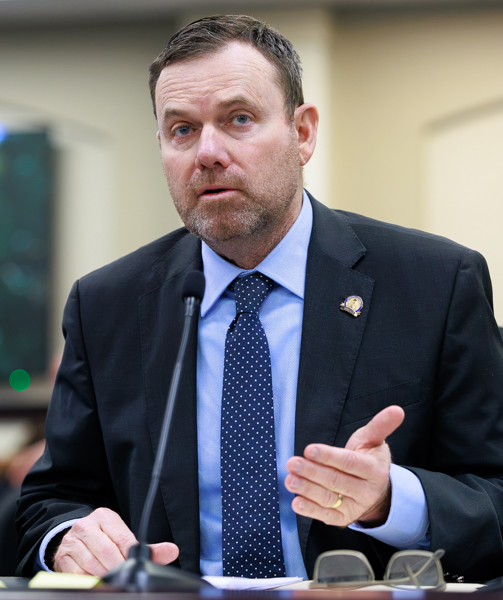
Sen. Stephen West, R-Paris, speaks on Senate Bill 251, which relates to the death penalty. A high-res version is available here.
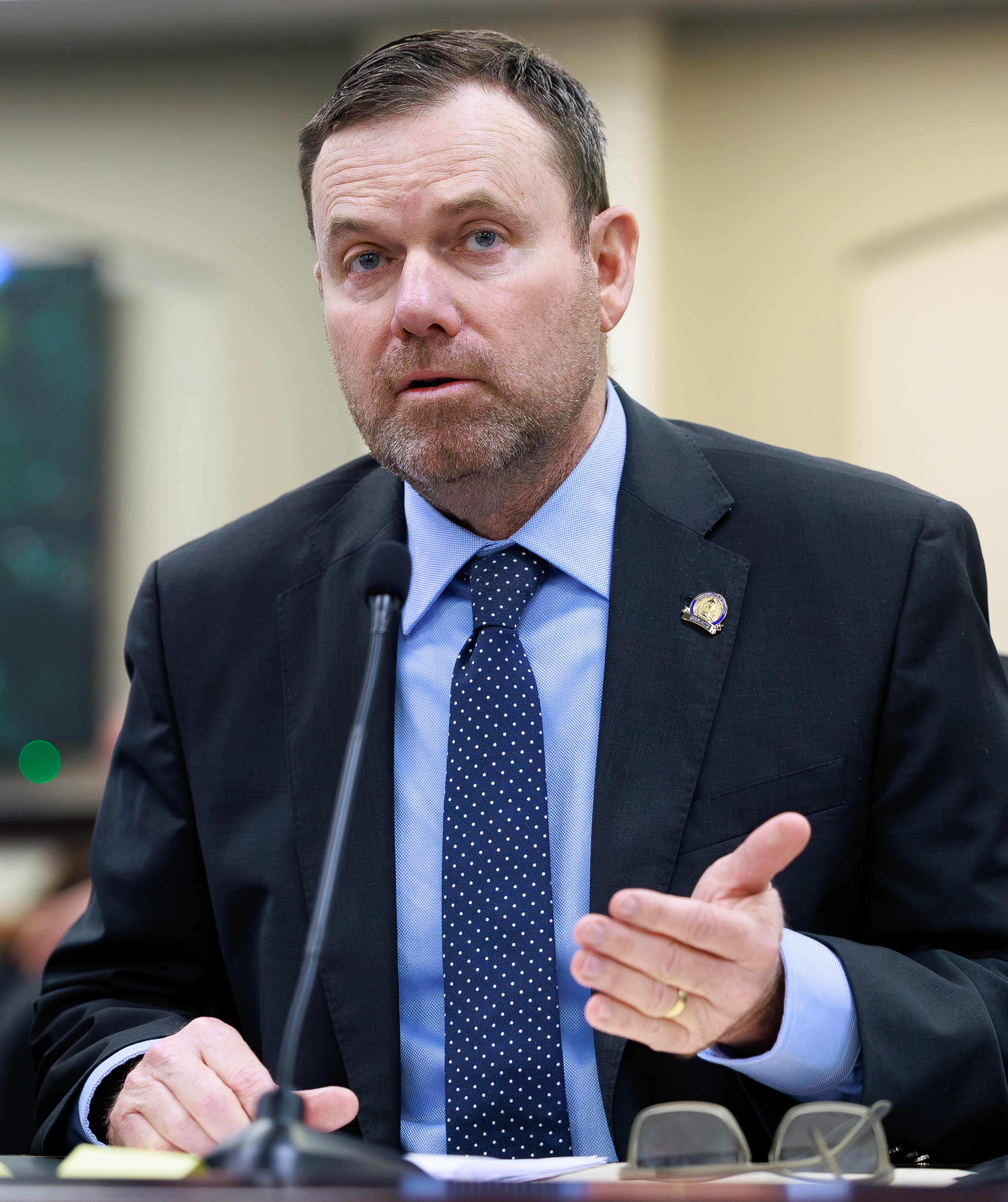
FRANKFORT — Two death penalty-related bills – Senate Bill 138 and Senate Bill 251 – were both advanced Thursday by the Senate Judiciary Committee.
SB 138, sponsored by Sen. Brandon Smith, R-Hazard, seeks to define child abuse homicide as a capital offense and increase the punishment for offenders.
“We basically stripped it down to where a person is guilty of child abuse homicide when he or she intentionally abuses another person or knowingly permits another person of whom he or she actually has custody of to be abused and thereby causes the death to a person who is under 18. Child abuse is a capital offense.” Smith testified.
Smith said children should be one of the state’s highest priorities and that killing a child will result in the highest punishment that the state can mete out.
Smith testified about the search for 10-year-old Jayden Spicer, a child killed last summer in Breathitt County. Jayden’s mother has been indicted on a murder charge in the case.
A child from Smith’s area also testified Thursday that Jayden’s death sent shockwaves through the community and “hurt lots of people.”
Senate Minority Caucus Chair Reginald L. Thomas, D-Lexington, said that, as a father of three and a self-described ‘helicopter parent,’ he understands how horrific child abuse is and “people should always recall how barbaric and unjust that act was.”
But he also questioned whether the threat of the death penalty would have prevented Jayden’s death, noting that mental illness reportedly played a role in the crime.
“I do not believe in the death penalty. I just don’t. I think that is a pillar that should not exist in an intelligent and enlightened society,” he said.
The second death penalty-related bill to advance was presented by Sen. Stephen West, R-Paris, who said the legislation stems from issues that have been transpiring in the courts for at least 10 years.
West said the death penalty is already law in Kentucky as set forth by the general assembly. In 2009, the Supreme Court ruled that Kentucky’s execution protocol must be promulgated by administrative regulation. That ruling started what West called a “merry-go-round” process involving the Kentucky Department of Corrections, the Kentucky Office of the Attorney General and the Franklin County Circuit Court, he said.
Under SB 251, the Department of Corrections would no longer be required to promulgate death penalty regulations and could implement execution protocols and procedures through internal policy, memorandum or similar action.
Supporters hope that change would end the impasse in the courts and clear the way for executions to resume in Kentucky.
Wil Schroder, senior counsel for the Kentucky Office of the Attorney General, read a letter during his testimony that was sent to him from a supporter of SB 251 who is involved in the Ralph Baze death penalty case. Baze has remained on death row in Kentucky for decades.
The woman wrote the bill would allow the Department of Corrections to make changes to its death penalty regulations more rapidly, allow Kentucky to swiftly restart the execution of death row inmates and cut down on delays that serve justice.
West said if the executive branch wishes to put execution protocols in administrative regulations, it is free to do so, but this is not required.
“They can use internal procedures or administrative regs,” West said.
Thomas asked West if he’s concerned that relying on internal policy memorandum or statements will make a death penalty case more successful under the Eighth Amendment, which deals with cruel punishments.
“Because the courts have made it clear that policy memorandum or policy statements within the agency do not have the force of law. Administrative regulations do have the force of law, and courts have recognized that,” Thomas said
West said he’s not concerned. He noted that Kentucky hasn’t always had administrative regulations, and when the state’s founders wrote the constitution, capital offenses happened. The Eighth Amendment was in place at that time, he said.
“This is less a death penalty question and more a rule of law question. So, the legislature writes the laws. It’s the job of the executive branch to carry out the laws. And it’s the job of the judicial branch to interpret the laws,” West said.
Committee advances bill on school-based Medicaid program
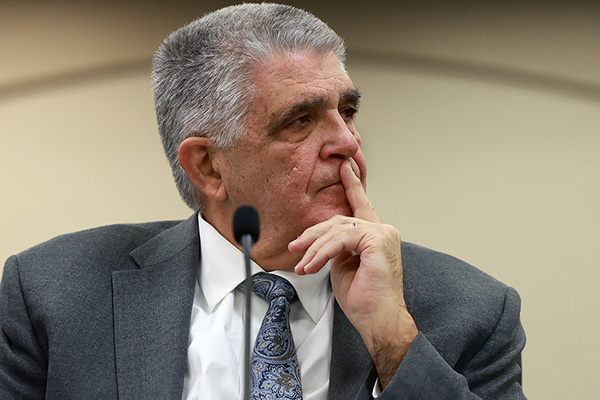
Rep. Steve Riley, R-Glasgow, speaks on House Bill 583 during Thursday’s meeting of the House Health Services Committee. A high-res version is available here.
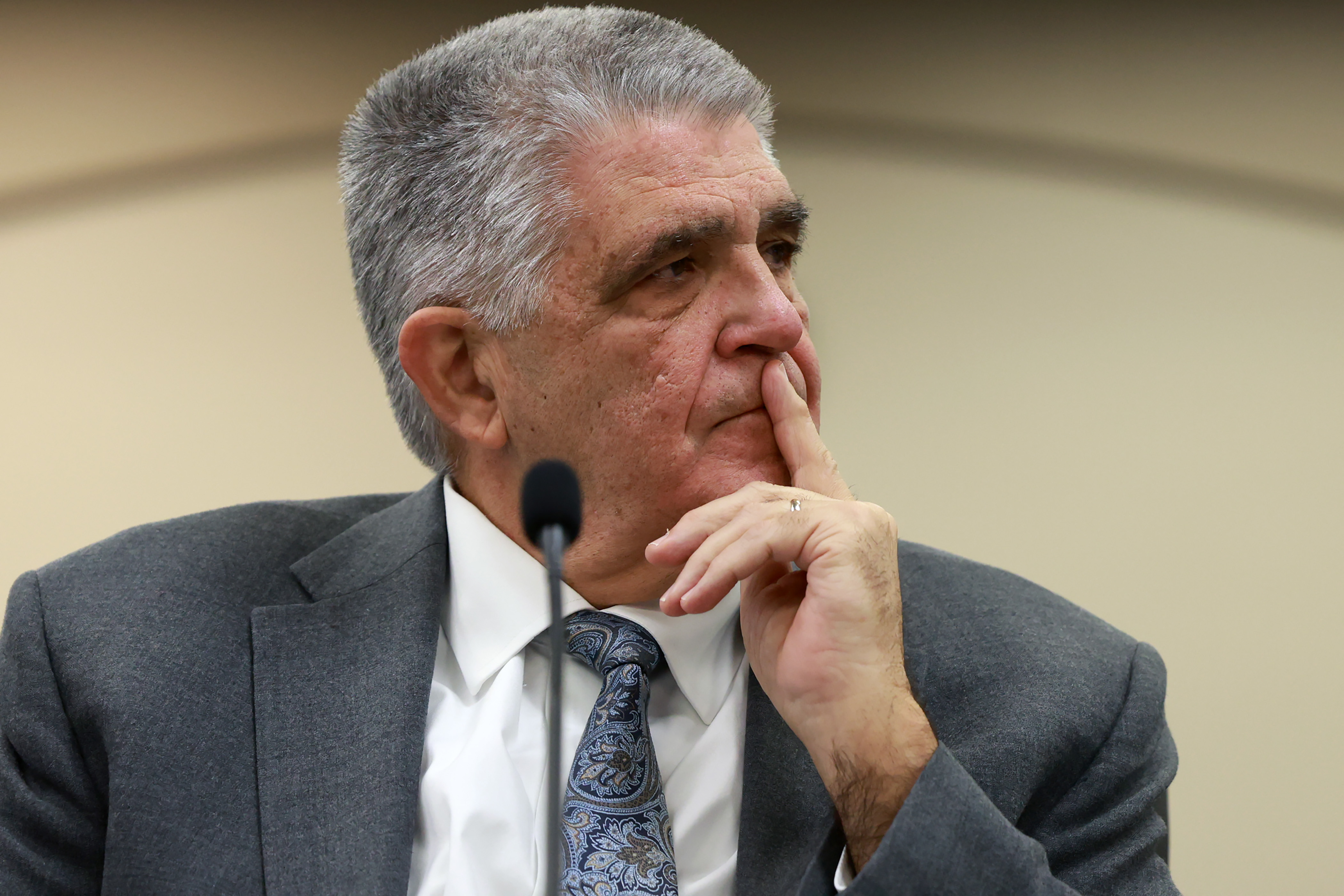
FRANKFORT — Legislation that would allow Kentucky schools to seek Medicaid reimbursement for certain health services provided by school nurses passed the House Health Services Committee on Thursday.
House Bill 583 aims to help school districts recover Medicaid funding for medically necessary services that are provided to Medicaid-enrolled students with parental consent.
The bill’s sponsor, Rep. Steve Riley, R-Glasgow, said the measure would allow school staff to focus on their primary roles instead of taking on responsibilities outside their training.
“I worked in the education program for a large number of years, and in my final years I worked as an assistant principal and a principal and never had the great opportunity of having a school nurse,” Riley said. “As an assistant principal, I felt like I had a billion different jobs — the judge, the jury, investigator, counselor — but one of those jobs I felt like I had was a school nurse.”
Emily Beauregard, executive director of Kentucky Voices for Health, testified in support of the legislation, stating Medicaid currently covers about half of Kentucky’s students.
“The only state cost would be from training school staff to bill appropriately,” she said. “We are strengthening a system that already exists to improve the health of our students.”
Eva Stone, a nurse practitioner who said she has worked in school nursing for 25 years, told lawmakers many students rely on school-based care because they lack regular access to health services.
“It doesn’t matter what district you’re in — we have children who don’t have regular access to health care,” Stone said. “Kids who aren’t healthy aren’t going to learn.”
Stone said many families struggle to take children to medical appointments during work hours.
“I’ve always had a job where I could leave if I needed to and take my kid to the doctor, but many of our families aren’t in that situation,” she said.
Rep. Kimberly Poore Moser, R-Taylor Mill, also spoke in favor of the proposal.
“This keeps parents at work, it keeps kids in school and kids are getting the care when they need it,” Moser said. “I see this as a real plus.”
Rep. Emily Callaway, R-Louisville, raised some concerns about the legislation. She said while she supports increasing access to health care, she questioned whether schools are the appropriate setting for expanded services.
“When I think of expanding health care, I don’t think of that happening in a school nurse’s office,” Callaway said. “I want these children to be under the regular care of a pediatrician on a regular basis.”
Callaway also expressed concern that Medicaid billing could result in students with Medicaid receiving more attention than those with private insurance and questioned whether school nurses were being asked to take on responsibilities outside their intended role.
Stone responded that school nurses already work to connect students with regular health providers but often face long wait times.
“When I started working at Jefferson County Public Schools, we had about 100,000 students and about 20,000 kids who weren’t current on their vaccines,” Stone said. “Ninety-two percent of those children were living in poverty and didn’t have a place to go.”
Stone said nurses often provide temporary care while working to connect students with a “medical home,” but wait times for appointments can stretch three to six months.
“We’re providing some stopgap measures that are essential but are not necessarily absorbing the role of primary care providers,” she said.
The bill passed committee 13-2 and now heads to the full House for consideration.
Child welfare bill advances
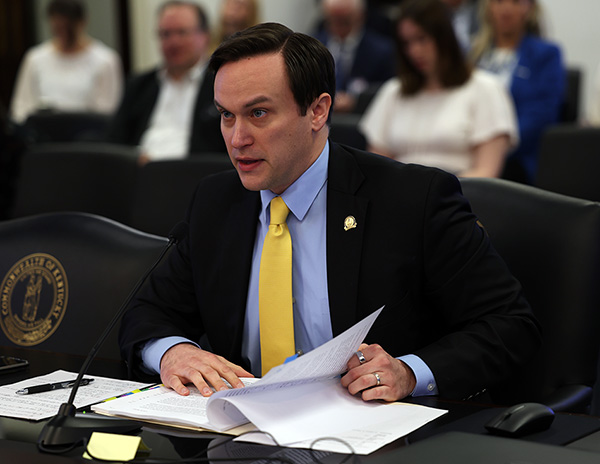
Rep. Nick Wilson, R-Williamsburg, shares how House Bill 778 will address several child welfare issues in Kentucky during Thursday’s House Families and Children Committee meeting. A high-res version is available here.
FRANKFORT — A bill seeking to address several child welfare issues, including child substance ingestion deaths, advanced from the House Families and Children Committee on Thursday.
Committee Vice-Chair Rep. Nick Wilson, R-Williamsburg, and Committee Chair Rep. Samara Heavrin, R-Leitchfield, are the primary cosponsors of House Bill 778. The bill contains provisions on foster care placements, data collection, school safety and more.
Wilson told the committee the first section of the bill would ensure a child in foster care cannot be placed with someone on the sex offender registry.
According to the legislation, this would include any adult or child living in the home who is a registered sex offender or juvenile sex offender. This would include a relative caregiver or fictive kin placement as well.
“It has happened, so we want to make that clear that that’s not acceptable,” Wilson said. “Sometimes I think it’s unknowingly, say a family member or new boyfriend or girlfriend or something like that, but we just thought we should address that situation.”
The bill also calls for safe and adequate foster care placements designed to meet the child’s needs. The legislation would also create a pathway for former foster care youth to reenter the system for support. The new definition of eligible youth would include a person 18 to 20.5 years old.
Heavrin, who serves on the state’s Child Fatality and Near Fatality Review Panel, told the committee more Kentucky children have been dying from ingesting harmful substances. Half of HB 778 focuses on this issue.
“If you look at the annual report that was put out recently, you will see that there, and it’s something that we really have to address,” she said.
Under HB 778, child injuries caused by ingestion or inhalation of a controlled substance would be included in the definition of neglect. Neglect would also be added to the child abuse statute.
Third-degree criminal abuse would include neglect under HB 778, and be a class A misdemeanor unless the child is under the age of 13. If a child under the age of 13 has suffered serious physical injury due to the ingestion or inhalation of a controlled substance, then the individual would face class D felony charges.
“I think we’ve done a really good job of threading the needle on criminalizing behavior that leads to these cases without criminalizing pure accidents,” Wilson said.
Rep. Emily Callaway, R-Louisville, also serves on the House Licensing, Occupations and Administrative Regulations Committee. She said there is an ongoing effort to address the packaging issue on certain substances that also look like candy.
“I did want to add that little bit of encouragement there, that we’re not just putting it solely on the parents and the people in the house,” Callaway said. “There’s going to be some more accountability as we’re delving into this kind of dangerous realm of these attractive cookies, gummies and all that goes with that.”
Wilson said children taking medication that looks like candy is a huge aspect of the recent increase of child ingestion-related fatalities in the commonwealth.
Another major aspect of HB 778 would allow public school superintendents, principals and school resource officers to be notified of certain details of a child’s diversion agreement within the juvenile justice system or if the child is under a domestic violence order or interpersonal protective order.
Rep. Kimberly Poore Moser, R-Taylor Mill, asked Wilson for clarification on the intent of those provisions.
“I just want to more clearly understand the intent of that and make sure that we are supporting the child in whatever diversion activities they need to participate in versus further stigmatizing the child,” she said.
Wilson said the intention of the legislation is to balance a safe environment for all children with privacy.
“We’ve had officers just basically come out and say, ‘This kid was charged with arson and nobody even knew,’ and we’re talking about some serious crimes,” Wilson said. “Sometimes it could be weapon-related, which is very important to know if you’re an officer in a school setting.”
Heavrin said she believes it’s important for the school to know about the child’s involvement in the juvenile justice system or in a domestic violence situation.
“I think it’s really important that people in the building know what’s going on to maybe say, ‘Hey, we need to keep an extra eye on him or her,’ in a way that’s best for the kid and maybe to give them extra, extra love,” she added.
HB 778 received unanimous approval from the House Families and Children Committee. It is now before the full House for consideration.
Ibogaine bill passes Senate Health Services Committee
Sen. Donald Douglas, R-Nicholasville, speaks on Senate Bill 77 during Wednesday’s meeting of the Senate Health Services Committee. A high-res version is available here.
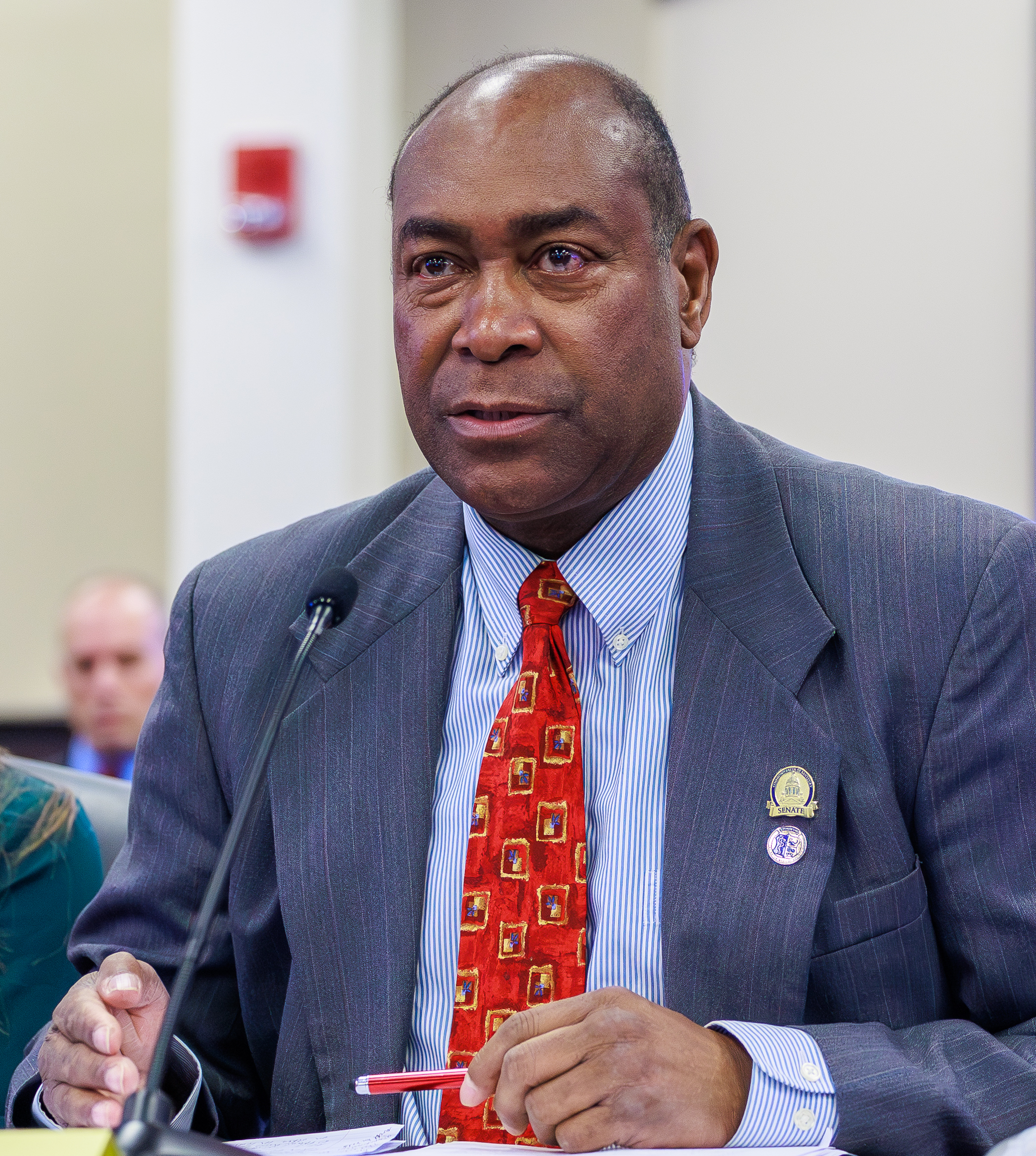
FRANKFORT — Kentucky lawmakers on Wednesday unanimously advanced a bill that would create a framework to study the use of ibogaine, a compound found in root bark in central west Africa, to treat substance use disorders.
Sen. Donald Douglas, R-Nicholasville, is sponsoring Senate Bill 77, and he noted that approximately $1.8 billion is spent toward substance use disorder issues in Kentucky.
The legislation “may be one of the most consequential bills that we will see this session, primarily due to its impact, or possible impact, on addressing the barriers to preventing and decreasing addiction here in our commonwealth,” Douglas said.
SB 77 calls for creation of an ibogaine research and intellectual property fund to be administered by the Department of Agriculture. It would set the stage for the department to partner with a drug developer to conduct clinical trials on using ibogaine to treat substance use disorders.
The fund may receive state appropriations, gifts, grants, federal funds and other private and public funds.
Dr. Jean M. Loftus, a physician and business owner in Northern Kentucky, said in her testimony that ibogaine treats several disorders, including addictions to opioids, cocaine, methamphetamine, and alcohol, along with post-traumatic stress disorder.
“Ibogaine immediately enables over half of the patients to skip acute and chronic withdrawal and craving. It interrupts addiction so patients can choose sobriety,” she said.
Ibogaine is now used in six countries to treat conditions, and it is now synthesized by several small pharmaceutical firms. The treatment itself is a single 8- to 12-hour process in a hospital setting, and the compound is administered in multiple doses, she said.
“With traditional treatment, no one skips acute withdrawal, chronic withdrawal or craving. That’s a year and a half of misery and incapacitation. And that is why the failure rate is so high with traditional therapy because it is so long and so miserable,” she said.
Loftus said ibogaine is not a recreational drug and is much safer than traditional treatment.
Jessica Blackburn-Allen, a licensed social worker from Floyd County, testified she became addicted to opioids in high school. She subsequently went to Mexico to receive ibogaine treatment, and she described what she experienced during the process.
“In that moment, I understood deeply for the first time the devastating impact my choices were having on my family. I understood the value of my life. It became clear to me that I had a responsibility to be better for myself and those who loved me, and I knew that I had a choice,” she said. “The next day, I had no cravings, no withdrawal, no desire to smoke a cigarette and no thoughts of wanting my life to end.”
Sen. Karen Berg, D-Louisville, asked if smoking was on the list that ibogaine could treat, and Loftus said this is the case.
Sen. Keturah J. Herron, D-Louisville, asked about future plans to fund the research.
Douglas said appropriations will continue to be discussed in both the House of Representatives and the Senate.
Sen. Danny Carroll, R-Paducah, said he has further questions about ibogaine, but researching it could be beneficial. He said he has spoken to people planning to undergo the treatment and that ibogaine could provide answers to these issues.
“We don’t need to let that pass by without taking some action,” he said.
Carroll asked who would serve as the drug developer in the partnership, and Loftus said that, in a similar program in Texas, several developers are competing for the role.
Douglas said ibogaine could be effective and helpful for many Kentuckians who battle substance use disorder.
“Here in the Commonwealth of Kentucky, we are putting billions of dollars in treating substance use disorder,” he said. “It is not the way to do business – to prop up businesses by locking people into a dependency or addiction.”
Committee advances bill seeking to improving school safety
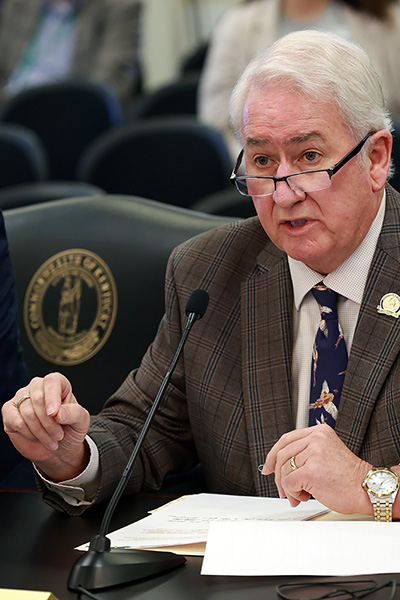
Rep. Kevin Jackson, R-Bowling Green, speaks on House Bill 643 during Wednesday’s meeting of the House Primary and Secondary Education Committee. A high-res version is available here.
FRANKFORT — Legislation seeking to improve school safety in Kentucky by introducing wearable panic alert technology for teachers and school staff advanced Wednesday from the House Primary and Secondary Education Committee.
Rep. Kevin Jackson, R-Bowling Green, said this technology would allow teachers and staff members to instantly alert law enforcement and school administrators during emergency situations.
“This is about public safety,” Jackson said.
House Bill 643 is called Alyssa’s Law, named after Alyssa Alhadeff, a 14-year-old who was killed in the Stoneman Douglas High School shooting in Parkland, Florida.
Since their daughter’s death, Alyssa’s parents, Lori Alhadeff and Ilan Alhadeff, have advocated for improved school emergency response systems. They argue teachers need faster ways to notify law enforcement during a crisis.
Jackson emphasized the technology is not meant to replace school resource officers.
“This is in no way to take the place of school resource officers. We all know the human factor of school resource officers is one of the best factors of school safety.” Jackson said. “This would work in conjunction with them to make schools safer for our kids, our staff and our faculty.”
Rep. Steve Bratcher, R-Elizabethtown, asked about the cost of implementing the program.
“I noticed the bill says 50% will be matched by the Center for School Safety. Do they already have that in their budget,” Bratcher asked.
Jackson said the funding model would require a shared investment between the state and school districts.
“As funds are available, it would be a 50-50 match,” Jackson said. “Ideally we would put in $8–10 million, and the school systems that want to activate the program would match those funds.”
Jackson spoke on the bill and the allocation of state funding.
“Right now there are no funds,” he said. “Some states, such as West Virginia, have just passed similar legislation without state funding but created an account where industries and individuals can donate. Schools can then opt in and match funds.”
Rep. James Tipton, R-Taylorsville, said the measure addresses a critical safety issue.
“This is a very important bill. There is nothing more important than safety for children,” Tipton said. “I actually have one of these devices in my office.”
Tipton questioned how many schools have already implemented this.
Co-sponsor of the bill, Rep. Chad Aull, D-Lexington, said about 19 districts across Kentucky currently use the technology. Aull also spoke on the possible expansion of that number.
“There’s about 19 across all of Kentucky, but that includes some private schools,” Aull said. “It’s about 14 or 15 public school systems, and we are aware of some districts that are going through the implementation process now.”
The bill passed committee 16-0 and now moves to the full House for consideration.
Comprehensive bill on sports wagering clears committee hurdle
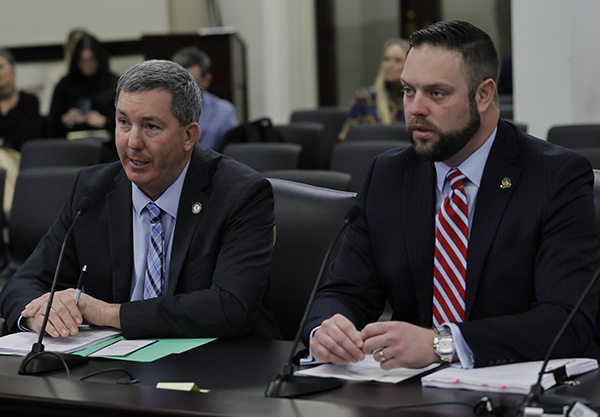
Rep. Michael Meredith, R-Oakland, (right) and Rep. Matthew Koch, R-Paris, present House Bill 904, which would bring many changes to Kentucky’s sports wagering and charitable gaming statutes. The bill advanced from the House Licensing, Occupations and Administrative Regulations Committee on Wednesday. A high-res version is available here.
FRANKFORT — A Kentucky House bill that would raise the sports wagering age from 18 to 21 and regulate fantasy contests advanced from the House Licensing, Occupations and Administrative Regulations Committee on Wednesday.
House Bill 904 is sponsored by Rep. Michael Meredith, R-Oakland, and Committee Chair Rep. Matthew Koch, R-Paris. They told the committee HB 904 would bring many changes to Kentucky’s sports wagering and charitable gaming statutes.
“Fantasy sports have been offered in Kentucky for a long time, but there’s never been a direct licensing statute or tax statute related to them,” Meredith said, adding that a separate measure – House Bill 757 – would create a taxation framework for fantasy sports.
HB 757 advanced from the House Appropriations and Revenue Committee on Tuesday.
Another change Kentuckians would see under HB 904 is the banning of proposition bets on Kentucky college athletes, which involves bets placed on an individual athlete’s statistics.
On prediction markets, Meredith said Kentucky is limited in its ability to directly regulate this type of wagering due to federal law. However, HB 904 would ban any license holders in Kentucky, such as tracks or providers, from affiliating with prediction market platforms, he said.
Another provision of HB 904 would create a purse stabilization fund for fixed-odds wagering, Meredith said.
HB 904 would also update Kentucky’s charitable gaming statute, Koch said. He said the committee will continue to study charitable gaming, but in the meantime HB 904 would address some of the charitable gaming issues.
One provision of HB 904 would increase the charitable gaming prize limit from $599 to $1,499.
Another section of the bill would “eliminate the middleman,” Koch said.
“You have a charity that’s out there operating, you have a retail store location that’s out there – the middleman is simply the agent,” Koch said. “It’s combining those. We’ve had quite a bit of examples of bad players within that space, so that’s one of the things we’re going to take on immediately.”
The charitable gaming age would also increase from 18 to 21 under this bill, Meredith added.
In discussion of HB 904, the prediction market aspect of the gaming industry became the lead topic of the conversation.
Rep. Kim Banta, R-Fort Mitchell, said she’s heard from constituents on the prediction market issue.
“I had a question from a constituent about voting on elections and things like that,” she said. “This is more of a curiosity question because I don’t even buy lotto tickets, so can somebody run a betting on elections?”
Meredith said the prediction market space allows bets on elections along with other betting on politics in the U.S. and globally.
“We’ve been told we can’t regulate them directly, preempted by federal law, but there’s nothing that says we can’t tax them,” Meredith said.
Meredith told the committee HB 757 would tax the prediction markets at 17.25%, which is a higher rate than the licensed operators are taxed.
Banta said she “hates that” Kentucky can’t do more to regulate prediction markets.
Meredith said he hopes there will be a change at the federal level soon.
“This prediction market space has been something that has happened very quickly, and we’re all trying to adapt to it the best we can,” he said. “We would love to see change at the federal level that would allow this to be addressed in a little different way.”
Koch said the committee doesn’t have an issue with gaming, but he believes regulation of prediction markets should happen at the state level like other forms of gaming and gambling.
“We don’t want to run them out of business. That is not our goal,” Koch said. “Our goal is to make sure that we can have state regulations on this… We can’t have one that’s not operating by our rules.”
HB 904 received committee approval by a 19-0 vote with one pass vote. It will now go before the full House for consideration.
House approves new tax framework for alcohol, cannabis beverages
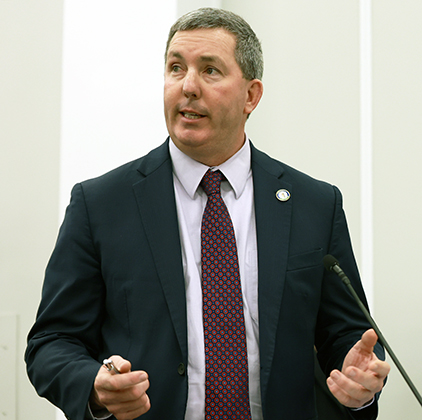
Rep. Matthew Koch, R-Paris, speaks on House Bill 9 on the House floor on Tuesday. The bill would streamline a new regulatory and tax framework for intoxicating products, like alcohol. A high-res version is available here.
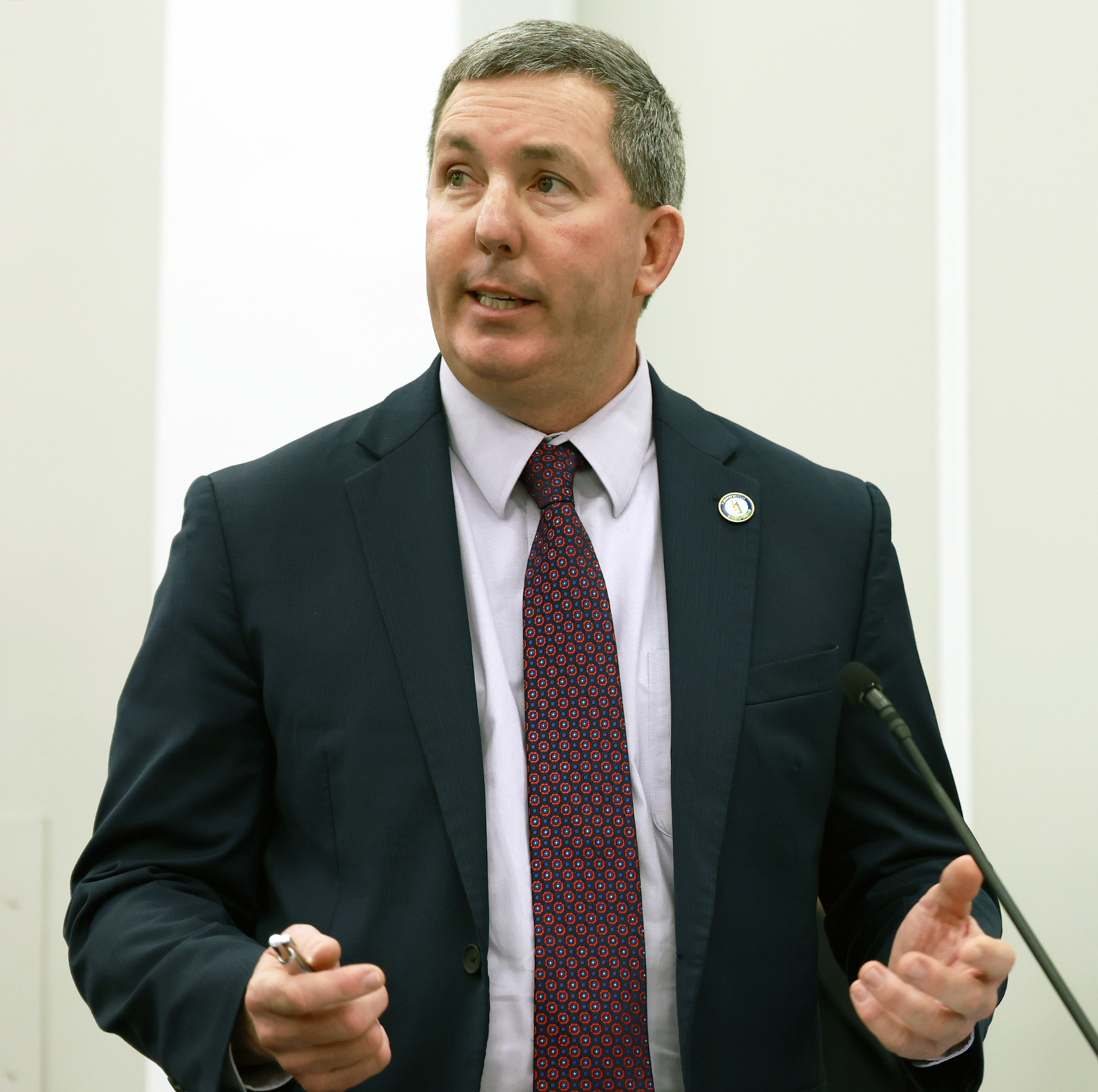
FRANKFORT — A comprehensive bill on alcoholic beverages, cannabis-infused beverages and other intoxicating products advanced off the House floor on Tuesday.
Rep. Matthew Koch, R-Paris, who is one of the sponsors of House Bill 9, said the legislation would streamline the regulatory and taxation framework for intoxicating products.
“That includes alcohol, cannabis-infused beverages, hemp-derived cannabinoids and products like kratom, all while laying out the framework to capture any new and emerging products as they come into the marketplace,” Koch said.
Although HB 9 is revamping the tax framework for intoxicating products, Koch said the bill is designed to be “revenue neutral-ish” when it comes to alcohol.
“We eliminated the cumbersome structure of the existing alcohol tax system to assist us with compliance while maintaining the revenue neutrality,” he added.
If HB 9 becomes a law, Kentucky would be the first state in the nation to establish a regulatory fee based on the pure alcohol content, Koch said.
The legislation would also establish a new 4% regulatory retail licensing fee on alcoholic and cannabis-infused beverages beginning July 1, 2027. To make the bill revenue neutral, Koch said other taxes were eliminated.
Additionally, HB 9 would streamline the local regulatory license fee collected by cities and counties and implement a 5% cap within a year, Koch said.
Cities and counties that drop the fee to 3% or lower will be able to use the funds for any emergency services and not just alcohol-related emergency services, he added.
As for the bill’s provisions on hemp, Koch said there is language to ensure proper lab testing and labeling on the products so hemp can be taxed properly.
Another major aspect of HB 9 would strengthen the penalties on retailers who sell alcohol to minors.
“Three strikes within two years at the same retail location is a lifetime ban on holding that alcohol license,” Koch said.
During debate on the legislation, Rep. Lisa Willner, D-Louisville, asked Koch if he could clarify who would be paying the taxes on the products.
Koch said who pays the taxes will not change under HB 9.
“(It’s) the same people who have always paid the tax on these products, and that’s all of us. That’s anybody that purchases alcohol,” Koch said.
Willner said she doesn’t think it is “sound fiscal policy” to continue to pass expenses on to consumers, so she would be voting against HB 9.
In answering a question on revenue from Rep. Adrielle Camuel, D-Lexington, Rep. Jason Petrie, R-Elkton, said the alcohol industry generates around $170 million in revenue.
Petrie, who is a co-sponsor of HB 9, reiterated Koch’s earlier statement that the goal of the legislation is not to gain or lose revenue, but to remain “revenue neutral-ish.”
“This is a realignment of taxes, not to shift it to consumers, because consumers are paying all the taxes now,” he said. “It’s just written into the price. This is just a realignment of where it’s collected.”
The Kentucky House passed HB 9 by a 63-31 vote. It is now before the Senate for consideration.
Senate committee advances child care bill
Rep. Samara Heavrin, R-Leitchfield, testifies Tuesday on House Bill 6 during a meeting of the Senate Families and Children Committee. A high-resolution photo can be found here.
FRANKFORT — Multi-pronged legislation designed to improve Kentucky’s child care landscape advanced Tuesday during a meeting of the Senate Families and Children Committee.
House Bill 6 would lay a foundation for building a stronger and more sustainable private child care network, which includes 2,000 small businesses, nonprofits and faith-based organizations throughout the state, among several other measures, bill sponsor Rep. Samara Heavrin, R-Leitchfield, testified.
“More efforts will be needed in the future, but this is going to initiate work that should have happened years ago, including the modernization of All STARS, data reforms and financial transparency,” she said.
HB 6 would establish clear legal intent for the Kentucky All STARS program to become an outcome-driven program based on quality research and for the state Cabinet for Health and Family Services to align the program with legislative goals, Heavrin said.
The bill would also authorize a new type of child care licensure known as microcenters to help ease regulatory challenges, encourage innovation and reestablish the certified child care community program to encourage local problem-solving and address barriers, she said.
Other provisions in SB 6 seek to improve child care data, create more financial transparency in publicly funded child care programs, reform the provider payment formula, codify the state’s free child care for child care workers’ program, and support children with special needs in child care.
Heavrin also highlighted another section that would create a two-year pilot program that streamlines issues related to the certification and regulation of child care operated by military families exclusively for military children.
“House Bill 6 is legislation that reflects more than 18 months of conversations and consensus-building on key measures to help strengthen access to affordable, quality child care to support workforce development and working Kentucky families,” Heavrin said.
More than 40 stakeholders with different opinions and ideologies came up with eight key priorities. They are: resources, regulations, quality, innovation, working family focus, employer participation, community engagement and data analysis, she said.
“It focuses on working families and affordability. Median child care costs are passing $12,000 per year in Kentucky counties. Care is out of reach for too many families. This legislation aims to improve affordability by strengthening the state’s low-income subsidy programs and reforming the employee child care assistance partnership,” Heavrin said.
Also, during the meeting, the committee unanimously advanced related legislation – House Joint Resolution 50 – which would require the state auditor of public accounts to commission an independent study of child care regulations in Kentucky.
Sen. Shelley Funke Frommeyer, R-Alexandria, voted against HB 6 and for HJR 50. She thanked Heavrin and others for working to improve child care, but expressed concern about taxpayers funding child care for other people’s children.
“I think we’re not actually getting to the root cause of the issue here. We have created so much friction on the administrative side, and a great business can reduce the costs,” she said.
Sen. Matthew Deneen, R-Elizabethtown, said his focus is on the last portion of the bill that relates to child care for military families. He asked about the differences between state and federal regulation in those situations.
Heavrin said the federal regulation is much more stringent than Kentucky’s regulation, and those in military leadership at Fort Campbell are very interested in seeing the legislation move forward.
Senate Minority Caucus Chair Reginald L. Thomas, D-Lexington, asked Sarah Vanover, policy and advocacy director for Kentucky Youth Advocates, what is the greatest strength of HB 6.
“I think the biggest strength is that we’re looking at an infrastructure package. Together, with all these different components, we have a foundation of ways that the community is involved, ways that parents benefit and ways that the child care programs can sustain,” she said.
Sen. Robin L. Webb, R-Grayson, and Sen. Gex Williams, R-Verona, both expressed concern regarding the costs associated with HB 6.
Heavrin said requests of about $53 million have been made for each year in the budget, conversations are continuing and the bill requests more financial data to determine true child care costs.
After both pieces of legislation were passed, Committee Chair Sen. Danny Carroll, R-Paducah, said improvement of child care in Kentucky is vital.
“We keep kicking this can down the road, and we’re reluctant to invest to make changes. This is about our kids. This is about workforce. This is about our economy. This touches every segment of what we do as a state,” he said. “Yet we’re reluctant to invest in it, and for the life of me, I don’t understand that. And until we do that, we’re going to keep falling behind.”
Committee advances bill on regulating cannabis beverages
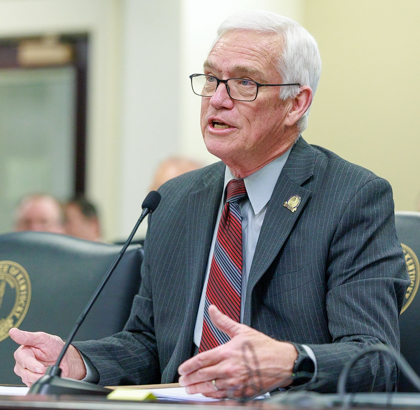
Sen. Stephen Meredith, R-Leitchfield, speaks on Senate Bill 223 during Tuesday’s meeting of the Senate Licensing and Occupations Committee. A high-resolution photo is available here.
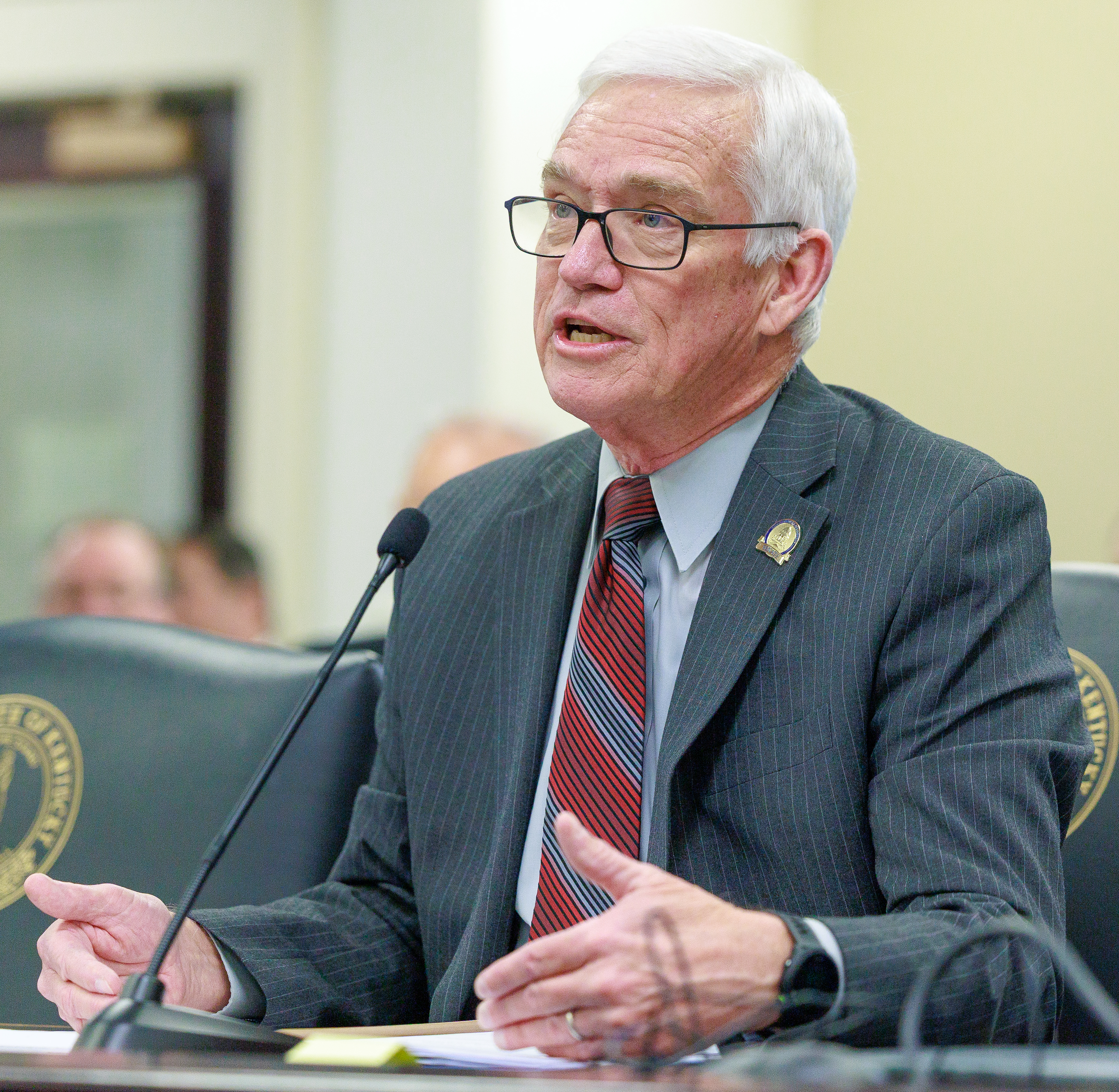
FRANKFORT — Legislation that would expand the sale of cannabis-infused beverages in certain establishments advanced Tuesday out of the Senate Licensing and Occupations Committee.
Current law allows cannabis-infused beverages to be sold in Kentucky if they contain no more than five milligrams of intoxicating cannabinoids per 12-ounce serving. But state law prohibits such beverages from being sold individually for on-site consumption in establishments such as bars, restaurants and event venues.
Senate Bill 223 seeks to implement an additional permit that would allow establishments already holding alcohol licenses to sell individual cannabis-infused drinks to consumers 21 and older.
“This bill establishes a clear regulatory framework for cannabis-infused beverages in Kentucky under the Department of Alcoholic Beverage Control, which I think is where it should be,” said the bill’s sponsor, Sen. Stephen Meredith, R-Leitchfield.
Jim Higdon, co-founder of Cornbread Hemp in Louisville, said the legislation would build on the legal foundation created last year when the general assembly adopted an initial measure to regulate cannabis beverages in Kentucky.
Higdon said the legislation would place cannabis-infused beverages under rules similar to alcohol regulations.
“As we regulate alcohol, those same rules need to apply as a safety and responsibility measure that was missed last year,” Higdon said. “We think it’s very important to get it on the record now.”
Meredith said the legislation would also create an open-container offense for cannabis-infused beverages in vehicles, aligning the law with existing alcohol rules.
“Senate Bill 223 simply regulates THC beverages like alcohol,” Meredith said.
Sen. Amanda Mays Bledsoe, R-Lexington, asked about federal oversight of THC beverages.
Meredith said federal regulation of hemp-derived products is still developing.
“I am aware that the whole hemp industry is being reviewed by the federal government and there is discussion about legislation that could be passed,” Meredith said. “But I don’t know of anything that’s tangible at this point in time.”
Gene Cole, president of the Kentucky Ethics League and executive director of the Kentucky League on Alcohol, Gambling and Substance Use Disorders, testified against the bill. He argued that first responders are already dealing with impaired drivers and expressed concern about introducing another intoxicating beverage.
Jack Mazurak, a representative for the Kentucky Distillers’ Association, urged lawmakers to proceed cautiously.
Mazurak said the distilled spirits industry can compete with hemp-based beverages but warned the bill could significantly expand access to intoxicating THC drinks without a fully developed federal regulatory framework.
Sen. Karen Berg, D-Louisville, asked whether there is federal regulation on highly caffeinated beverages and suggested that the cardiac effects of those drinks could be comparable to or greater than those of the standard dosing in THC beverages.
Mazurak said he did not have an answer but would be willing to look into the issue.
Sen. Jimmy Higdon, R-Lebanon, spoke in favor of the bill, highlighting differences between synthetic THC and hemp-derived THC, adding that “synthetic THC is the devil itself.”
Higdon also asked whether there had been any issues resulting from the legislation passed last year allowing the sale of boxed THC beverages in liquor stores.
Mazurak responded that he was not aware of any health or public safety issues tied to the law.
“I have not, but I think we agree on this — the FDA, TTB and other agencies that regulate the alcohol industry need to be aligned on regulations for hemp at the federal level,” Mazurak said.
Higdon agreed that federal regulation is needed but emphasized the committee’s role in addressing the issue at the state level.
“Today we’re talking about Kentucky and its regulation, and right now we’re the only ones with authority over this product,” Higdon said.
The bill passed the committee 9-2 and now heads to the full Senate for consideration.
This Week at the State Capitol (3-6-26)
Legislation is signed in the Senate during the ninth week of the 2026 legislative session. A high-resolution photo is available here.
FRANKFORT — Deadlines have passed for filing new bills in the House and Senate, and Kentuckians now have a more comprehensive view of the issues that lawmakers plan to grapple with in the 2026 legislative session.
Overall, legislators have introduced 1,293 bills this year – 354 in the Senate and 939 in the House – along with scores of resolutions in each chamber.
Lawmakers have a little more than three weeks left on the calendar to apply the polish to bills and get them to the governor’s desk if they want a chance to override potential vetoes. That means later nights ahead as more bills begin moving off the chamber floors.
Energy and physician shortages were among the major themes that emerged in the Senate this week.
The chamber on Monday advanced Senate Bill 57, which would create the Nuclear Reactor Site Readiness Pilot Program to help energy providers obtain licenses and permits related to site work for nuclear power projects.
The program would provide up to $25 million in grant funding to each of three projects in Kentucky. It’s part of a continuum of bills that lawmakers have passed in recent years to support nuclear energy development in the state.
Lawmakers also took up Senate Bill 8 this week, seeking to modernize the Kentucky Public Service Commission to better handle utility regulations, infrastructure investment and rate cases. Among many provisions, the bill would expand the commission from three to five seats and establish professional qualification standards for members.
The bill cleared the Senate Natural Resources and Energy Committee on Wednesday and won support on the Senate floor Friday.
On the issue of physicians, the Senate Health Services Committee advanced Senate Joint Resolution 116 on Wednesday. SJR 116 would direct the University of Kentucky, the University of Louisville and Eastern Kentucky University to work together in meaningful ways to alleviate physician shortages in underserved areas of the state.
The chamber also passed Senate Bill 137 on Thursday, seeking to eliminate a duplicative residency requirement for international doctors to practice in Kentucky. That change, supporters say, would make it easier for doctors from other countries to practice here and help address shortages in rural areas.
Meanwhile in the House, lawmakers passed a measure Wednesday that seeks to reduce recidivism and support workforce development.
House Bill 5 would establish the Kentucky Community and Technical College System Prison Education Program. It calls on KCTCS to partner with the state Department of Corrections to build and operate a vocational training campus at Northpoint Training Center.
The House also advanced a much-discussed bill on elections this week that, among other goals, aims to prevent felons and non-citizens from voting in Kentucky.
House Bill 534 would also allow a candidate to appear twice on the same ballot if that candidate already holds a federal office and is running in another federal race in which the outcome is decided by the Electoral College.
The bill stirred a long debate in the House on Thursday before advancing off the floor on a 53-40 vote. Supporters argued that changes are needed to protect election security, while critics said Kentucky’s elections are already secure and the bill could disenfranchise some legitimate voters.
One issue that has drawn concern from lawmakers in both chambers is the growing use of virtual currency in scams against Kentuckians.
The Senate passed Senate Bill 189 on Monday to create a licensing and regulatory framework for virtual currency kiosks, and a similar measure, House Bill 380, received a nod from the House Banking and Insurance Committee on Wednesday.
Lawmakers say scammers are defrauding or extorting Kentuckians into transferring large sums of virtual currency through the kiosks and that the funds are nearly impossible to recover.
Many other bills continue to make headway through the legislative process. Here’s a look at some of the other bills that were moving this week:
Juvenile Justice – Senate Bill 125 would establish a comprehensive framework for identifying and treating high-acuity youth in Kentucky's juvenile justice system and create a dedicated mental health residential treatment facility for them. The Senate passed the legislation on Monday.
Child Protection – House Bill 246 calls for animal control officers to complete training to help recognize signs of child abuse and neglect. A provision in the bill would allow local governments that employ animal control officers to opt out of the training by providing a written notice before the end of the year. The House voted in support of the measure Monday.
Machine Gun Conversion Devices – House Bill 299 would align Kentucky gun laws with federal law related to machine gun conversion devices. Federal law already bans possession of such devices, but supporters say the bill is needed to help law enforcement enforce the ban locally. Ultimately, possession of a conversation device would be a class C felony in Kentucky if the bill becomes law. HB 299 received approval in the House on Monday.
Deer Populations– House Bill 142 seeks to help farmers more easily file and renew claims for crop and property damage caused by deer while also addressing overpopulation concerns across the state. The House passed the bill Tuesday.
Sunscreen in Schools – House Bill 586 would clarify that sunscreen is not a medication and that students can apply sunscreen at school without a written order from a health care provider. The legislation won approval in the House on Tuesday.
Child Marriage – Senate Bill 156 would close a loophole in state law to ensure that 18 is the youngest legal age for marriage in Kentucky. Right now, state law still allows 17-year-olds to get married if they have approval from the judicial system. The Senate passed the bill Tuesday.
Research Fund – Senate Bill 6 would appropriate $150 million to the Endowment Research Fund to support research collaboration and innovation across Kentucky universities. The Senate Appropriations and Revenue Committee approved the measure Wednesday.
Driving Under the Influence – House Bill 563 takes aim at repeat drunk drivers. Among several provisions, it would prohibit anyone convicted of drunk driving four times within a 10-year period from purchasing alcohol while their license is suspended and for two years after the suspension ends. The legislation moved out of the House Judiciary Committee on Wednesday.
Constitutional Amendments – Senate Bill 262 seeks a change to the state constitution regarding how proposed constitutional amendments appear on the ballot. Instead of printing the full text of the proposed amendment on the ballot, SB 262 seeks to have the proposal appear in the form of a ballot question or summary that clearly and accurately states the substance and effect of the amendment. SB 262 received a favorable vote in the Senate State and Local Government Committee on Wednesday.
Fraudulent Contractors – Senate Bill 153 would help protect Kentucky homeowners from abusive and fraudulent contractors following severe weather. It would clarify that vandalism committed for the purpose of an insurance claim is fraud. It would also create a post-disaster registry for roofing, siding and tree-removal businesses, and it would prohibit door-to-door solicitations during declared emergencies. The measure cleared the House Banking and Insurance Committee on Wednesday.
Kindergarten Readiness – Senate Bill 191 calls on the University of Kentucky to establish a pilot program that gauges the effectiveness of using financial incentives to encourage kindergarten readiness. The Senate voted in favor of the bill Wednesday.
School Board Candidates – House Bill 469 would require candidates for local school board seats to undergo background checks. The House passed the bill Wednesday.
Energy Study – House Joint Resolution 77 would direct the Kentucky Energy Planning and Inventory Commission to conduct a comprehensive assessment of coal resources and electricity affordability in the region. The study aims to provide lawmakers with research and data that could guide future energy and economic policy decisions affecting coal-producing communities. The House Natural Resources and Energy Committee advanced the bill Thursday.
Abuse of a Corpse – Senate Bill 221 would make clear that knowingly purchasing, selling, transferring a corpse or part of one after the corpse has been authorized for cremation or burial would be a class D felony in the commonwealth. The Senate Judiciary Committee passed the measure Thursday.
Impaired Driving – Senate Bill 66 would add clonazepam, cyclobenzaprine and fentanyl to the list of drugs that, when detected in a driver’s blood, could lead to an impaired driving conviction. The bill would also stipulate that refusing a blood test will result in suspension of a driver’s license. The legislation won support from the Senate Judiciary Committee Thursday.
Workplace Violence in Health Care – House Bill 713 seeks to combat workplace violence in health care facilities. Among several provisions, it calls on health facilities to annually verify that they maintain workplace safety plans and assessments and provide violence prevention training to staff. The House Health Services Committee advanced the bill Thursday.
Pesticide Labeling – Under Senate Bill 199, pesticides that display an EPA-approved label will have satisfied state laws related to the duty to warn consumers. The bill includes an exception for manufacturers that knowingly mislead the EPA about potential health risks. The measure cleared the Senate Agriculture Committee on Tuesday and advanced off the Senate floor on Thursday.
Eminent Domain – House Bill 542 seeks to improve communications and transparency between landowners and officials seeking to condemn property. The measure moved out of the House Judiciary Committee on Wednesday and cleared the House floor on Friday.
Dolly Parton’s Imagination Library – Senate Joint Resolution 54 calls on the Kentucky Department for Libraries and Archives and the state Cabinet for Health and Family Services to cooperate in exploring ways to increase enrollment in Dolly Parton’s Imagination Library. The Senate passed the bill Friday.
School Communications – House Bill 67 seeks to clarify a law adopted last year regarding communications between school employees and students. The House Primary and Secondary Education Committee advanced HB 67 on Wednesday and the bill cleared the House floor Friday.
The general assembly is scheduled to reconvene on Monday for day 42 of the session.
Kentuckians are urged to check the general assembly's calendar for updates. Kentuckians can track the action through the Legislative Record Webpage, which allows users to read bills and follow their progression through the chambers.
Citizens can also share their views on issues with lawmakers by calling the general assembly's toll-free message line at 1-800-372-7181.
Certificate of need reform bill gets committee approval
Rep. Marianne Proctor, R-Union, (right) presents House Bill 407 to the House Health Services Committee on Thursday next to Kileen Lindgren with the Pacific Legal Foundation. The bill would reform Kentucky’s certificate of need law. A high-res version is available here.
FRANKFORT — – A bill advocates say would bring needed changes to Kentucky’s certificate of need law advanced from the House Health Services Committee on Thursday.
Rep. Marianne Proctor, R-Union, is the primary sponsor of House Bill 407, which would reform the certificate of need process in Kentucky.
Proctor told the committee the original intention of certificate of need, or CON, at the state and federal level in the 1970s was to reduce health care costs and improve quality of care.
“However, the federal government realized this was not accomplishing the purpose, which was to contain costs, to make (health care) more accessible and to improve quality. And in 1986, CON was repealed,” she said.
While many other states have repealed or passed CON reforms, Kentucky has not, Proctor added.
“Kentucky has fundamentally not changed any of the processes of CONs since 1972,” Proctor said. “… What this bill seeks to do is streamline the process of CON. That’s all it does. It does not repeal certificate of need.”
Mark Guilfoyle, an attorney representing St. Elizabeth Healthcare in Northern Kentucky, spoke in opposition to the legislation. He said the bill would end the ability for any parties other than the applicant to have a role in the CON process or to file an appeal.
“We think that this bill will do damage to the certificate of need process, and what that will do, in particular to St. Elizabeth, is it will harm safety net hospitals,” Guilfoyle said.
Kileen Lindgren, senior state policy manager at the Pacific Legal Foundation, testified alongside Proctor in favor of HB 407. She told the committee an updated version of the bill does confer a right to non-applicants, or the affected parties.
Lindgren said the legislation seeks to ensure the CON process through the state Cabinet for Healt h and Family Services is “thorough and fair.”
“The committee sub ensures that the cabinet has a process to get necessary information from existing certificate of need holders and anybody else that is relevant to their decision-making process,” Lindgren added.
On the affordability issue, Rep. Ken Fleming, R-Louisville, asked Proctor and Lindgren to speak more on the potential for HB 407 to drive up health care costs.
Lindgren said in states without CON, the consumer, or patient, has not seen an increase in health care costs.
“The cost has gone down for folks in South Carolina under their certificate of need repeal they did a few years back,” Lindgren said. “I estimated about $2,000 a year for individuals or households there. I think there are about 40% of states that don’t have certificate of need or have it for a very limited service, and we just have not seen costs blowing up.”
Committee chair Rep. Kimberly Poore Moser, R-Taylor Mill, said health care “is not really a free market enterprise,” so she would like to further examine data in other CON reform states to study the impact on the cost issue.
“We need to improve access, of course. We need to maintain quality, of course. We need to maintain credentialing and all the things that factor into this, but I just want to make sure that we’re not driving up the cost of health care,” Moser said.
The House Health Services Committee approved HB 407 by a 10-5 vote with two pass votes.
House Minority Caucus Chair Lindsey Burke, D-Lexington, said she agrees CON needs to change in Kentucky, but she still has concerns about ensuring there is a right to appeal for all parties.
“When a corporation or hospital, whether they’re for profit or not for profit, is directly impacted by a decision of the government, they need a right to appeal because the government is not always right,” Burke said while recording a “no” vote.
Moser voted “yes” on the legislation, but said she would like to work with Proctor on addressing “the appeals process concerns in the legal representation piece” of the bill.
HB 407 is now before the full House for consideration.
Senate passes bill defining duty to warn in pesticide civil actions
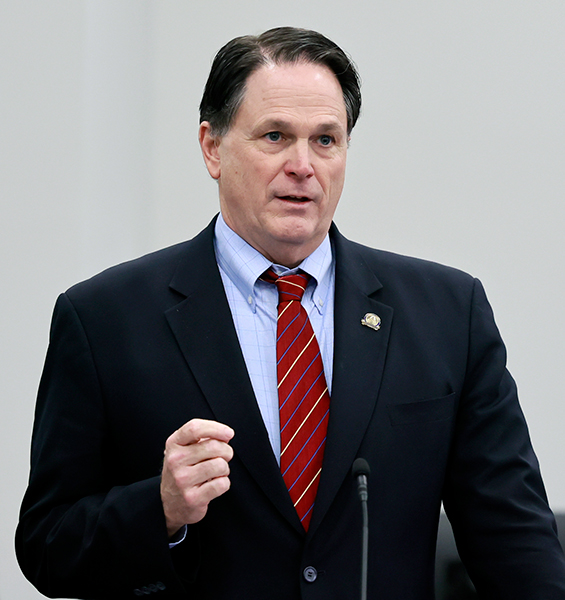
Sen. Jason Howell, R-Murray, speaks on Senate Bill 199, on the Senate floor. A high-res version is available here.
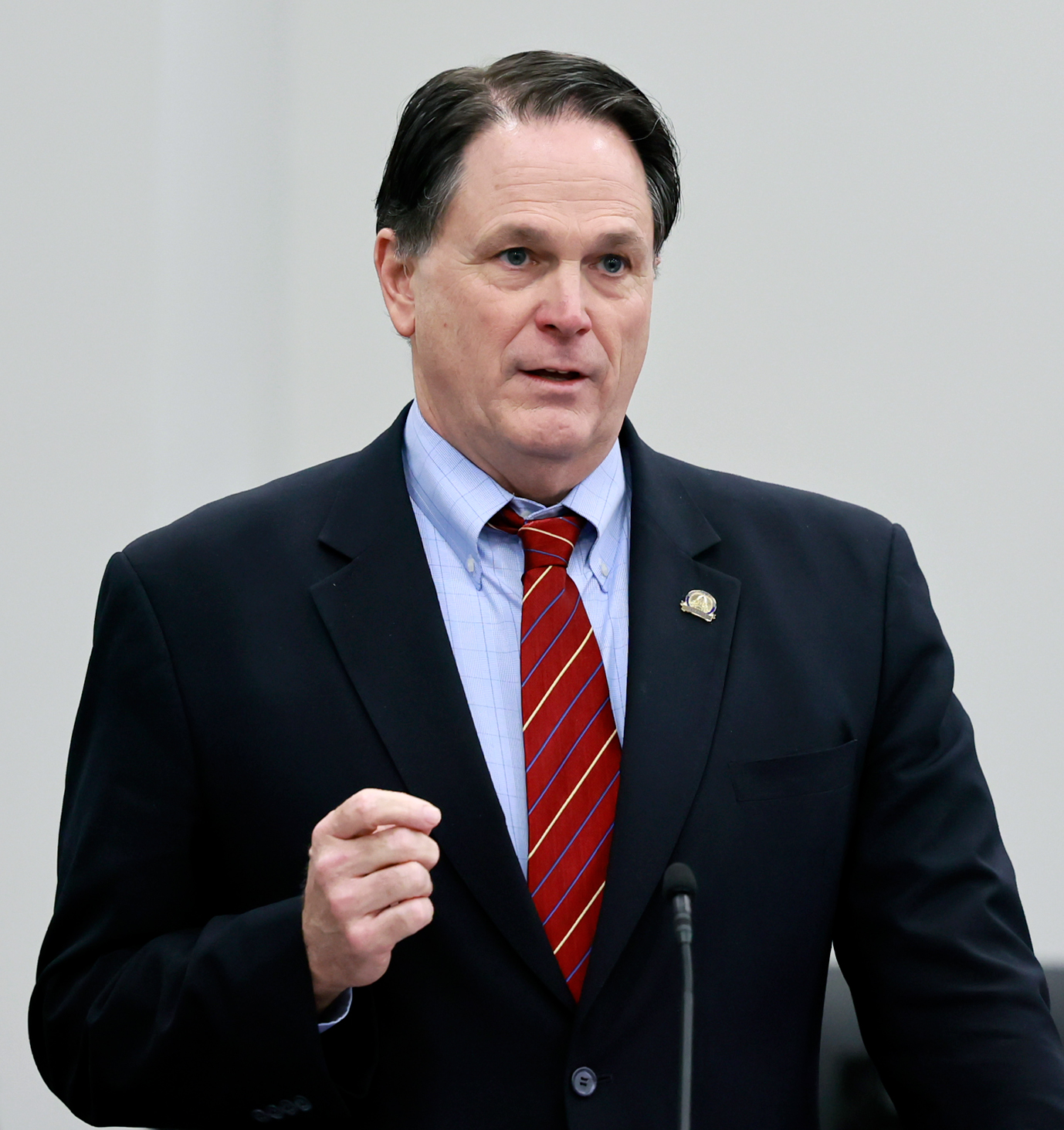
FRANKFORT — – Legislation establishing EPA-approved warning labels as sufficient warning under Kentucky state law for purposes of duty-to-warn and failure-to-warn claims in civil court actions advanced Thursday in the Senate.
SB 199, sponsored by Sen. Jason Howell, R-Murray, would make Kentucky law on failure-to-warn causes of action consistent with federal determinations on warnings, preventing state courts from imposing different warning requirements.
“This bill states that EPA warning labels are the standard of care in civil actions coming out of failure-to-warn claims,” Howell said.
Howell also said that the bill was an attempt to help Kentucky farmers preserve their ability to effectively work their land.
“I want to preserve farming for future Kentuckians, and preserve the things and the tools that we need in agriculture, to keep it sound, and help us continue in our proud agricultural heritage in Kentucky.”
The bill spurred debate on the chamber floor.
One supporter, Senate President Pro Tempore David P. Givens, R-Greensburg, said that EPA regulations around pesticides were strict enough to serve as the standard.
“I want to offer some comfort because I stand behind the counter at the farm store, and I know the regulatory environment. The system has lots of built-in safeguards to allow us to enjoy that safety, abundance, convenience, and affordability that farming supplies,” Givens said.
Others spoke against the measure, including Sen. Shelley Funke Frommeyer, R-Alexandria, who argued that it removes from pesticide manufacturers an important reason to innovate.
“This devastates me to vote no, but it does look like we are giving every pesticide manufacturer some amount of approval not to keep making their products better or safer, or better understand what is happening,” Frommeyer said.
Senate Minority Whip Cassie Chambers Armstrong, D-Louisville, said that the bill would take away from injured individuals the ability to recover for any injuries they sustain from pesticides.
“This bill says that even if a company chooses not to know, even if a company is negligent, even if they violate their standard of care, you do not get compensation from them. They do not have to pay you for the injury they caused,” Chambers Armstrong said.
Others noted that farmers were often the ones most exposed to pesticides.
However, Sen. Aaron Reed, R-Shelbyville, said that he voted for the bill because of his constituents.
“I cast a yes vote, and I do so reluctantly because I am a champion of medical freedom,” he said. “However, I could not find one farmer in my district to tell me to vote no on this bill. Every farmer I talked to told me to vote yes.”
Sen. Robin L. Webb, R-Grayson, said that the bill was important because it would help farmers meet demand for their crops.
“Until there is an alternative to the production pressure that is put on our farmers, I cast a yes vote,” Webb said.
SB 199 now heads to the House.
Committee moves bill to study energy resources and costs
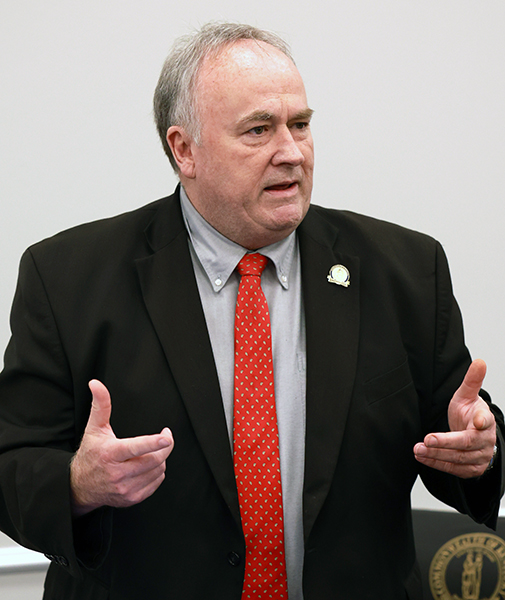
Rep. Tom Smith, R-Corbin, is sponsoring House Joint Resolution 77, which cleared the House Natural Resources and Energy Committee on Thursday. A high-resolution photo can be found here.
FRANKFORT — The House Natural Resources and Energy Committee advanced a resolution Thursday directing state officials to study the future viability of coal resources and energy affordability in Eastern Kentucky.
House Joint Resolution 77 would direct the Kentucky Energy Planning and Inventory Commission (EPIC) to conduct a comprehensive assessment of coal resources and electricity affordability in the region. The study aims to provide lawmakers with research and data that could guide future energy and economic policy decisions affecting coal-producing communities.
Under the resolution, the commission would examine the long-term availability of coal, the reliability of the electric grid and the cost of energy in Eastern Kentucky. The commission would report its findings to the Legislative Research Commission by Dec. 1, 2026.
Rep. Tom Smith, R-Corbin, said the resolution is intended to give lawmakers a clearer picture of the region’s energy landscape.
“We asked EPIC to come into Eastern Kentucky to look at the whole of what’s going on with our electric grid and what our options are,” Smith said during the committee meeting.
Rep. Adam Moore, D-Lexington, said he planned to support the resolution but asked whether the study would consider alternative energy sources in addition to coal.
While the resolution focuses heavily on coal, Smith said the study could also examine other energy resources used in the region.
“When we talk about Eastern Kentucky, we talk about jobs, and when we talk about coal, it’s kind of like we’re in a coal bubble,” Smith said. “We produce gas in Eastern Kentucky yet it’s not being burned in these coal-fired generators. So, the resolution is also asking them to look at gathering systems or energy that could possibly be used in Eastern Kentucky.”
House Majority Caucus Chair Suzanne Miles, R-Owensboro, also praised the resolution, saying the research could help lawmakers develop long-term solutions for energy policy across the state.
“Hopefully we have some good data to work on solutions for the entire state,” Miles said.
Rep. Jim Gooch Jr., R-Providence, said he initially had concerns about the resolution because of its focus on Eastern Kentucky and the timeline for completing the study. Gooch said he later learned EPIC had already begun researching many of the issues outlined in the resolution.
“I spoke to EPIC and they are already doing this research, this resolution just makes it official.” Gooch said. “I no longer have as many serious reservations about how quickly we’re going to have to operate.”
The measure passed committee 19-0 and now moves to the full House of Representatives for consideration.
Senate committee advances bill to deter abuse of a corpse
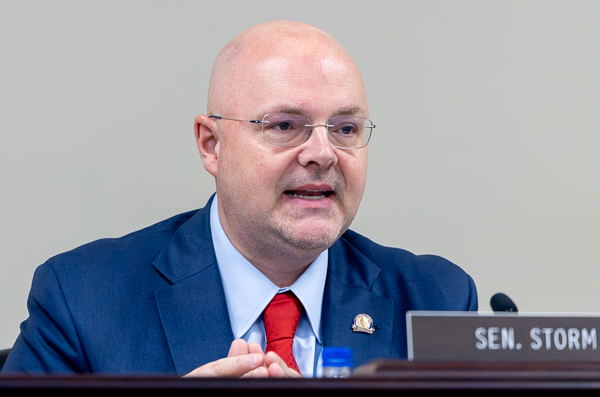
Committee Chair Sen. Brandon J. Storm, R-London, testifies Thursday on Senate Bill 221 during a Senate Judiciary Committee meeting. A high-res version is available here.
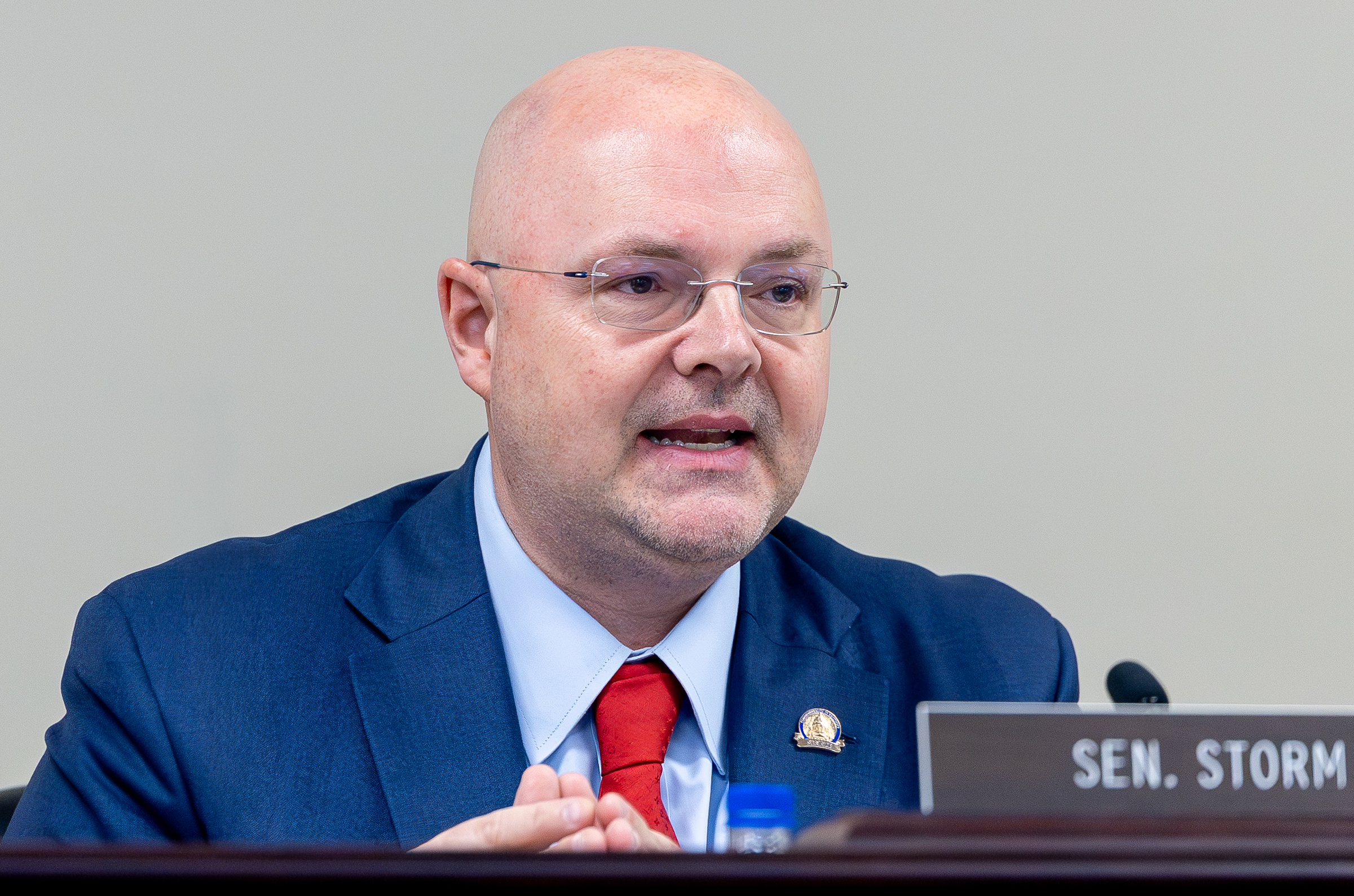
FRANKFORT — Legislation seeking to strengthen Kentucky law against abuse of a corpse advanced unanimously Thursday during a Senate Judiciary Committee meeting.
Senate Bill 221 would make clear that knowingly purchasing, selling, transferring or offering to purchase, sell or transfer a corpse or part of one after the corpse has been authorized for cremation or burial would be a class D felony in the commonwealth.
Committee Chair Brandon J. Storm, R-London, is sponsoring the bill. He pointed to news stories about body parts being harvested and sold inappropriately and illegally because the decedent didn’t consent to have their body parts used for scientific study or other purposes.
When individuals do not consent to have their body parts studied, “this would prohibit individuals from selling those body parts, and there’s been numerous cases throughout the United States,” Storm said.
Storm pointed to a 2023 case in Little Rock, Ark. involving federal charges stemming from the interstate sale of human remains.
Sen. Michael J. Nemes, R-Shepherdsville, asked if it isn’t already against the law to “sell something you don’t own.”
Storm said it should be. The bill provides a cautionary approach in case the question is raised when someone dies, he said.
Sen. Phillip Wheeler, R-Pikeville, said his father once purchased a medical practice that was in possession of human skulls. He asked if the proposed legislation would make it a felony to transfer such items when the source is unknown and the items have become more like historical objects.
“I don’t know if we would potentially – unintentionally – create a felon by a circumstance like that,” Wheeler said.
Storm said that situation is different than one involving a corpse or parts of a corpse that have been scheduled for final disposition through burial or cremation.
“I think in your situation it refers to a relic of the past, perhaps, and this would be referring to individuals who were authorized for final disposition through cremation or burial. So, we’re trying to make sure we’ve very tight on that,” he said.
Sen. Aaron Reed, R-Shelbyville, asked how the bill relates to a fetus being aborted or any other reason of death.
“Would this also pertain to that?” he said.
Storm said the case in Arkansas involved the sale of varying types of organs and other body parts and the intention of the bill is to ensure corpses aren’t abused in Kentucky.
“What we’re trying to make sure is that that’s not occurring here in the commonwealth. But your question is an excellent question,” he said. “If, I think, it had been authorized for final dispositions or cremation or burial, very likely that would qualify under this statute,” he said.
The bill now heads to the full Senate for consideration.
Committee advances bill to strengthen research innovation
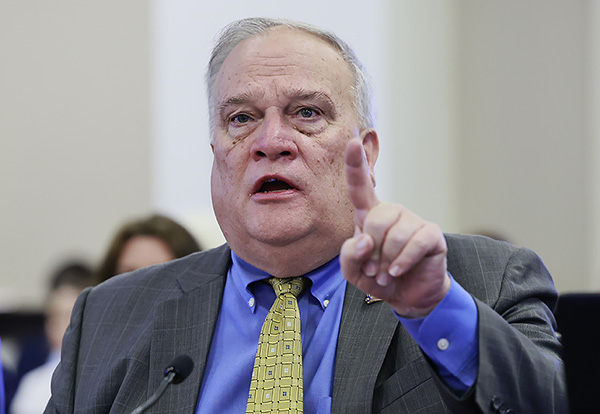
Senate President Robert Stivers, R-Manchester, speaks on Senate Bill 6 during Wednesday’s meeting of the Senate Appropriations and Revenue Committee. A high-res version is available here.
FRANKFORT — Legislation aimed at boosting research collaboration and innovation across Kentucky passed the Senate Appropriations and Revenue Committee on Wednesday.
Senate Bill 6 would appropriate $150 million in general fund dollars in fiscal year 2026–27 to the Endowment Research Fund.
Senate President Robert Stivers, R-Manchester, said the proposal would establish a competitive grant process requiring collaboration among universities and encouraging institutions to work together rather than compete against one another.
“We want our athletes to compete on the field or on the court. But in the realm of research and academics, I think it’s better to collaborate and work together than it is to be in competition,” Stivers said.
The measure would allow time to develop regulations outlining priority research areas, application procedures and expectations for bringing innovations to market. Stivers said the investment is intended to help Kentucky monetize research through patents and intellectual property protections while attracting private-sector partners.
“It’s about bringing as many assets and resources as you can to the table,” he said.
Committee discussion centered on the fiscal impact and how the state’s investment could leverage additional funding and generate economic growth.
Senate Democratic Floor Leader Gerald A. Neal, D-Louisville, called the measure “a no-brainer,” and asked how the state could use the funding to attract federal dollars and other outside resources.
Stivers responded that the goal is to create a foundation strong enough to compete for major federal grants and private-sector partnerships once the state’s initial funding period ends.
Sen. Shelley Funke Frommeyer, R-Alexandria, raised questions about coordination with economic development efforts, noting Kentucky’s distinct regional strengths and asking how the state economic development cabinet might be involved.
Stivers said the cabinet supports the concept. He added that research investment often leads to job creation when companies partner with universities to develop and commercialize new technologies.
Stivers pointed to the Kentucky Spine and Brain Injury Research Trust to illustrate how long-term investment can pay off.
He referenced actor Christopher Reeve, who suffered a spinal cord injury and sought treatment in Kentucky, noting that research here into tissue regeneration and neurological recovery continues to make advancements in modern medicine.
Stivers said those early investments laid the groundwork for continued innovation, allowing Kentucky institutions to secure competitive grants and build partnerships, explore tissue impacts from space travel, and connect those findings with research into Alzheimer’s disease.
Neal echoed that sentiment.
“When you envision something and you invest in it, we can get an outcome we didn’t expect to happen,” Neal said during the discussion.
The bill passed committee 19-0 and now heads to the full Senate for consideration.
Senate committee OKs resolution to address physician shortages
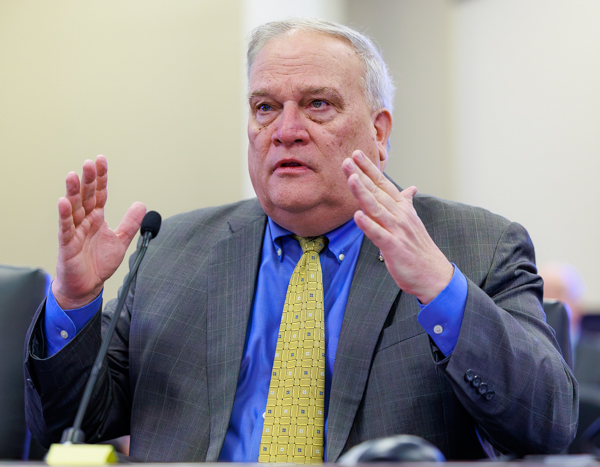
Senate President Robert Stivers, R-Manchester, testifies on Senate Joint Resolution 116 during Wednesday’s Senate Health Services Committee meeting. A high-res version is available here.
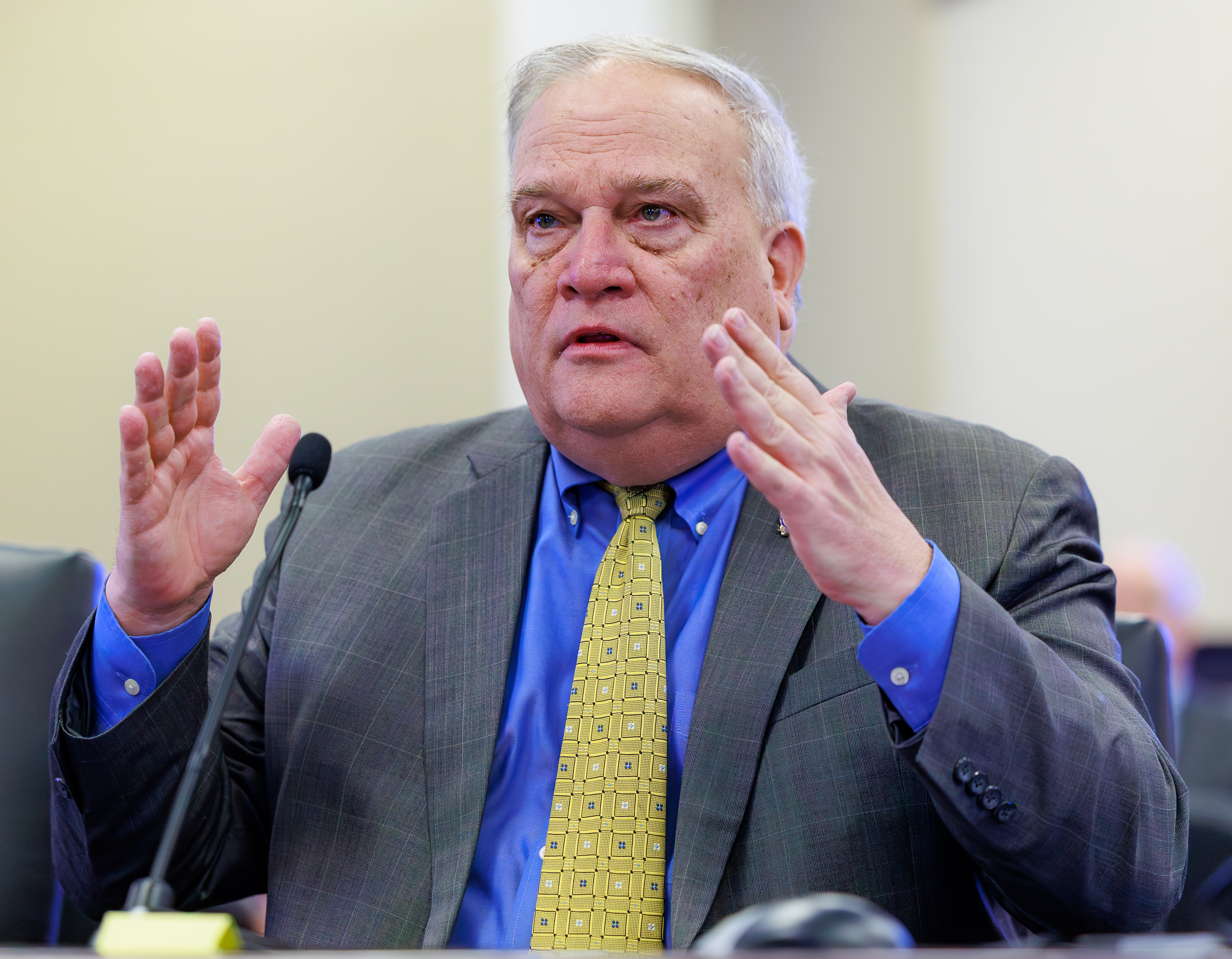
FRANKFORT — The Senate Health Services Committee unanimously advanced a joint resolution Wednesday designed to help address physician shortages in Kentucky.
The measure, Senate Joint Resolution 116, would direct the University of Kentucky, the University of Louisville and Eastern Kentucky University to work together in meaningful ways to alleviate physician shortages in underserved areas of the state.
Senate President Robert Stivers, R-Manchester, is sponsoring the resolution. He said it would call on the universities to look at the issue over the next year and “come back with a good framework and plan on how we serve the full state of Kentucky with health care.”
Stivers said it’s hoped that other entities – such as the University of Pikeville, the Kentucky Hospital Association and the Kentucky Medical Association will join the effort to help find solutions to the physician shortages.
The resolution calls for the three universities to develop a report and submit it to the general assembly by Jan. 1, 2027. Some topics expected to be in the report are: the shortage of primary and specialty care physicians, retention of physicians, possibilities for building on current actions, and regulatory or statutory barriers.
The resolution would earmark $250,000 from the general fund in fiscal year 2026-2027 to administer and produce the report.
Committee Chair Sen. Stephen Meredith, R-Leitchfield, asked Stivers what those at the universities initially thought of their proposed undertaking.
Stivers said he has spoken with medical officials at the UofL and EKU, and their reaction was positive; they want to move forward and feel comfortable in the collaboration.
Meredith pointed to data regarding physician shortages throughout the United States and said Kentucky’s shortage is not as severe as some other states’ shortages. “One of the issues may be the maldistribution of physicians, and that’s something that certainly has to be factored in,” he said.
Sen. Donald Douglas, R-Nicholasville, who is a physician, said the health care space is changing and Kentucky must keep pace.
“I appreciate the continued movement to direct our universities to work together in coordination with one another, allowing them to step outside the silos to better serve the people of the commonwealth,” he said.
Stivers said Manchester benefits from an Adventist hospital because not only does it provide health care, it also invests money in the community and provides hundreds of jobs.
“Thinking of the health care that we have access to, that very, very few small towns have, is wonderful. But then thinking of the economic engine that it is for my hometown is really quite unbelievable,” he said.
Sen. Karen Berg, D-Louisville, who is a physician, described the resolution as “awesome.” She said it’s the responsibility of the state’s physicians to help address the shortage problem.
“I hear and I hear and I hear about shortages of physicians in this state and how we need to basically alter requirements for who’s doing what because we don’t have enough doctors. And so, we’re having to rely on mid-level providers,” she said.
Sen. Keturah J. Herron, D-Louisville, also said she supports the resolution.
“Yesterday, I spoke to the folks at Eastern Kentucky University, and one of their ‘asks’ is also expanding their medical education programs, and so I completely support this,” she said.
Joint resolutions have the effect of law and are treated procedurally as bills. SJR 116 now moves to the full Senate.
House bill clarifying traceable communications law advances
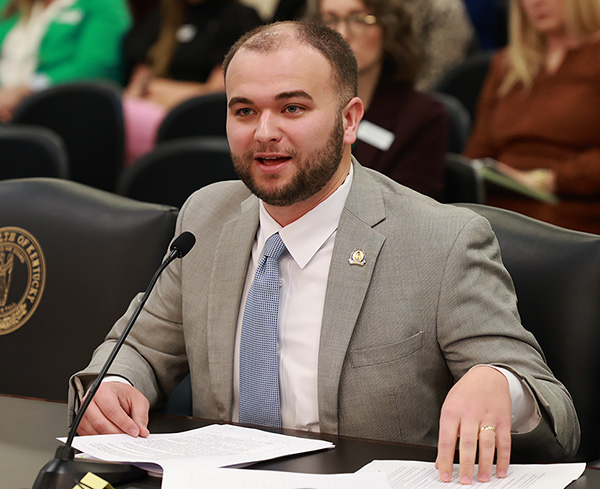
Rep. J.T. Payne, R-Henderson, said House Bill 67 would provide clarifications to Kentucky’s traceable communications law during Wednesday’s House Primary and Secondary Education meeting. A high-res version is available here.
FRANKFORT — A bill seeking to clarify a law designed to provide oversight on communications between students and public school faculty and staff is on the move.
House Bill 67, sponsored by Rep. J.T. Payne, R-Henderson, received unanimous approval from the House Primary and Secondary Education Committee on Wednesday. Payne said the legislation builds on Senate Bill 181 from the 2025 legislative session.
“Senate Bill 181 is a very well-intentioned piece of legislation that maybe had some unintended consequences,” Payne said. “Our goal in this bill, House Bill 67, is to clean up that the best we can to still protect our students, but also not to make it more difficult for teachers to do their job and be the professionals that they are.”
SB 181 required public school districts to establish a traceable electronic communications system between students and teachers and other school authority figures to provide oversight and establish boundaries.
The current law does provide a few exceptions as to who is required to communicate with a student via traceable communications. A parent teaching at the same school as their child, for example, is exempted from exclusively using traceable communications with their own child under current law.
HB 67 would expand the list of individuals exempted from using traceable communications and provide other clarifications, Payne said.
Under the legislation, cousins would be added to the list of exempted family members as well as any adult who lives in the same household as the student.
A group text involving two or more school employees or qualified volunteers and one or more students for an academic, athletic or extracurricular purpose is also among the new exemptions listed in the legislation.
Payne said HB 67 would also better define a qualified school volunteer.
Additionally, Payne told the committee that teachers who may encounter students via other jobs outside the school system, like a youth pastor, delivery driver or a photographer, may disclose that job and be exempt from using a traceable communication system for those purposes under the bill.
In case of an emergency, HB 67 would allow a teacher to respond to a student outside of the traceable communications system.
“They can help that student and then disclose that communication afterward and be perfectly ok,” Payne said. “Then it also says that as part of a field trip or work-based learning experience, teachers can contact students.”
HB 67 would also further clarify which social media communications are exempt, Payne said.
“House Bill 67 clarifies and says no, if it’s a public post or public comment and not a private one then it is ok,” he said.
Rep. Timmy Truett, R-McKee, is an educator and a youth leader at his church. He asked if he would be able to contact his youth group about events at church without notifying his school.
Payne said yes, as long as he discloses the job.
“You say I’m a youth pastor at such and such church, then yes. That would allow you to have those communications,” he said.
Rep. Lisa Willner, D-Louisville, thanked Payne for the legislation. She asked Payne who he consulted with when drafting the bill.
Payne said he met with the Kentucky School Boards Association, Kentucky Association of School Administrators, Kentucky Department of Education, Kentucky League of Cities, Kentucky Farm Bureau and more while drafting HB 67.
HB 67 is now before the full House for consideration.
This Week at the State Capitol (2-27-26)

Lawmakers spent the eighth week of the 2026 legislative session moving bills on Medicaid reform, educational tax credits and a new two-year spending plan for the state executive branch. A high-res version is available here.

FRANKFORT — Major bills on Medicaid reform, educational tax credits and the state’s new budget plan dominated much of the action in the Kentucky General Assembly this week as lawmakers debated some of the biggest spending and policy decisions of the session so far.
Legislators have continued to ramp up the pace each week since convening in January, and the intensity reached a new peak on Friday when lawmakers were simultaneously advancing House Bill 2 off the House floor and giving final passage to House Bill 1 in the Senate.
Both bills arrive in the wake of the One Big Beautiful Bill Act that the U.S. Congress passed last year.
HB 2 seeks to align Kentucky’s Medicaid program with the new federal law, and among many provisions, would implement community engagement requirements for certain able-bodied adults.
Other sections of the wide-ranging bill would address cost-sharing, eligibility reviews, non-emergency transportation services, accountability for managed care organizations and delivery of dental services. HB 2 also aims to enhance transparency by creating a performance dashboard and requiring regular program audits.
The legislation won support from the House Appropriations and Revenue Committee on Tuesday and cleared the House on a 77-21 vote Friday after supporters fended off a half-dozen amendments that were called on the chamber floor.
Proponents say the measure would streamline operations, improve outcomes, combat fraud and ensure that the program prioritizes those Kentuckians who most need services.
But during more than an hour of impassioned debate, critics charged that HB 2 would reduce access to health care and create steep, bureaucratic barriers for struggling Kentuckians.
The bill now heads to the Senate, which held an hour-long debate on the floor Friday over HB 1. That legislation would clear the way for Kentucky to participate in the new federal educational tax credi t program established in the One Big Beautiful Bill.
The program allows taxpayers to contribute up to $1,700 to scholarship organizations that assist K-12 students in public and private schools. Families can use the funds for a wide range of education-related expenses, and taxpayers would receive a matching federal tax credit for contributions.
Advocates for the bill say it will boost support for low-income students and students with special needs, but opponents have raised concerns that it will exacerbate disparities in education.
HB 1 advanced out of the House Appropriations and Revenue Committee and off the House floor on Tuesday. The Senate voted 33-5 on Friday to send the bill to the governor’s desk.
Perhaps the most watched bill of the week was House Bill 500, which represents the House version of the executive branch budget. It includes more than $151 billion in proposed appropriations for the 2026-28 biennium, including operating and capital costs.
Lawmakers sparred for more than two hours on the House floor Thursday before passing the bill 81-18 along with another measure that proposes a two-year spending plan for the judicial branch.
HB 500 seeks an overall reduction in spending but exempts areas like veterans affairs, the state funding formula for schools known as SEEK, Medicaid benefits, behavioral health, juvenile justice, corrections, and other key areas.
Backers said HB 500 would prioritize needs over wants and limit the growth in state spending to around 2% each year. Detractors said the plan should include more funds for education, housing and Medicaid, among other areas.
The bill now heads to the Senate where it is sure to undergo changes.
The general assembly has now convened for 36 days of this year’s 60-day session, and more than 1,000 bills have been filed in the chambers so far.
But lawmakers are facing deadlines next week for introducing new legislation: Monday is the last day to file bills in the Senate, and Wednesday is the last day in the House.
Meanwhile, dozens of other bills are continuing to build momentum. Here’s a look at some of the other measures that were moving forward this week:
Impaired Boating – In the event of a serious boating accident, House Bill 168, known as Keegan’s Law, would require law enforcement officers to seek a search warrant for blood testing of the boat operator if that person refuses to submit to the test. It also calls on telecommunicators to report boating accidents to Kentucky State Police. The measure cleared the House on Monday.
Involuntary Commitments – House Bill 249 would expand the list of felony sex crimes for which a judge may involuntarily commit a mentally incompetent offender to treatment. The House voted in favor of the legislation Monday.
Artificial Intelligence – House Bill 455 would forbid the use of artificial intelligence in providing direct mental health therapies. AI could not be used to make independent therapeutic decisions, to directly interact with clients or to generate treatment plans without the review and approval of a licensed professional. The House passed the bill Monday.
School Employee Sick Leave – Under Senate Bill 124, school districts would have the option to let employees voluntarily cash in sick days. Employees would need to maintain a minimum of 15 sick days, but could cash in additional days at 30% of their current pay rate. The bill would also allow teachers to use sick days for religious holidays that do not appear on the school calendar. The Senate gave the bill a green light on Monday.
Dolly Parton’s Imagination Library – Senate Joint Resolution 54 calls on the Kentucky Department of Libraries and Archives and the state Cabinet for Health and Family Services to cooperate in exploring ways to increase enrollment in Dolly Parton’s Imagination Library. The measure cleared the Senate Families and Children Committee on Tuesday.
Child Protection – House Bill 246 would require animal control officers to complete training to help recognize signs of child abuse and neglect. The House Local Government passed the bill Tuesday.
Firearms Conversation Devices – House Bill 299 would align Kentucky gun laws with federal law related to machine gun conversion devices. Federal law already bans possession of such devices, but supporters say the bill is needed to help law enforcement enforce the ban locally. Ultimately, possession of a conversation device would be a class C felony in Kentucky if the bill becomes law. The legislation received support from the House Veterans, Military Affairs and Public Protection Committee on Tuesday.
Logan’s Law – House Bill 422 would clarify the insanity defense in state criminal law and eliminate the eligibility of some violent offenders for early release. The bill was filed after Ronald Exantus, the man who killed 6-year-old Logan Tipton in 2015, was released early from prison last year. The House approved the measure Tuesday.
Student Violence – Senate Bill 101 would mandate that local boards of education expel students for a minimum of 12 months when they become aware of an incident in which a student in grades 6–12 intentionally harmed a teacher or other school employee on school grounds or at a school function. The Senate voted for the measure Tuesday.
FAIR Teams – Senate Bill 162 would eliminate the requirement to use Family Accountability, Intervention and Response teams – known as FAIR teams – in the diversion process for juvenile offenders in Kentucky. The bill won support in the Senate on Tuesday.
Status Offenders – Senate Bill 170 would create a four-year pilot program in up to 10 school districts to help address barriers to school attendance and improve accountability among parents of habitually truant students. SB 170 cleared the Senate Tuesday.
Physician Residencies – Senate Bill 137 would eliminate a duplicative residency requirement for international doctors to practice in the state. The Senate Health Services Committee passed the bill Wednesday.
Deer Populations – House Bill 142 seeks to help farmers more easily file and renew claims for crop and property damage caused by deer while also addressing overpopulation concerns across the state. The House Agriculture Committee advanced the bill Wednesday.
School Board Candidates – House Bill 469 would require candidates for local school board seats to undergo background checks. The House Primary and Secondary Education Committee voted for the bill Wednesday.
Sunscreen in Schools – House Bill 586 clarifies that sunscreen is not a medication and ensures that students can apply sunscreen at school without a written order from a health care provider. The legislation cleared the House Primary and Secondary Education Committee on Wednesday.
Residential Storm Shelters – Senate Bill 11 would create a residential safe room rebate fund that helps homeowners pay for building emergency storm shelters. The goal is to eventually provide matching grants to help cover the cost. The Senate Appropriations and Revenue Committee passed the bill Wednesday.
Nuclear Energy – Senate Bill 57 would create the Nuclear Reactors Site Readiness Pilot Program to help energy providers obtain licenses and permits related to constructing nuclear power projects. The program would provide grant funding for up to three projects with up to $25 million in grants available for each one. The legislation received support from the Senate Appropriations and Revenue Committee on Wednesday.
Juvenile Justice – Senate Bill 125 would establish a comprehensive framework for identifying and treating high-acuity youth in Kentucky's juvenile justice system and create a dedicated mental health residential treatment facility for them. The Senate Appropriations and Revenue Committee gave the bill a green light Wednesday.
Kindergarten Readiness – Senate Bill 191 calls on the University of Kentucky to establish a pilot program that gauges the effectiveness of using financial incentives to encourage kindergarten readiness. SB 191 cleared the Senate Appropriations and Revenue Committee on Wednesday.
Environmental Regulations – Under Senate Bill 178, new state environmental regulations cannot be more stringent than federal laws or regulations regarding the same topic. In absence of a federal law or regulation, new state environmental regulations must be technologically achievable and based upon the best available science and the weight of scientific evidence. The Senate Natural Resources and Energy Committee passed the measure Wednesday.
Prison Education Programs – House Bill 5 would establish the Kentucky Community and Technical College System Prison Education Program, seeking to reduce recidivism and support workforce development. KCTCS would partner with the state Department of Corrections to build and operate a vocational training campus at Northpoint Training Center. The legislation received a nod from the House Judiciary Committee on Wednesday.
Diabetes – House Bill 141 calls on the Kentucky Department of Education to provide informational materials on Type 1 diabetes to school districts for distribution to parents and students. The House voted in favor of the bill Wednesday.
Organ Donors – House Bill 510 aims to protect patients during the organ donation process by requiring additional verification steps before organ procurement can begin. It would also clarify that donor consent must be properly documented and that a patient must be formally declared dead before organs are donated. The bill cleared the House on Wednesday.
Stalking – House Bill 521 seeks to modernize state stalking laws especially regarding stalking behaviors that occur through electronic communications and social media platforms. The legislation won support in the House on Wednesday.
Alternative Sentencing – Senate Bill 122 aims to keep families intact when a parent is convicted of a felony. It would require Kentucky courts to consider alternative sentences for certain nonviolent felony convictions when the defendant is a primary caretaker of a dependent child. The Senate voted for the measure Wednesday.
Child Marriage – Senate Bill 156 would close a loophole in state law to ensure that 18 is the legal age for marriage in Kentucky. Right now, state law still allows 17-year-olds to get married if they have approval from the judicial system. The Senate Committee on Veterans, Military Affairs and Public Protection moved the bill forward on Thursday.
Data Centers – House Bill 593 seeks to protect utility ratepayers from subsidizing the energy costs for new data centers. It calls on tech companies, when opening a data center, to either generate their own energy, enter into a power purchase agreement or purchase power on the national market. The legislation cleared the House Committee on Economic Development and Workforce Investment on Thursday.
Wrongful Conviction Compensation – Senate Bill 131 would allow wrongfully convicted felons in Kentucky to sue for monetary damages based on how long they were wrongfully imprisoned. The Senate Judiciary Committee voted for the bill Thursday.
Medicaid Delivery Study – Senate Concurrent Resolution 9 calls for a study of accountable care models used for Medicaid programs in other states. The study would also look at opportunities to implement such a model in Kentucky through a pilot program. The effort seeks to control costs and improve health outcomes. The House Health Services Committee approved the resolution on Thursday.
Food is Medicine Initiatives – Senate Joint Resolution 23 would declare Kentucky as a “Food is Medicine” state and direct state agencies to advance Food is Medicine initiatives. The resolution on Thursday cleared the House Health Services Committee.
State Dog Breed – Senate Bill 37 would designate the Treeing Walker Coonhound as the official state dog of Kentucky. The Senate Agriculture Committee passed the bill Tuesday, and the measure cleared the Senate floor on Friday.
Recovery Residences – Senate Bill 33 seeks to enhance local communication and transparency around residential recovery centers. Operators who want to open a center would have to notify city government within 30 days of applying and provide a second notice if the center is certified. Operators would also be required to notify the city if any fines are imposed on the facility. The bill also would allow cities to maintain a registry of residential recovery centers. SB 33 advanced off the Senate floor on Friday.
Lawmakers are scheduled to reconvene on Monday for day 37 of the session.
Kentuckians are urged to check the general assembly's calendar for updates. Kentuckians can track the action through the Legislative Record Webpage, which allows users to read bills and follow their progression through the chambers.
Citizens can also share their views on issues with lawmakers by calling the general assembly's toll-free message line at 1-800-372-7181.
House passes Medicaid reform bill
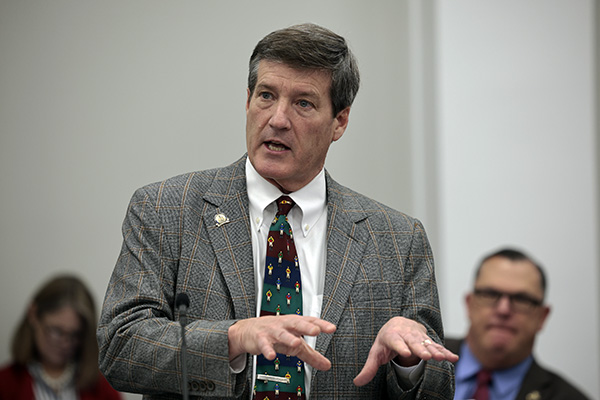
Rep. Ken Fleming, R-Louisville, speaks on the Kentucky Medicaid Reform Act found in House Bill 2 on the House floor on Friday. A high-res version is available here.
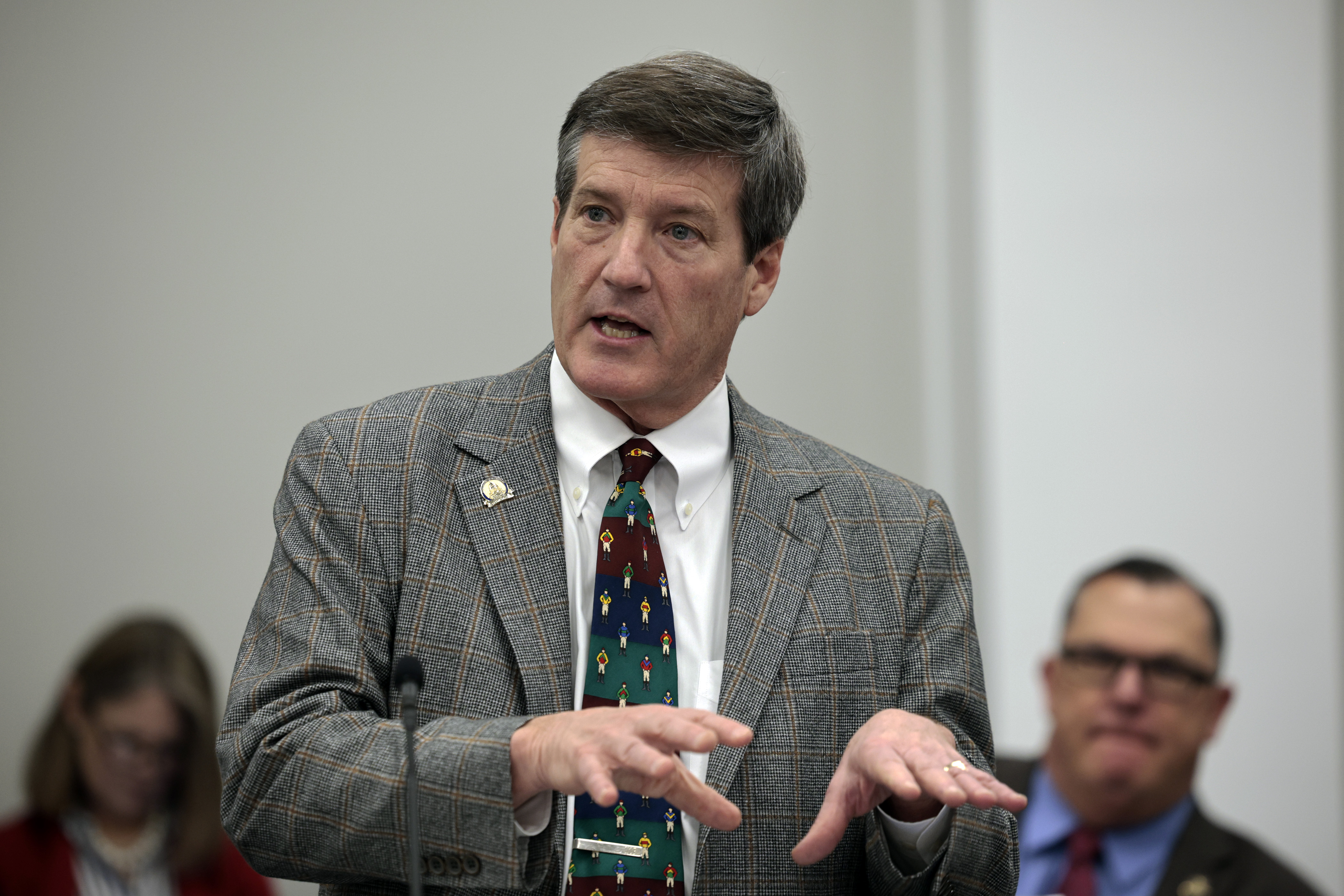
FRANKFORT — A major overhaul to Kentucky’s Medicaid program is on the move in the Kentucky General Assembly.
The Kentucky House of Representatives passed House Bill 2 on Friday after nearly two hours of debate.
Rep. Ken Fleming, R-Louisville, is the primary sponsor of the legislation. He said the first nine sections of HB 2 would bring state Medicaid law in line with the House Resolution 1, or the One Big Beautiful Bill Act, that U.S. Congress passed last year.
“The federal government has shifted the financial burden of Medicaid to Kentucky,” he said, adding that Medicaid coverage for a third of Kentuckians is the second largest state expense.
In addition to implementing new federal law, the Kentucky Medicaid Reform Act also aims to implement recommendations from the state Medicaid Oversight and Advisory Board.
This includes enhancing transparency, bettering health outcomes, streamlining program operations and delivery, strengthening program oversight and accountability, and reducing fraud, Fleming said.
The HR 1 provisions of the bill would address new federal community engagement, cost sharing and eligibility requirements.
Fleming said the general assembly’s response to HR 1 would focus on the Medicaid expansion population and not the traditional recipients. There are also specific carve outs to exempt certain members of the Medicaid population.
“These populations include pregnant women, caregivers for a dependent child under 13, and individuals with serious and chronic health conditions,” Fleming said.
Children and individuals on community-based waivers would also be exempt.
Fleming said HB 2 promotes personal responsibility without limiting access to essential care.
“It increases eligibility integrity by implementing safeguards to ensure only eligible Kentuckians are enrolled in our Medicaid program,” Fleming said.
Other provisions of HB 2 include reforming the appeals and auditing process, limiting coverage for glp-1 weight loss medication to medical-necessity only, and requiring the state auditor to conduct an audit of the program at least once every five years, Fleming said.
Critical debate of HB 2 included concerns the bill will result in less Kentuckians in need receiving care and put an undue burden on those subjected to the cost sharing and community engagement requirements.
Rep. Adam Moore, D-Lexington, said he is in support of the bill’s goal to reduce fraud and ensure recipients are seeing their primary care physicians more and going to the emergency department less.
He said he does, however, still have concerns about the cost sharing requirements of the legislation going beyond the federal requirements.
“We all share a goal of ensuring that the long-term sustainability of our Medicaid program, but we need to be careful that in our pursuit of oversight that we don’t actually build a pay-to-play health care system that punishes or leaves out Kentuckians that this program was designed to protect,” Moore said.
Fleming said the $20 copay provision of HB 2 would not go into effect until Oct. 1, 2028. If HB 2 becomes law, the Medicaid Oversight and Advisory Board would do a study.
“If we find through that data, through surveys, through whatever information we get that it’s not prudent to do this, we have two sessions before this takes effect to react to that,” Fleming said.
HB 2 now heads to the Senate after a 77-21 House vote.
Senate passes bill on federal education tax credit program

Senate President Pro Tempore David P. Givens, R-Greensburg, speaks on House Bill 1, on the Senate floor. A high-res version is available here.

FRANKFORT — Legislation implementing a new federal tax-credit scholarship program in Kentucky received final passage in the Senate on Friday and now heads to the governor’s desk.
HB 1 is sponsored Rep. Kimberly Poore Moser, R-Taylor Mill, and was carried in the Senate by President Pro Tempore David P. Givens, R-Greensburg.
It would make Kentucky eligible to participate in the qualified elementary and secondary education scholarship federal tax credit program established in House Resolution 1, which passed the U.S. Congress last year.
The legislation grants Kentucky’s Secretary of State the authority to opt into the program on behalf of the state. Participants would receive a federal tax credit of up to $1,700 for donations made to Kentucky scholarship granting organizations (SGOs).
“I want to stress the word tax credit, Mr. President, because that is a significantly different phrase than tax deduction. This is a dollar-for-dollar credit. In essence, if you have a dollar that you owe to D.C., you have the choice of sending that dollar to D.C. or one of these Kentucky SGO’s,” Givens said.
Givens also said that potential donations from the bill would not affect state resources in any negative fashion.
“Your donations do not impact state receipts in any fashion other than potentially having a positive ripple multiplier effect of that money being invested back in Kentucky. There are no state tax dollars being used in this program,” Givens said.
Senate Minority Caucus Chair Reginald L. Thomas, D-Lexington, spoke against the bill, arguing that as a tax credit, it would divert important government money that could otherwise fund other programs.
“As explained, this bill is a tax credit that takes out money that could otherwise go to Medicaid benefits, Medicare benefits, SNAP, defense, housing, transportation, you name it,” Thomas said.
Thomas further argued that the bill might create a two-tiered public school system.
“This bill will create a have and have not system among our public schools. Certainly those schools that are in urban areas, that have private schools, this will be a real boon for them,” Thomas said. “But if you live in one of those counties where your primary workforce depends on the school system, you will be harmed and disadvantaged by this bill.”
Speaking in favor, Senate Majority Floor Leader Max Wise, R-Campbellsville, said the bill would help provide the best outcomes for Kentucky students.
“This is truly a benefit that would help kids. The creativity and opportunity this could provide for summer programs, for the purchase of technology. This is another tool and another option for superintendents to work with,” Wise said.
Sen. Robin L. Webb, R-Grayson, explained her yes vote by saying she would monitor how any increased funding is used in the state to ensure the bill achieves its intended effect.
“This is an opt-in program. I assume we could also opt-out if it does not give us the results that we think it will or that other states are experiencing. I’m a rural legislator, we are going to be monitoring that. I think this bill has a lot of potential across the board.”
State budget clears House floor, heads to the Senate
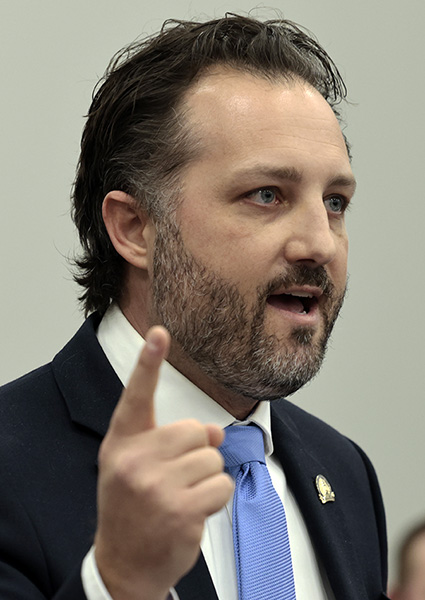
Rep. Josh Bray, R-Mount Vernon, speaks on House Bill 500 on the House floor on Thursday. The bill is a first draft of the state budget for the next two years. A high-res version is available here.
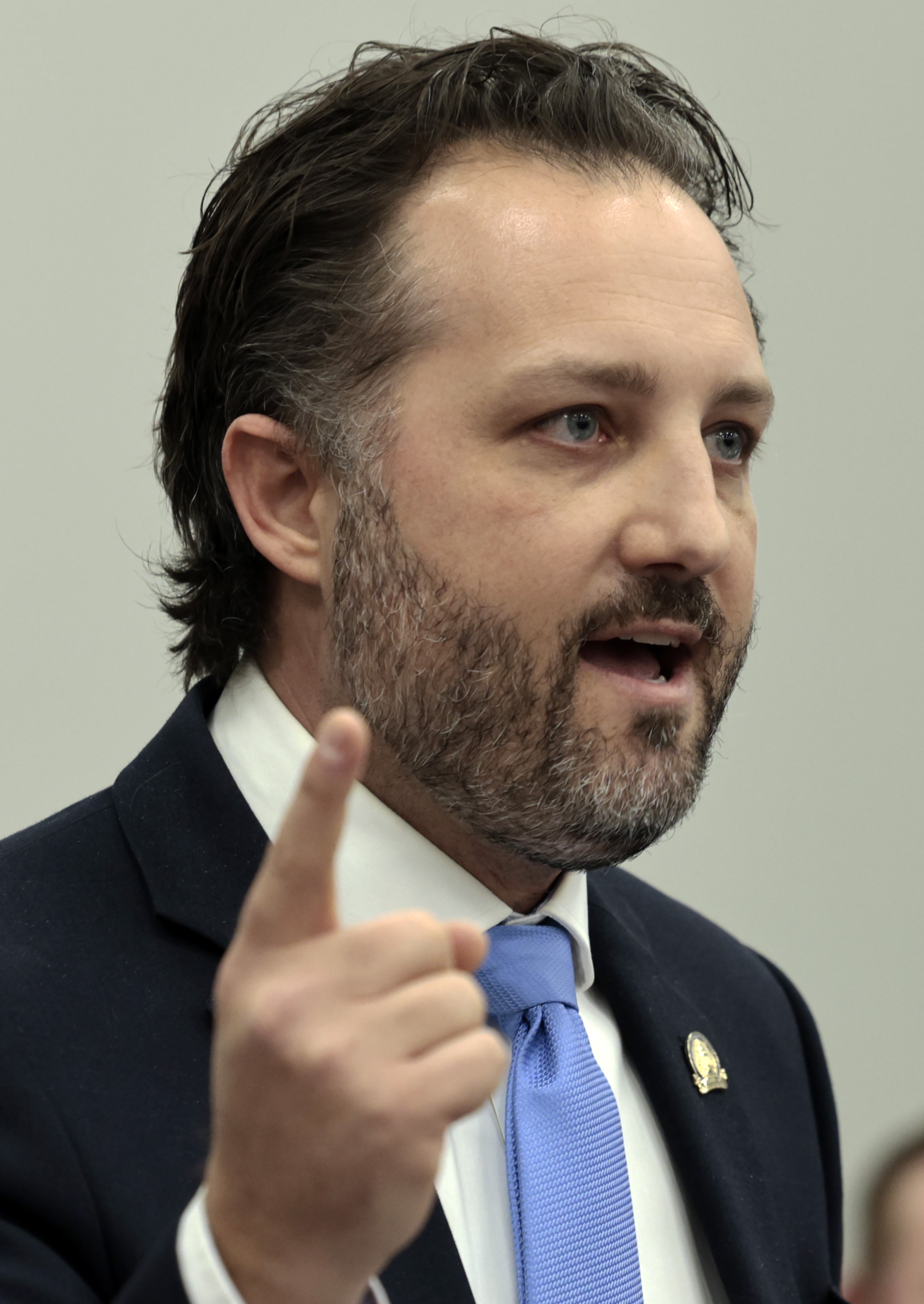
FRANKFORT — Two bills related to Kentucky’s spending plan for the next biennium advanced off the Kentucky House floor on Thursday.
House Bill 500 would appropriate billions each fiscal year to the state executive branch. Rep. Jason Petrie, R-Elkton, serves as the committee chair for the House Appropriations and Revenue Committee. He was joined by the chairs for the House Budget Review Subcommittees in presenting on HB 500 on the House floor.
In his opening remarks, Petrie said the legislation is a “good first draft” as the general assembly moves through the lengthy budget drafting process.
“We focused on the near-term needs for the next two years,” Petrie said. “And I stress, we focused on the needs, not wants.”
State government offices and agencies and other stakeholders have spent the last several weeks meeting with Petrie and the budget subcommittee chairs to share what the spending needs are in Kentucky over the next two years, he said.
“We focused on the needs. And ultimately, we ended up at …a restrained growth of spending in each year of a little less than 2%,” Petrie said.
While the budget calls for an overall reduction in spending, Petrie said there are areas of the budget that are exempt. Those are: veterans affairs, SEEK, county costs, Medicaid benefits, behavioral health, family resource centers, youth service centers, juvenile justice, corrections, community services and local facilities.
A previous call to limit spending on the state employee health insurance plan was removed, according to the bill.
Looking at projected revenues, Petrie said HB 500 calls for 2% of revenues from each year to be deposited into the budget reserve trust fund. He projects that would result in about a $614 million allocation to address long-term needs in the future.
The House debated HB 500 for more than two hours Thursday afternoon, during which several lawmakers called for an increase in funding for public education, affordable housing, Medicaid and more.
Rep. Kim Banta, R-Fort Mitchell, serves as the chair of the House Budget Review Subcommittee on Primary and Secondary Education. She said the budget calls for a 2% increase in SEEK, or per pupil spending, in each fiscal year.
Rep. Adrielle Camuel, D-Lexington, said she is thankful for the budgeted increase in SEEK funding, but feels it doesn’t go far enough.
“Those increases are welcome, but they’re just not enough to keep up with the rising cost and the growing expectations that we keep putting on our public schools and our school staff,” she said.
Camuel called for a floor amendment that would provide a salary increase for public school teachers and support staff, but the amendment failed.
“If we truly value public education, then our budgets have to reflect that,” she said.
Rep. Josh Bray, R-Mount Vernon, serves as a vice chair of the House Appropriations and Revenue Committee. He said he would also like to see more funding for education and other things, but Kentucky must “live within its means.”
“I trust you all when you say you want these things, because guess what – we want them too. But there are things we can afford to do, things we need to do in order to move the commonwealth forward,” Bray said, adding the state can’t afford reckless spending.
The House passed HB 500 by an 81-18 vote.
House Bill 504 – the state judicial branch budget – also advanced off the House floor on Thursday after receiving a 94-4 vote.
Rep. Stephanie Dietz, R-Edgewood, also described the judicial bill as a “good first draft” that supports infrastructure needs, flood recovery, workforce stability and more.
Both HB 500 and 504 are now before the Senate for consideration.
Committee approves bill to prevent child marriage

Sen. Julie Raque Adams, R-Louisville, testifies Thursday on Senate Bill 156 to the Senate Veterans, Military Affairs and Public Protection Committee. A high-resolution photo can be found here.

FRANKFORT — A bill crafted to close a marriage age loophole in Kentucky law advanced unanimously Thursday during a Senate Veterans, Military Affairs and Public Protection Committee meeting.
“Basically, this is just legislation designed to end child marriage in Kentucky once and for all by closing the remaining loopholes and ensuring that our laws are clear, enforceable and centered on the safety and dignity of our minors,” said the bill’s sponsor, Sen. Julie Raque Adams, R-Louisville.
The measure – Senate Bill 156 – builds on legislation the Kentucky General Assembly passed in 2018, which essentially identified 18 as the legal age for marriage. However, the law still allowed 17-year-olds to get married if they had approval from the judicial system, Adams said.
“It was kind of a checklist that they would go through. The main one being that that 17-year-olds would be emancipated, so in case anything happened, they would have full legal rights to sign a lease or enter into a domestic violence shelter, those kinds of things,” she said.
The caveat has been exploited and not adhered to, Adams said.
Donna Simmons, founder of the REVIVE Collective and survivor of generational child marriage, testified that she reached out to Adams after years of trauma.
“I approached Senator Adams about filing this bill because this is not theoretical to me. This is my life. My mother was a resident of McCreary County when she was 13 years old and married my father. He was a grown man who had already served in the Korean War and had two young sons,” she said.
Simmons said when she was 14 years old, she was admitted to a behavioral health facility where she was groomed by a 29-year-old staff member.
“When I was released, that relationship continued, and at sixteen, my mother consented to me marrying him. He was 31. I was forced to drop out of high school before completing the tenth grade,” she said. “When I tried to escape his abuse, I was denied housing because I was a minor and I could not enter into a contract.”
Simmons said she was also turned away from a domestic violence shelter because she was under age.
“At sixteen, I miscarried and nearly died from complications. As a married minor, I could not consent to my own medical care. I had to wait for my abuser to decide whether I would receive treatment. I became pregnant again when I was 17. My daughter was born just about a month after I turned 18,” she said
Simmons said when she was choked by her husband, she knew things had to change, and now after surviving violence, exploitation, and systemic failure, she works to protect other girls from becoming trapped.
Simmons testified she had to fight to obtain public records and discovered some officials were violating child marriage laws by authorizing marriages involving 16-year-olds, clerks bypassing required judicial orders and marriages involving age gaps of 10-12 years receiving approval.
“Let us stop interrupting childhood in the name of marriage and give children full lives that they not have to spend decades recovering from,” she said.
Committee Chair Sen. Matthew Deneen, R-Elizabethtown, thanked Simmons for testifying.
“I know many folks may think this is an issue that doesn’t have so many layers, but it does. And we appreciate you sharing your story with us.”
Sen. Gary Boswell, R-Owensboro, said Simmons has a heartbreaking story and said he was sorry she went through it. He voted for the bill, but said he still has some questions.
“My best friend and his wife, they were married when she was 17 and he’s 19. They’ve been married 60 some odd years, and so, I understand the issue when it comes to predators and all that,” he said. “…I’m going to be in favor of the bill, but I do have a few questions and maybe we can talk about later.”
Sen. Brandon Smith, R-Hazard, said Simmons spoke on behalf of other women who might not be able to come forward regarding their situations. He said Kentucky is “only as strong as the least of us” and told Simmons she is part of something historic and is a tenacious fighter after being turned away from institutions she thought would help her.
“But I’m glad you didn’t stop, and I apologize on behalf of all those agencies and institutions that turned you away and let you down,” he said. “But you deserve to hear that apology from somebody in government that says to you that I’m truly sorry they let you down.”
Bill advances on compensation for wrongfully convicted felons
Sen. Robin L. Webb, R-Grayson, testifies on SB 131 at Thursday’s meeting of the Senate Judiciary Committee. A high-resolution photo can be found here.
FRANKFORT — Legislation that would create a new civil cause of action for wrongfully convicted felons to obtain compensation for their lost years advanced out of the Senate Judiciary Committee on Thursday.
Senate Bill 131, sponsored by Sen. Robin L. Webb, R-Grayson, creates new statutory language that allows wrongfully convicted Kentucky felons to sue the commonwealth for monetary damages based on how long they were wrongfully imprisoned.
“There have been 23 known exonerations since 1989, with innocent Kentuckians losing a combined 220 years of their lives,” Webb said. “What I think we have done with this bill is try to narrowly define who would be eligible and provide a rational system for their compensation.”
As laid out in the bill, this new civil cause of action would apply only to incarcerated individuals who have had their felony convictions reversed, in addition to those who, meeting the incarceration requirement, have received an unconditional gubernatorial pardon on innocence grounds.
Michael VonAllmen, a wrongfully convicted individual testifying with Webb on the bill, said that the current remedies available to individuals in his situation are not enough for what their wrongful convictions have made them endure.
“When you take 27 years as a convicted felon, and the end result of your sentence being overturned is an ‘oops, we’re sorry’, that would not sit right with you, or anyone,” VonAllmen said.
Kentucky Innocence Project Director Aaron Riggs, also speaking with Webb on the bill, said that the current system provides few resources for innocent individuals once released from their wrongful imprisonments.
“Really what we have right now is a system where individuals who have gone to prison for crimes that they have committed and served their time reenter society with more support than people who have gone to prison for crimes that they have not committed,” Riggs said.
Senate Minority Caucus Chair Reginald L. Thomas, D-Lexington, speaking in favor of the bill, asked how much the claims arising out of the bill might cost.
Webb said that should every claim from existing exonerations be granted, the state would pay out $7.5 million in damages.
Sen. Michael J. Nemes, R-Shepherdsville, said that the bill was an important way the state could take accountability for incorrect judicial outcomes.
“There is no way that we can repay anyone in this situation. But what the bill shows is that we have made a mistake, and we want these people back in society as best as they can be,” Nemes said.
Sen. Phillip Wheeler, R-Pikeville, asked if this bill would prevent wrongfully convicted individuals from filing other civil claims surrounding their imprisonment.
“Would pursuing a claim under this new section preclude pursuing any other actions against negligent parties,” Wheeler asked.
Riggs answered that, while the new language would not preclude individuals from filing other claims, any damages awarded by those other claims would offset any compensation they might have received from claims made under this new bill.
SB 131 now moves to the full Senate.
Bill to regulate utilities for data centers on the move
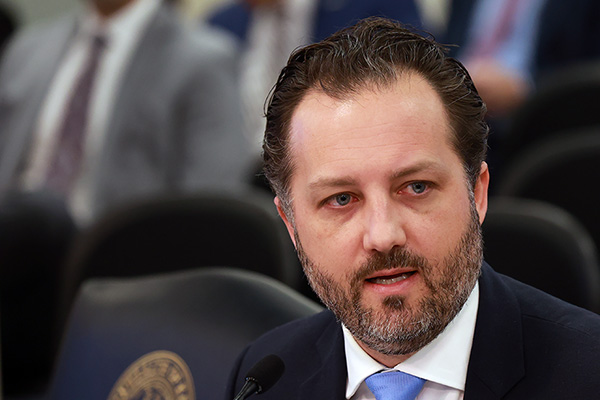
Rep. Josh Bray, R-Mount Vernon, told the House Economic Development and Workforce Investment Committee on Thursday that House Bill 593 would protect ratepayers from subsidizing data centers. A high-resolution photo can be found here.
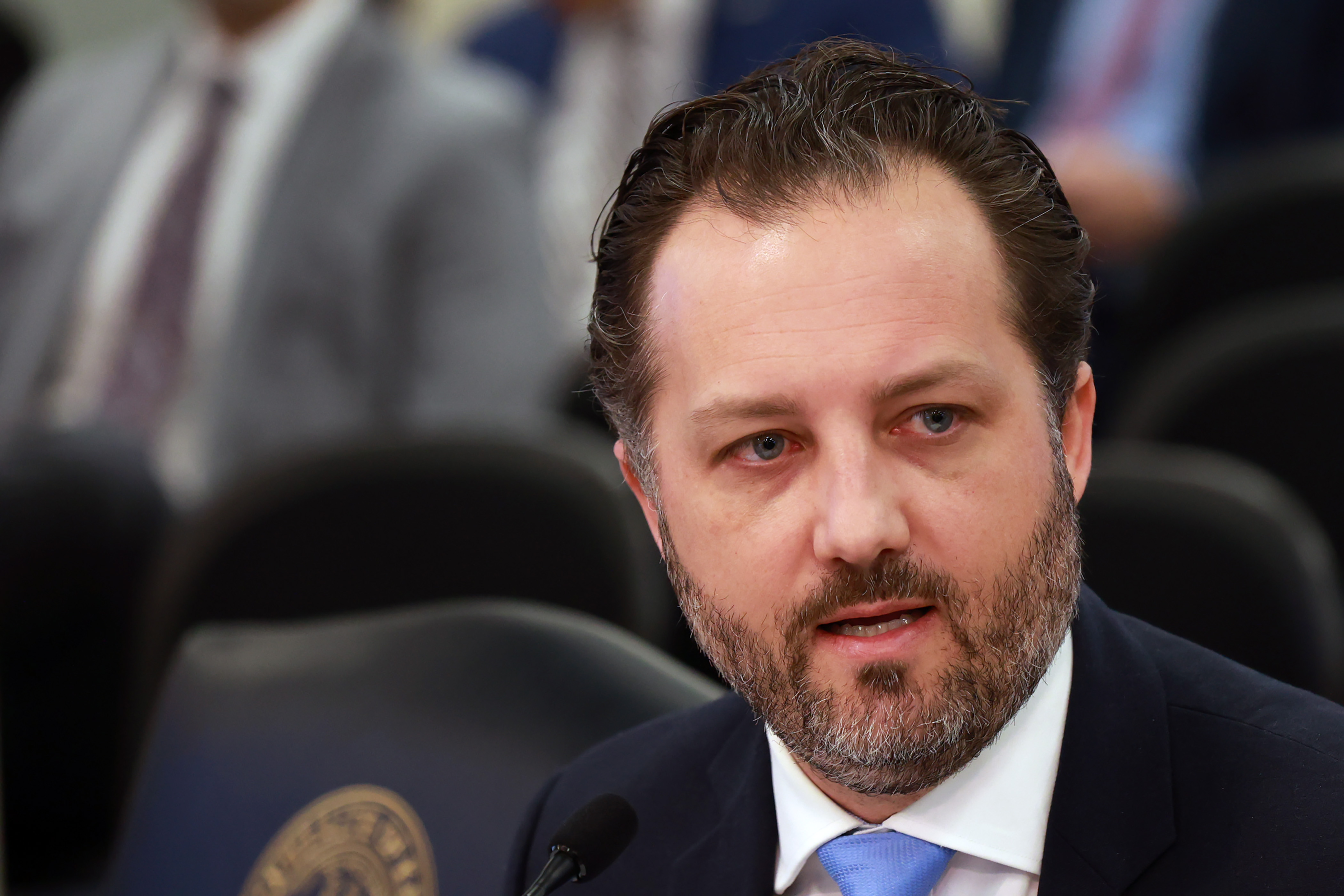
FRANKFORT — As tech companies plan to bring more data centers to Kentucky, House Bill 593 would ensure Kentuckians do not subsidize the utility costs.
The House Economic Development and Workforce Investment Committee heard from Rep. Josh Bray, R-Mount Vernon, on the issue on Thursday. He is the primary sponsor of the legislation.
Bray said he’s spent the last two years on the Artificial Intelligence Task Force learning about the utility needs of data centers.
“What this bill does is make sure Kentucky handles data centers the right way, so that we protect our ratepayers, and we take advantage of kind of a unique opportunity and protect our future economic interest going forward,” Bray said.
If a tech company wants to bring a data center to Kentucky, HB 593 would require the company to do one of three things, Bray said.
First, a company could choose to provide its own electric generation for a data center and sell any excess to the local utility. The second option is the company could enter into a power purchase agreement, and the third option would be purchasing the electricity on the national open market.
HB 593 would also require a minimum, nonrefundable $75,000 application fee.
“If we have to increase generation, if we have to increase transmission, then the data center should pay for all of those expenses,” Bray said.
The legislation also includes a provision addressing water, gas and wastewater costs, he said.
Rep. Nima Kulkarni, D-Louisville, who also serves as a ranking minority member on the committee, asked Bray what the application fee covers.
Bray said the fee would cover the actual cost of the study to determine the data center’s capacity and transmission requirements.
“The $75,000 application helps make sure that all of that’s paid for up front, so that ratepayers aren’t having to cover that,” he said.
The legislation would apply to municipal and private utility companies, Bray added.
Kulkarni said it is “imperative” Kentucky tries to regulate data centers to avoid negative impacts on our communities.
Rep. Kevin Jackson, R-Bowling Green, said he appreciates Bray’s work at “tackling the issue.” He wanted to know if Bray is certain this bill would protect ratepayers.
“If this bill passes, there’s no way that any constituents’ electric bills, utility bills would go up because of that,” Jackson asked.
Bray said that is his intention, and he believes the bill is “pretty clear” that ratepayers cannot subsidize data centers.
The House Economic Development and Workforce Investment Committee voted unanimously to send HB 593 to the House floor.
Rep. William Lawrence, R-Maysville, said HB 593 is a “due diligence” bill that addresses one of the biggest concerns many constituents have about data centers in Kentucky.
“I feel like we are always on the backside of fixing problems here in Frankfort, and this is a bill that gets ahead of the game,” he said. “We’re setting the parameters. We’re making the guardrails, as we should as the people who set the laws for the state.”
Bill to create KCTCS Prison Education Program advances
Rep. Jennifer Decker, R-Waddy, tells the House Judiciary Committee that House Bill 5 would reduce recidivism in Kentucky through establishing the Kentucky Community and Technical College System Prison Education Program. A high-resolution photo can be found here.
FRANKFORT — The House Judiciary Committee considered a bill on Wednesday that seeks to reduce recidivism and boost Kentucky’s workforce.
House Bill 5, sponsored by the committee’s co-chair, Rep. Jennifer Decker, R-Waddy, would establish the Kentucky Community and Technical College System Prison Education Program.
“This initiative will lower recidivism, accelerate workforce development, help address Kentucky’s labor needs, and deliver long-term security savings to society through reduced reincarceration rates,” Decker said.
Under HB 5, KCTCS would partner with the Kentucky Department of Corrections to build and operate a model vocational training campus at Northpoint Training Center, a men’s prison in Boyle County.
Decker said the legislation is modeled after a similar, successful initiative in Michigan.
“Michigan’s results are not theoretical,” she said. “They are proof that HB 5 is grounded in real world evidence and delivers a proven data-supported return on investment, safer communities, dramatically lower reincarceration rates and a stronger workforce that helps create more tax-paying citizens.”
Inmates serving a life sentence without parole or who have been convicted of a sex crime would not be eligible for the program, according to the bill. Inmates who have previously escaped prison or attempted to would also not qualify.
Kerry Harvey, a representative from the governor’s office and former secretary of Kentucky’s Justice and Public Safety Cabinet, told the committee HB 5 would not replace prosecution or punishment.
“It is not a ‘get out of jail free card,’” he said. “It will, however, turn out inmates who are substantially less likely to commit new crimes upon release from prison.”
Harvey also told the committee he is appreciative of the partnership with KCTCS President Ryan Quarles on the project.
Quarles said KCTCS’s partnership with the Department of Corrections is not new. The college system already has 550 inmates enrolled, and recently celebrated more than 3,000 inmates receiving their GED.
More than 300 employers in Kentucky will hire convicted felons, Quarles said. This means inmates should have an opportunity to find employment upon release from prison and completion of this uniquely immersive and intensive educational program, he said.
Committee Chair Rep. Daniel Elliott, R-Danville, said the inmates could study manufacturing technology, welding, carpentry, HVAC, diesel mechanic technology, electricity, computerized machining, heavy equipment operations and more.
“These are all very marketable professions that these folks will be able to go into,” Elliott said, noting the program would be in his district.
Data collection is another provision of HB 5. Rep. Nima Kulkarni, D-Louisville, asked if there was a way to add tracking of the successful employment of inmates after they’ve been released that provision.
“I think it’s really important for us to track the success of these programs,” she said.
Quarles said KCTCS would encourage that in order to show the return of investment on the project.
“Employment trends change or there might be an employment opportunity that wasn’t there in the first wave when we get started hopefully fall of next year,” he added.
Harvey said most parolees are under supervised release, so there could be a way to track employment there.
Kulkarni asked Decker if she would be open to a floor amendment. Decker said she’d discuss it.
“That sounds like a great idea,” she added.
The House Judiciary Committee approved HB 5 by a 19-1 vote. It will now go before the full House for consideration.
Prior to voting in favor of the legislation, Rep. Kimberly Poore Moser, R-Taylor Mill, encouraged the committee to support HB 5.
“I love this bill,” she said. “This is a great initiative, and it is something that is near and dear to my heart.”
Committee advances bill on the overpopulation of deer
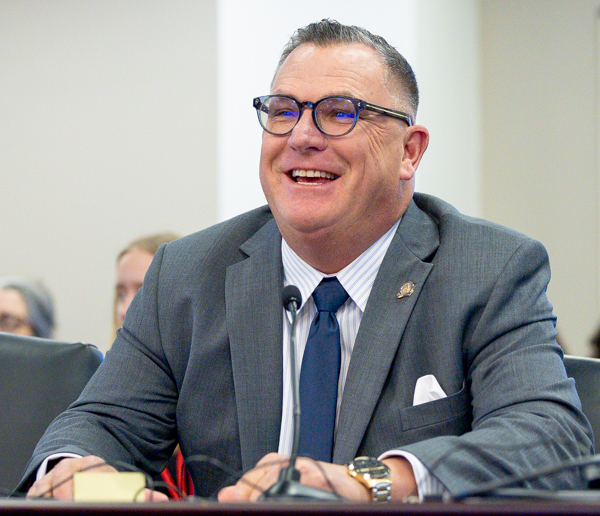
Rep. Michael Sarge Pollock, R-Campbellsville, is sponsoring House Bill 142, which cleared the House Agriculture Committee on Wednesday. A high-resolution photo can be found here.
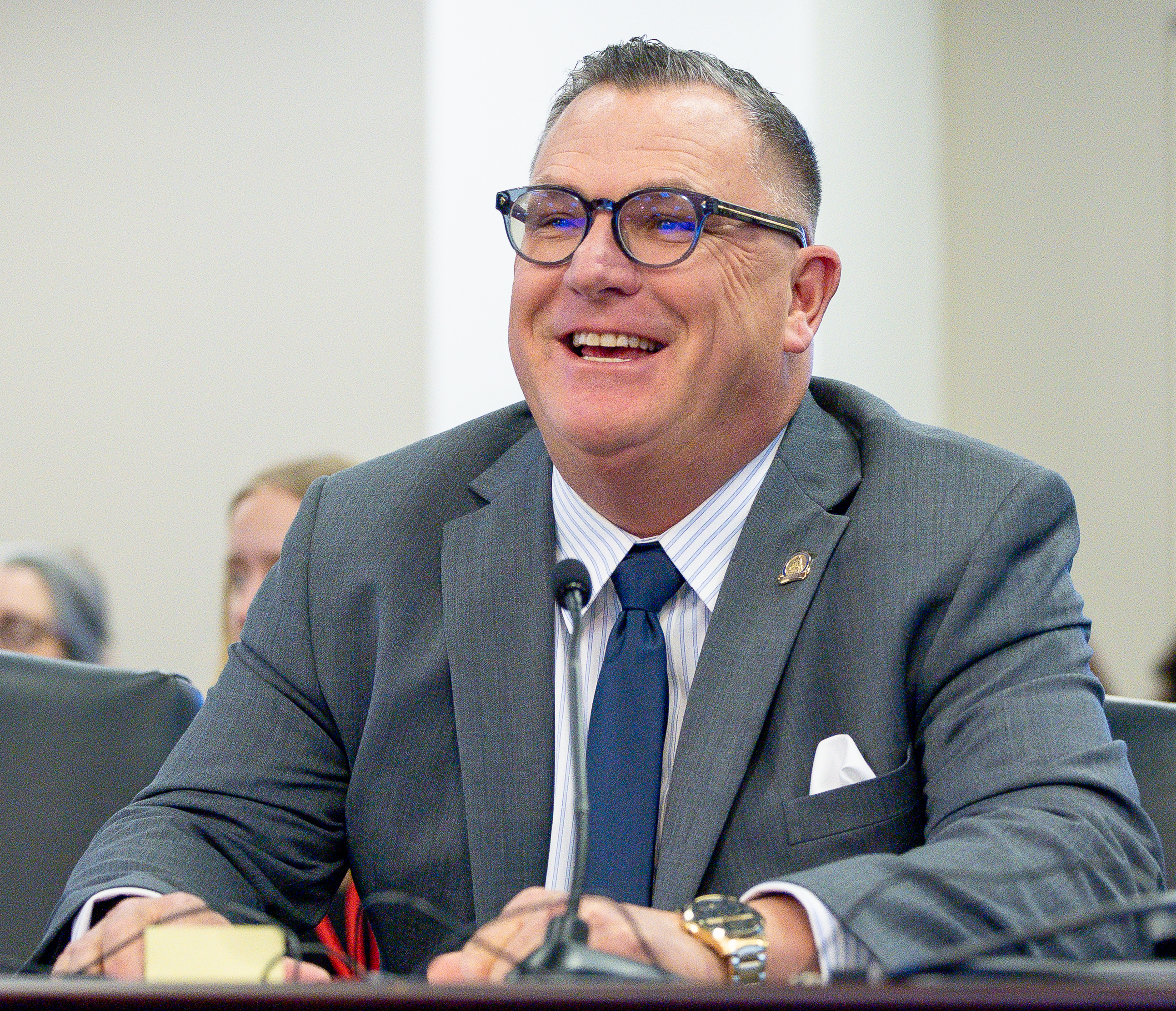
FRANKFORT — The House Agriculture Committee advanced legislation Wednesday aimed at helping farmers more easily file and renew claims for crop and property damage caused by deer while also addressing overpopulation concerns across the state.
House Bill 142 focuses on simplifying the permit renewal process for landowners who experience repeated deer damage.
Rep. Michael Sarge Pollock, R-Campbellsville, said the legislation is intended to reduce delays and provide relief to farmers dealing with consistent losses.
“It expedites the process that farmers or a landowner can go through after damage due to deer,” Pollock said.
Currently, landowners must apply for a deer damage permit through the Kentucky Department of Fish and Wildlife Resources and provide documentation of crop or property destruction. Permits are issued for a limited time and require landowners to reapply and submit evidence of continued damage.
HB 142 would allow landowners who have documented damage for three consecutive years to immediately renew their permit, allowing a faster response to ongoing losses.
The bill additionally targets antlerless deer, which are the primary drivers of population growth. Under the legislation, the department of fish and wildlife would issue destruction permits in areas with an overpopulation of deer, allowing landowners to take antlerless deer outside normal hunting seasons.
Rep. Chad Aull, D-Lexington, asked how the state determines which areas qualify as overpopulated, and Pollock explained how these areas would be identified.
“The state is broken into zones by fish and wildlife by counties. Zone one and zone two are the over populated areas. However, in zones one, three and four, over population does not pertain to these particular areas, so for this bill they would determine the over populated areas,” he said.
Several lawmakers spoke in support of the bill, sharing personal experiences with deer-related losses.
Rep. Ryan Bivens, R-Hodgenville, a farmer, said deer have caused significant damage to his property.
“I think we lose close to six figures on the farm every year because of deer destruction – of not only crops but shed antlers damaging tires,” Bivens said.
Rep. Shawn McPherson, R-Scottsville, also spoke in support of the measure.
“There’s some mornings I can count 40-60 deer before I get a mile from the main road while driving,” McPherson said.
Rep. Walker Thomas, R-Hopkinsville, recalled his experience with a vehicle crash involving a deer.
“My last car was totaled from hitting a deer as I was driving the three hours up this way to Frankfort.” Thomas said.
Pollock explained the legislation could possibly work alongside efforts to provide venison to Kentuckians in need through organizations such as Feeding America and Hunters for the Hungry.
“That’s a passion that I have,” Pollock said. “They are all excited to know that this focus will provide extra protein, so we’re working through a process of what that could look like now.”
Rep. David Hale, R-Wellington, thanked Pollock and fish and wildlife officials for addressing earlier concerns.
“I’m very thankful you and fish and wildlife got together on issues that I had about the bill early on,” Hale said.
The bill passed 20-0 vote and now moves to the full House for consideration.
Committee passes provisional medical license bill
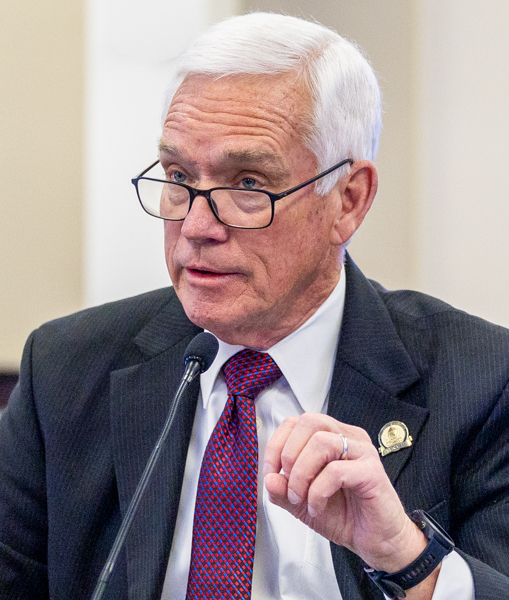
Sen. Stephen Meredith, R-Leitchfield, speaks Wednesday on Senate Bill 137 during a Senate Health Services Committee meeting. A high-resolution photo can be found here.
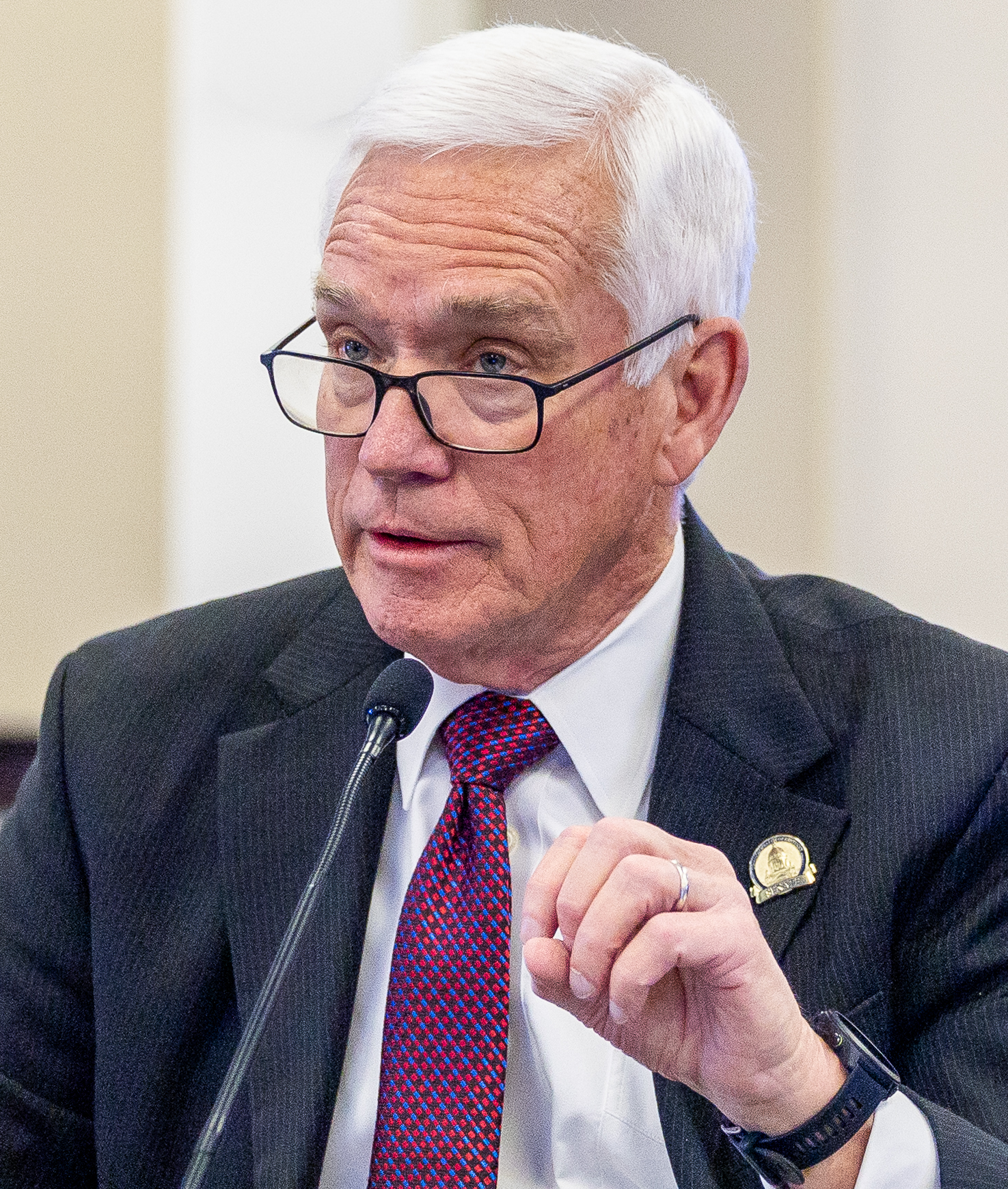
FRANKFORT — In a bid to lessen Kentucky’s medical doctor shortage, a bill that received approval Wednesday from the Senate Health Services Committee would eliminate a duplicative residency requirement for international doctors to practice in the state.
Senate Bill 137’s sponsor, Committee Chair Sen. Stephen Meredith, R-Leitchfield, said the shortage is pronounced in rural communities where 42% of Kentuckians live, but only 17% of the state’s primary care physicians reside.
“What we’re attempting to do is address a problem that is serious and will become more serious in the future. It’s projected by 2030 that we’re going to have a shortage of almost 3,000 physicians in the state of Kentucky,” he said.
Meredith said the bill isn’t a total solution to the problem, but a big step in the right direction. He said the state’s Medicaid spending has grown from $10 billion in 2017 to more than $20 billion today. A top priority is getting enough practitioners so that people have access to care, he said.
Joshua Reynolds, policy analyst for Cicero Action, said that under current law, Kentucky requires international physicians to complete residency in the United States even if they have completed a residency elsewhere. Senate Bill 137 would remove this duplicative requirement, he said.
Over the last five years, international medical graduates filled 237 – approximately 12% – of the state’s residency slots, Reynolds said.
“Many of these physicians did not need to repeat post graduate education, and allowing these internationally trained physicians who have already completed residency and worked for a number of years in the country of licensing, will allow them to immediately address the physician shortage in Kentucky and open up more of these slots for U.S. medical graduates,” he said.
Reynolds said there are many safeguards in the bill to ensure that access to care is increased and quality won’t be decreased.
Under SB 137, doctors would have to complete English proficiency requirements, be graduates of a foreign medical school and have completed a foreign residency program or alternatively, graduate from a U.S. medical school and have completed a foreign residency program.
They must also have at least five years of work experience as a physician fully licensed in their country of licensing and be in good standing with the licensing authority of that country, he said.
Reynolds said candidates need to be certified by the Educational Commission for Foreign Medical Graduates, pass exams required by the Kentucky board and have an employment offer from a sponsor.
Sen. Karen Berg, D-Louisville, who is a physician, said she has had positive experiences with physicians who were trained outside the United States.
“My experience has been very positive at the university, with foreign medical graduates, the majority of whom, that I know personally came from Germany – extremely well trained. They didn’t all do well in this country. I’ll be honest. I think out of the three that I worked with, two of them are no longer here,” she said.
Sen. Lindsey Tichenor, R-Smithfield, voted against the measure, saying she has concerns about the quality of training some physicians might have. She also said there’s the possibility of false licenses.
“I have some concerns with this bill based on a perspective that I bring. I lived for four years in a third-world developing country,” she said.
She said a national from the foreign country where she lived performed dental work on her, and she subsequently needed to have surgery in the United States.
Meredith said he worked with physicians from Pakistan, Canada, Lebanon, India and Iran while working as a hospital chief executive officer. He said the credentialing process is not simple.
“And this is radically different from just filling out a job application and wanting to go to work. Credentialing is a very structured process. And bear in mind that no provider wants to expose themself from a professional liability standpoint and they’re not going to take shortcuts. It doesn’t make sense to do that,” he said.
Sen. Keturah J. Herron, D-Louisville, voted for the measure and said it’s important to ensure something is built in for implicit bias training or diversity training at medical facilities.
Sen. Donald Douglas, R-Nicholasville, who is a physician, voted for the measure and voiced concern that physicians seeking to practice in Kentucky might not actually end up working in health care professional shortage areas.
“I think we need to allow the bigger picture in terms of more people in the general assembly to get an opportunity to get a bite of this apple and get comfortable with a bill such as this,” he said.
Senate Bill 137 now heads to the full Senate.
Senate moves forward on two bills related to status offenders

Sen. Stephen West, R-Paris, speaks Tuesday on Senate Bill 162 on the Senate floor. A high-resolution photo can be found here.

FRANKFORT — The Senate on Tuesday moved forward with two measures – Senate Bill 162 and Senate Bill 170 – related to student misconduct and ongoing efforts to divert status offenders from the criminal justice system.
Sen. Stephen West, R-Paris, said SB 162 addresses Family Accountability, Intervention and Response (FAIR) teams, which have been part of Kentucky’s efforts to assist juvenile offenders via diversion efforts – especially students who are habitually truant or engage in uncontrollable behavior at school.
The FAIR teams model was adopted by the Kentucky General Assembly in 2014 with the goal of bringing together representatives from the legal system, schools officials and others to help keep juvenile offenders on track and out of court.
West said the effort was well-intentioned and earned a lot of buy-in from stakeholders at the time.
“Fast forward to today, it has become clear that it is time for the FAIR teams part of the law to leave, to exit. It’s not working. The system is not currently working as intended,” he said.
West said the main issues with FAIR teams seem to be the length of time that the process takes and getting all the interested parties scheduled at the same time. He said juveniles are also waiting long periods of time to receive needed services.
“While they’re waiting for these services, they are back in school,” he said. “So, when they’re back in school, they’re causing the same types of problems for which they’re in diversion or they’re in front of the FAIR teams.”
Under the proposed changes, complaints filed against students who are beyond school control must be referred to the court-designated worker and to the county attorney for an initial decision about whether the youth will be referred for court action or remain with the court-designated worker (CDW) for diversion.
West said the bill ensures that any diversion agreement with the CDW includes a provision that the student attends school regularly and refrains from conduct that would lead to suspension or expulsion.
If the student is suspended or expelled, the CDW would consult with the county attorney, and if the county attorney determines that the child had adequate opportunity to engage in services, the youth will be considered to have failed diversion, he said.
West told other legislators that the juvenile justice process is complex and complicated with layers upon layers and different steps along the way.
“This bill simply removes one small part of that process before you get to the county attorney – the FAIR teams part of the process. There’s still a CDW there to handle the process, and they do have some wiggle room, some ability to maybe work with what otherwise would have been FAIR teams and try to consider those things. But it expedites the process and moves the cases along,” he said.
West said the most important thing the measure seeks concerning students who are beyond school control is to keep them out of the school setting.
“And so, it’s safer for students, and it’s safer for teachers in the school building,” he said.
SB 162 received Senate approval with a 30-7 vote.
SB 170 is sponsored by Sen. Brandon J. Storm, R-London, who said “the bill is grounded in one simple belief: That when a child struggles with attendance, the answer is early intervention and family engagement.”
The bill would establish the SOAR (Supporting Opportunities for Accountability and Restoration) Truancy Prevention pilot program in 10 school districts.
It would also strengthen diversion by making it a family diversion agreement, not just an agreement with the student. Also, the state Department of Education would be required to report data annually so the general assembly can evaluate if court involvement improves attendance, Storm said.
Other provisions of the bill would prohibit the secure detention of children under the age of 14 for status offenses. For children 14 and older, detention would be limited to seven days unless a judge makes written findings that continued detention is needed for public safety, Storm said.
“Let me be clear: The court retains authority and discretion to place a child in out-of-home setting when needed,” he said.
Storm recognized House Majority Whip Jason Nemes, R-Middletown, for working closely with him on the legislation and said the bill reflects a shared commitment across the chambers to improve early intervention and family engagement to address truancy and status offenses.
Sen. Keturah J. Herron, D-Louisville, said she’s a former court-designated worker and court-designated specialist who worked in the juvenile justice system for years. She said FAIR teams worked well.
She said the juvenile justice system doesn’t always have the support it needs and the general assembly should keep finances at the forefront to keep programs going – this includes prevention and intervention.
“If it doesn’t have a financial tag, I think we need to reconsider what we’re doing,” she said.
SB 170 was unanimously advanced by the Senate.
House votes to opt-in to federal educational freedom tax credit
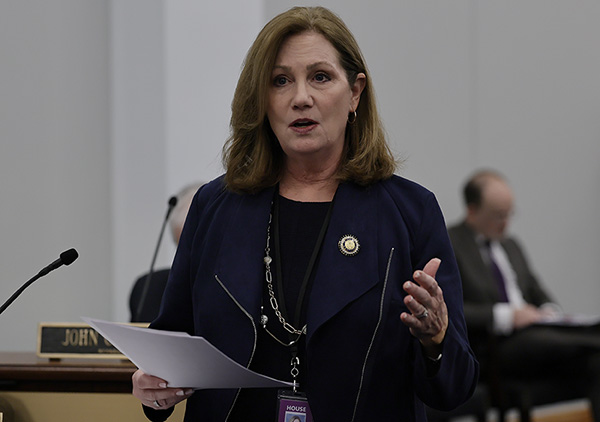
Rep. Kimberly Poore Moser, R-Taylor Mill, speaks on House Bill 1 on the House floor on Tuesday. The legislation would pave the way for Kentucky to opt into a federal educational funding program. A high-res version is available here.
FRANKFORT — Kentucky may soon be eligible for a new federal educational tax credit program.
The Kentucky House of Representatives voted 79-17 with one abstention on House Bill 1 on Tuesday. The legislation would pave the way for Kentucky to opt into an educational funding program established in House Resolution 1 – or the One Big Beautiful Bill Act – in Congress last year.
Rep. Kimberly Poore Moser, R-Taylor Mill, is the primary sponsor of the legislation. She said the bill would ensure Kentuckians don’t miss out on a federally-funded opportunity.
“This measure would provide a significant tool for public schools to harness a federal tax credit to assist families and children access school resources,” Moser said. “It affirms our commitment to expanding educational opportunities and improving student outcomes.”
Under HB 1, Kentucky would be eligible to participate in the qualified elementary and secondary education scholarship federal tax credit program for individuals who make a qualifying contribution to a scholarship granting organization, or SGO.
The legislation would grant Kentucky’s Secretary of State the authority to opt-in to the program on behalf of the commonwealth and oversee Kentucky’s participation. Under federal law, qualified participants could receive up to a $1,700 tax credit on donations to an SGO annually beginning in 2027.
On the House floor, Moser said if Kentucky does not choose to opt-in, schools in other states will benefit from money that could be going to a local SGO instead.
“Under this model, public schools could establish their own independent scholarship granting organizations to collect donations, just as they do with other nonprofits like PTO or athletic boosters to administer SGO funds,” Moser said.
SGO funds cannot be used for tuition, but SGO dollars could fund other scholarship opportunities for students in public, private and homeschool settings. The scholarships can be used for fees, tutoring, technology, transportation, special needs programs, instructional materials, school supplies and more, Moser said.
“(HR 1) sets clear guidelines for how the funds are used – at least 90% of the contributions must be awarded as scholarships to students,” Moser said. “This really prioritizes supporting middle- and low-income households.”
Moser said HB 1 is constitutional under state law since the legislation does not allocate any state public dollars to fund SGO accounts.
If passed, Kentucky would join 27 other states that have opted in to the program so far.
Rep. T.J. Roberts, R-Burlington, is a primary co-sponsor of the legislation. He said HB 1 is about the average Kentuckian, and he doesn’t want Kentucky students to miss out on this opportunity.
“There are students with special needs, there are students who don’t have the same learning style as myself – House Bill 1 looks out for them and puts the Kentucky students first and ensures that we are capable of providing the best opportunities for every student regardless of their income,” he said.
The House debated HB 1 for an hour Tuesday, with several lawmakers sharing concerns the legislation will ultimately lead to less funding for public education.
Rep. Mary Lou Marzian, D-Louisville, said she worries opting in to the federal program will lead to public dollars being used to fund private schools more so than public schools.
“The fear that this is the road to vouchers and charter (schools) is really a slap in the face to our teachers, our classified staff, who often work just for a paycheck for their health insurance,” she said. “… I would love to take a step back and see what the full cost of this could be and how much money it’s going to put in the pockets of the very wealthy.”
House Speaker Pro Tempore David Meade, R-Stanford, said HB 1 is not about private schools.
“This is a chance to get more funding in public education” he said, adding he wants his public schools in his district to benefit from this opportunity.
Other lawmakers said they were also voting for HB 1 for public schools in their communities.
Rep. Chris Fugate, R-Chavies, said his Eastern Kentucky district is home to one of the poorest counties in the country: Owsley County. He said he plans to help Owsley County start an SGO if HB 1 becomes law.
“My understanding is this is to help the poorest of the poor,” Fugate said. “There are no big private schools in Owsley County.”
In explaining her vote on HB 1, Rep. Tina Bojanowski, D-Louisville, said she struggled to decide whether to vote yes or no on the legislation. She ultimately decided to vote yes with the commitment to help public schools in her district as well.
“It’s a really, really hard vote for me,” she said. “But I believe in my heart and soul that this will help public education students. So I’m going to stick with the yes, because I’m going to do everything that I can to ensure that we have scholarship granting organizations that help public education students and students with disabilities.”
HB 1 is now before the Senate for consideration.
Committee advances bill requiring child abuse training for animal control officers

The House Local Government Committee voted Tuesday to advance House Bill 246 in the 2026 legislative session
FRANKFORT — — The House Local Government Committee advanced legislation Tuesday that would require animal control officers to complete training to help recognize signs of child abuse and neglect.
House Bill 246, sponsored by Rep. Susan Witten, R-Louisville, would mandate training for animal control officers to identify physical, sexual, and emotional abuse, as well as neglect. The bill is intended to strengthen Kentucky’s child safety network by equipping more workers to recognize warning signs.
Witten said the legislation is a preventative measure designed to protect vulnerable children.
“This is a simple bill meant to protect children and save lives,” Witten said. “Animal control officers are often the first to witness warning signs like domestic child abuse in the household.”
The legislation is known as “Kyan’s Law,” named after a 10-year-old boy who was killed by his mother. According to testimony, animal control officers had visited the home 24 times in the 18 months leading up to his death.
The training would be available both in person or online and would cover how to recognize and properly report suspected abuse.
Kiera Dunk, a junior at North Oldham High School who worked with Witten on the bill, testified about the connection between animal abuse and child abuse.
She shared research showing that individuals who abuse animals are more likely to abuse children. Dunk also explained that animal control officers are an underutilized resource in identifying abuse because they often encounter young children who are not yet in school and may not interact with mandated reporters such as teachers.
Jill Seyfred, executive director of Prevent Child Abuse Kentucky, explained how the training would work and how data would be recorded to better understand trends in child abuse reporting.
“The training will be housed on our website free of charge,” she said. “We will keep track of individuals and counties who are participating so we can report back on the impact the training is having.”
Rep. Sarah Stalker, D-Louisville, asked whether the training would be required annually or just once. Witten said the bill currently requires only a single training.
Rep. Beverly Chester-Burton, D-Shively, asked whether other states had adopted similar measures.
Dunk said many states have implemented comparable training requirements, while Seyfred added that others are watching Kentucky’s approach closely.
“There are also a lot of states who have not adopted this but are showing lots of interest in the effectiveness as well as how we are going to implement it,” Seyfred said.
Several lawmakers also praised Dunk for her advocacy and work bringing attention to the issue at a young age.
House Bill 246 passed 19-0 and now moves to the full House for consideration.
Imagination Library resolution advances
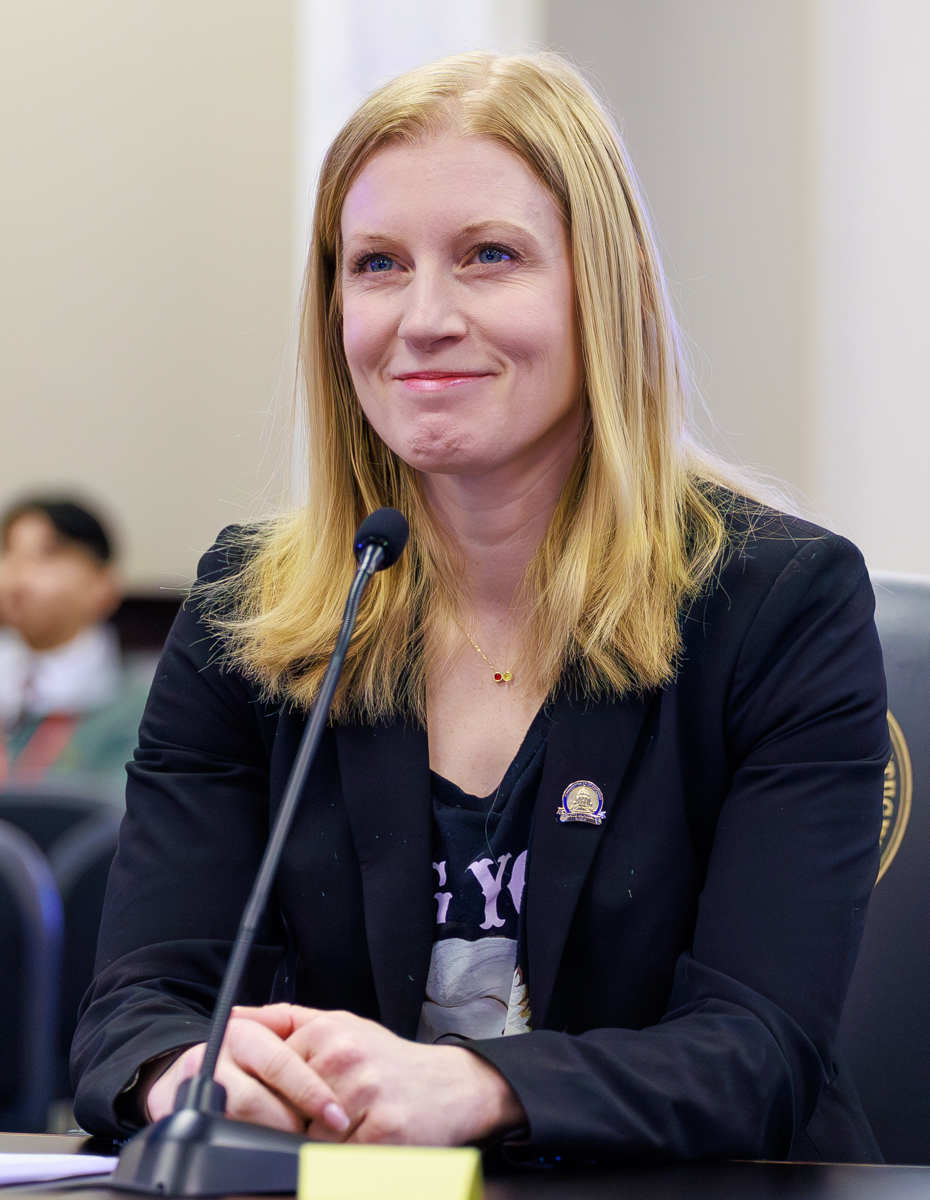
Senate Minority Whip Cassie Chambers Armstrong, D-Louisville, testifies Tuesday on Senate Joint Resolution 54 in support of Dolly Parton’s Imagination Library during a Senate Families and Children Committee meeting. A high-resolution photo can be found here.
FRANKFORT — — Reading can open doors for young people that are otherwise shut, and with this mindset, legislators on Tuesday advanced a Senate joint resolution in support of Dolly Parton’s Imagination Library.
During the Senate Families and Children Committee meeting, Senate Minority Whip Cassie Chambers Armstrong, D-Louisville, and others testified that through the initiative, children from birth to age five can obtain books delivered to their mailboxes at no charge.
“I’ve been working 9-to-5 with Imagination Library to think of ways that we can expand this program so that every Kentucky kid has access to it, and the options we’ve come up with are varied as a coat of many colors,” she said. “And they include things like automatically enrolling our kids in foster care, collaborating with our WIC program around enrollment opportunities and studying how people can enroll as part of the birth certificate process like other states have taken steps to do.”
Senate Joint Resolution 54 would direct and organize this work, requiring the state Cabinet for Health and Family Services, the state Department for Libraries and Archives, and Imagination Library to work together and bring ideas to expand access, Armstrong said.
Armstrong thanked Senate President Robert Stivers, R-Manchester, and U.S. Rep. Morgan McGarvey – a former state lawmaker – for their work to bring Imagination Library to Kentucky.
“This has always been a bipartisan program supported greatly by this general assembly, and I just wanted to say to President Stivers and Congressman McGarvey, Kentucky families will always love you for your work with DPIL,” she said.
Sen. Amanda Mays Bledsoe, R-Lexington, said she’s a big fan of Imagination Library. She asked about local match funding and said it can be a challenge for some communities.
Libby Suttles, state director of Imagination Library of Kentucky, said work is being done to roll out a system to focus on sustainability for expansion of local programs.
“We meet with every partner when they start the program and do a five-year cost estimator to determine what type of financial sustainability a program needs to have,” she said.
Suttles said she and others are working closely with all partners on a variety of funding – multiple grants, family foundations, spelling bees, Dolly Parton galas, sing-alongs and other fundraisers.
“So, we’re really hoping to be very creative to support local programs to reach their financial goals and sustainability,” Suttles said.
Suttles thanked Armstrong for creating the resolution, which gives authority to align resources between the health cabinet and department of libraries. She said this will provide greater outreach to health departments, hospitals, the HANDS (Health Access Nurturing Development Services) program and the Kentucky Department of Corrections. She said some inmates not only read to their children; they hone their own skills.
“We have soft reading spaces in all prisons across Kentucky, so when children come to visit their parents, there’s an opportunity to pull a Dolly book off of a bookshelf, sit on a carpeted area, sit at a table, use crayons, talk about books,” she said.
Sen. Shelley Funke Frommeyer, R-Alexandria, said she has a daughter who was born in 2010, and those in Campbell County did a great job of making Imagination Library available to children. She asked how recipients continue to received books after they move.
Lindsey B. Westerfield, community engagement coordinator of Dolly Parton’s Imagination Library of Kentucky, said the program is connected with the change of address registry of the United States Postal Service.
“When a book maybe arrives at a mailbox, and there is a forwarding address that’s been listed with the postal service, that will flag in the system,” she said.
Sen. Robin L. Webb, R-Grayson, said Dolly Parton’s father couldn’t read and Parton was inspired to do something positive. Imagination Library is a good way to help overcome illiteracy, she said.
“I think that is an extension that is a natural one that’s going to be very beneficial for reintegration of those inmates and the educational aspect of those children as well,” she said.
Sen. Keturah J. Herron, D-Louisville, said she has met with program representatives.
“I’m super impressed by the work that is happening and really, the cost. I think that when you look at and you break down the cost of 60 books over those five years, it’s less than $1.50,” she said.
Senate Minority Caucus Chair Reginald L. Thomas, D-Lexington, said education begins at birth, and the program is vital to his granddaughter and all children of Kentucky.
“It’s so important that we start emphasizing literacy and reading, and that’s what helps children become kindergarten ready,” he said.
Committee advances bill on machine gun conversion devices
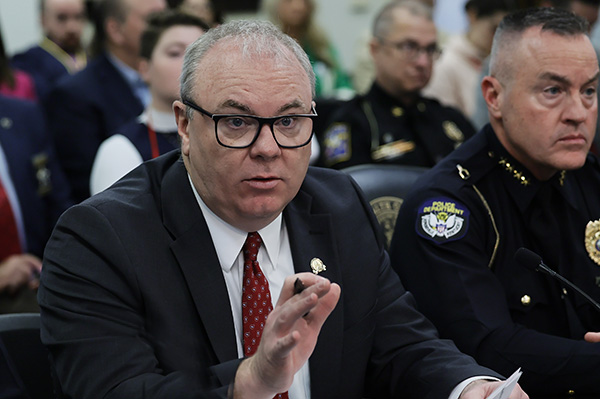
House Majority Whip Jason Nemes, R-Middletown, speaks on House Bill 299 during Tuesday's meeting of the House Veterans, Military Affairs, and Public Protection Committee. A high-res version is available here.
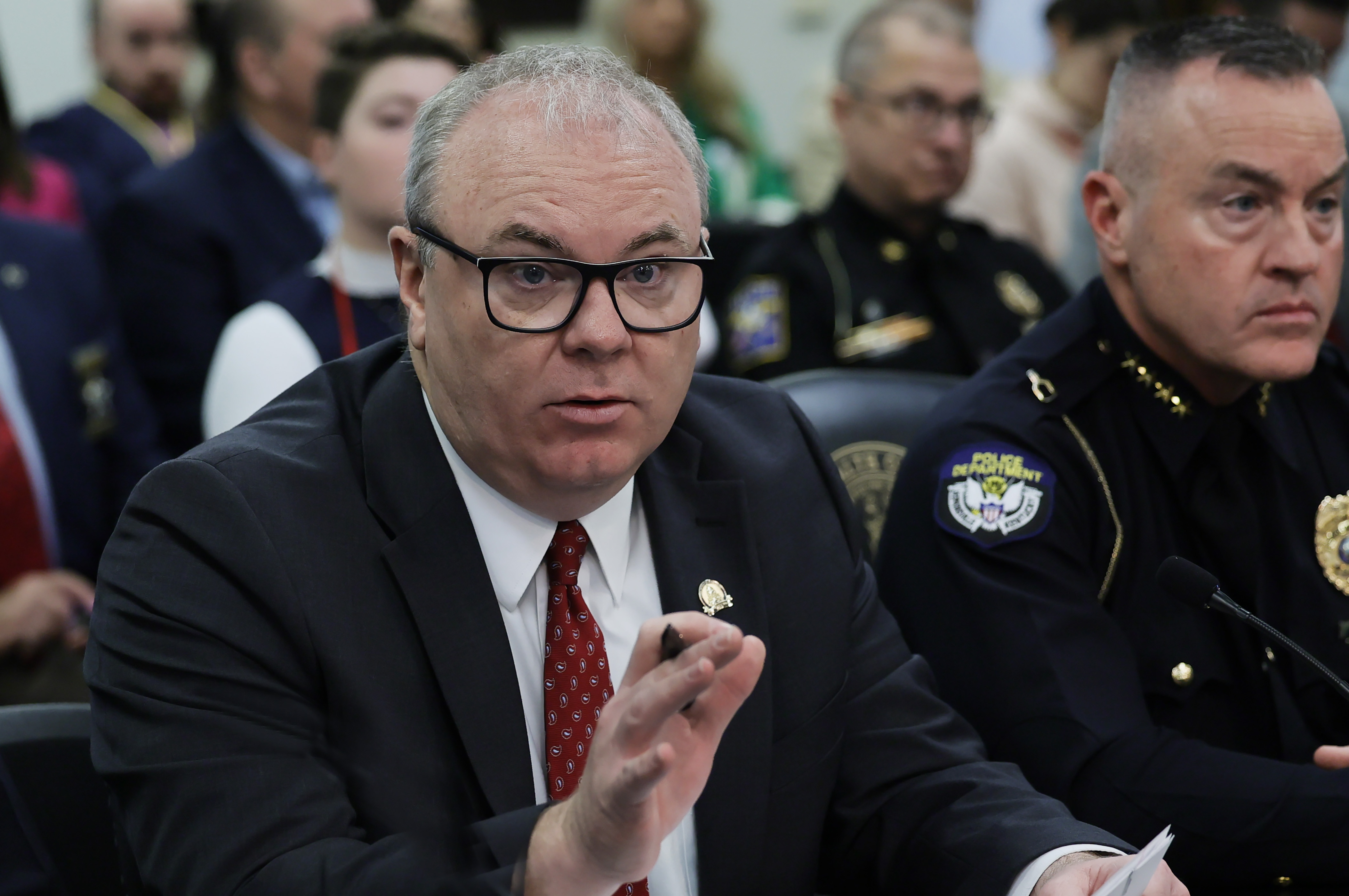
FRANKFORT — Legislation that would make it a class C felony to possess a machine gun conversion device advanced Tuesday in the House Veterans, Military Affairs, and Public Protection Committee.
House Bill 299, sponsored by House Majority Whip Jason Nemes, R-Middletown, creates new statutory language that makes Kentucky gun law on machine gun conversion devices mirror federal law on the subject.
“This bill before you couldn’t be any simpler,” Nemes said. “All it does is mirror the federal law with respect to these machine gun conversion devices, which says that you cannot knowingly possess machine gun conversion devices.”
As discussed in the bill, machine gun conversion devices are parts, or combinations of parts, that convert regular firearms into machine guns. Machine guns are defined in federal law as weapons that can shoot more than one shot without manually reloading by a single function of the trigger.
“This bill does not make anything illegal that is not already illegal,” Nemes said. “Things you can do today, you can still do after passage of this bill.”
Louisville Metro Chief of Police Paul Humphrey testified with Nemes on the bill. He said that the legislation would be an important tool for Kentucky law enforcement to get these devices off the streets.
“What this allows us to do is, when we encounter these devices, we do not have to turn them back out to the street,” Humphrey said. “Right now, we would turn that weapon right back over if the federal government was not willing to step in and take it over as a federal case.”
Furthermore, Humphrey noted that the bill would allow Kentucky law enforcement to better keep Kentuckians safe from the dangers of these devices.
“While we might have someone who is on our radar as being involved in violent crime, and we need to get them off the street in order to save the lives of our community members, we do not currently have the ability to do that without depending on the federal government,” Humphrey said.
Rep. Myron Dossett, R-Pembroke, thanked law enforcement for the work that they do in Kentucky and spoke in favor of the bill.
“I want to thank the police officers for the job that they do in our communities to keep us safe, and if this bill helps in any way, I’m proud to offer you my support,” he said.
Rep. T.J. Roberts, R-Burlington, spoke against the bill, first on constitutional grounds. He noted that when the first machine gun was patented in 1718, it was not regulated or banned. He also raised some practical concerns with the bill.
“There are devices known as forced reset triggers, which utilize the energy of slides to reset triggers while still allowing the guns to be considered semi-automatic. This state law does not affect those devices. If we take these off the street, criminals will just switch to those devices. I am not sure if this law has any real benefit,” Roberts said.
HB 299 now moves to the full House.
Senate advances bill related to secondary voter IDs at the polls
Lindsey Tichenor, R-Smithfield, speaks on Senate Bill 154, which limits what counts as acceptable secondary ID at the polls, on the Senate floor. A high-resolution photo can be found here.
FRANKFORT — Legislation that would remove Social Security cards and food stamp cards as secondary identification options for voters lacking standard photo IDs advanced in the Senate on Friday.
Senate Bill 154, sponsored by Sen. Lindsey Tichenor, R-Smithfield, would restrict acceptable forms of secondary identification for voters unable to provide standard photo ID to those that include a photograph, eliminating non-photo alternatives.
“Currently, in the state of Kentucky, a person that comes to the polls that does not have one of the four approved methods of verifying their identification with a photograph can sign an affidavit, and provide additional forms of ID, two of which that do not require a photograph,” Tichenor said.
“This bill will strike those two measures, ensuring that people who come to vote in Kentucky elections have photo ID to verify their identification.”
The Senate voted 31-7 to pass the bill out of the chamber following a moderate floor debate over election security and voter access.
Senate Minority Whip Cassie Chambers Armstrong, D-Louisville, said that the bill would make it harder for rural Kentuckians who have difficulties obtaining photo ID to vote.
“I listened when I heard members of this chamber say that in rural Kentucky, it’s really hard to get a driver’s license,” she said. “There are transportation barriers. You shouldn’t give up your ability to participate in civic democracy for that reason.”
Senate Democratic Floor Leader Gerald A. Neal, D-Louisville, said that the bill was trying to solve an issue that does not exist in the state.
“My research does not reveal almost any voter fraud anywhere, including Kentucky,” he said. “It just appears to me that we are trying to cure a problem that does not exist, except that it does have a disparate impact on certain populations that we would like to participate in this process.”
Sen. Stephen Meredith, R-Leitchfield, said that the bill was necessary even if there was not major proof that Kentucky was not a state with widespread voter fraud.
“It reminds me of the accounting profession… you know what the best form of embezzlement is? The embezzlement that has not yet been discovered,” he said. “Has fraud been broad? I do not know. But why wouldn’t we want reasonable safeguards in place to ensure that it does not happen.”
Senate President Robert Stivers, R-Manchester, recounted instances of voter fraud in the state that he could remember, and said the legislation was needed for the integrity of Kentucky’s democracy.
“Voter fraud happens. I’ve called out four or five instances here in this state, since I have been in this chamber,” he said. “But for the sake of democracy, all it takes is a photo ID. Why not have that one simple thing?”
Tichenor, after casting her vote, said that the bill was another means by which Kentucky would root out fraud in its elections.
“This bill is another way to eliminate any potential for fraud in our elections, and ensure that my vote does not get cancelled out by someone else who does not have a right to vote,” she said.
SB 154 now moves to the House.
Committee passes bill on patient protections for organ donors
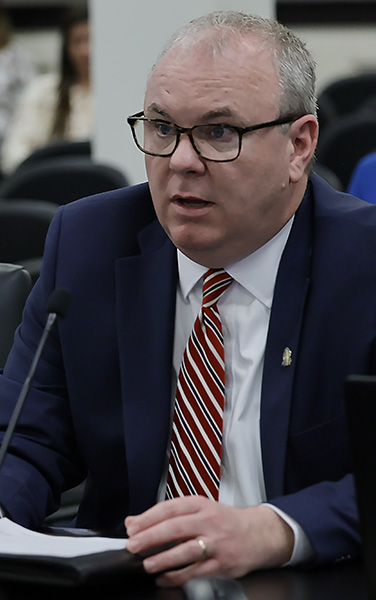
House Majority Whip Jason Nemes, R-Middletown, speaks on House Bill 510 during Wednesday’s meeting of the House Health Services Committee. A high-resolution photo can be found here.
FRANKFORT — Legislation that would strengthen patient protections during the organ donation process was approved by the House Health Services Committee on Thursday.
The measure would create what House Majority Whip Jason Nemes, R-Middletown, described as a “pause in procedure” requirement, intended to ensure patients and their families have clear protections and maintain control over the organ donation process.
House Bill 510 would require additional verification steps before organ procurement can begin. The bill also reinforces that a patient must be formally declared dead according to established medical standards.
Other provisions in the bill would clarify that consent must be properly obtained and documented, and that the decision to withdraw life-sustaining treatment remains separate from any discussions about organ donation.
Supporters say the changes would provide clearer guidance for medical providers and help ensure transparency for families during the process.
Addia Wuchner, executive director of Kentucky Right to Life, spoke in favor of the bill.
“We believe life is a gift, one of the most profound final gifts an individual could ever give,” she said “House Bill 510 ensures every Kentuckian is given that choice.”
Barry Massa, CEO of Network for Hope, said many of the practices outlined in the legislation are already part of the organization’s process.
“All these actions incorporated in this bill are already incorporated in the Network for Hope’s organ donation process, and we’re here to support this bill because we want to rebuild public trust in organ, tissue and eye donation,” he said.
Rep. Kimberly Poore Moser, R-Taylor Mill, thanked Nemes for his work on the measure and voiced support during the meeting.
“It is critically important, and I like this clarification and am in support of this language,” Moser said.
The bill passed the committee 17-0, allowing it to move forward for consideration by the full House of Representatives.
Comprehensive bill on elections advances from House committee
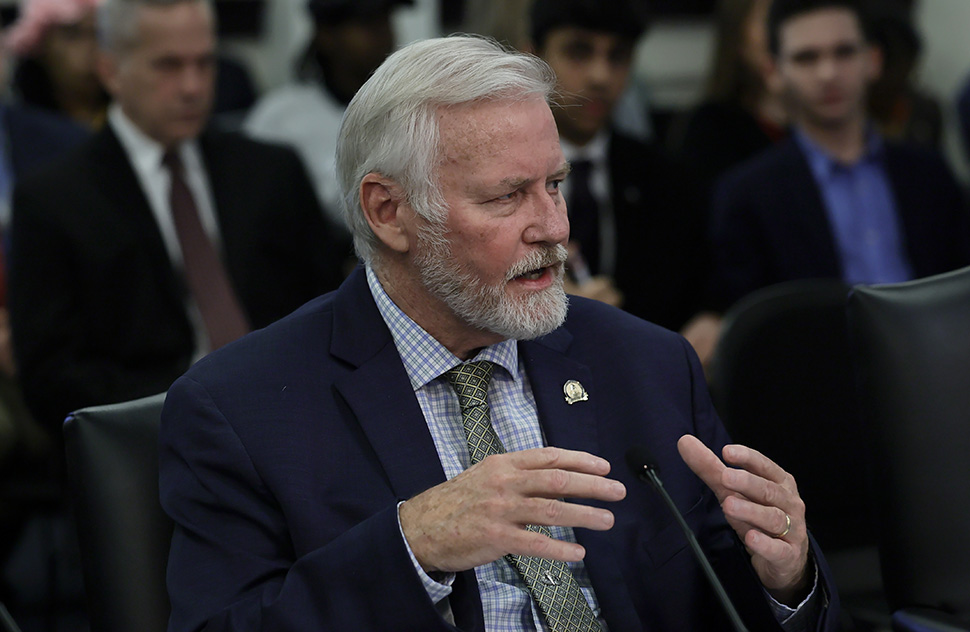
Cutline: Rep. DJ Johnson, R-Owensboro, explains his comprehensive elections bill, House Bill 534, during Thursday's House Elections, Constitutional Amendments and Intergovernmental Affairs Committee meeting. A high-res version is available here.
FRANKFORT — The House Elections, Constitutional Amendments and Intergovernmental Affairs Committee approved a bill on Thursday that seeks to prevent felons and non-citizens from voting in Kentucky, among other provisions.
Rep. DJ Johnson, R-Owensboro, is the chair of the committee and the sponsor of House Bill 534. He said the state Secretary of State's office, the Kentucky Board of Elections, the Kentucky County Clerk's Association, and others have been involved in the process of drafting the legislation.
Under HB 534, the state Administrative Office of the Courts would send the State Board of Elections a list of every person in Kentucky convicted of a felony by July 1. The board would have until Aug. 1 to remove any person on the list who is registered to vote from the voting registration records.
Another key provision of HB 534 would authorize the board of elections to enter into agreements with federal agencies to identify individuals who are registered to vote but are not American citizens.
Those identified as non-citizens would be notified that they cannot cast another vote in Kentucky without providing proof of citizenship. The bill would create a process for individuals identified as non-citizens to cast a provisional ballot until citizenship status is verified, Johnson said.
The legislation would also allow the state to share certain voter information with federal agencies, including the name, date of birth and social security number of registered voters.
HB 534 would also change who can appoint members to the Kentucky Registry of Election Finance to include the Kentucky Senate President and Speaker of the House of Representatives.
The bill would also allow county clerks to make images of scanned cast ballots publicly available electronically as long as the images do not include any voter-identifying information.
Danetta Ford Allen, president of the Kentucky County Clerk's Association, told the committee the association has many concerns with HB 534, but she only shared three.
“First, while county clerks appreciate the intent behind allowing Kentucky to use the federal citizenship information available through the SAVE Act, we do feel that it will put eligible Kentucky voters at risk of becoming ineligible and incorrectly removed from the voter rolls,” Allen said.
Additionally, Allen said county clerks worry the emergency clause in the bill would disrupt the May 19 primary election. The organization also has concerns about making cast ballots electronically available.
Johnson said the technology that would make the ballots available electronically is emerging, and that section of the bill is intended to be proactive.
Rep. Josh Branscum, R-Russell Springs, asked if it would be better to “hit pause” on that part of the legislation for now.
Johnson said he was open to a floor amendment to address that concern and to delay the implementation until after the May 19 primary election.
Rep. Mary Lou Marzian, D-Louisville, said she knows Kentucky has one of the safest election processes in the country with a fraud rate of less than zero. She asked Johnson if he's found any voting irregularities or fraud in Kentucky.
Johnson said he's aware of at least once incident where a couple of ballots were illegally cast in his own election, but he agrees Kentucky has safe elections.
“That does not mean we can't continue to improve it though,” he added.
HB 534 will now go before the full House after a 9-2 vote with one pass vote.
Rep. Erika Hancock, D-Frankfort, who spoke on financial concerns she had with the bill earlier in the meeting, voted “no” on the bill.
“This bill creates sweeping election changes without documented need, fiscal transparency or adequate voter protections in the current form,” she said.
While a few other committee members said they have a few concerns with the legislation, most voted “yes” and said they trust Johnson to make the appropriate changes. Rep. Ryan Bivens, R-Hodgenville, was one of them.
“Obviously we don't want to do anything that's going to be cumbersome to our county clerks out there, so I would love to see you clean this up before we get to the House floor,” he said. “… But I do think the intent behind this is very good.”
Committee advances bill to expel students who assault school staff
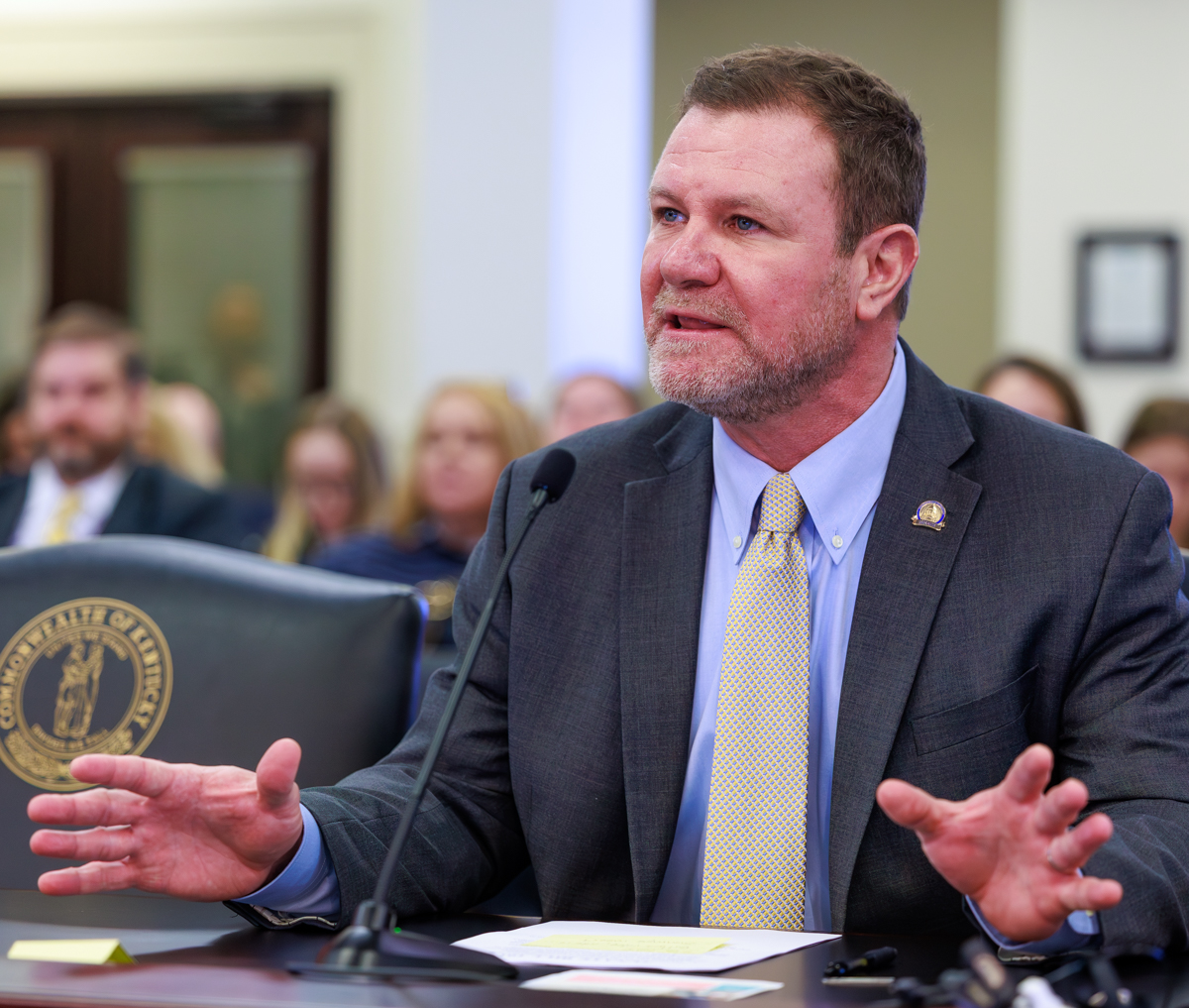
Sen. Matt Nunn, R-Sadieville, testifies on Senate Bill 101 before the Senate Education Committee on Thursday. A high-res version is available here.
FRANKFORT — Legislation requiring local boards of education to expel students if they intentionally cause physical injury to school employees passed unanimously Thursday in the Senate Education Committee.
Senate Bill 101, sponsored by Sen. Matt Nunn, R-Sadieville, would mandate that local boards of education expel students for a minimum of 12 months when they become aware of an incident in which a student in grades 6–12 intentionally harms a teacher or other school personnel on school grounds or at a school function.
“This bill requires each local school board of education to adopt a policy requiring a minimum policy of expulsion of 12 months for a student in grade 6 through 12, who is determined by the board to have physically assaulted, battered, or abused school personnel without just cause of provocation on school property or at a school function under the board's jurisdiction,” Nunn said.
The bill would also require school employees to report any student-on-teacher assault incident immediately to law enforcement and create penalties for any school employee who fails to do so.
“From the people that I have talked to, this is an underreported problem,” Nunn said. “And so I wanted to make sure that there was an important reporting mechanism in this legislation.”
Sen. Danny Carroll, R-Paducah, expressed concern about punishing school staff with misdemeanors for failing to report such incidents.
“I am troubled by the thought that a teacher or other staff member, someone takes a swing at them, and they decide not to report it, and are then charged with a misdemeanor. I'm wondering if it would not be better to leave that up to school district policy, since this falls under their policy on setting penalties for not reporting things,” Carroll said.
In response, Nunn said he did not include the penalty provision lightly but believed it was necessary to ensure the problem was addressed.
“From what I am hearing, I think we have to have some sort of penalty to encourage and ensure these reports occur. If there were lower penalties… I would have started there, but I started at the lowest place,” he said.
Sen. Lindsey Tichenor, R-Smithfield, asked whether the bill's omission of students in grades K–5 would prevent school districts from creating expulsion policies for younger children.
Nunn clarified that school boards would still be permitted to expel K–5 students for aggressive actions against school staff if they chose to do so, though the bill would not mandate such a policy.
SB 101 now heads to the full Senate.
Senate committee OKs rights restoration bill

The Senate State and Local Government Committee on Wednesday OKd a voting rights restoration bill at the Capitol Annex in Frankfort.
FRANKFORT — Legislation proposing an amendment to the Kentucky Constitution that would automatically restore voting rights to certain felons was advanced Wednesday by the Senate State and Local Government Committee.
Sen. Jimmy Higdon, R-Lebanon, and Sen. Keturah J. Herron, D-Louisville, are cosponsoring Senate Bill 80. Higdon said the bill was passed by the Senate in 2020, but was sidelined in the House that year due to the COVID-19 pandemic.
This year's bill – if successful in its attempt to amend the constitution – would restore voting rights to felons once they have completed a prison sentence, probation or parole. It includes exceptions for people convicted of election fraud, a violent felony offense, a felony sexual offense or criminal offense against a child.
“When a felon has served their time, served their probation period, this bill would automatically give them their voting rights back, not their ability to hold office, but their ability to vote,” Higdon said.
Herron said she has learned from Higdon that she must trust the process when dealing with legislation. Some people don't think the bill goes far enough to restore rights, but it's a step in the right direction, she said.
“I think that this is a bill that we can get passed out of the Senate, and you know, we will do what we need to do after it moves through this process. But I fully support this version of the bill to move it along,” she said.
If SB 80 is adopted into state law, the amendment to the constitution would still require ratification on the ballot from Kentucky voters.
Nicole D. Porter, senior director of advocacy for The Sentencing Project, testified in favor of restoration of rights, but said a clean approach to expanding voting rights to everyone with felony convictions is the most straightforward path.
“Voting is fundamental to expressing civic involvement and community belonging and is a pathway to public safety,” she said. “The Sentencing Project supports Senate Bill 80, but we do recommend that there are amendments that bring it in line with our position.”
Sen. Scott Madon, R-Pineville, said he has helped many people try to get their rights restored. He asked Higdon how clerks will know if someone can be registered or not.
Higdon said that if the proposed amendment is ratified, the general assembly will then pass accompanying legislation to implement the process and provide ground rules for clerks and citizens.
Senate Minority Whip Cassie Chambers Armstrong, D-Louisville, said there is a pathway through expungement to get voting rights back, but it's very cumbersome and people must go through a legal process.
She asked Higdon if this is a fair characterization. He said it is, but with expungement, the right to own and carry a gun can also be restored. He also said the governor could grant a pardon to give someone back their voting rights.
Armstrong said she favors the bill.
“Thank you both for this legislation. I think this could maybe be the most consequential thing that we pass this session, or among them, because I do believe that giving folks the right to vote is so foundational to our democracy. I think it's really important work,” she said.
Committee advances legislation to protect youth from addictive platforms
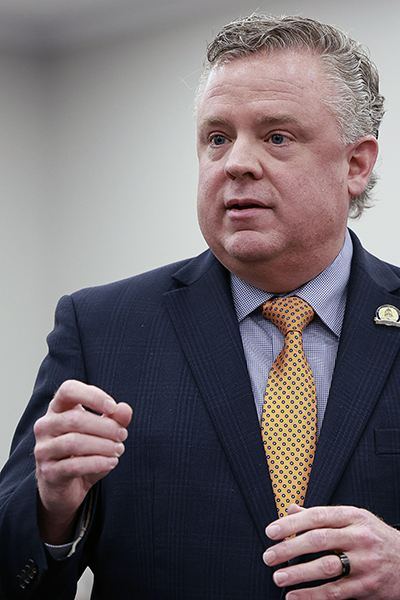
Rep. Matt Lockett, R-Nicholasville, speaks on House Bill 227 during Wednesday's meeting of the House Small Business and Information Technology Committee A high-res version can be found here.
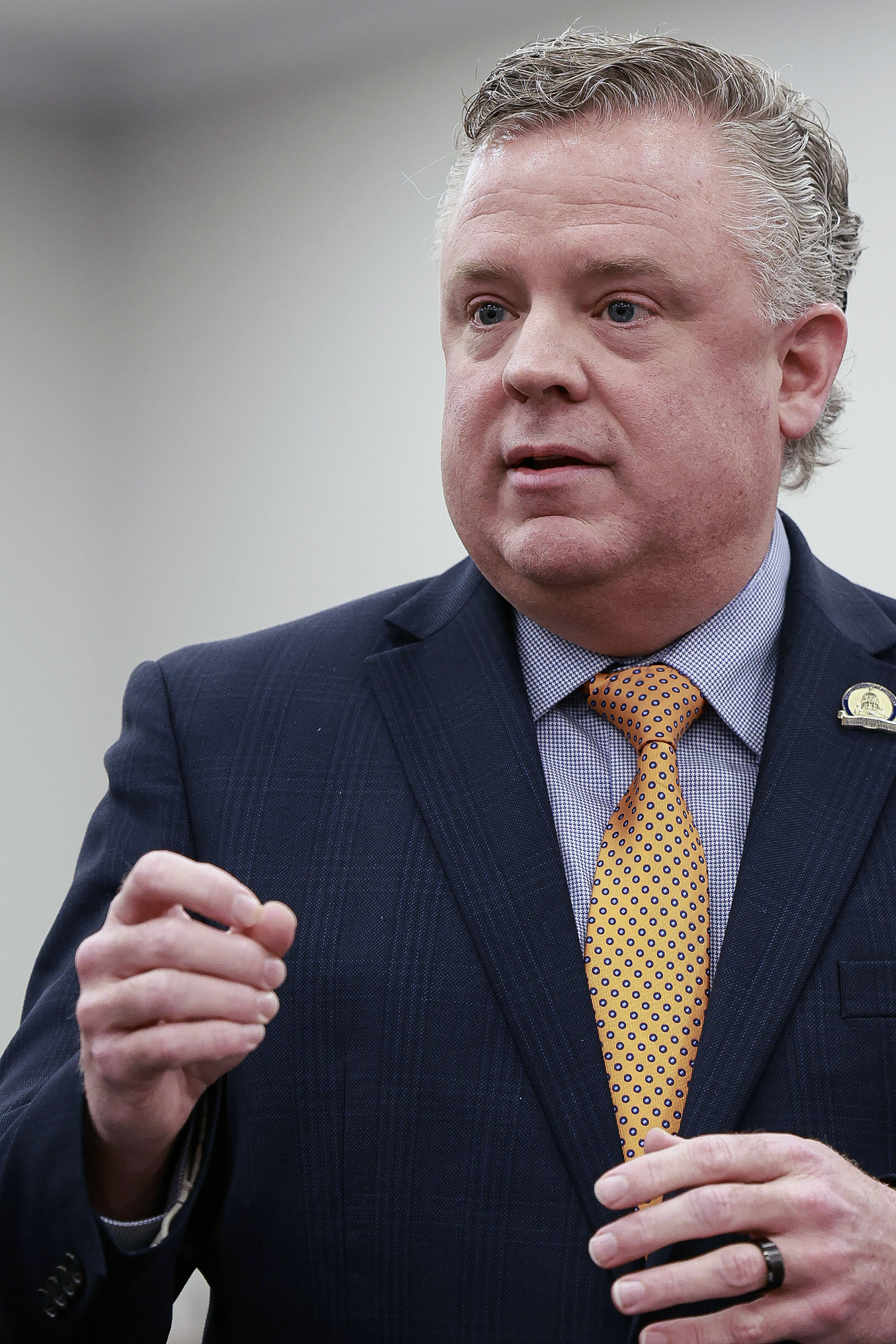
FRANKFORT — The House Committee on Small Business and Information Technology passed legislation Wednesday that seeks to protect minors by restricting addictive features used by social media platforms.
Rep. Matt Lockett, R-Nicholasville, said the bill's primary goal is to address what he described as the harmful relationship between social media and children.
House Bill 227 would restrict certain addictive social media features for children under age 15 and give parents more control over their child's account.
The bill would require platforms to limit features designed to keep minors engaged for extended periods, such as auto-scrolling and algorithm-driven recommendations, and would rely on age-verification methods already used by companies. The goal, Lockett said, is to reduce risks to minors' mental health.
“A brain frequently exposed to social media closely resembles a brain that is hooked on the most highly addictive drugs,” Lockett said. He added that platforms can “quickly pull children down rabbit holes of drug-related or sexual content.”
Lockett emphasized the bill does not ban minors from using social media but instead focuses on protections.
“We are not outright banning social media usage by minors,” he said. “We are trying to protect children from social media.”
Chelsey Youman, counsel with Alliance Defending Freedom, clarified that the bill would not completely prohibit minors from having social media accounts. Instead, platforms using age-estimation technology would be required to disable accounts of users identified as 15 or younger until verified parental consent is provided.
Other states have passed legislation on the issue that was later struck down in court due to constitutional concerns involving First Amendment rights. But Wil Schroder, senior counsel for the Kentucky Office of Attorney General, said the office believes the HB 227 would withstand a legal challenge.
“Our attorneys have reviewed this bill and are encouraged that it is content-neutral in every way and will uphold a constitutional challenge,” Schroder said.
Opponents raised concerns about free speech and privacy.
Ari Cohn, representing the Foundation for Individual Rights and Expression, said the bill could violate constitutional protections.
“This would violate the First Amendment rights of social media users and the platforms as well,” Cohn said. “While a parent has a constitutional right to be free from government interference, that right is not constitutionally assertable against private parties. The bill would infringe on First Amendment rights of all users, including minors.”
Others urged lawmakers to consider potential privacy risks associated with age-estimation requirements in the bill, and some lawmakers also questioned how the bill would be enforced.
Rep. William Lawrence, R-Maysville, asked whether the law could be successfully enforced at the state level against national companies. Schroder said the attorney general would have jurisdiction within Kentucky and could also work with other states.
“We could enter into multistate litigation where attorneys general work together and use their voices to get changes made within the big companies,” Schroder said.
Lawrence spoke in favor of the bill, witnessing this issue first hand. He shared a personal experience involving his 16-year-old son, saying they encountered a sexual AI-generated advertisement while browsing Facebook Marketplace together.
Youman said the bill also addresses algorithm-based content.
“The bill uses the term profile-based feed, which is the idea that they are taking the child's data and feeding them content,” Youman said. “This bill states that one of the addictive features not allowed to be presented to the child are feeds based on the data being collected.”
House Minority Whip Joshua Watkins, D-Louisville, asked why the bill targets social media platforms but not other services, such as streaming platforms with autoplay features.
Youman said broader legislation has struggled to survive court challenges, leading lawmakers to pursue a narrower approach.
Rep. Ryan Dotson, R-Winchester, said that, as a grandfather of four grandchildren, he finds the issue very concerning and wants more guardrails in place.
"I have a 12-year-old grandson,” he said. “The very same things are happening, and I can see some minor changes in his behavior, so I do support this bill."
The committee voted to advance the legislation 13-0 with two “pass” votes. It now moves to the full House for consideration.
House Judiciary approves Logan's Law
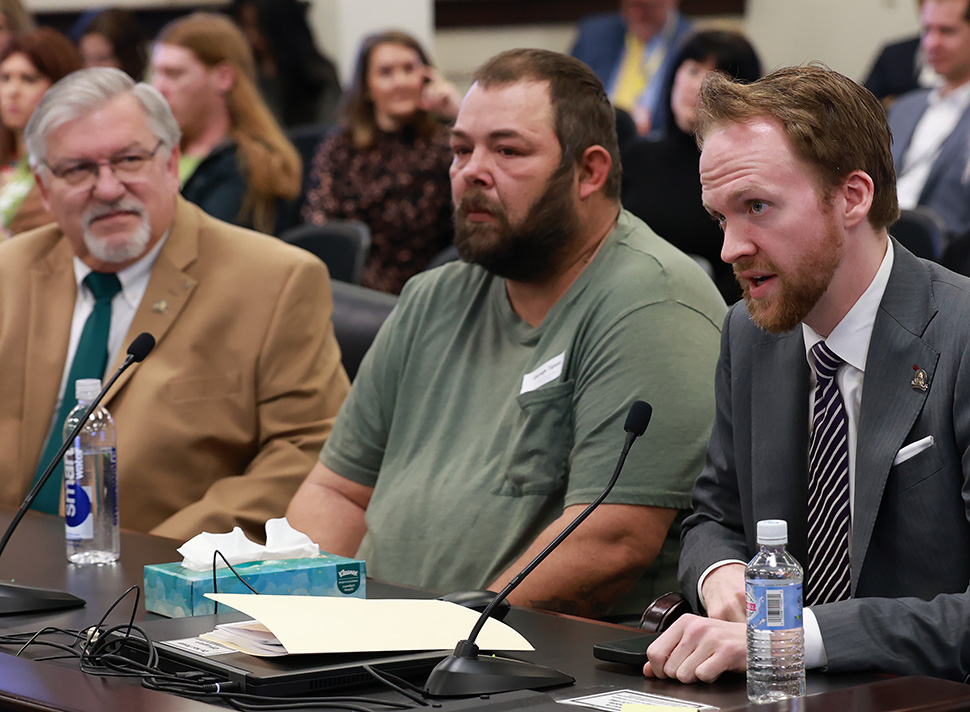
Rep. T.J. Roberts, R-Burlington, (right) speaks on Logan's Law, or House Bill 422, during Wednesday's House Judiciary Committee meeting. Dean Tipton (center) joined Roberts and Rep. Daniel Fister, R-Versailles, (left) in advocating for the legislation named for his son Logan. A high-res version can be found here.
FRANKFORT — Logan's Law took its first step toward becoming law on Wednesday.
The House Judiciary Committee unanimously approved House Bill 422, or Logan's Law, after hearing directly from Logan Tipton's father Dean Tipton on the importance of the bill.
Rep. Daniel Fister, R-Versailles, and Rep. T.J. Roberts, R-Burlington, are the primary cosponsors of the bipartisan legislation.
Logan was 6-years-old when Ronald Exantus broke into the Tiptons's Versailles home and stabbed Logan to death in his bed in 2015, Fister said. A jury later found Exantus not guilty by reason of insanity for Logan's murder, but did convict Exantus for violently assaulting Tipton and his daughters.
After Kentucky state law permitted Exantus to be released from prison last year – a decade early – Fister, Roberts and more than 60 other House lawmakers decided a change is needed to protect the public and ensure justice for future victims.
Tipton told the committee HB 422 is about accountability and protecting people from suffering the way he and his family have.
“The only thing that I find insane in this whole thing is the fact that in a matter of seconds, he was found innocent by reason of insanity on the murder of my son, but found guilty on the stabbings of my other daughters and myself,” Tipton said. “That is insane. That is not right.”
Fister said HB 422 “brings sanity to the insanity statute.”
An original version of the bill sought to remove the option of an insanity plea from state law, but a new version reforms the statute instead of outlawing it, Roberts said. He described Kentucky's current definition of insanity as loose and confusing.
“The insanity defense would be amended now to make it to where the individual, as a result of a mental illness or intellectual disability, is not capable of appreciating the nature of their actions,” Roberts added. “In other words, they were so insane, they simply did not know what they were doing.”
Additionally, the bill would create a pathway for severely mentally ill defendants to receive proper inpatient or outpatient treatment, Roberts said.
Roberts also outlined the other main reforms in HB 422 to the committee.
“The first one is mandatory reentry supervision reform,” he said. “This ensures that it's not just capital offenses and class A felonies that are ineligible, it adds class B felonies.”
HB 422 would also ensure if the parole board unanimously denies parole to someone convicted of a violent felony, that individual would not be eligible for early release.
In Exantus's case, the parole board unanimously denied him parole, but a loophole allowed him to be released anyway. Roberts said HB 422 would prevent that from happening again.
Another provision focuses on equitable accountability by changing when concurrent sentencing is permitted, Roberts said.
“If they are found guilty on charges for each victim, the sentence is consecutive for each victim,” Roberts said.
Juries would also be allowed to weigh the facts of a case to determine whether a defendant deserves life in prison without the possibility of parole or life in prison with the possibility of parole, Roberts added. The 25-to-life statute would also be amended to 35-to-life.
“And (that section) further requires that for anyone with that sentence, they must serve at least 30 years of their sentence before they can be released,” Roberts said.
Scott West, with the Kentucky Association of Criminal Defense Lawyers, and Bailey Truitt, a staff attorney at the Kentucky Department of Public Advocacy, shared a few concerns they have with the bill.
They both said they worry the legislation will make it harder for attorneys to negotiate plea bargains for their clients, among other concerns. The bill could further bog down an already strained court system, they said.
House Majority Whip Jason Nemes, R-Middletown, said he supports helping mentally ill individuals and low-level offenders, but he believes Kentucky should be keeping violent criminals locked up for longer.
“If you commit murder on one of our people, I don't want you getting out,” he added.
HB 422 will now go to House floor after receiving a 17-0 vote with two pass votes.
House Minority Caucus Chair Lindsey Burke, D-Lexington, recorded a pass vote due to concerns about the legislation, including how much the bill might cost taxpayers.
“I'm not saying that it's not worth it, but I need to know how much it is,” she said.
House Minority Floor Leader Pamela Stevenson, D-Louisville, voted “yes” on HB 422. In explaining her vote, Stevenson echoed an earlier call from Roberts for more access to mental health care in addition to passing this bill.
“We've got to protect people by doing the whole thing,” she said.
Committee advances kindergarten readiness incentive pilot program bill
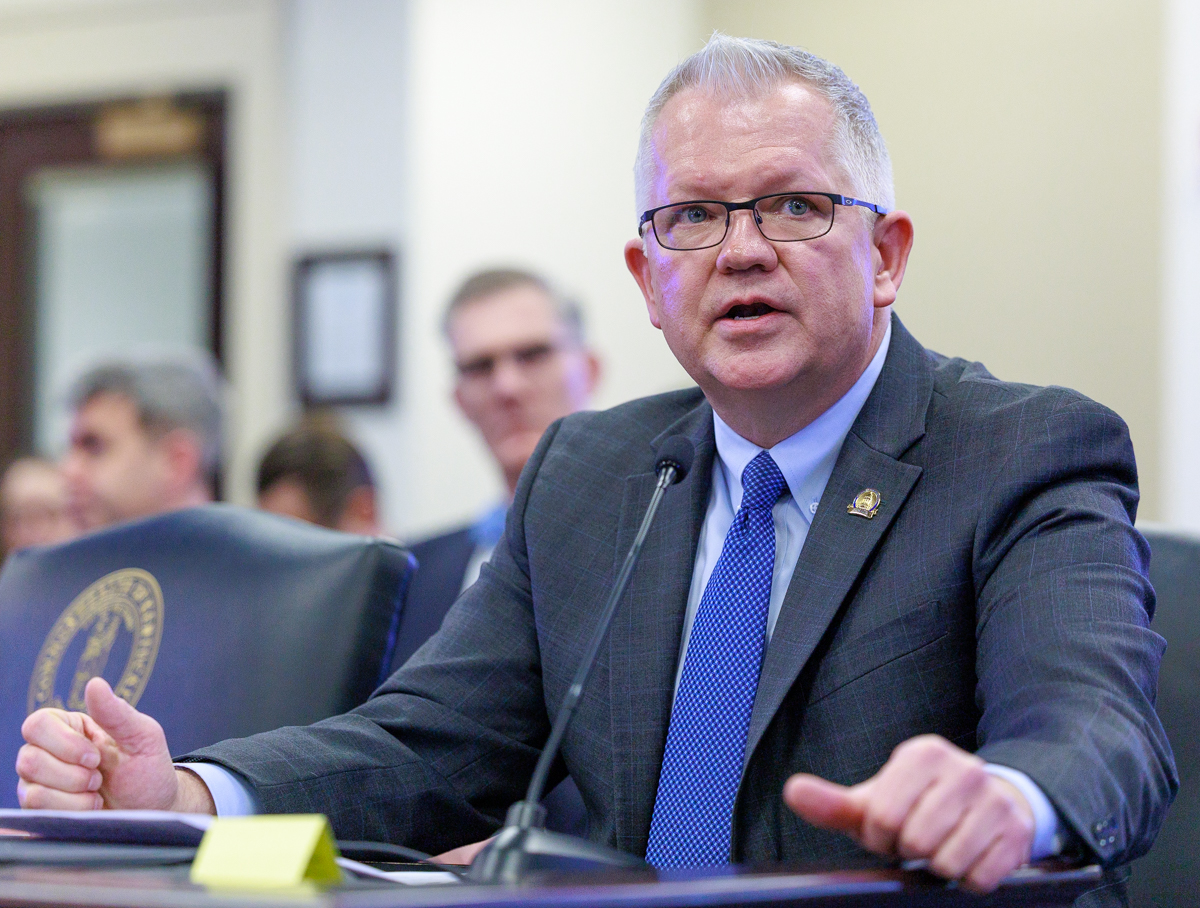
Sen. Danny Carroll, R-Paducah, testifies Tuesday on Senate Bill 191 to the Senate Families and Children Committee. A high-res version can be found here.
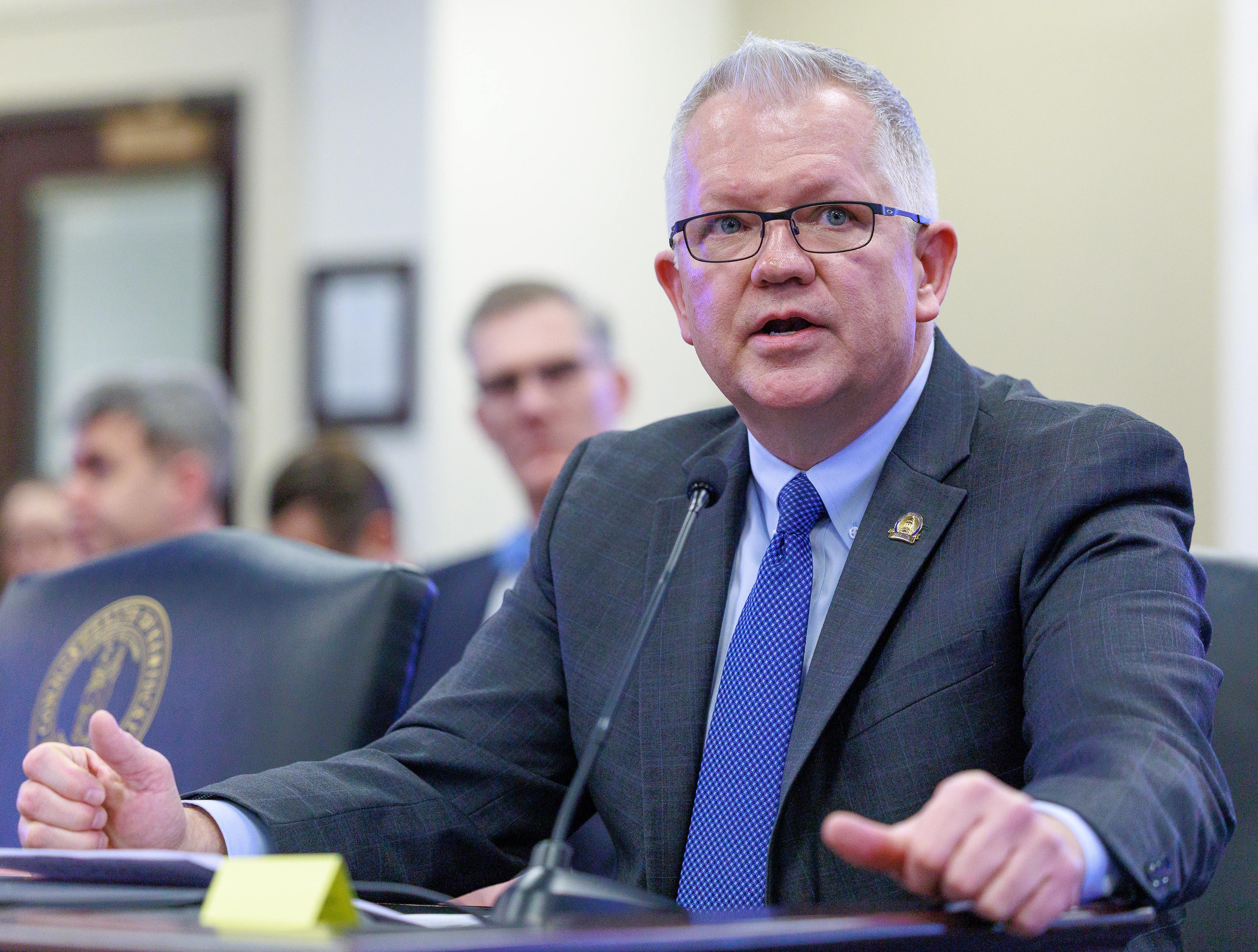
FRANKFORT — The Senate Families and Children Committee unanimously passed a bill Tuesday to seeks to gauge the effectiveness of using financial incentives to encourage kindergarten readiness.
The measure – Senate Bill 191 – calls on the University of Kentucky to establish and operate the Kentucky Kindergarten Readiness Performance-Based Child Care Incentive Pilot Program from the beginning of 2027 until July 2029.
The program would award one-time, $2,000 payments to early education providers, child-care providers and low-income parents who adequately prepare children for kindergarten. One major goal of the effort is to determine if such financial incentives help boost the rates of kindergarten readiness.
Bill sponsor and Committee Chair, Sen. Danny Carroll, R-Paducah, said SB 191 is a new concept for early childhood education and he expects that the legislation will evolve.
“I do want to stress this is a pilot program,” he said. “The University of Kentucky College of Education has agreed to take this on as a project, and they are excited about this project. And it will encompass a three-year period where we will assess the contents of this bill and check out the proof of concept to see if it is a viable concept.”
Under SB 191, UK would determine how best to assess applicants, award funds, and evaluate the impact of performance-based incentives.
Type I and II child care centers, state-regulated early education providers, certified child care homes, and parents who qualify for certain child care subsidies could be eligible for financial awards if they meet the requirements of the program.
The university would report findings and data from the pilot to the state Cabinet for Health and Family Services and the Legislative Research Commission in October 2029.
Carroll said the pilot program could lead to the expansion of services across Kentucky.
“We heard time and time again how important kindergarten readiness is for our children,” he said. “We know that we have about a 50% kindergarten readiness rate in the commonwealth, a little bit higher around 60% for those kids who go to child care centers.”
Sen. Stephen Meredith, R-Leitchfield, called the legislation bold and innovative and asked if interested parties would have to register with the pilot program to be eligible.
Carroll said UK is working through details to identify providers and families that will participate in the project. “It's going to have to encompass enough numbers to make sure that we get a true reading out of it,” he said.
Sen. Shelley Funke Frommeyer, R-Alexandria, said if there is $2 million set aside for the project, it's possible there would be approximately 10,000 children participating. She asked if families must qualify as low income to participate.
Carroll said families would have to qualify and prove they are eligible for child care.
“That's the threshold. Again, this is a pilot project, and I expect that there will be ideas that come along the way that are better than what I have,” he said.
Senate Minority Caucus Chair Reginald L. Thomas, D-Lexington, said he favors diversity concerning the pilot project, and he said learning begins early in a child's life.
“Everyone here on this committee dais knows I've been a strong proponent of universal pre-K, and obviously, this is a step in that direction. I do applaud you for bringing this,” he said.
Sen. Matthew Deneen, R-Elizabethtown, said he had some fiscal concerns and asked how many 3- and 4-year-old children in Kentucky would be potentially eligible for the project.
Carroll said the legislature isn't committing to anything other than completing the pilot project and analyzing the data.
“When this is over, then we as a legislature will take a look at that data, and we will decide if the outcomes of that would justify opening this up throughout the entire state,” Carroll said.
Legislation advances on DNA collection for felony arrests
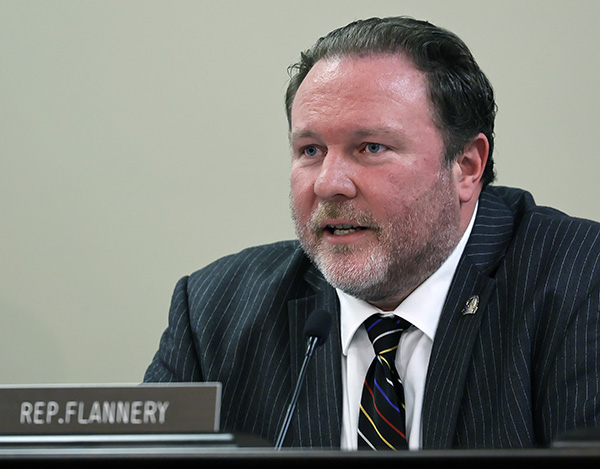
Rep. Patrick Flannery, R-Olive Hill, is the primary sponsor of House Bill 414, which would require DNA collection upon a felony arrest in Kentucky. He spoke on the bill during Tuesday's House Local Government Committee meeting. A high-res version can be found here.
FRANKFORT — Individuals facing felony charges in Kentucky may soon have to provide more than just their fingerprints upon arrest.
House Bill 414 would require jails to collect a DNA sample when a person is booked into jail on a felony charge. Rep. Patrick Flannery, R-Olive Hill, is the primary sponsor of the legislation and the chair of the House Local Government Committee.
Sen. Julie Raque Adams, R-Louisville, testified alongside Flannery and two advocates on the legislation during the committee's Tuesday meeting.
Flannery told the committee that 31 other states have already enacted similar legislation, which has aided law enforcement in solving cold cases.
“This is very helpful for different reasons,” Flannery said. “One is hopefully we can solve crimes that have been remaining out there. Hopefully for folks that are innocent, this can be used to exonerate them.”
U.S. Supreme Court case Maryland v. King opened the door for states to pass legislation like HB 414, Flannery said. Adams told the committee she first filed similar legislation years ago.
Then, Kentucky would've been a pioneer, she said. Today, Kentucky is considered an outlier compared to its surrounding states.
“I've always been deeply committed to this, and I've always thought it was the right direction,” Adams added.
Under HB 414, collected DNA would be sent to the Kentucky State Police's forensic laboratory. The DNA samples could only be used for criminal justice purposes.
The legislation limits DNA collection upon felony arrest to adults. The bill would require the samples and the DNA profile to be expunged upon an acquittal, a dismissal or a conviction for a nonfelony offense.
Individuals who successfully complete a pretrial diversion program could also qualify for expungement.
Rep. Michael Meredith, R-Oakland, asked Flannery why collecting a $5 fee for the collection of the DNA samples was removed from a new draft of the legislation.
Flannery said the state does not collect a fee for fingerprinting or other aspects of the booking process, so the change would make the DNA collection no different. He also said HB 414 would have a “minimal, if any” fiscal impact.
Advocate Michelle Kuiper shared her story as a real-life example of how HB 414 can help Kentuckians. She is a survivor of a serial rapist. It took 17 years for a DNA sample to identify the perpetrator who kidnapped and attacked her in Louisville in 1994.
Kuiper said the man responsible for her assault and the assault of at least two other women had been in and out of jail for other crimes, but no DNA had been collected in those instances. A DNA sample upon a trafficking cocaine conviction in 2012 finally revealed his identity.
Kuiper said she believes HB 414 would help catch more serial rapists and prevent crime.
“It's a proactive approach that accelerates investigations, potentially prevents future violent crimes, and exonerates the innocents and provides reliable, long-lasting forensic evidence so someone does not have to wait two decades to find their predator,” Kuiper said.
Ashley Spence, founder of the DNA Justice Project, testified alongside Kuiper. She said she saw her rapist identified and brought to justice thanks to legislation like HB 414 in California.
She told the committee when Texas enacted similar legislation, they saw 1,005 cold cases closed in one year.
“Not only is this, in my opinion, smart public policy, it is one of the most fiscally responsible public safety investments that we can make,” Spence said.
Rep. Rebecca Raymer, R-Morgantown, thanked Kuiper and Spence for their testimony. She told the women she has been working to expand access to sexual assault nurse examiners in Kentucky.
“This is a very wonderful piece of legislation that will complement that, and I'm going to be a very proud ‘yes' today,” she said.
The House Local Government Committee unanimously voted to send HB 414 to the House floor.
This Week at the State Capitol (2-13-26)
The gavel for House Speaker David W. Osborne rests on the striking block in the House chamber, where lawmakers were busy this week moving bills closer to passage in the 2026 legislative session. A high-res version can be found here.
FRANKFORT — During another jam-packed week in the 2026 legislative session, lawmakers advanced two bills on child care, gave a nod to first responders and sparred twice over a proposal to allow conscientious objections for health care workers in Kentucky.
The sixth week of the session was brimming with back-to-back committee meetings as lawmakers also moved measures on choking prevention, fraudulent contractors, agritourism and campaign finance, among many others.
Meanwhile, talks on the state's new two-year budget plan continue to steam ahead. The House held six budget review subcommittees throughout the week along with an hour-long hearing in the House Appropriations and Revenue Committee that touched on funding for four state agencies.
On Monday, the Senate passed a trio of education bills related to salaries for school administrators, new principal training and financial training for school board members.
The attention turned to child care on Tuesday when the Senate Families and Children Committee took up Senate Bill 160, which would provide more flexibility to state agencies that oversee Kentucky's child care industry.
The measure calls on state officials to consider certain mitigating factors before issuing a plan of correction, suspension or revocation of a license to a child care center. It would also require officials to provide two weekly support contacts during a center's six-month probationary period.
Supporters say the changes would help child care centers succeed at a time when demand is outpacing supply in the child care industry.
SB 160 cleared the Senate floor on Thursday and now heads to the House, which acted on a separate child care measure in the House Families and Children Committee.
That legislation, House Bill 6, proposes a broad overhaul of the regulatory framework for Kentucky's child care sector – all part of an effort to modernize the system, enhance data collection, and improve access and quality of services.
HB 6 advanced out of committee without opposition and now heads to the full House for consideration.
Thursday also brought action on a bill that seeks to prevent interference or harassment of first responders.
Senate Bill 104 would create a 25-foot safe zone around police, firefighters and others while they are performing their official duties. Individuals who remain in the zone could face criminal charges if they ignore an initial warning to move back.
The Senate Committee on Veterans, Military Affairs and Public Protection voted 9-2 to send the bill to the full Senate.
Of all the measures this week, none garnered more debate than Senate Bill 72, which seeks to protect conscientious objections among professionals in the health care sector.
The measure would let health care workers refuse to participate in services that violate their sincerely held beliefs. It would also protect such workers from discrimination or retaliation from employers and government agencies.
The Senate Health Services Committee passed the legislation 8-2 following a long debate on Wednesday, and lawmakers clashed for nearly an hour Friday before moving the bill off the Senate floor on a 28-5 vote.
Supporters say the measure is vital to protecting the rights of health care workers and to improving recruitment and retention in a state struggling with shortages in the industry. Critics, however, say the bill would allow workers to discriminate against patients based on personal beliefs, leaving some patients without access to care.
SB 72 now heads to the House.
Many other bills are gaining ground in the legislature, including measures on literacy, grand juries, autism and robotics. Here's a look at some of the bills making headway.
School Bus Safety – House Bill 7 would allow school districts to install traffic cameras on school buses to help enforce laws against stop-arm violations. The House voted for the measure Monday.
School Administrator Salaries – Senate Bill 2 would prohibit school administrators from receiving a percentage pay increase that is greater than the average percentage pay increase provided to classroom teachers in that district. The bill cleared the Senate on Monday.
New Principal Training – Senate Bill 4 would create a five-year training program that provides leadership development and mentorship opportunities for new school principals in Kentucky. The state would partner with the Kentucky Chamber Foundation to provide intensive training during the fourth year of the program. The Senate advanced the bill Monday.
School Board Financial Training – Senate Bill 71 would enhance the financial training requirements for local school board members. The legislation won approval Monday in the Senate.
Choking Prevention – House Bill 335 would allow schools and other government facilities to obtain anti-choking devices and provide legal protections for staff who use them during emergencies. The House Committee on Veterans, Military Affairs and Public Protection approved the bill Tuesday.
Autism Trust Fund – Senate Bill 69 would create an autism spectrum disorder trust fund administered by the Kentucky Cabinet for Health and Family Services. It would allow individuals to donate their tax refunds to support research and support services. The fund could also accept grants, appropriations and other types of contributions. The Senate Appropriations and Revenue Committee advanced the bill Wednesday.
License Plate Reader Data – Under House Bill 58, data from automated license plate readers could be stored for only 90 days, with some exceptions. The bill would also limit the use of license plate readers to specific activities like regulating parking, collecting tolls, and promoting public safety, among others. The House Judiciary Committee passed the bill Wednesday.
Robotics Education – House Bill 44 would create a state trust fund for promoting robotics education in Kentucky high schools. Grants from the trust fund would also support efforts to create community partnerships and career pathways for students in the field. The House voted in support of the bill Wednesday.
Grand Jury Confidentiality – House Bill 305 would extend the statute of limitations for prosecuting anyone who secretly records grand jury proceedings. It would also extend the statute of limitations for prosecuting anyone who unlawfully shares grand jury testimony. The bill received a green light from the House on Wednesday.
Missing Persons – Senate Bill 159 calls on local law enforcement to submit case information on missing people to the National Missing and Unidentified Persons System. The bill received a go ahead from the Senate Committee on Veterans, Military Affairs and Public Protection on Thursday.
Campaign Finance – House Bill 136 would allow the use of campaign funds to pay for the “reasonable costs” of security measures for candidates, office holders and family members. The House Committee on Elections, Constitutional Amendments and Intergovernmental Affairs passed the bill Thursday.
School-Based Councils – Senate Bill 152 would replace school-based decision-making councils with school-based advisory councils. The advisory councils would continue to provide feedback and recommendations to school officials, but final authority over hiring, curriculum and leadership would rest with the principal and superintendent under the bill. The Senate Education Committee advanced the legislation on Thursday.
Mental Illness – House Bill 485 would change procedures for involuntary hospitalization and care of individuals with mental illness. The measure is intended to improve oversight of treatment decisions while ensuring individuals receive appropriate mental health care. The bill cleared the House Health Services Committee on Thursday.
Fraudulent Contractors – Senate Bill 153 would help protect Kentucky homeowners from abusive and fraudulent contractors following severe weather. It would clarify that vandalism committed for the purpose of an insurance claim is fraud. It would also create a post-disaster registry for roofing, siding and tree-removal businesses, and it would prohibit door-to-door solicitations during declared emergencies. The measure received a nod from the Senate Banking and Insurance Committee on Tuesday and cleared the Senate floor Thursday.
Literacy – House Bill 253 would end the use of the three-cuing method, a system used to teach reading, in Kentucky schools by the 2029-30 academic year. The bill seeks to replace that model with evidence-based reading approaches that emphasize techniques like phonics, vocabulary and fluency. The House passed the bill Thursday.
Agritourism – Senate Bill 45 would prohibit local governments from enacting “unreasonable or impractical” restrictions on agritourism activities such as rodeos, livestock shows and horseback riding. The Senate Agriculture Committee approved the bill Tuesday, and the Senate voted in favor of the measure Thursday.
Bar Association Membership – House Bill 526 would make membership in the Kentucky Bar Association voluntary for attorneys staring in 2027. The measure cleared the House Licensing, Occupations and Administrative Regulations Committee on Wednesday and received a favorable vote in the House on Friday.
Lawmakers will break in observance of Presidents' Day on Monday but are scheduled to reconvene on Tuesday for day 28 of the session.
Kentuckians are urged to check the general assembly's calendar for updates. Kentuckians can track the action through the Legislative Record Webpage, which allows users to read bills and follow their progression through the chambers.
Citizens can also share their views on issues with lawmakers by calling the general assembly's toll-free message line at 1-800-372-7181.
Committee advances bill on high-acuity juvenile offenders
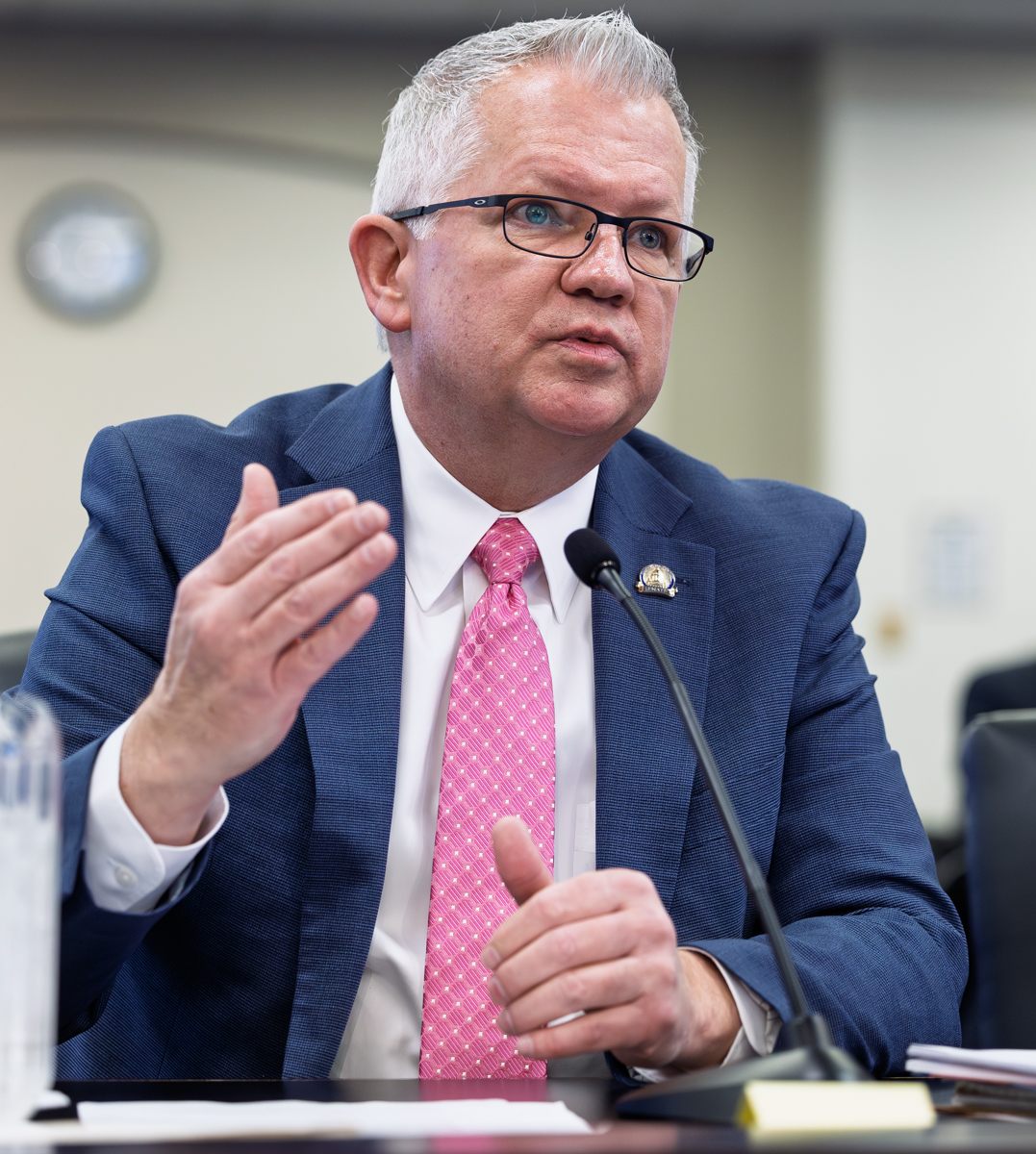
Sen. Danny Carroll, R-Paducah, speaks on Senate Bill 125 before the Senate Judiciary Committee. A high-res version can be found here.
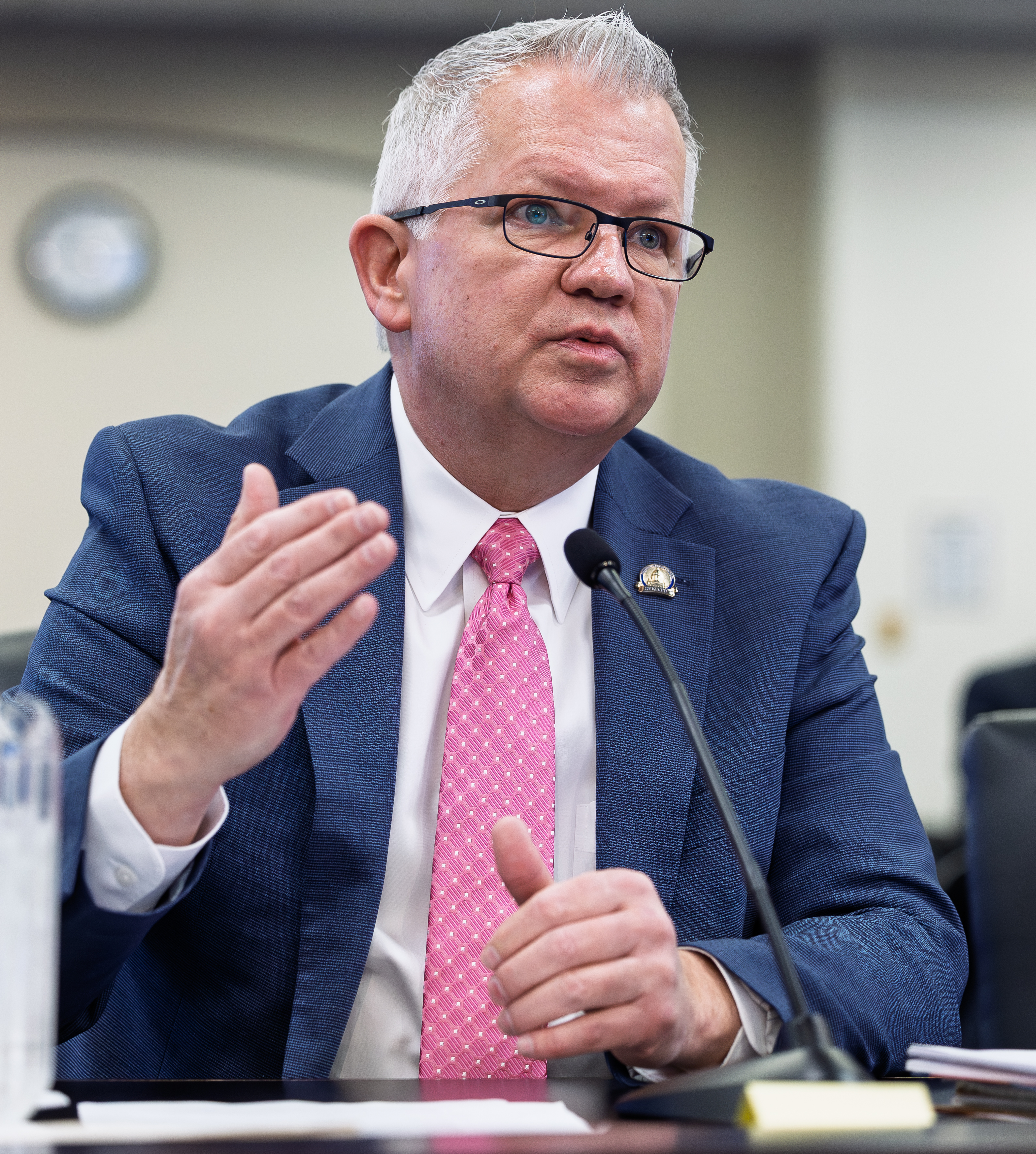
FRANKFORT — Legislation that would establish a comprehensive framework for identifying and treating high-acuity youth in Kentucky's juvenile justice system and create a dedicated mental health residential treatment facility for them advanced unanimously in the Senate Judiciary Committee.
Senate Bill 125, sponsored by Sen. Danny Carroll, R-Paducah, creates a new structure for evaluating juvenile offenders to determine if they are high-acuity youth. The bill also sets out the subsequent treatment plan for those juvenile offenders should they be found to be high-acuity.
“The bill sets up the structure for evaluation and placement of acute mentally ill children,” Carroll said. “It sets up a continuum of care for how to move the children up and down the system based on their need.”
Mona Womack, Deputy Secretary of the Kentucky Justice Cabinet, testified with Carroll on the legislation. She said the bill fills a gap in services for youth that have significant mental issues in those instances where these youth have limited options for private care and juvenile detention would not be equipped for their needs.
“This bill calls for a facility to be built specifically for youth in detention who have severe high-acuity mental health needs, allowing them to get the care they need at a secure state-run medical facility,” she said.
Senate Minority Caucus Chair Reginald L. Thomas, D-Lexington, asked how accessible the newly proposed mental health facility might be to juveniles who have committed particularly violent offenses.
“Here's a hypothetical. There's a 14-year-old boy who had a confrontation with a teacher and hauls off on her. He hits the teacher with his fist, severely injuring the teacher. What happens to that 14-year-old boy? Does he go through juvenile court and get a slap on the wrist? Is he tried as an adult? Is this facility an option for him?” Thomas asked.
In reply, Sen. Carroll clarified that the bill would impact the student only if the student were deemed high-acuity.
“This bill strictly impacts the situation if that young man were determined to be acutely mentally ill and needed placement in a treatment center,” Carroll said. Furthermore, he clarified that this determination had a process and that the bill did not intend to make offenders less accountable.
“It sets up the process for that determination. A representative from both cabinets would get together and decide if they agreed with the clinician's assessment, file affidavits with a judge, who would then make the final decision on where the child might be placed,” Carroll said.
Sen. Matthew Deneen, R-Elizabethtown, asked how long the Juvenile Justice Department thought building a new facility might take.
Randy White, Commissioner of the Department of Juvenile Justice, answered that building a new facility would take about two and a half to three years, depending on the availability and price of building materials.
SB 125 now heads to the full Senate.
House bill on improving child care access advances

Rep. Samara Heavrin, R-Leitchfield, explains how House Bill 6 would improve child care access in Kentucky during Thursday's House Families and Children Committee meeting. A high-res version can be found here.

FRANKFORT — A bill stakeholders say will improve child care access for Kentucky families cleared its first major hurdle on Thursday.
House Bill 6 is sponsored by House Families and Children Committee Chair Rep. Samara Heavrin, R-Leitchfield. She told the committee the legislation has been 18 months in the making with the Kentucky Collaborative on Child Care.
Heavrin described the collaborative as a group of more than 40 stakeholders from across the political spectrum. She said HB 6 has a long-term focus on affordability, quality and access.
“We're focusing on working families and affordability, and (the bill) ensures the quality of early learning and access and options for parents,” Heavrin said. “These are long term reforms, not quick fixes.”
Heavrin said HB 6 addresses the certified child care community program, the Kentucky Advisory Council, micro child care centers, efforts focused on children with special needs, child care data and information, transparency, faith-based child care providers, child care assistance program improvements and employee child care assistance partnership reform.
HB 6 would also establish a pilot program to allow Kentucky's military bases to work on an opportunity to have off-base child care.
Committee co-chair Rep. Nick Wilson, R-Williamsburg, kicked off discussion of the legislation by asking for more insight on micro child care centers.
Charles Aull, vice president of policy and research at the Kentucky Chamber of Commerce, said micro centers are a new type of child care service that is different from a traditional child care center or home-based child care.
“The intent behind them is to address specific gaps within communities,” Aull said. “So things like third-shift care, drop-in care, rural child care and to support public and private partnerships.”
Aull said HB 6 would initially allow the existence of 10 micro centers – with no more than two in a single county at a time – with the ability to have as few as four children or as many as 24 children.
In the future, the general assembly could consider allowing more micro centers, but HB 6 is a start to give the state time to establish a regulatory framework, Aull said.
“What's unique about them is they operate under a more flexible regulatory framework than what we see in traditional child care centers and certified family child care homes,” he added.
Another major provision of HB 6 is related to privatization of the state's employee child care assistance partnership program, Heavrin said.
Rep. Tina Bojanowski, D-Louisville, asked if the bill provides new opportunities for public sector employees, like teachers, to use the program.
Heavrin said the program has been “a mess” since it was established in 2022. She said she wants to work on fixing the issues with the program before expanding it. The program has not taken off as quickly as originally planned.
Despite the problems, Heavrin said she thinks the state Division of Child Care has done a good job with the program despite it being out of their scope of practice.
“Hopefully in the next year or two we can look and see if we can include teachers and add public governments to it,” she said.
As Heavrin was preparing to present the bill, she said she thought about how child care access prevents some Kentuckians from starting families as early as they would like, if at all.
“I really think these programs in this bill are going to help future generations to come,” she said. “And hopefully it encourages more children if people want children. It is ok if they don't, but we want to be able to help families and meet them where they're at.”
The House Families and Children Committee voted to send HB 6 to the House floor by a 12-0 vote with one pass vote.
In explaining his “yes” vote, Rep. Robert Duvall, R-Bowling Green, thanked Heavrin and the other stakeholders for their work on the legislation.
“Kentucky is leading here,” he added. “And I love it.”
Senate committee endorses first responder safety barrier bill
Sen. Matt Nunn, R-Sadieville, testifies Thursday on Senate Bill 104 to the Senate Veterans, Military Affairs and Public Protection Committee. A high-res version can be found here.
FRANKFORT — A bill to ensure a “safety barrier” for first responders while they work advanced Thursday from the Veterans, Military Affairs and Public Protection Committee.
Bill sponsor Sen. Matt Nunn, R-Sadieville, said the legislation is often called the “Halo Act,” and it would create a 25-foot safety barrier around first responders when they're performing their official duties.
Under the measure – Senate Bill 104 – a first offense would be a class B misdemeanor, a second or third offense would be a class A misdemeanor, and each subsequent offense would constitute a class D felony charge.
“What this bill does is ensure that the men and women who protect and serve our commonwealth every day can do so without any interference, any impediments. That way they can go home safely every day, and the people they're protecting and serving get the best, most efficient treatment,” he said.
Nunn said the bill calls for a verbal warning if someone is impeding, harassing or intimidating a first responder. If the offender ignores that warning, they can be charged.
Committee Chair Matthew Deneen, R-Elizabethtown, said the bill would provide a safety net for all responders, mentioning how first responders are sometimes impeded by distraught family members while they're working.
“That's critical to making sure that our first responders, whether it is law enforcement, fire, rescue, that those individuals have the space to do their job and that they can return home safely to their families,” he said.
Sen. Jimmy Higdon, R-Lebanon, also supported the bill, but cited concerns over the felony provision, which he called a “pretty tough standard.”
Nunn said he understands the levity of the felony charge, but he noted that it only takes effect on the fourth offense and that warnings are given before each charge. He said an offender will have been warned and charged many times before the felony provision kicks in.
“At that point, I feel like it is an appropriate escalation,” he said.
Sen. Karen Berg, D-Louisville, described the bill as “thoughtful”, but voted against the measure. She said she's not aware of incidents happening very frequently and questions why penalties would need to escalate.
Berg said state law already forbids people from intentionally obstructing or disrupting an emergency responder from performing his or her official duties.
“I'm just curious, do you know how many people have been cited under this in the last couple of years in this state,” she asked.
Nunn said he didn't have statistics on how many people have been cited under current statute, but he further explained the intention of the bill.
“We have a serious problem here. I hear this often from first responders, and what this bill does is it creates a clear standard. The statute you described has some room for interpretation. This creates a very clear standard in my opinion, and that's necessary to ensure those first responders can perform their duties,” he said.
Sen. Gary Clemons, D-Louisville, also raised some issues over the bill. He said he understands the 25-foot rule for EMTs and firefighters, but he expressed concern about police and immigration officers violating the free speech rights of people who may be recording the incident. He voted against the measure.
Sen. Craig Richardson, R-Hopkinsville, voted in favor of the SB 104 and said it's necessary.
“I think this bill creates well-defined standards to protect people that want to be there, that want to be close by, that are concerned and have a vested interest in what's happening, but also protects those that are trying to serve and do their job,” he said.
Sen. Gary Boswell, R-Owensboro, said he shares Higdon's concern regarding felony offenses.
“However, I would say in this particular case, I think your bill is very lenient,” Boswell said. “You're given so many opportunities for people not to do this. I don't think we're talking about a lot of young kids here. I think we're probably talking about people who possibly might be a little bit older, and they should know better.”
SB 104 now heads to the full Senate.
Health care professionals bill gains committee approval
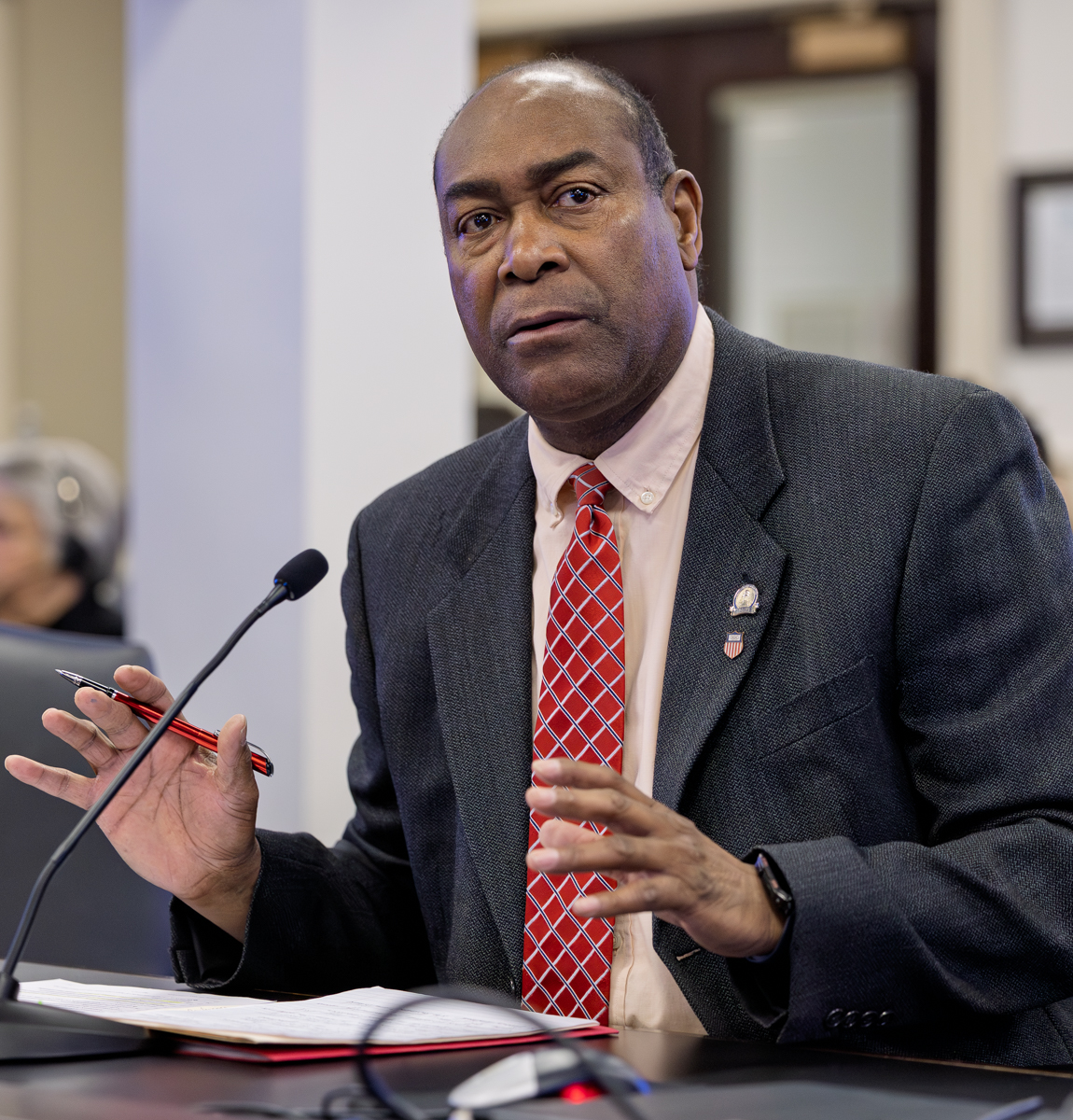
Sen. Donald Douglas, R-Nicholasville, testifies Wednesday on Senate Bill 72 during a Senate Health Services Committee meeting. A high-res version can be found here.
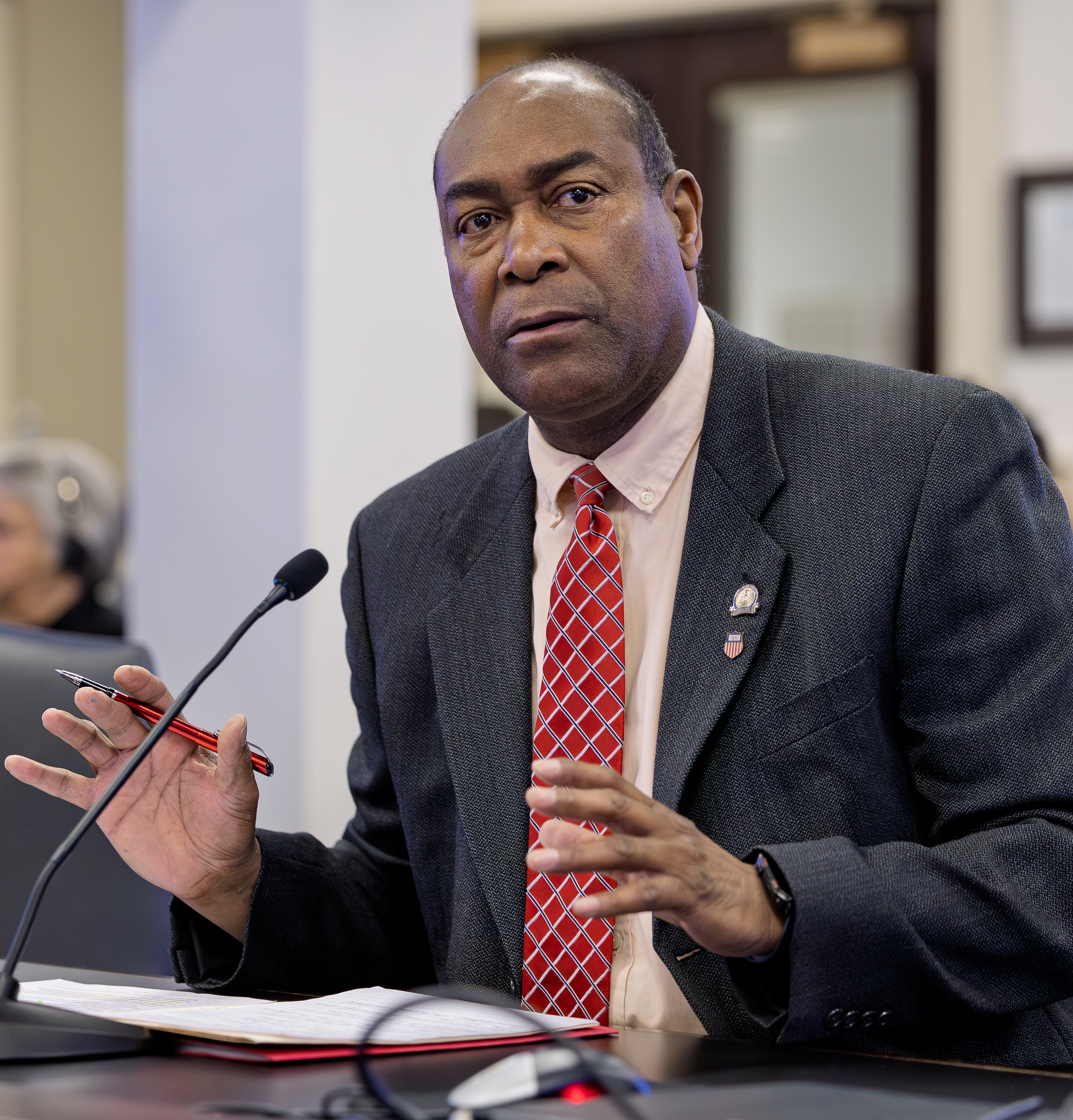
FRANKFORT — A bill that would let health care professionals refuse to participate in services that violate their conscience advanced Wednesday following impassioned debate during the Senate Health Services Committee meeting.
Sen. Donald Douglas, R-Nicholasville, is the sponsor of Senate Bill 72, a bill he described as a commonsense approach to provide parity for health care professionals.
“This bill is a provider recruitment and retention tool. It's an economic development tool, and it is a tool that says to a health care provider who wants to come into our commonwealth that we welcome you for your dedication and your hard work for serving the public,” he said.
Douglas, a medical doctor, said the legislation would protect those who want to follow their strongly held beliefs as long as their decision does not put others in danger or interfere with the rights of others.
“Even though we're going to continue to expect the highest level of professionalism from you, we will honor your individuality as a person and your values just like we do everybody else in the Commonwealth of Kentucky,” he said.
Douglas said Kentucky is facing health care provider shortages and distribution problems and that the bill would take away some of the fear from some workers.
SB 72 would stipulate that health care workers or health care institutions shall not be liable civilly, criminally or administratively for exercising the right of conscience. It would also forbid discrimination or retaliation against such workers from employers or governmental agencies.
Several people spoke against SB 72 during the public comment period, including Tamarra Wieder, state director of Planned Parenthood in Kentucky. She said the bill would allow delayed and substandard medical care with no protections to ensure patients get the care they need.
“This will harm Kentuckians, especially people who already face barriers to access in care such as people with low income or people living in rural areas who can't easily obtain care elsewhere,” she said.
One committee member opposed to the bill, Sen. Keturah J. Herron, D-Louisville, said she doesn't support barriers to health care. She voted against SB 72.
“I just want to make clear that this bill basically is going against what we've already done this year. We cannot in one breath say that we want to expand health care and make sure all Kentuckians have that access but then create pieces of legislation like this that would then create barriers and allow some people to be excluded,” she said.
Senate Majority Caucus Chair Robby Mills, R-Henderson, said Ohio, Tennessee and Illinois already provide for this protection for medical professionals. He voted in favor of the bill.
“I'm not a doctor, but I hear, this year and last year, the talk of lack of doctors, the tough recruiting process of getting a doctor to come to Kentucky,” he said. “I think this provides for safety, to keep our medical professionals in Kentucky and allow them to continue to practice.”
Sen. Steve Rawlings, R-Burlington, also voted for the bill, and said he has heard from concerned medical students from the University of Kentucky.
“They were sincerely concerned about their conscientious rights to the extent that they were going to move to Florida, where they do have conscientious protection,” he said. “So, this bill, I don't see this as a withholding care type of bill. This is about recruiting doctors and upholding their conscientious rights.”
SB 72 now heads to the full Senate.
Automated license plate reader bill advances
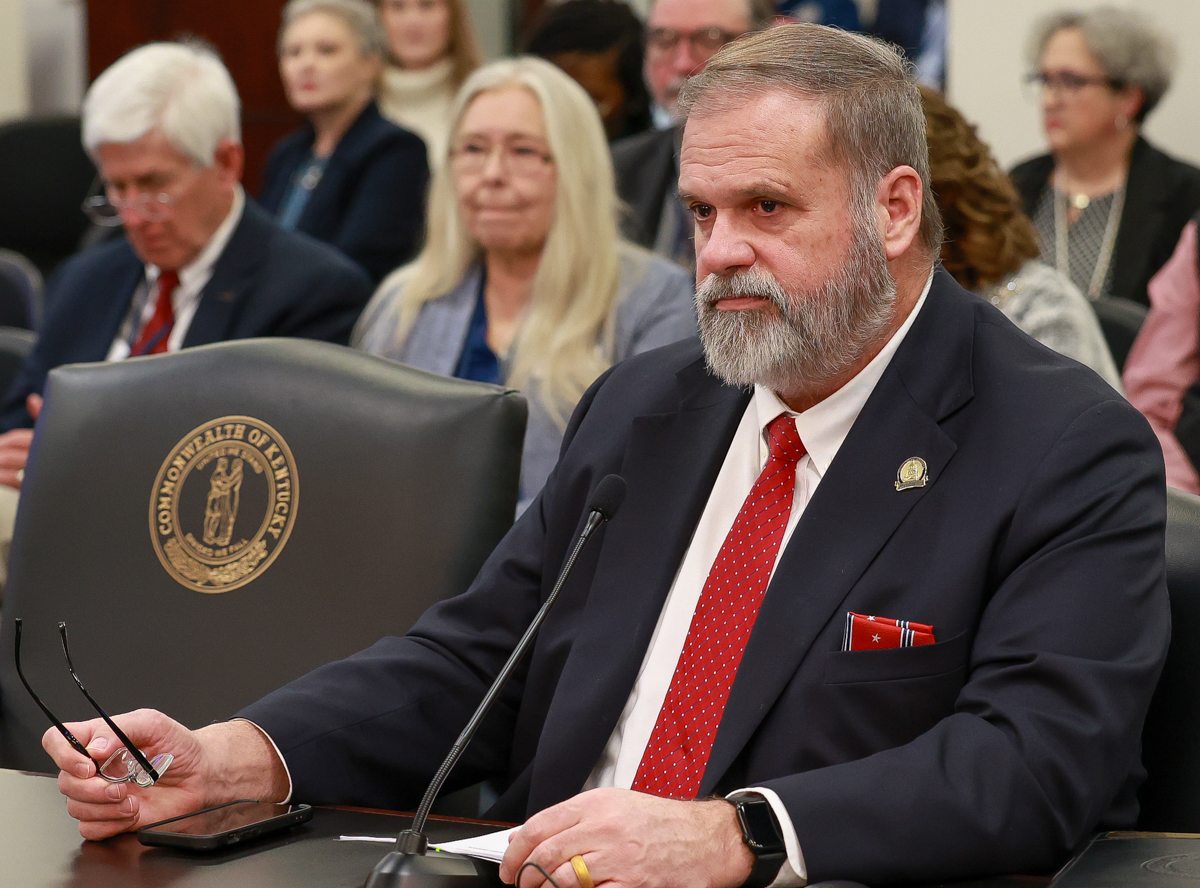
Rep. John Hodgson, R-Fisherville, presented House Bill 58 during Wednesday's House Judiciary Committee meeting. A high-res version can be found here.
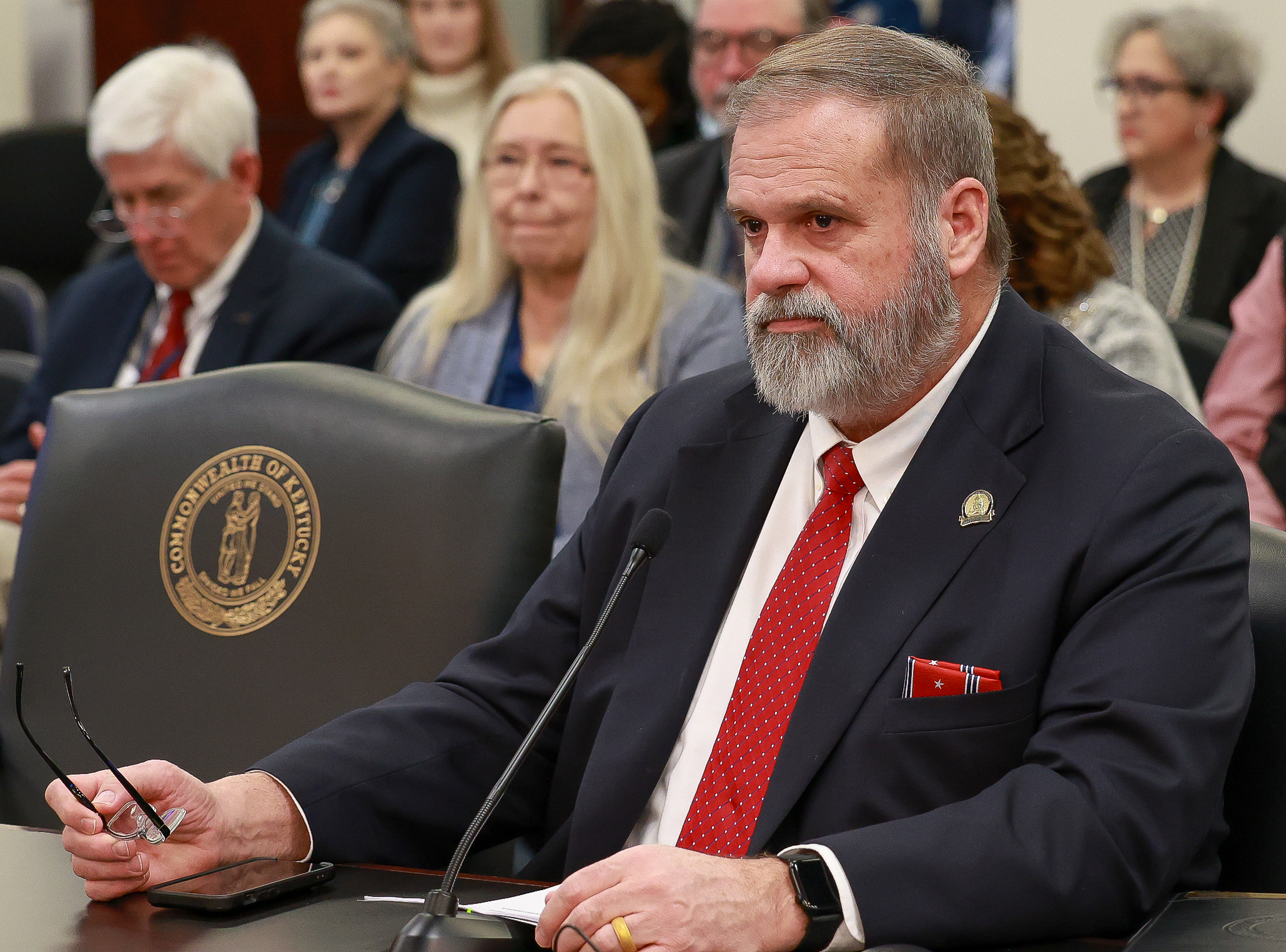
FRANKFORT — A Kentucky House bill that would limit the amount of time automated license plate reader data can be stored is on the move.
Rep. John Hodgson, R-Fisherville, presented House Bill 58 to the House Judiciary Committee on Wednesday. He said this is the fourth time he's filed legislation on automated license plate reader data retention.
“The crux of this bill is that we are intending to limit the retention of that data to 90 days after,” he said. “With certain exceptions, it should be destroyed.”
HB 58 would also strictly limit the sale or distribution of that data, Hodgson said.
The bill would only allow automated license plate readers to be used to regulate parking, toll collection, controlling access to secured areas, promoting public safety, deterring crime or to address auto theft, among a few other exceptions.
Under HB 58, it would be unlawful for an individual, entity, partnership, corporation, association or the state to use an automated license plate readers other than what is permitted by the legislation.
Violators could face a $20-$2,000 fine or up to a year in prison, according to the bill.
Rep. John Blanton, R-Salyersville, asked Hodgson if the legislation would impact the new highway work zone speeding enforcement cameras that are being installed around the state. Blanton sponsored legislation related to highway work zone cameras in 2025.
“Is there an exception if there is a pending court case that needs that data to be retained until the conclusion of that court case?” Blanton added.
Hodgson said HB 58 would not prohibit the speeding enforcement cameras. The legislation would also allow exceptions on data retention for criminal and insurance investigations.
“If there's an active criminal investigation, you can retain it as long as necessary, and also an active insurance investigation or subpoena,” Hodgson said.
The House Judiciary Committee voted unanimously to send HB 58 to the full House.
In explaining her vote, Rep. Savannah Maddox, R-Dry Ridge, said she thinks HB 58 “is a step in the right direction” but she would prefer to see automated license plate readers outlawed.
Rep. T.J. Roberts, R-Burlington, also explained his vote. He is also wary of automated license plate readers.
“The right to be left alone is one of those rights that sparked the revolution that created this country,” he said. “This gets us closer to that effort and ensures that there's at least guardrails in place to ensure that citizens are not constantly being spied on.”
Committee advances bill on school anti-choking devices
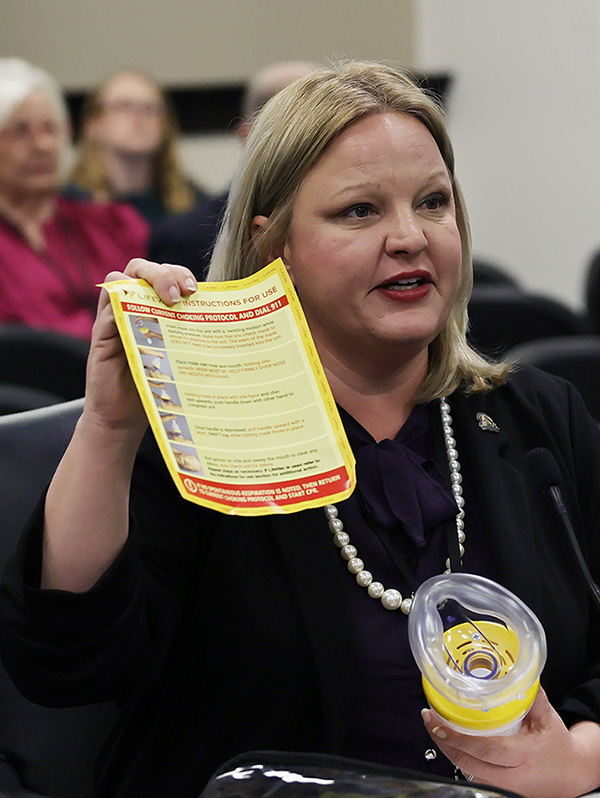
Rep. Candy Massaroni, R-Bardstown, speaks on House Bill 335 during Tuesday's meeting of the House Veterans, Military Affairs, and Public Protection Committee. A high-res version can be found here.
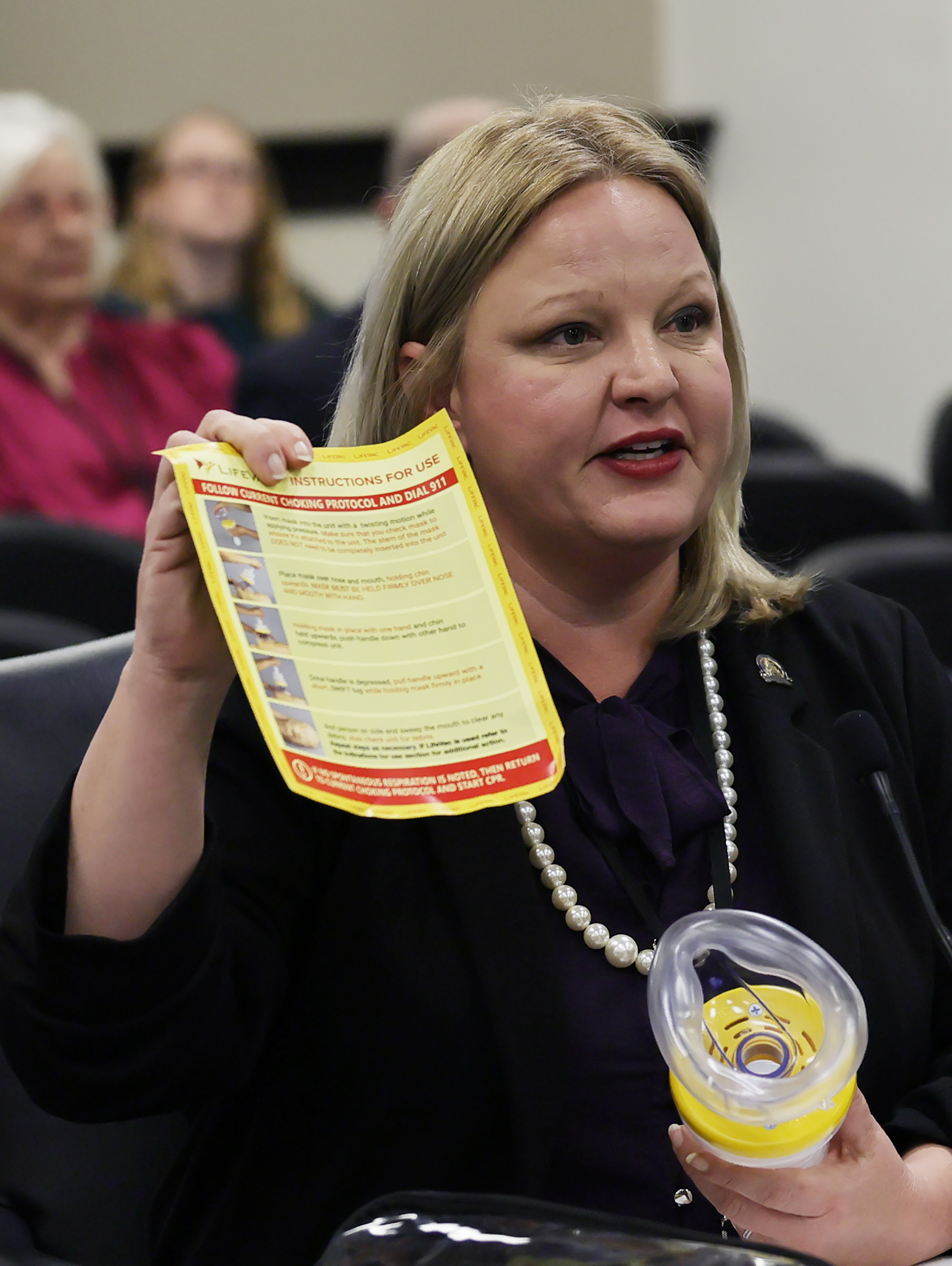
FRANKFORT — A bill aimed at improving how Kentucky schools respond to choking emergencies advanced Tuesday from the House Veterans, Military Affairs, and Public Protection Committee.
House Bill 335, sponsored by Rep. Candy Massaroni, R-Bardstown, would allow schools and other government facilities to obtain anti-choking devices and provide legal protections for staff who use them during emergencies.
“This bill would allow schools or other government facilities to have anti-choking devices,” Massaroni said. “It would remove the liability to align with Good Samaritan laws we already have.”
The legislation comes after the death of 8-year-old Landon McCubbins of Bardstown, who choked on a small ball in a Nelson County classroom. Emergency responders attempted to dislodge the object but were unable to save him.
Landon's mother, Lauren McCubbins, spoke in support of the measure.
“Those emergency protocols failed my sweet boy, and there was not an anti-choking device in the school to try to save him,” McCubbins said. “I would give anything for my son to still be alive, and I will do everything in my power to save another child.”
Anti-choking devices are portable, nonpowered suction tools designed to help clear airway obstructions when standard first aid methods, such as abdominal thrusts or back blows, are not successful.
Rep. Nick Wilson, R-Williamsburg, offered condolences to the McCubbins family on behalf of the committee.
Massaroni emphasized that the bill does not require schools to have the devices. “It is not mandated. It is a local control issue. They can decide if they want it or not.”
Rep. Steve Bratcher, R-Elizabethtown, referenced similar legislation that passed the House last session and asked whether a program offering free devices to schools was still available.
Massaroni said the company LifeVac, which had a representative attending the meeting via Zoom, previously offered to donate a device to any Kentucky school that wanted one and may still be willing to participate.
HB 335 passed the committee on a vote of 15-0 and now heads to the full House of Representatives.
Committee OKs child care center bill
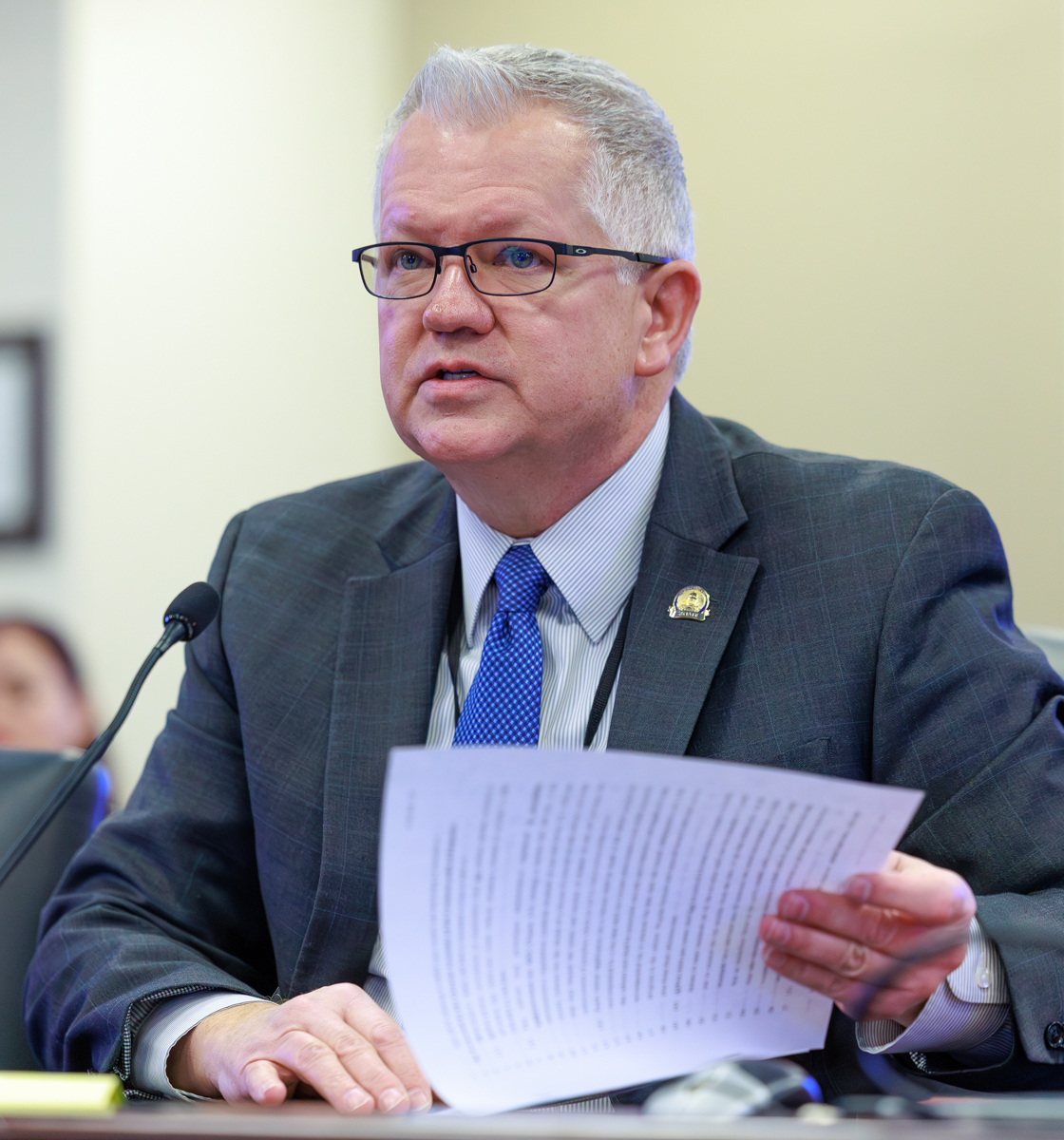
Sen. Danny Carroll, R-Paducah, testifies Tuesday on Senate Bill 160 during a Senate Families and Children Committee meeting. A high-res version can be found here.
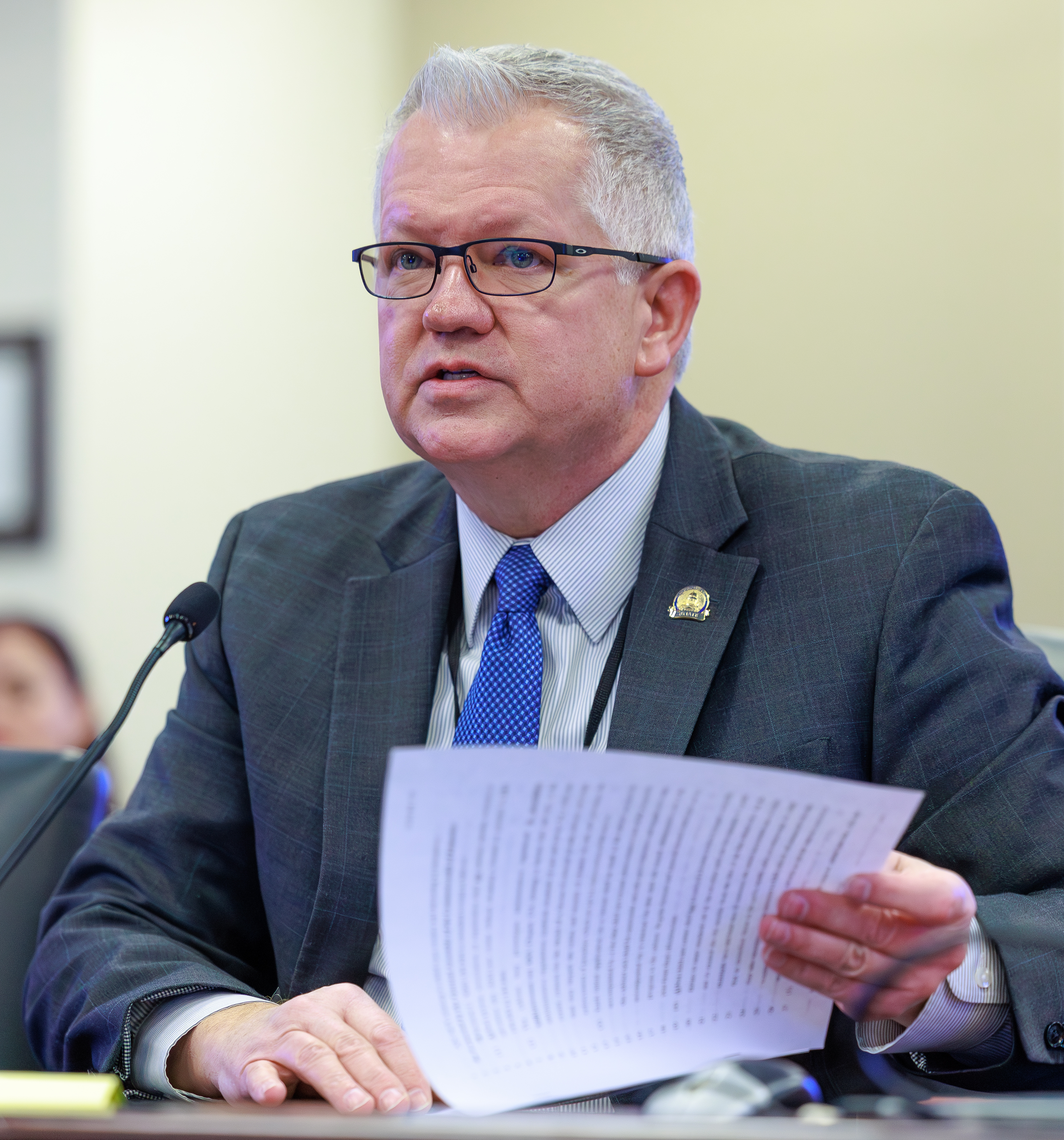
FRANKFORT — Legislation that would provide more flexibility and support within the regulatory framework for child care centers advanced Tuesday following a unanimous vote during the Senate Families and Children Committee meeting.
Committee Chair Sen. Danny Carroll, R-Paducah, is the sponsor of Senate Bill 160. He called the measure a very fair and simple bill that offers more latitude to the state Office of Inspector General and the Kentucky Cabinet for Health and Family Services when overseeing child care centers.
“There have been a lot of times that there have been suspensions and revocation of licenses that I don't think the cabinet really wanted to do,” he said. “But due to the current language, they were forced to do that.”
Under SB 160, health cabinet officials would be required to consider certain factors before issuing a plan of correction, suspension or revocation of a license to a child care center.
Among the considerations is whether the center self-reported the incident in question and has a history of self-reporting incidents. Officials would also need to consider if the incident resulted from a failure in policy, training, enforcement or supervision and whether the failure was an independent act by a director or staff person.
Another consideration would be if the child center appropriately responded to the violation by holding the party responsible for their actions, Carroll said.
The bill would also require that if officials issue a directive plan of correction, that will not result in suspension unless the incident itself was of a serious enough nature to lead to a suspension of the license, Carroll said.
“We want to set them up to succeed, not fail, because these services are crucial,” Carroll said.
Carroll said the bill calls for the cabinet to provide two weekly support contacts to child care centers with preliminary licenses during the center's six-month probationary period.
“During those six months, the cabinet shall not issue any violations against the child care center unless the cabinet determines that the violation was knowingly committed after the cabinet had provided clear instructions or the violation created an immediate threat to the health and safety or welfare of the children in the center,” he said.
Sen. Shelley Funke Frommeyer, R-Alexandria, said her eight-month-old niece died from suffocation in child care due to a mattress that was too small for the bed.
“I was told that this facility had been inspected. So, my question is the frequency of inspections,” she said. “When a violation is determined, how quickly is it verified that things are in good order and that baby isn't put back in a bed like she had died in.”
Carroll said when something like this occurs, the response would be immediate.
“There are reporting requirements within the time frame. Obviously, something of that serious of a nature, Child Protective Services would be involved. So, those responses would be very quick,” he said.
Senate Minority Caucus Chair Reginald L. Thomas, D-Lexington, said he was sorry for Funke Frommeyer's loss, and generally, those at child care centers want to do the right thing. He said he favors the bill, especially the contact information for centers with preliminary licenses.
“Most of them, particularly the private ones, do struggle because of money, because of the difficulty in finding good staffing because of turnover, particularly. It's sometimes a little difficult for them, but I think this bill is a step in the right direction to try to reach a balance,” he said.
Senate green lights principal training program bill

Sen. Stephen West, R-Paris, speaks Monday on the Senate floor regarding Senate Bill 4. SB 4 would create a training program for new principals in Kentucky. A high-resolution photo can be found here.

FRANKFORT — The Senate on Monday unanimously advanced a bill that would create a training program for new school principals in Kentucky.
The bill's sponsor, Sen. Stephen West, R-Paris, said the program would span five years and provide leadership and development opportunities. The state would partner with the Kentucky Chamber Foundation to provide intensive training during the fourth program year.
West said the goal of the program is to be the best of its kind in the United States. The bill would codify an on-going relationship with the Kentucky Chamber of Commerce that has spanned approximately 11 years, among other measures.
"It mandates a five-year pathway. Year one and year two are handled by the Kentucky Department of Education. They already do some of this work anyway," he said. "This would just enhance some of the work they're already doing and maybe put that on steroids a little bit. Maybe make it go a little bit further and hopefully, eventually, give them the money to do so – being a principal 101."
West said the program would instruct new principals about several topics, including school security, liability, and working with teachers and helping them in the classroom.
During the first two years, there would be a principal mentorship program. Each new principal will be aligned with and assigned to a principal with significant experience. Retired principals could also be mentors, he said.
Year three is a gap year to digest the things participants learned. They still must complete their continuing education, West said.
During the fourth year, the principals would travel to North Carolina for training, he said.
"We have a partnership with Truist Bank and the Kentucky Chamber of Commerce where principals will leave Kentucky after the school year is over, this is not during the school year. But they will travel to North Carolina to the Truist facility down there for leadership training. This is a proven training system," West said. The Kentucky Chamber is bringing its own member dollars through its foundation to help train principals in the program, and West said he will seek full funding for the measure as it moves through the legislative process this session.
Year five of the program is set aside for high-level intensive leadership training through vetted groups. There is already a list of entities with employees who are willing to do the training, West said.
Senate Democratic Floor Leader Gerald A. Neal, D-Louisville, said he likes that the bill is "very intentional" and is "exceptional."
Senate Minority Caucus Chair Reginald L. Thomas, D-Lexington, said he favors the bill, and it should move Kentucky's school systems forward. However, he expressed concern that the language should be changed to "first-time" principals instead of "new" principals.
"It's a good bill. I applaud the senator from Bourbon for this. So, I do vote yea," he said.
Two other education bills were unanimously advanced Monday by the Senate – Senate Bill 2 and Senate Bill 71.
Senate Bill 2, sponsored by Sen. Julie Raque Adams, R-Louisville, would prohibit administrators from receiving a percentage pay increase greater than the average percentage pay increase provided to classroom teachers in that district.
Adams said SB 2 reflects a core principle – that compensation decisions should align with classroom priorities while still respecting local governance and flexibility.
Senate Bill 71, sponsored by Sen. Matthew Deneen, R-Elizabethtown, would require school board members to go beyond the current three hours of financial training and obtain two additional hours of training every two years.
House approves school bus stop-arm camera bill
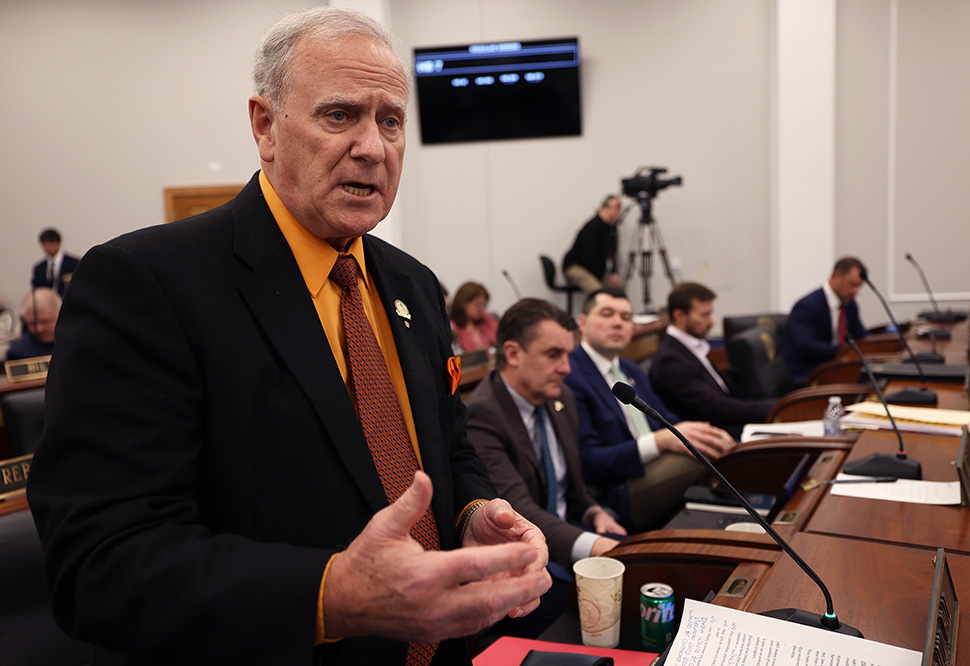
Rep. David Hale, R-Wellington, speaks on House Bill 7 on the House floor on Monday. The legislation would allow school districts to install stop-arm cameras on school buses. A high-res version as available here.
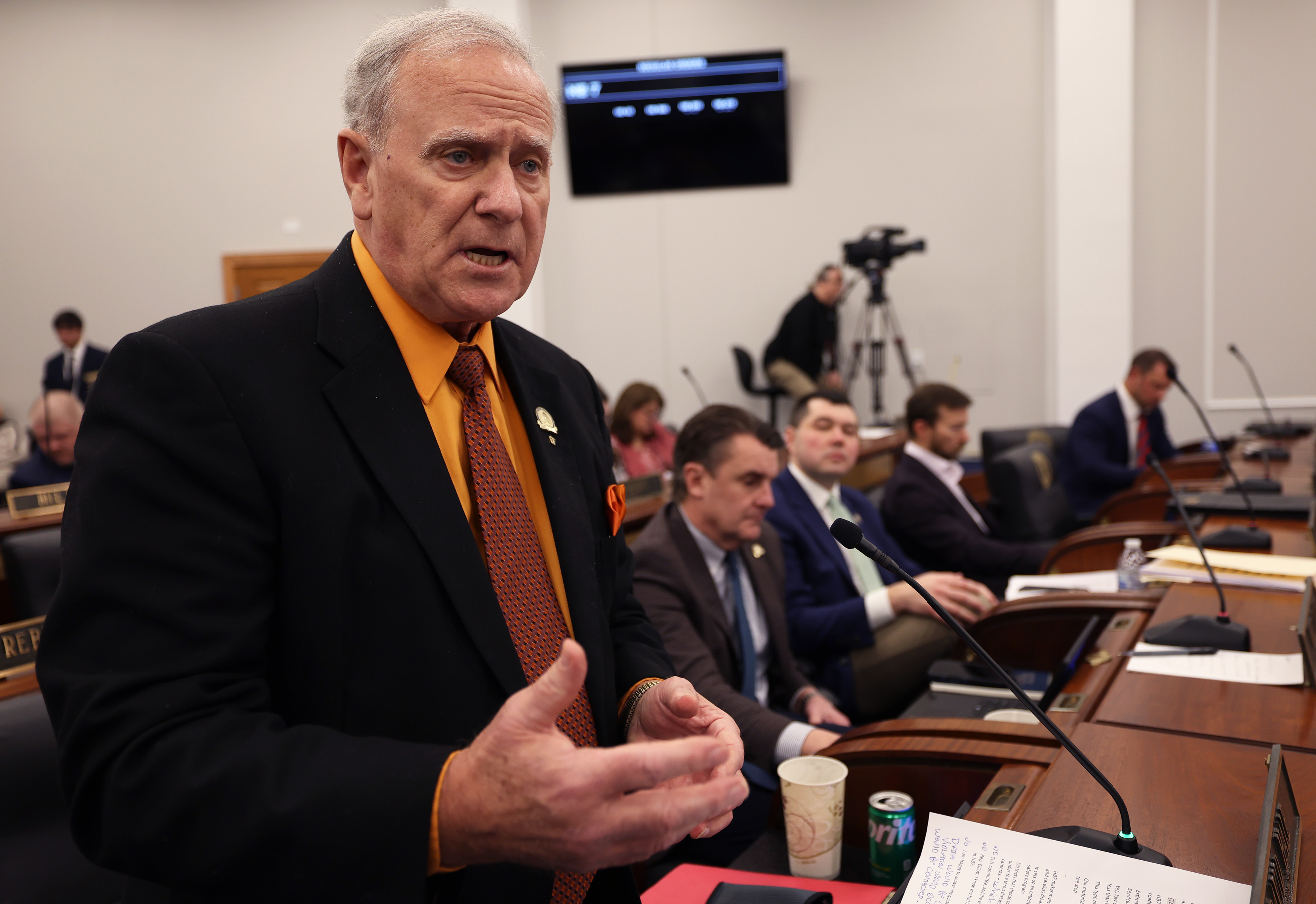
FRANKFORT — A Kentucky House bill geared toward preventing school bus stop-arm violations advanced off the House floor on Monday.
Rep. David Hale, R-Wellington, said House Bill 7 would make it easier for school districts and law enforcement to hold drivers who violate the law accountable.
Data shows there are more than a thousand school bus stop-arm violations daily on Kentucky roadways, Hale said.
"You can ask your school bus drivers in your districts," he added. "I'm sure that they could tell you the violations or things they see on a daily basis that definitely bring a lot of possible harm to those individuals who are exiting the buses or getting onto those buses."
HB 7 would give school districts permission to install stop-arm cameras on school buses. Hale said the bill is not a mandate.
"It sets up an entirely violator-funded stop-arm camera safety program," he said.
If a school district chooses to install stop-arm cameras, Hale said the vendor would collect the data and share the violator's information with local law enforcement. From there, law enforcement would review the footage before contacting the violator and issuing a civil penalty.
"(Law enforcement) would actually have to sign a sworn statement that they had viewed the video and that a violation did occur," Hale said.
Violators would be fined $300 on the first offense and $500 on the second or subsequent offense, according to the bill.
To ensure due process, Hale said fined individuals would have up to 60 days to file an appeal in district court.
For individuals who do not pay the fine after 60 says, Hale said the local law enforcement agency could contact the Department of Transportation to have the violator's motor vehicle registration suspended.
In seeking clarification on who pays for the stop-arm camera installation, Rep. Mary Lou Marzian, D-Louisville, asked Hale if the school district would have to pay for installation up front.
Hale said school districts would not have to pay in advance to install the cameras. Instead, the vendor the district chooses to contract with would be reimbursed through the collection of violation fees.
Marzian then spoke in-favor of the legislation.
"I think it's a really great safety measure for our school buses," she said.
Before voting on the legislation, Rep. Bobby McCool, R-Van Lear, said if the legislation saves one life, it will be worth it. McCool shared he was once hit by a truck while exiting a school bus.
"It did change my life," McCool said. "I'm a lucky one. The next one might not be."
After a 78-15 vote, HB 7 now will go before the Senate for consideration.
This Week at the State Capitol (2-6-26)

Snow continued to cover much of the Capitol campus during the fifth week of the 2026 legislative session. But it didn't hinder the Kentucky General Assembly from acting on dozens of bills throughout the week. A high-res version can be found here.

FRANKFORT — Education remained in the spotlight during the fifth week of the 2026 legislative session as lawmakers advanced a series of high-profile bills on school governance, administrative salaries, budgeting, literacy, and academic assessments.
The Kentucky General Assembly hit the one-third mark in the 60-day session on Wednesday, and proceedings in the chambers continue to grow longer as more bills are called up for floor votes. The House, for instance, passed 14 bills off the floor this week.
On Monday, the Senate action focused on two bills that the Senate Majority has highlighted as priority education bills for the year.
Senate Bill 1 would effectively revamp the governance structure of Jefferson County Public Schools by creating more specific responsibilities for superintendents and boards of education in large, complex school districts.
The legislation also seeks to lay out a legal justification for why the general assembly has a compelling interest in intervening in large districts like Jefferson County. It follows a similar measure that passed the legislature in 2022, but was later struck down in the courts.
SB 1 cleared the Senate 29-7 and now heads the House.
The chamber was more united on Senate Bill 3, which seeks to enhance financial transparency within school districts. It calls on districts to publish financial documents online and establishes new timelines and procedures for adopting budgets, presenting information at public meetings and reporting on finances.
Lawmakers sent that measure to the House with a 35-1 vote.
The House Primary and Secondary Education Committee took up a major education bill on Wednesday that would end the use of the three-cuing model in Kentucky schools by the 2029-30 academic year.
The three-cueing approach teaches students to read by recognizing whole words and using context clues to decipher language. However, the model has faced growing criticism in recent years. House Bill 253 seeks to replace that model with evidence-based reading approaches that emphasizes techniques like phonetic awareness and phonics.
The committee advanced HB 253 with another bill focused on educational assessments.
House Bill 257 calls for the state's education accountability standards to focus on student growth. It would also reduce state testing, prioritize attendance and allow districts to adopt locally-defined quality indicators.
Both bills now head to the full House for consideration.
Education emerged again on Thursday when the Senate Education Committee advanced Senate Bill 2. It would prohibit school administrators from receiving a percentage pay increase that is greater than the average percentage pay increase provided to classroom teachers in that district.
The committee also voted in favor of Senate Bill 4 to create a five-year training program that provides leadership development and mentorship opportunities for new school principals in Kentucky. The state would partner with the Kentucky Chamber of Commerce to provide intensive training during the fourth year of the program.
Both SB 2 and SB 4 now head to the full Senate.
Many other bills are progressing though the legislature, including measures on grooming, fluoride, trauma centers and housing. Here's a look at some of the bills that moved forward this week.
Hearing Aids – House Bill 164 would increase the coverage amounts that health insurance plans provide for purchasing hearing aids and related services for minors. The House passed the bill Monday.
Cigar Bars – House Bill 194 would create clear guidelines for cigar bars to operate in local communities, including certain requirements related to smoke exposure, age limits and revenue thresholds, among others. The House advanced the legislation Tuesday.
Eating Disorders – House Bill 169 calls on health insurance plans that provide behavioral or mental health care coverage to also provide coverage for the diagnosis and treatment of feeding or eating disorders. HB 169 won support in the House on Tuesday.
Inmate Reentry – Senate Bill 48 would prohibit repeat violent offenders from qualifying for mandatory reentry supervision, which allows certain inmates to leave prison under community supervision near the end of their sentences. The Senate passed the bill Tuesday.
School Bus Safety – House Bill 7 would allow school districts to install traffic cameras on school buses to help enforce laws against stop-arm violations. The House Transportation Committee gave the bill a green light on Tuesday.
Robotics Education – House Bill 44 would create a state trust fund for promoting robotics education in Kentucky high schools. Grants from the trust fund would also support efforts to create community partnerships and career pathways for students in the field. The House Primary and Secondary Education Committee passed the bill Wednesday.
Grand Jury Confidentiality – House Bill 305 would extend the statute of limitations from one year to 10 years for prosecuting anyone who secretly records grand jury proceedings. It would also extend the statute of limitations for unlawfully sharing grand jury testimony from one year to five years. The House Judiciary Committee approved HB 305 on Wednesday.
Grooming – House Bill 4 would criminalize efforts to manipulate a minor into sexual contact with an adult, a practice known as "grooming." The House voted for the bill Wednesday.
Geoengineering – House Bill 60 would prohibit the injection of certain chemicals into the atmosphere with the intent to modify the weather. The House Committee on Natural Resources and Energy advanced the bill Thursday.
Trophy Catfish – House Bill 397 would prohibit a person engaged in commercial fishing from transporting live trophy catfish, except by boat, beginning in 2027. The bill cleared the House Committee on Natural Resources and Energy on Thursday.
School Board Financial Training – Senate Bill 71 would enhance the financial training requirements for local school board members. The Senate Education Committee voted in favor of the bill Thursday.
Fluoride in Drinking Water – House Bill 103 would allow officials at local water systems to opt out of adding fluoride to their water supply. The House passed the measure Thursday.
Backyard Chickens – House Bill 276 would allow residents to keep up to six chickens on their residential property for personal egg production or educational purposes. It would also prevent local governments from outright banning the practice of keeping chickens. HB 276 cleared the House on Thursday.
Locally-Grown Food – Senate Bill 5 would make it easier for Kentucky schools to purchase locally-grown food for student meals. It seeks to lift some procurement requirements and better connect students with the agricultural economy. The bill cleared the Senate Agriculture Committee on Tuesday and advanced off the Senate floor Thursday.
Trauma Centers – Senate Bill 12 seeks to allow more of Kentucky's hospitals to be designated as Level IV trauma centers, particularly in rural areas of the commonwealth that are facing shortages in health care. Among several changes, the bill would ease some of the staffing standards required in current law. The Senate advanced the bill Thursday.
Veteran PTSD – House Bill 369 would add post-traumatic stress disorder to the list of medical conditions that allow veterans to qualify for hyperbaric oxygen therapy. The House Committee on Veterans, Military Affairs and Public Protection advanced the bill Tuesday, and the House voted in favor of the measure Friday.
Affordable Housing – House Bill 333 would allow faith-based organizations to build small-scale affordable housing units on property located near religious institutions. The House Local Government Committee passed the bill on Tuesday, and the measure cleared a House vote Friday.
Massage Therapy – Senate Bill 132 would strengthen local oversight of massage businesses while toughening penalties for unlicensed practices in an attempt to combat human trafficking. The bill cleared the Senate State and Local Government Committee on Wednesday and received a favorable vote on the Senate floor Friday.
Lawmakers are scheduled to reconvene on Monday for day 23 of the session.
Kentuckians are urged to check the general assembly's calendar for updates. Kentuckians can track the action through the Legislative Record Webpage, which allows users to read bills and follow their progression through the chambers.
Citizens can also share their views on issues with lawmakers by calling the general assembly's toll-free message line at 1-800-372-7181.
Senate passes massage therapy bill aimed at curbing human trafficking
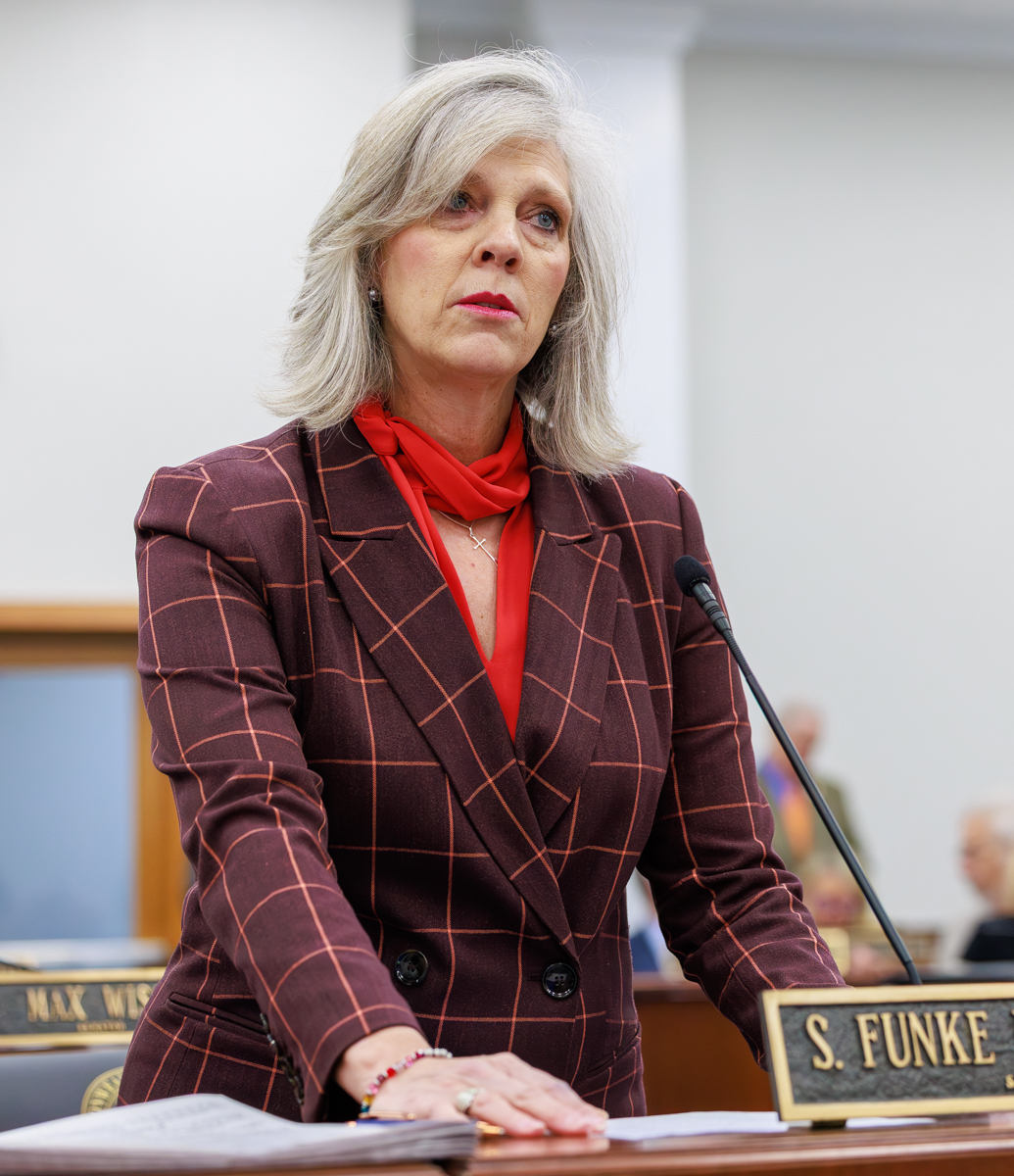
Sen. Shelley Funke Frommeyer, R-Alexandria, speaks on Senate Bill 132, which strengthens local control over massage therapy businesses, on the Senate floor. A high-resolution photo can be found here.
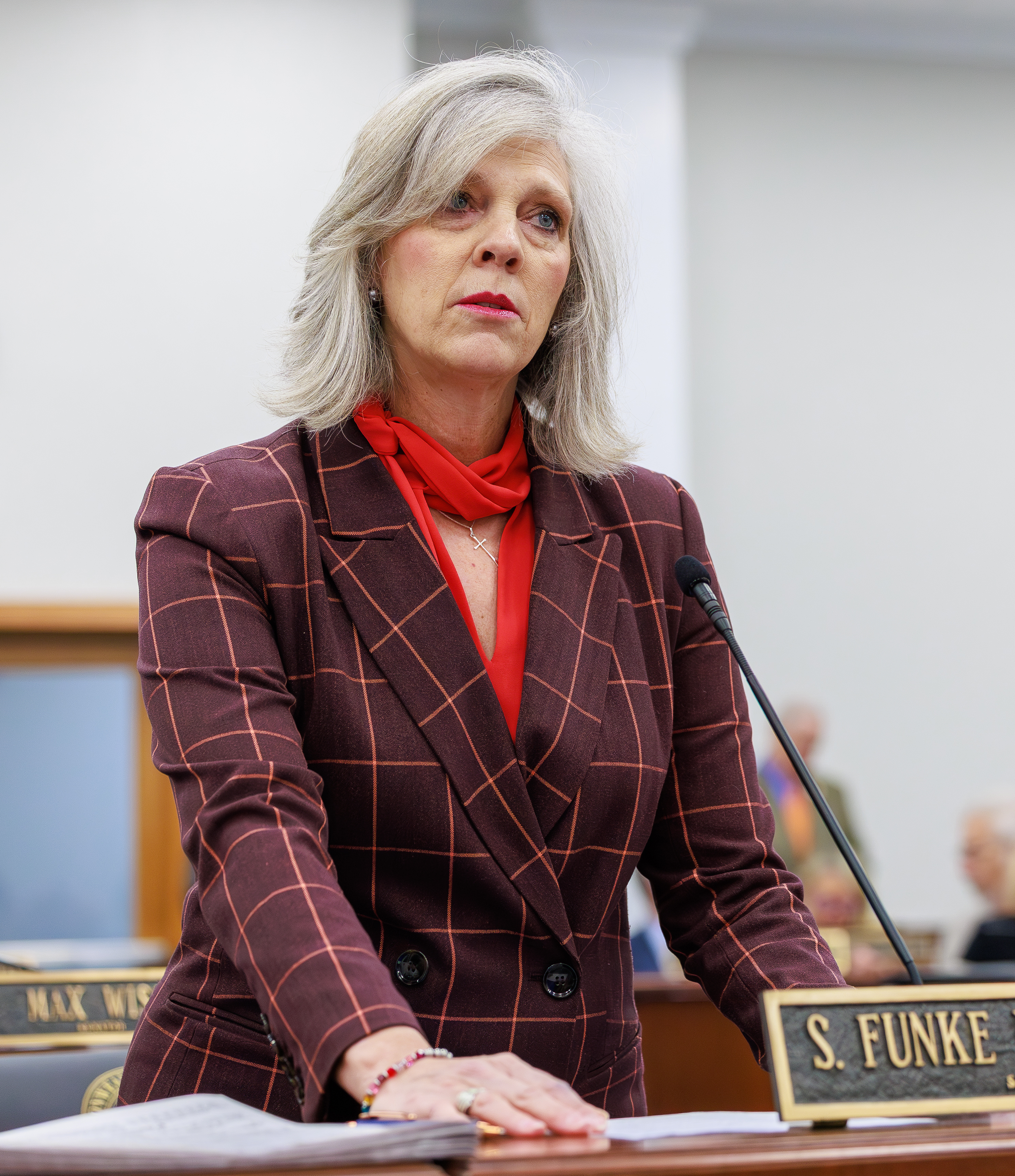
FRANKFORT — A bill that would strengthen local oversight of massage businesses while toughening penalties for unlicensed practices passed on the Senate floor Friday.
Sen. Shelley Funke Frommeyer, R-Alexandria, said that the bill is not about hurting massage businesses, but rather, stopping massage businesses that are fronts for human trafficking.
"Senate Bill 132 expressly authorizes cities to adopt and enforce ordinances related to zoning, occupational licensing requirements, fees, inspections, advertising, hours of operation, and sanitation," Frommeyer said.
SB 132 clarifies that state law continues to supersede any local ordinances or regulations that directly regulate massage therapists: things like therapist certification requirements, training standards, and the scope of a therapist's practice.
However, the bill makes clear that this state preemption does not extend to any local ordinances that govern how these massage businesses operate, which clarifies local authority beyond prior, narrower exceptions.
"This clarification ensures that local governments can more effectively investigate complaints and address illegal activity at businesses representing themselves as massage parlors while leaving regulation of the practice of massage therapy itself with the state," Frommeyer said.
The bill also raises the penalty for practicing massage therapy without a license from a class B misdemeanor to a class A misdemeanor, and specifies that each individual massage performed without a license counts as a separate offense.
Senate Minority Whip Cassie Chambers Armstrong, D-Louisville, asked Frommeyer if the bill would preempt a recently passed Louisville ordinance that requires massage businesses to display posters with information regarding human trafficking and the human trafficking hotline number.
Frommeyer responded that the bill would only support that ordinance, and that other communities, as a result of the bill's passage, a might expect such ordinances in the future.
Armstrong then spoke in favor of the bill, noting that it supports Louisville and other cities seeking to combat human trafficking. She also raised some concerns with the penalties section of the legislation.
"What worries me particularly is that there is nothing in the bill that I see that provides preemptive protections for victims of human trafficking, and so I prefer that we add a requirement that somebody knowingly and willingly held themselves out as an unlicensed massage therapist so that we aren't overbroadly catching those who have been trafficked," Armstrong said.
Sen. Lindsey Tichenor, R-Smithfield, said she was voting "yes" on the legislation and commented on what she thought could strengthen efforts to combat trafficking in the future.
"This is a small effort as we move forward to address this issue. Something I would like to see in the future is our strengthening of the laws and efforts to prosecute not only the business owners who are involved in offering this at all, but also those who are furthering the need for the market to exist at all," she said.
The Senate voted 32-0 to send the bill to the House.
Senate OKs trauma center bill after impassioned debate
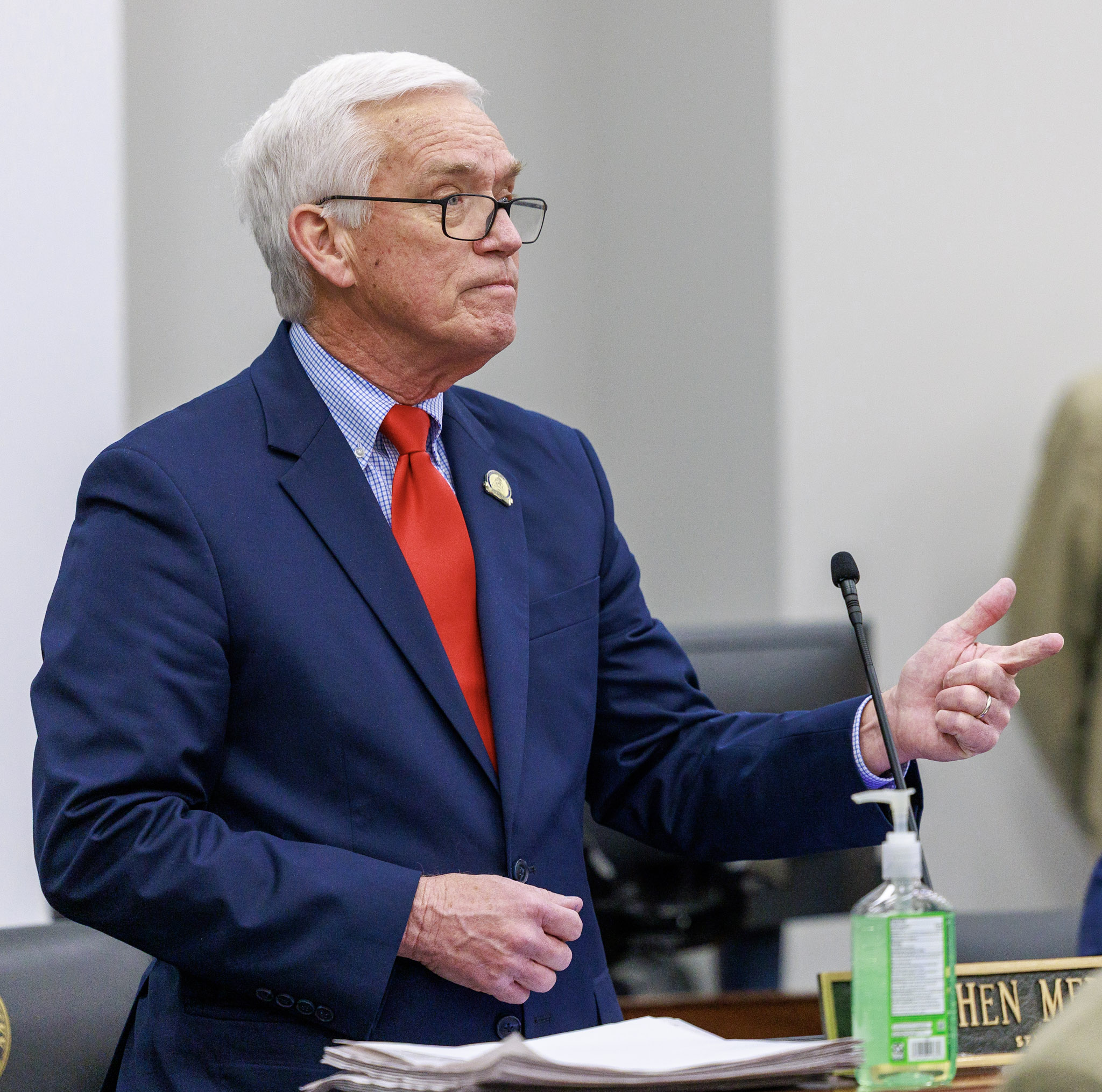
Sen. Stephen Meredith, R-Leitchfield, speaks Thursday on Senate Bill 12 on the Senate floor. SB 12 relates to medical provider coverage in Level IV trauma centers. A high-resolution photo can be found here.
FRANKFORT — A bill that would allow more Kentucky hospitals to be designated as Level IV trauma centers received approval in the Senate on Thursday following impassioned debate on the chamber floor.
Bill sponsor Sen. Stephen Meredith, R-Leitchfield, said Level IV is the lowest designation of trauma center in Kentucky. The state passed legislation in 2008 to establish a statewide trauma network but never appropriated funding, he said.
Senate Bill 12 is seeking to ease some of the legal standards to help grow the network, particularly in rural areas that are struggling with gaps in health care, Meredith said.
National standards from the American College of Surgeons allow trauma centers to operate with a mid-level practitioner under the supervision of a physician, but Kentucky's law does not make that distinction, he said.
SB 12 would allow Kentucky Level IV trauma centers to operate if either a physician or an advanced practice provider is supervised by an on- or off-site physician at all times.
Meredith said the legislation would align Kentucky with the national standards while providing clear oversight, approved processes and approved coordination that ultimately supports patient care and more efficient transfers.
"We're 45th nationally in trauma-related deaths and a good measure because of a lack of those resources," he said. "We need to build that network. I'm not here to ask for an appropriation today. I'm asking for relaxing some standards to expand our network."
Meredith read a letter from the chief executive officer of the Crittenden Community Hospital, who wrote that many Kentucky hospitals provide the same level of care as a Level IV trauma center, but do not qualify as a Level IV due to staffing.
The bill drew debate on the Senate floor as supporters argued that the changes are needed to boost health care in rural Kentucky. Opponents raised concerns about the lack of an on-site physician.
One critic was Sen. Karen Berg, D-Louisville, who said that, as a physician who has worked in trauma at the University of Louisville for several years, she has concerns about lowering standards.
"Unfortunately, this part about having non-physicians in Level IV trauma centers is for me and for the trauma network that I have worked my entire life in, unacceptable," she said. "It is unacceptable because time is life. And to transport a patient to a facility where you know you do not have a medical doctor to respond is a waste of time."
Sen. Donald Douglas, R-Nicholasville, who is also a physician, voted against the measure. He said doctors are concerned generally about the lowering of standards in health care and that even though some health care workers can perform some of the duties of a doctor, that doesn't make them equal.
"Medical doctors and all specialties, this might be news for you all, but they're feeling disrespected. And they're feeling devalued," he said. "We let other people creep closer and closer to having the privileges that we worked so many hours to have, that we took so many tests to have."
However, Sen. Scott Madon, R-Pineville, recalled how a local hospital in his district was facing bankruptcy and all of the doctors left to work in rural health clinics. He said he supports SB 12 because it's a tool for his community to keep the hospital open.
"They're not asking for a hand out, they want a hand up. They want a way to keep their hospital open," he said.
Sen. Gex Williams, R-Verona, said he enthusiastically supports the bill.
"I hope that as we get these physician assistants out into our rural communities, that they can tell their families about the Kentucky lives they saved, about the Kentucky injuries that they have kept and not some neighboring state," he said. "We need this bill passed and we need it passed as soon as possible so that we can get our Kentuckians the kind of rural health care that every state around us has."
Meredith said the bill isn't the ultimate solution, but emergency room doctors and primary care doctors aren't coming to Kentucky.
"To ask us just to wait for health care or drive up the road, that's unreasonable. It's not fair. It's terribly unfair," he said. "And that's all we're asking is let these hospitals have some additional resources so they can lift themselves up to be the best that they can be. That's all this amounts to. It's not replacing doctors."
The bill cleared the Senate on a 27-11 vote and now heads to the House for consideration.
Senate committee advances bill on school leaders' salaries
Sen. Julie Raque Adams, R-Louisville, testifies Thursday on Senate Bill 2 to the Senate Education Committee. A high-resolution photo can be found here.
FRANKFORT — A bill to ensure that classroom teachers aren't left behind when school districts consider pay raises for administrators was unanimously advanced Thursday by the Senate Education Committee.
Bill sponsor Sen. Julie Raque Adams, R-Louisville, said Senate Bill 2 reflects a core principle – that compensation decisions should align with classroom priorities while still respecting local governance and flexibility. The legislation would establish a clear, reasonable standard without eliminating existing waiver options already permitted under Kentucky law, she said.
"Specifically, the bill prohibits school administrators from receiving a percentage pay increase greater than the average percentage pay increase provided to classroom teachers in that district," she said.
The bill would reinforce fairness in compensation practices across school systems and reflect the value of classroom instruction in district-level decision making, Adams said.
Adams said the bill would not eliminate local control over compensation decisions and would not cap salaries or mandate specific pay raises. Additionally, it would not prevent districts from rewarding leadership or compensation for increasing responsibilities provided that those decisions remain balanced and fair to teachers.
"Classroom teachers are the center of student learning and school success. When compensation decisions favor administrative growth over classroom instruction, it can undermine morale, trust and long-term workforce stability," she said.
Senate Bill 2 is designed to promote fairness and transparency, support teacher recruitment and retention and reinforce public confidence in education funding decisions," Adams said.
Senate Minority Caucus Chair Reginald L. Thomas, D-Lexington, said he supports the bill, but retaining talent is highly important. He asked if the bill would prevent a school board from renegotiating the salary of a superintendent if that superintendent was being recruited by other communities.
"We do that in any organization, whether we're talking about Fortune 500 companies or in major sports leagues across this country or in any endeavor. If you have talent, and that talent threatens to go somewhere, you should want to take time or make time to try to retain that talent," he said.
Adams said the waiver option would be available in those cases.
"If that district wants to maintain that superintendent, and they feel that a funding decision is important in that retention, then they have that waiver option within this bill to make that decision. But that decision will be transparent, and everyone will know that's what's happening," she said.
Senate President Pro Tempore David P. Givens, R-Greensburg, said teachers are the backbone of schools.
"Let's not kid ourselves – the rubber meets road where the teachers are in the classroom and meeting those kids day in and day out and I applaud all of those teachers," he said. "And thank you for leading on this legislation that effectively says whatever you're going to increase in administrators' pay, you've got to increase that teachers' pay by that much or more," he said.
Sen. Stephen Meredith, R-Leitchfield, said from a rural perspective, more focus might be needed on principals rather than superintendents. He said finding and keeping talent is a growing challenge, and he expressed concern that rural districts can't react quickly enough to increased salaries in urban areas.
"I'm concerned about the unintended consequences for rural communities. I understand what you're trying to accomplish, and I applaud that and I support that. I just don't think this is the vehicle to do it," he said.
Givens said his understanding is the waiver process is expedited very quickly.
Senate Democratic Floor Leader Gerald A. Neal, D-Louisville, said he's concerned districts aren't fully funded in general.
Sen. Steve Rawlings, R-Burlington, said years ago when Japan was experiencing expansive economic development, he heard a story about how chief executive officers couldn't make more money than nine times what the very lowest-paid person could make.
"I definitely support this bill. I like the context and manner and the thoughtfulness for which it's done. So, I'm a yes vote," he said.
Trophy catfish preservation bill catches committee approval
Correction: An earlier version of this story, published on Feb. 5, stated that House Bill 397 would prohibit commercial fishing and transport of live trophy catfish. The bill would not prohibit commercial fishing. Instead, it would prohibit a person engaged in commercial fishing from transporting live trophy catfish, except by boat, beginning in 2027. A corrected version of the story is available below.
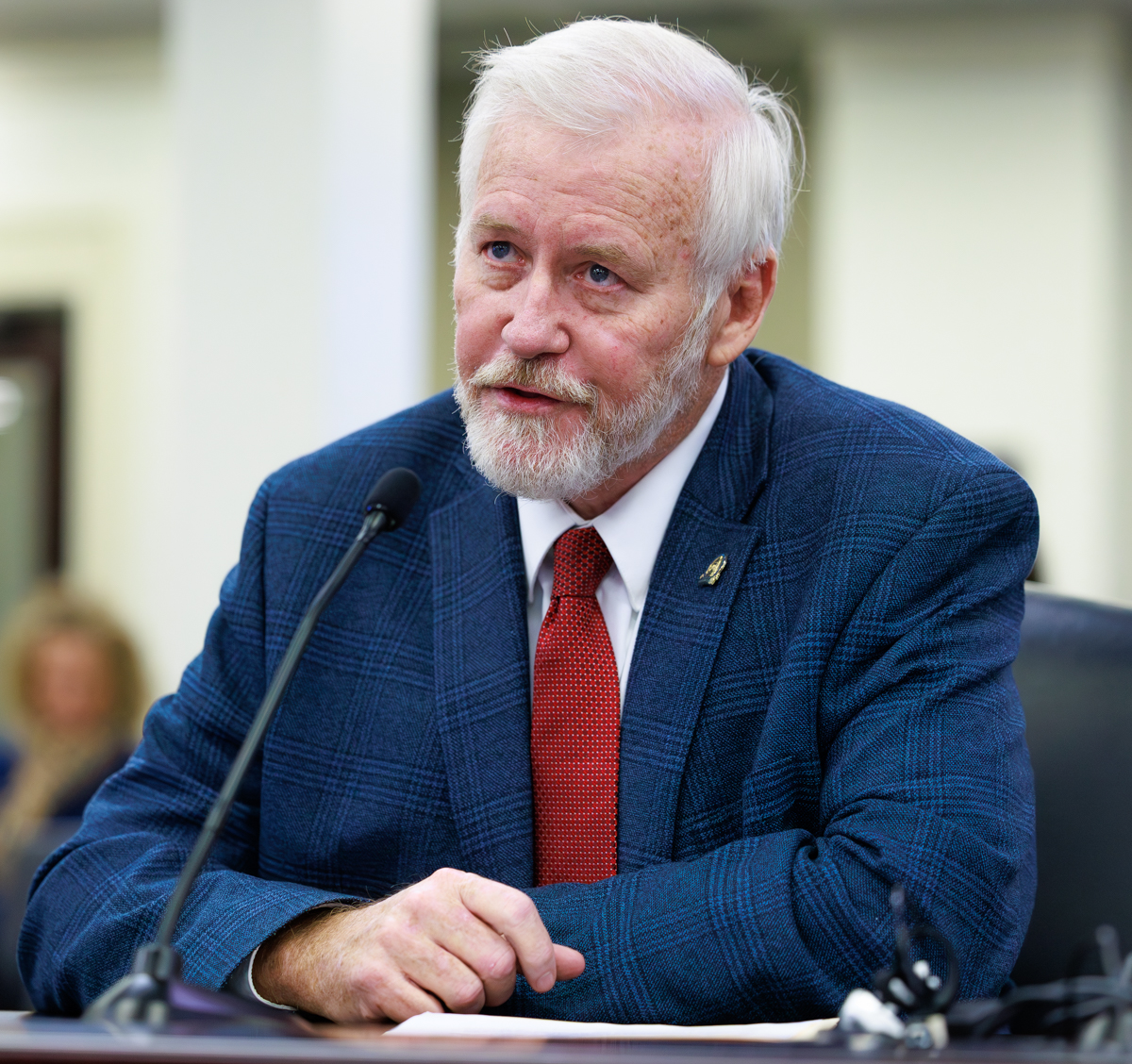
Rep. DJ Johnson, R-Owensboro, explains why House Bill 397 is needed to preserve the trophy catfish population during Thursday's House Natural Resources and Energy Committee meeting. A high-resolution photo can be found here.
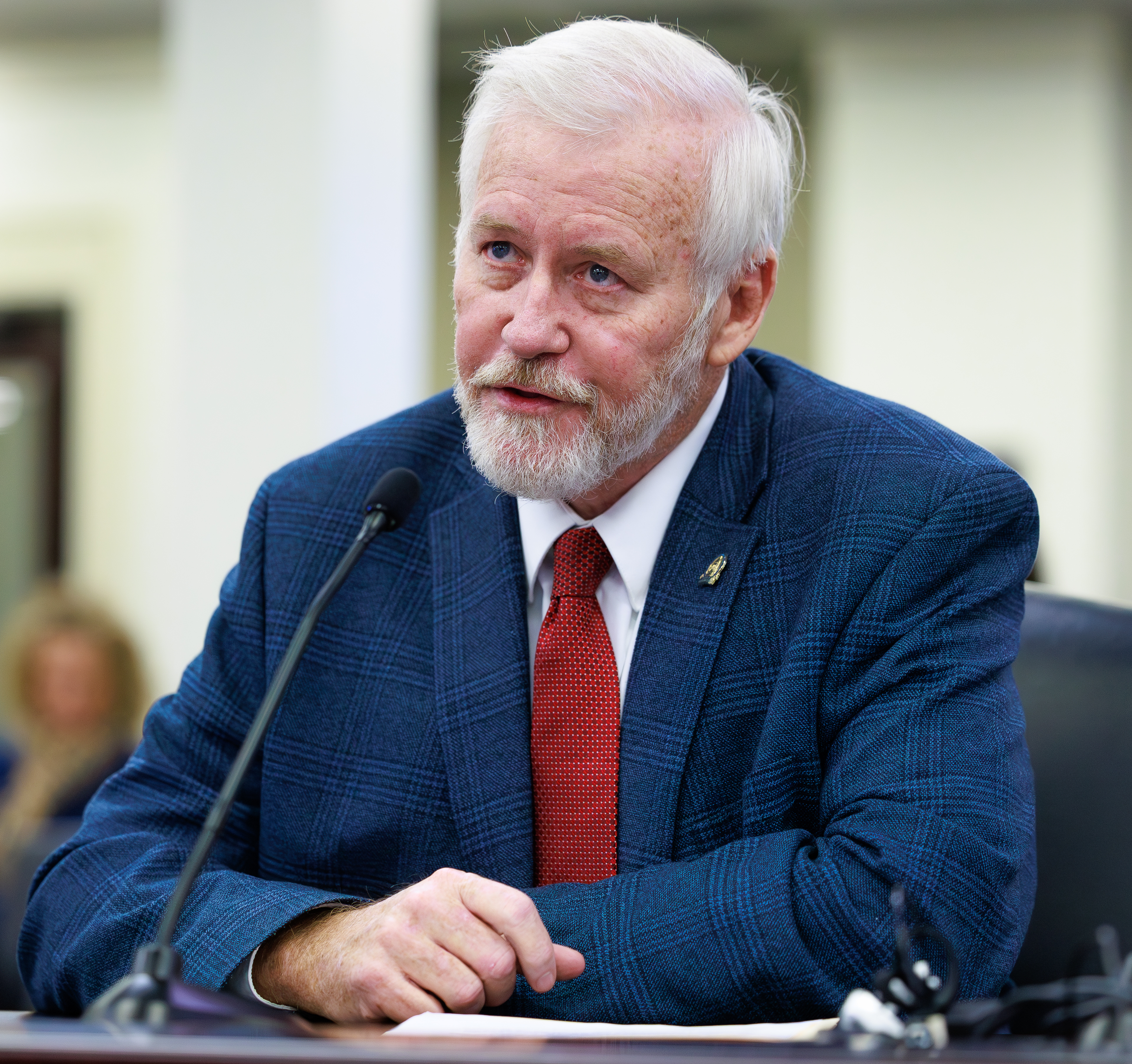
FRANKFORT — The Kentucky House is considering legislation that aims to preserve the trophy catfish population in the lower Ohio River and its tributaries.
House Bill 397 would prohibit the transport of live trophy catfish for commercial purposes, except for by boat, beginning in 2027.
The bill's primary sponsor Rep. DJ Johnson, R-Owensboro, told the House Natural Resources and Energy Committee that the bill would not prohibit recreational catfishing or tournaments.
HB 397 would define a trophy catfish as a blue or flathead catfish of at least 35 inches in length or a channel catfish that is at least 28 inches in length.
"In short, it takes 15 to 20 years for a catfish to reach trophy size. Left alone in their natural habitat, they can live much longer than that. But when removed from the river and placed on a commercial lake, their lifespan is much, much shorter," Johnson said.
The bill would make the practice a class A misdemeanor. The legislation would also issue a $500 replacement fine for any trophy catfish that is wounded or dies in the process of being unlawfully transported.
Johnson said since trophy catfish can only survive in a lake environment for a few months at best, and HB 397 is needed to protect these animals.
"If we continue to remove a natural resource that takes years to create and place them in an environment for only a period of weeks or months, we will eventually deplete that resource entirely," Johnson said. "That is what is happening with respect to trophy catfish."
Nick Hart, a lobbyist with the Kentucky Waterways Alliance, told the committee the conservation community supports the legislation.
"These (fish) are the breeders," Hart added. "These are the fish that are going to create the next stock."
House Majority Caucus Chair Suzanne Miles, R-Owensboro, said she wants to ensure the bill would not impact recreational catfishing activities in her district.
"I just want to go on the record and make sure this has no effect on changing the Butler County Catfish Festival that happens the first week of July – the catfish wrestling or the catfish catching," Miles said.
Johnson said HB 397 "does not impact the festival in any way."
The House Natural Resources and Energy Committee voted unanimously to approve HB 397 with one pass vote from Rep. Tom Smith, R-Corbin.
Smith said he has heard a few concerns from constituents that he plans to seek more clarification on before deciding how he will vote on the bill on the floor.
HB 397 is now before the full House for consideration.
Bill advances on safeguarding grand jury testimony
Rep. Candy Massaroni, R-Bardstown, (center) presents House Bill 305 during Wednesday's meeting of the House Judiciary Committee. Joining her is Jackie Steele (right), commonwealth's attorney for the 27th Judicial Circuit, and Sherry Ballard (left), the mother of Crystal Rogers. A high-resolution photo can be found here.
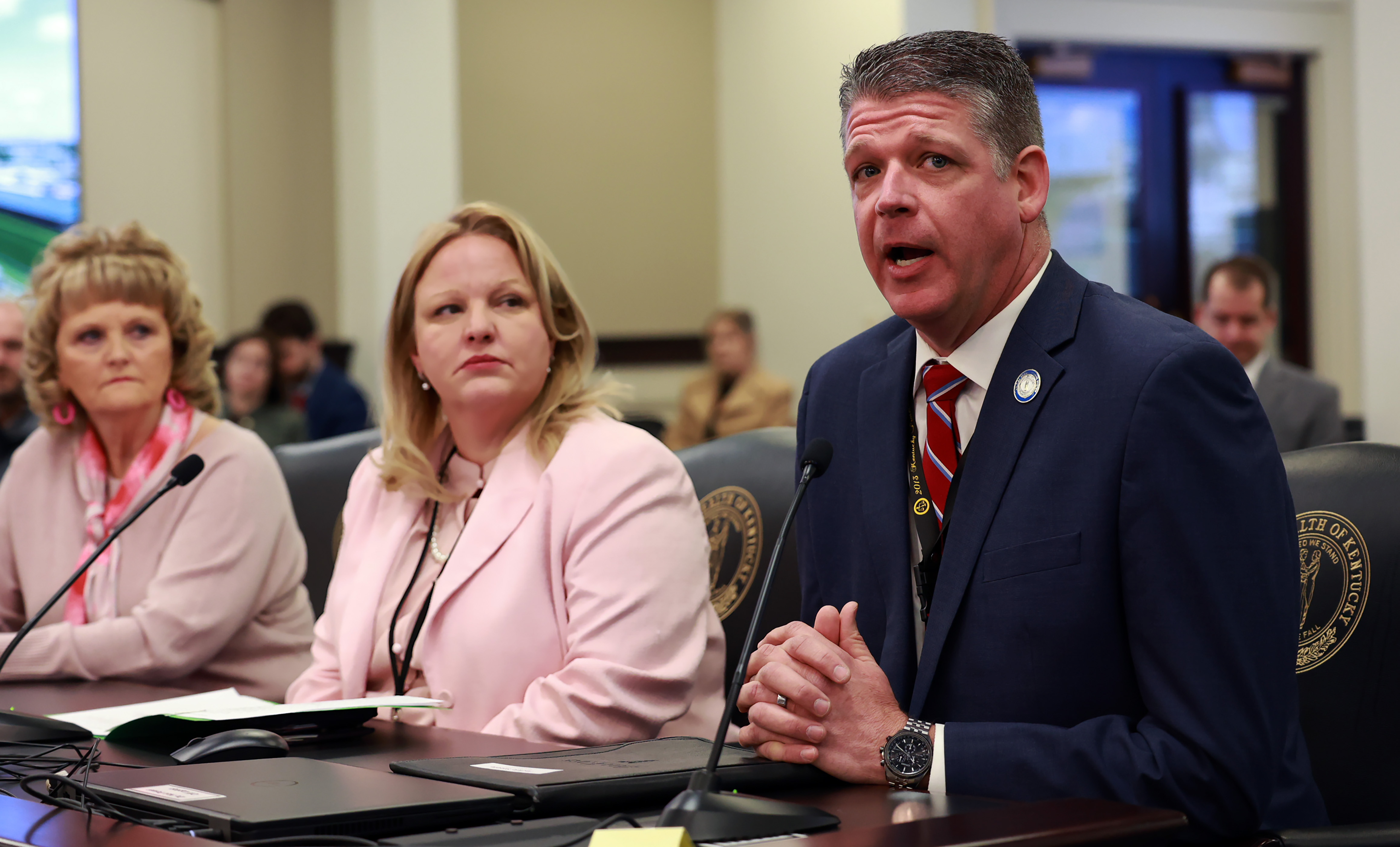
FRANKFORT — A House bill aimed at strengthening protections around grand jury secrecy advanced Wednesday in the House Judiciary Committee.
The legislation would extend Kentucky's statute of limitations for prosecuting anyone who secretly records grand jury proceedings from one year to 10 years. It would also extend the statute of limitations for unlawfully sharing grand jury testimony from one year to five years.
Rep. Candy Massaroni, R-Bardstown, said the measure is designed to protect the integrity of the grand jury process and ensure those who violate its secrecy can still be held accountable years later.
"This bill is to protect the integrity of the grand jury and to extend the statute of limitations for anybody secretly recording grand jury testimony," Massaroni told committee members.
Grand juries are used to review evidence in serious criminal cases and determine whether charges should be filed. Proceedings are conducted in secret to protect witnesses, safeguard investigations, and prevent testimony from being influenced.
Sherry Ballard, the mother of Crystal Rogers, spoke in support of the bill. Rogers, a Bardstown mother, disappeared in 2015. Ballard said the proposed changes could have made a difference in her daughter's case.
During the investigation, the FBI discovered some recordings during a search on the suspect's property, Ballard said. "This was years after my daughter went missing."
Investigators later determined the recordings included grand jury material. Because of the current one-year statute of limitations, no charges were filed related to the recordings, Ballard said.
Jackie Steele, commonwealth's attorney for the 27th Judicial Circuit, told lawmakers the issue extends beyond a single case. He said illegal recordings of grand jury proceedings can affect drug investigations and even lead to the sale of sensitive testimony on the black market.
"There are protections within the judicial system for that material so it doesn't get out, but if someone is recording, it unknowingly gets out," Steele said.
Steele proposed an amendment to clarify that routine grand jury functions, such as issuing subpoenas or conducting interviews, would not create legal issues for prosecutors.
"We are for the bill, other than just allowing us to do our job without committing a class D felony," Steele said.
Lawmakers asked questions about the broader impact of the bill.
House Majority Whip Jason Nemes, R-Middletown, asked why it is critical to prevent recordings from being shared publicly. Steele said secrecy is essential to prevent witnesses from tailoring their testimony.
"That way further testimony cannot be tailored to cover for somebody," he said.
House Minority Caucus Chair Lindsey Burke, D-Lexington, asked whether someone who both records and distributes grand jury material could face two charges. Steele said they could be charged separately for each offense.
Rep. T.J. Roberts, R-Burlington, asked whether recordings put witnesses at risk. Steele said fear of exposure is a real concern, especially in smaller communities.
"When you get to smaller jurisdictions, you're hearing cases about your neighbor," Steele said. "If you can't deliberate honestly because you're scared somebody's recording it and playing it to your neighbors, that's an obstruction of justice."
Several lawmakers thanked Ballard for advocating for changes and her persistence in fighting for justice in her daughter's case.
House Judiciary Chair Rep. Daniel Elliott, R-Danville, said the legislation should be known as the "Crystal Rogers Act."
The bill passed the committee and now heads to the full House of Representatives.
Evidence-based literacy bill green-lit by House committee
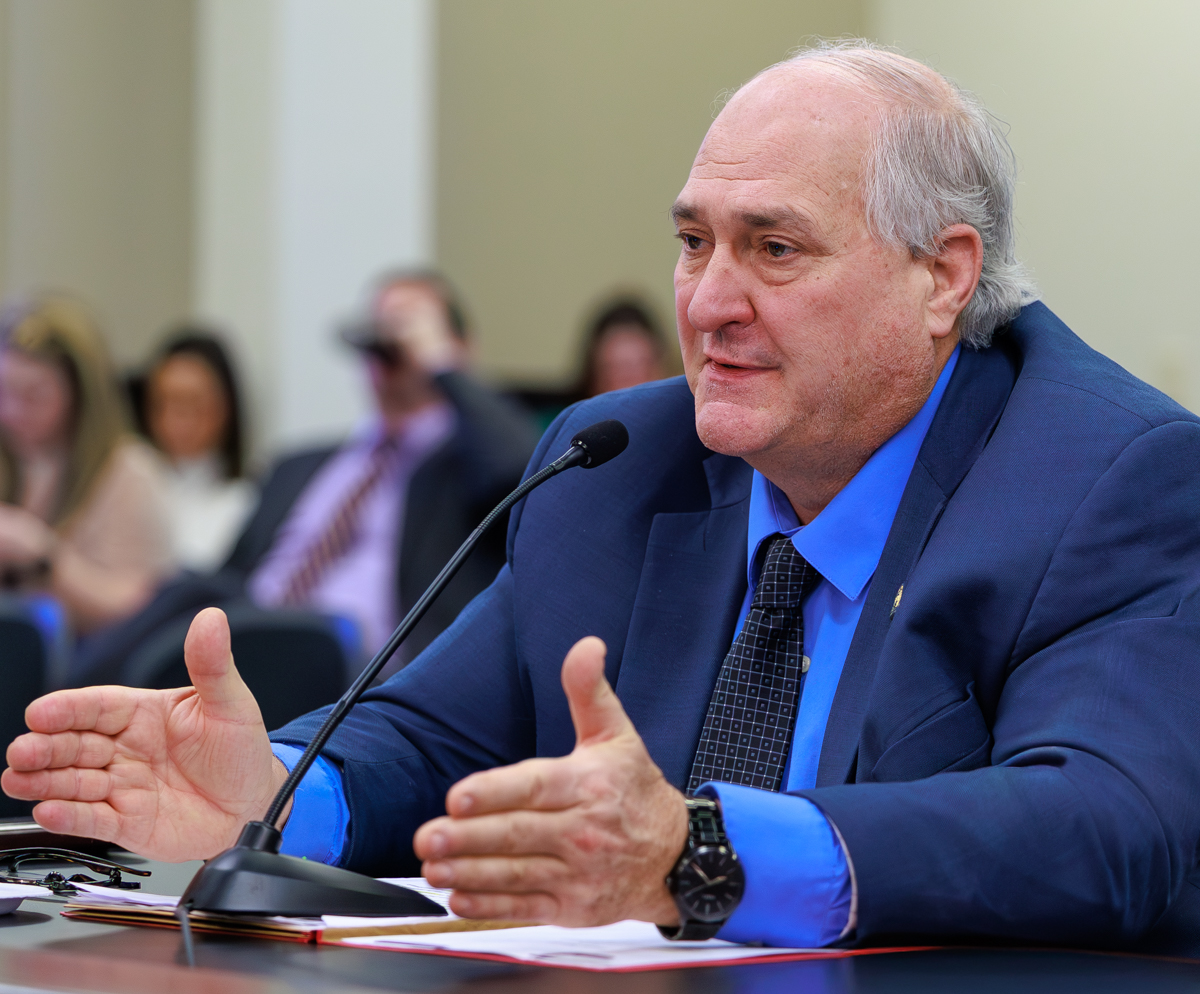
Rep. James Tipton, R-Taylorsville, explains why Kentucky needs to end the three-cuing system teaching model of reading in schools through House Bill 253. The discussion was part of Wednesday's House Primary and Secondary Education meeting. A high-resolution photo can be found here.
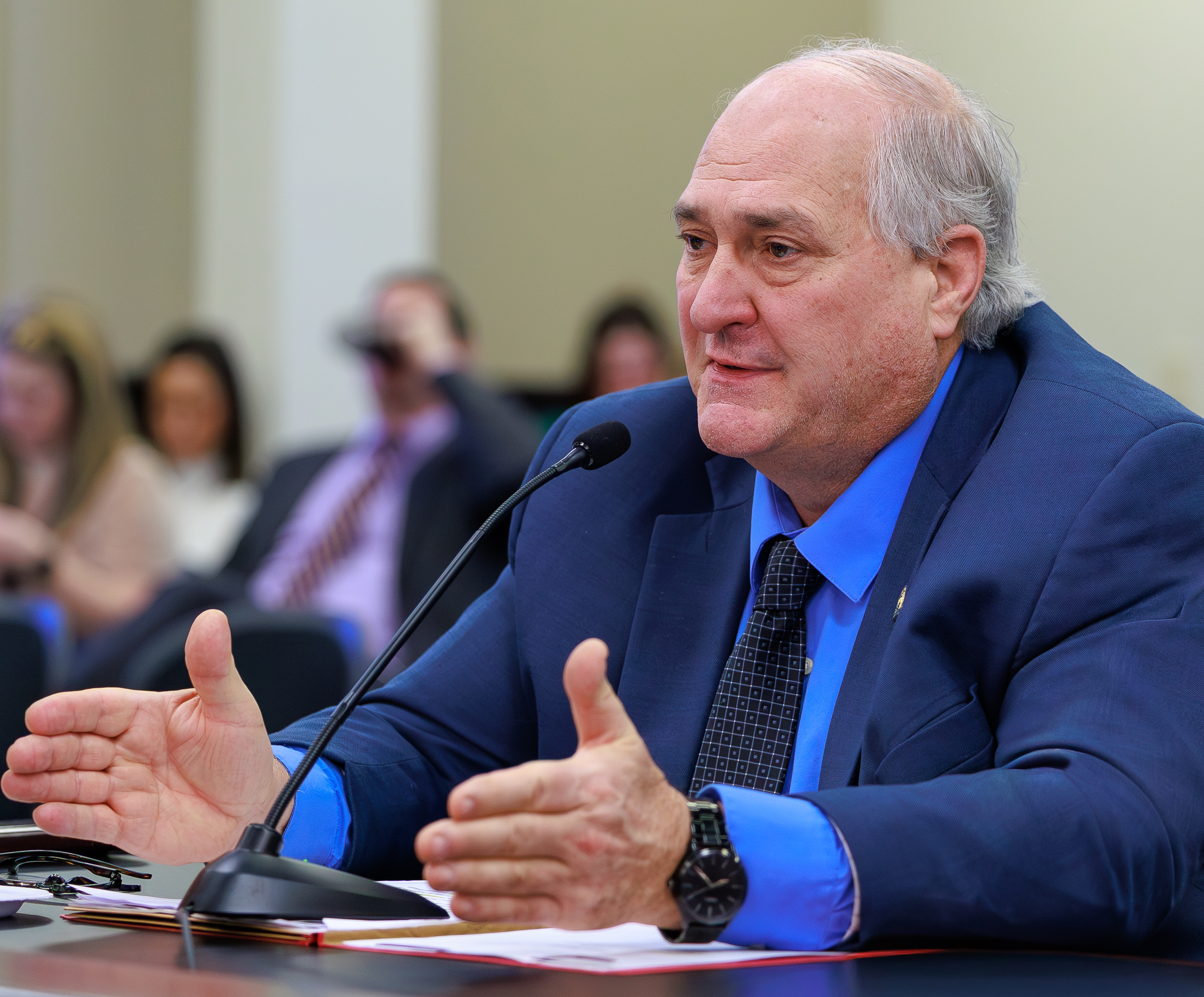
FRANKFORT — Literacy curriculum similar to the "Mississippi Miracle" may be coming to elementary school classrooms across Kentucky by 2029.
Rep. James Tipton, R-Taylorsville, and Rep. Tina Bojanowski, D-Louisville, are the primary co-sponsors of House Bill 253. Tipton presented the legislation to the House Primary and Secondary Education Committee on Wednesday.
Tipton said Mississippi implemented new literacy curriculum in 2013 that has transformed the state's literacy rates. Other states inspired by Mississippi's success have begun to implement similar curriculum.
Under HB 253, the three-cuing system teaching model for reading would be banned in Kentucky public schools by the 2029-30 school year.
"We have seen research recently that shows that it is not nearly as productive as the Science of Reading's five essential components of reading: phonetic awareness, phonics, vocabulary, fluency and comprehension," Tipton said. "In fact, there is a detriment to using the three-cuing method."
Under the three-cuing method, students memorize what words look like instead of developing the ability to understand letter sounds and decode language, Tipton said.
"If you teach a student to memorize what 10 words look like, they will know 10 words," Tipton said. "But if you teach them 10 sounds through phonetics, they will be able to speak thousands of words."
In 2022, the general assembly passed Read to Succeed Act. Since then, 7,000 teachers have completed the KY LETRS program through the Kentucky Department of Education, which is a two-year intensive training initiative for Kentucky teachers on the Science of Reading, Tipton said.
Under HB 253, the department would offer several training programs on the Science of Reading, including LETRS. One program would be about 50 hours, Micki Marinelli, chief academic officer for the department, said.
An earlier version of HB 253 called for an immediate ban on the three-cuing system. Rep. Josh Calloway, R-Irvington, asked Tipton why the bill now delays the implementation to 2029.
"The concern was if we just stopped cold turkey immediately, that a lot of teachers have had no training at all in the Science of Reading," Tipton said, while adding that 19,000 more teachers need to complete LETRS training.
Marinelli told Calloway the department hopes that as more teachers complete Science of Reading training, they will see the curriculum is an evidence-based approach and in the best interest of the students.
Rep. Adrielle Camuel, D-Lexington, told Tipton and Marinelli she's been talking to teachers and reading specialists in her districts who use structured literacy programs that include the three-cuing system. Camuel asked what enforcement of a ban on the curriculum would look like.
"If it's prohibited from being utilized, what does enforcement look like? Are you going to put a whole prohibition on teachers using the tools that they know help students?" Camuel asked.
Tipton said the legislation would require KDE to counsel school districts who are not in compliance with the law.
Marinelli said enforcement of the three-cuing ban would not be about punishment.
"It would be about support," she said. "Everything that we're doing around Read to Succeed is about making an investment in educators for the benefit of students, and so we would want to be in conversation with them."
The House Primary and Secondary Education Committee voted unanimously to advance HB 253 to the House floor. Camuel was the lone pass vote.
"I have a lot of reservations," she said while explaining her vote, adding she has concerns about prohibiting tools that have shown success with certain students.
Bojanowski, who serves as the ranking minority member on the committee, said she's completed the LETRS training and has seen firsthand with her own students how the three-cuing system is not beneficial. She said having students guess the words is not helping her students become stronger readers.
"I support this bill," Bojanowski said.
House approves cigar bar bill
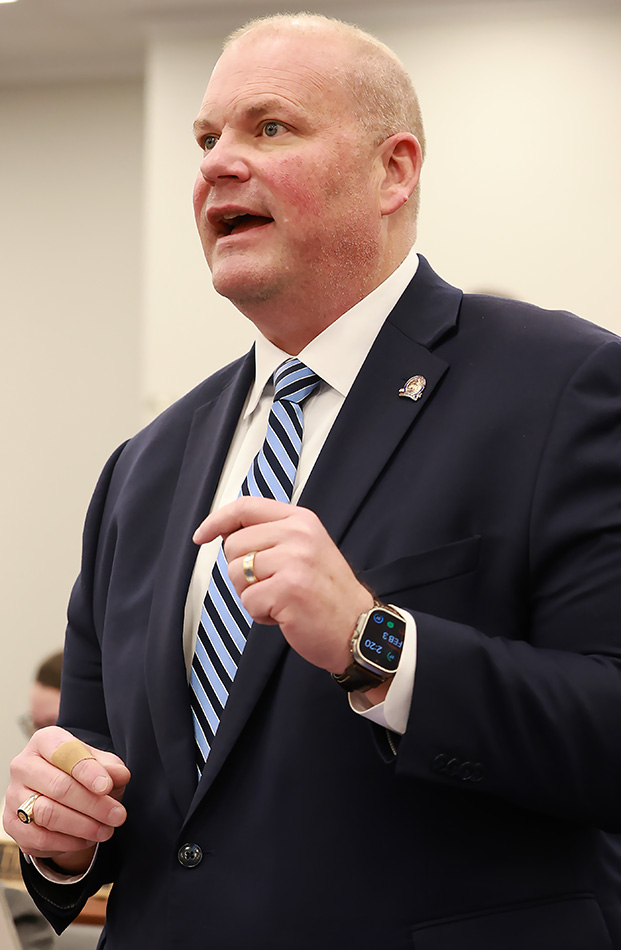
Rep. Chris Lewis, R-Louisville, speaks on House Bill 194, which would allow cigar bars in Kentucky, on the House floor. A high-resolution photo can be found here.
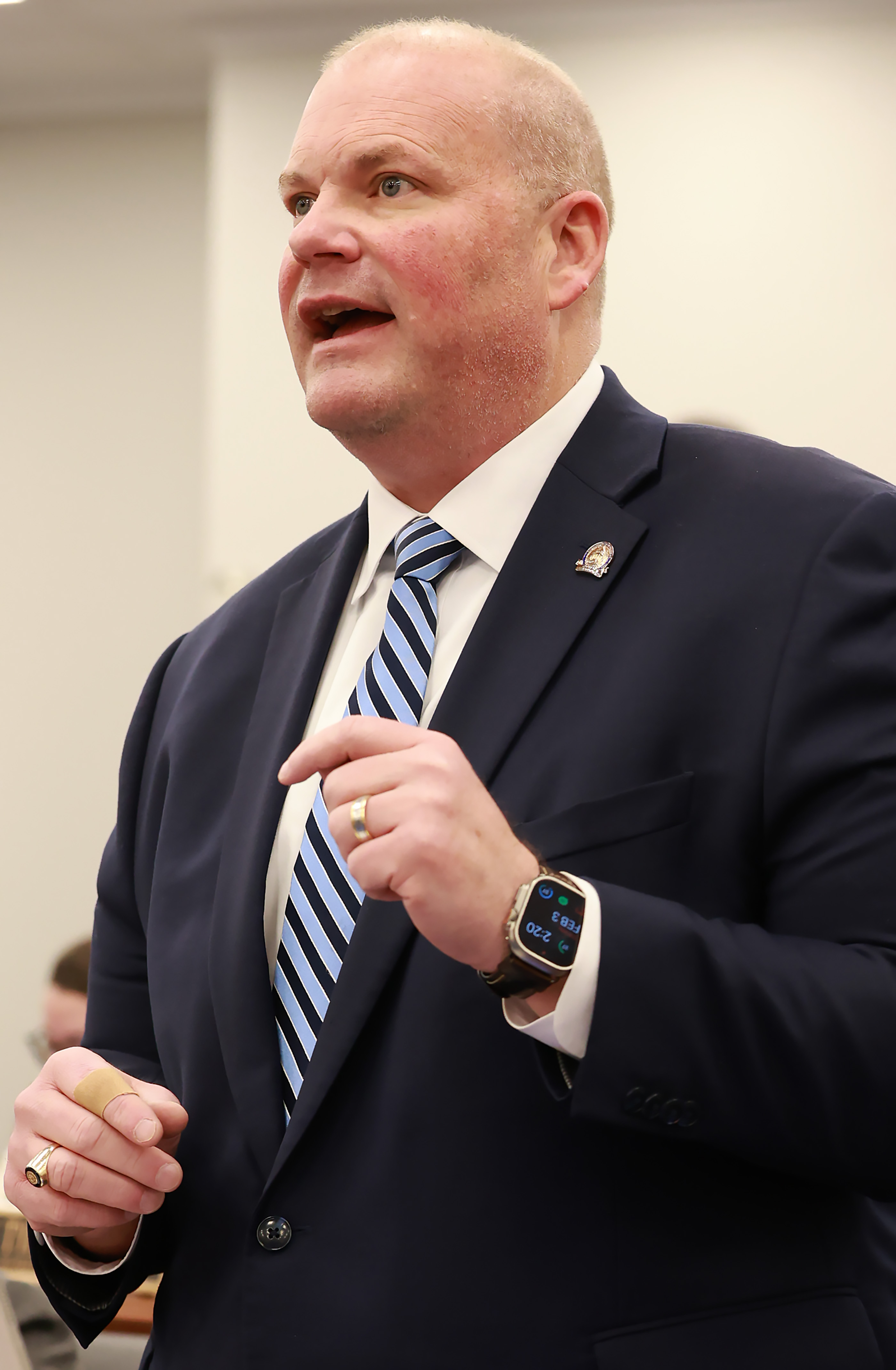
FRANKFORT — A bill that would allow certain businesses to operate as a cigar bar advanced off the House floor on Tuesday.
Rep. Chris Lewis, R-Louisville, said House Bill 194 creates "a narrow exemption" in the law that would allow the smoking of cigars in what the bill defines as a cigar bar.
"If you don't want to be exposed to cigar smoke in a public place where smoke-free laws currently exist, nothing in this bill changes your ability to maintain that separation," Lewis said on the House floor.
Under HB 194, a business would only be permitted to operate as a cigar bar if 25% of the business's gross annual income is derived from the sale of cigars, pipe tobacco, related accessories or the rental of humidors. Additionally, the business must hold a valid quota retail drink license.
The bill would give local governments the ability to enact an ordinance to require cigar bars receive a special permit to operate. Local governments may also exempt cigar bars from the quota retail drink license requirement.
To address health concerns, Lewis said HB 194 would require cigar bars to provide a smoke-free location for deliveries and signage warning potential customers of exposure to cigar and pipe tobacco smoke.
Cigar bars that share a physical wall or a common, enclosed air space with any other structure would be required to implement measures to ensure smoke does not pass into smoke-free areas, Lewis added.
The bill also would prohibit anyone under the age of 21 from entering the business.
Rep. Adrielle Camuel, D-Lexington, asked Lewis to clarify how HB 194 might impact local smoke-free ordinances.
Lewis said there is nothing in the legislation that would allow smoking in bars, restaurants, bowling alleys or anywhere public where current smoke-free ordinances are in place.
"This doesn't prevent any municipality from creating a new smoke-free ordinance, but it would not allow them to ban a cigar bar," he added.
The House voted 69-24 to send HB 194 to the Senate.
Rep. Anne Gay Donworth, D-Lexington, said she was voting "no" on the legislation because her district is against it.
"I do want to thank the bill's sponsor. I think this is a much better version than what we passed last year, having the 25% margin for cigar sales," Donworth said. "I am a no purely because my district has a very, very, very popular indoor smoking ban."
Rep. Al Gentry, D-Louisville, voted "yes" on HB 194. He said although he isn't a smoker, he supports others' right to do it.
"I voted ‘yes' on the bill because I am a proponent of freedom and accountability," he said. "Cigar smoking is legal, so if we want to have a confined space for those individuals to come together and do that, that is their choice."
Senate committee green lights food procurement bill
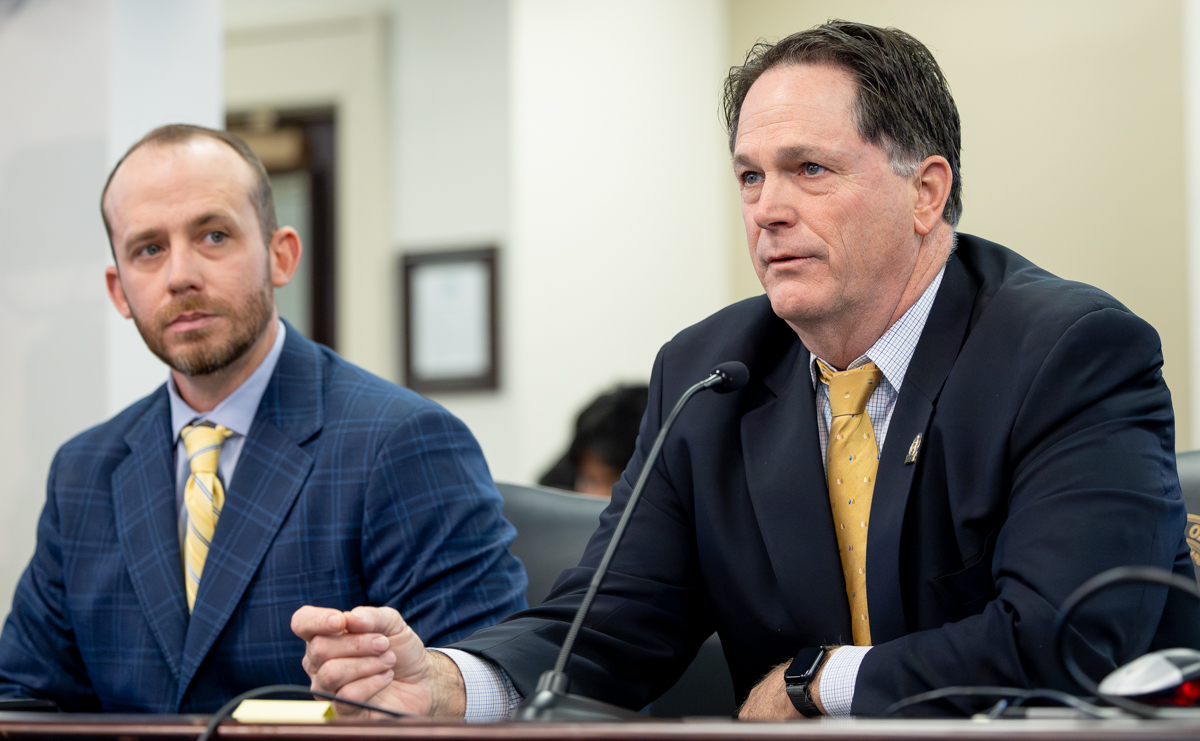
Sen. Jason Howell, R-Murray, (right) testifies Tuesday on Senate Bill 5 during the Senate Agriculture Committee meeting. Joining Howell is Kentucky Agriculture Commissioner Jonathan Shell. A high-resolution photo can be found here.
FRANKFORT — A bill crafted to help Kentucky farmers more easily share their products in students' meals advanced Tuesday during a Senate Agriculture Committee meeting.
Sen. Jason Howell, R-Murray, and sponsor of the measure, said one of the prime goals is to put more locally grown produce into schools to benefit students' nutrition, among other things.
"I think this opens the door to expanding out this arena and having more and more of our local produce be able to go, not just into schools and hospitals, but to be able to develop and push into the mainstream market," Howell said.
Kentucky Agriculture Commissioner Jonathan Shell said the legislation would start the process of decentralizing the current procurement system in schools so that farmers' access to school markets can be bolstered.
SB 5 seeks to break barriers and overcome procurement challenges created by large conglomerates, he said.
"A lot of it's federal. Some of it's state, but it's all-around procurement," Shell said. "It's all-around sourcing. It's all-around guidelines and programs that they've put in place in policy that really have created barriers to limit access for locally grown food."
Shell said there's a larger plan to market farmers' products outside legislation, and many stakeholders are working on these efforts.
Shell said officials with the state education department have been cooperative and open to changing the way procurement has happened for the last 30 years.
Sen. Shelley Funke Frommeyer, R-Alexandria, asked Shell if agriculture discussions are happening in classrooms and if parents are asking for more farm-raised food in cafeterias.
Shell said many stakeholders are collaborating to teach students about agriculture, and there's a focus on students at elementary schools. He said, for example, that agriculture becomes relevant in life because math equations can be used to build a barn and to feed cattle. They also learn about nutrients and how food affects their bodies. School nutritionists have procured locally grown foods during agriculture week and taught students the origins of food, he said.
Senate Majority Whip Mike Wilson, R-Bowling Green, said his family is from Mississippi, and he comes from a long line of farmers. He said he appreciates the legislation.
"Most people, especially kids today, do not know where their groceries come from. They think they come from Kroger. So, I appreciate your efforts in education and especially this in getting it into the schools along with the MAHA that we're doing," he said, referencing recent Make America Healthy Again initiatives.
Affordable housing bill passes
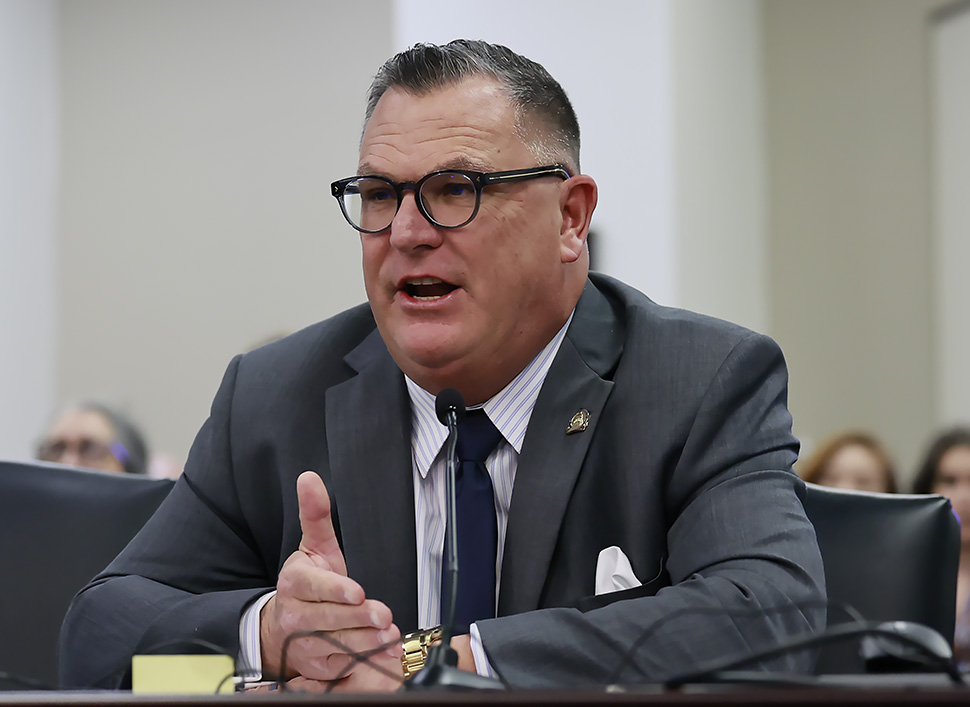
Rep. Michael Sarge Pollock, R-Campbellsville, speaks on House Bill 333, an affordable housing bill, during Tuesday's House Local Government Committee meeting. A high-resolution photo can be found here.
FRANKFORT — A bill that would enable religious institutions to build small-scale affordable housing units advanced from the House Local Government Committee on Tuesday.
Rep. Michael Sarge Pollock, R-Campbellsville, is the primary sponsor of the bipartisan legislation, House Bill 333.
Pollock said the Sisters of Loretto, a Catholic women's organization, reached out to him and Sen. Jimmy Higdon, R-Lebanon, about a plan to renovate an empty structure into short-term housing.
"The conversation created an opportunity to share their story, and their input made it clear there is both a need and opportunity here in Kentucky," Pollock added.
Under HB 333, faith-based organizations would be allowed to build small-scale affordable housing up to 24 units on the parcel or contiguous parcel owned by the religious institution within a half mile of the development.
The legislation "also ensures housing remains affordable for at least 15 years," Pollock said.
Pollock said the legislation would implement additional safeguards to prevent clustering or large-scale development on properties that are owned prior to Jan. 1, 2021.
Additionally, HB 333 would expand a religious institution's ability to operate modest-sized homeless shelters, including cooling or warming centers, in industrial zoned areas, Pollock added. These facilities would be required to follow health and safety regulations.
Pollock told the committee the bill matters because homelessness is a real issue in Kentucky, and more affordable housing options can help.
"Faith communities in Kentucky are eager to play a constructive role in addressing homelessness and housing affordability," he said.
Rep. Sarah Stalker, D-Louisville, is a co-sponsor of the legislation. During a discussion on the bill, Stalker said she is under the impression the legislation will have a positive impact on the property tax base.
"I want to make sure that other folks are clear, and that I am clear on this, that the property tax base will only be impacted in a positive manner because of this bill," she said. "Meaning that if somebody had a building they were no longer using, or sitting on a church property — they were not paying taxes on that. Whereas if they renovate that and now we have affordable housing, they will be paying into that the tax base. Is that correct?"
Pollock said Stalker was correct.
The House Local Government Committee voted unanimously to send HB 333 to the House floor for consideration.
Education committee green lights school finances bill
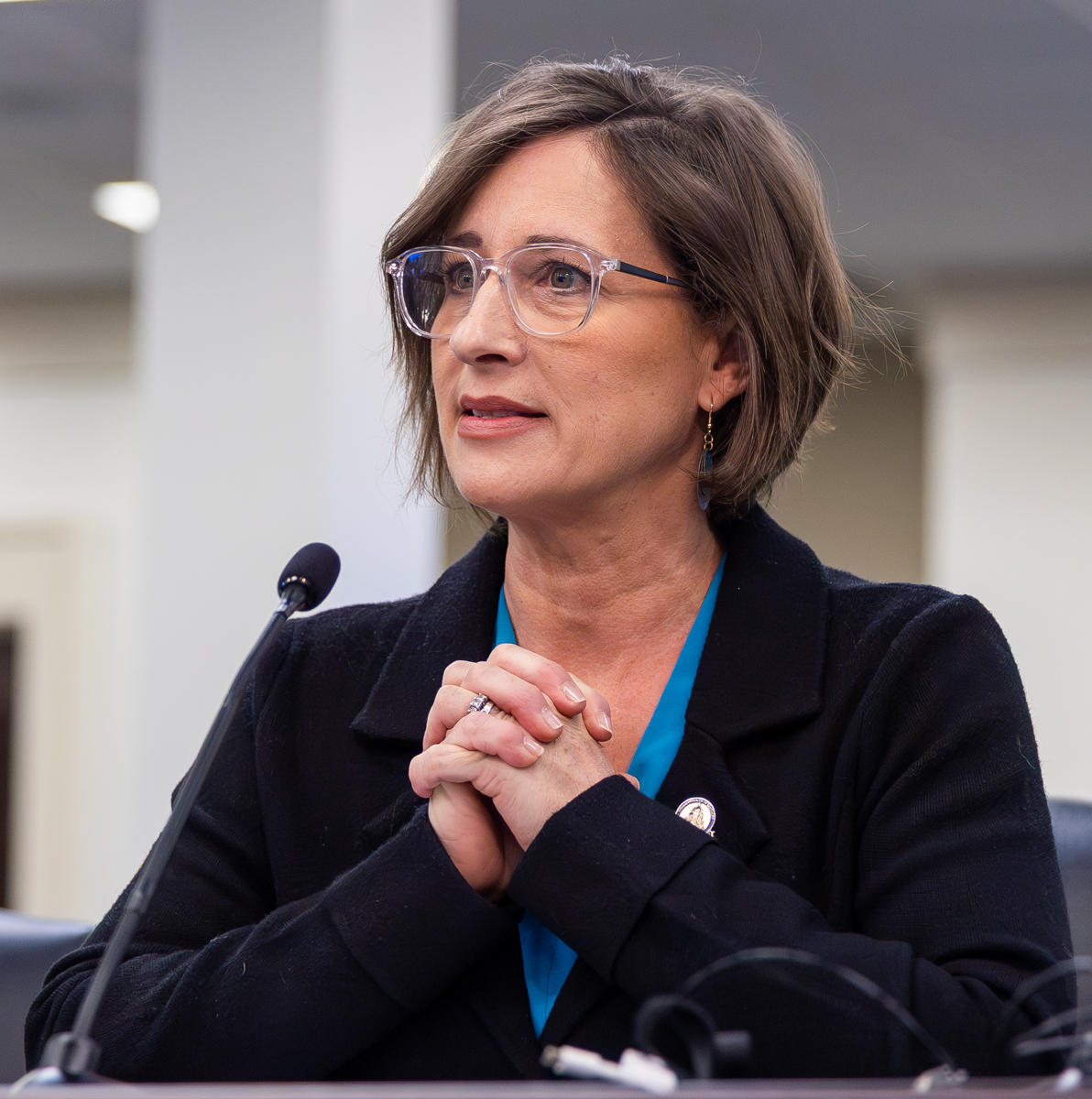
Sen. Lindsey Tichenor, R-Smithfield, testifies Thursday on Senate Bill 3 during a Senate Education Committee meeting. A high-resolution photo can be found here.
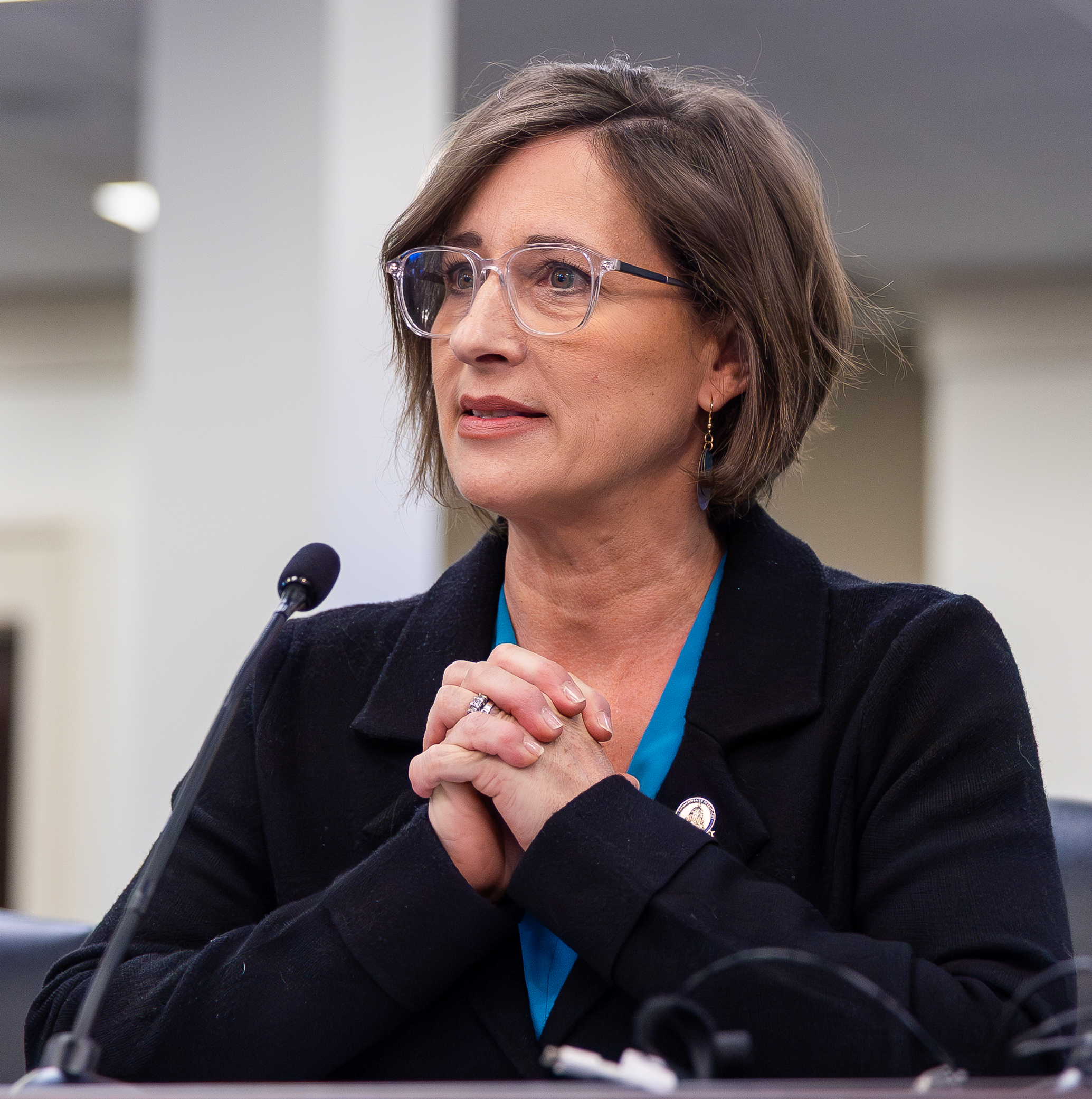
FRANKFORT — A bill designed to improve school financial transparency in Kentucky's public schools advanced 11-1 Thursday during a Senate Education Committee meeting.
Sponsored by Sen. Lindsey Tichenor, R-Smithfield, Senate Bill 3 seeks to strengthen transparency requirements for districts and expand the general public's access to the budgeting process, financial reports and spending information.
"The goal of SB 3 is to ensure our education dollars are focused on student learning and student achievement. Education money is ultimately for the educating of our students, and when monies are irresponsibly used elsewhere, once made transparent, a correction needs to be made," she said.
Tichenor said that added transparency in smaller districts may reveal how school boards and superintendents navigate operations on a shoestring budget and where potential gaps may exist in funding.
In larger districts, she said the opposite effect may occur, shedding light on wasteful spending and encouraging district leaders to improve financial management.
SB 3 would create requirements for the budgeting processes at schools, providing full access for school board members and the public. It calls for superintendents to present final working budgets at public meetings and to highlight specific details in each budget.
Details would include state and federal appropriations; projected expenditures for personnel, transportation, maintenance and materials; any one-time major expenses; projected revenues and expenditures associated with restricted funds and facility funds; costs associated with incurred debts; and how the 2% required minimum reserve will be maintained, Tichenor said.
SB 3 would also mandate that school districts post monthly and annual reports on the district webpage, along with monthly credit card statements, the superintendent's contract, any additional compensation, the district's financial audits, and the final working budget, she said.
Tichenor said significant budget shortfalls in some districts have spurred open records requests on various financial documents such as credit card statements, procurement receipts and purchase order reimbursements. The documents revealed expansive misuse of taxpayers' dollars, she said.
"By reviewing information gathered from nine various districts that span the state, a noticeable pattern emerged of heavy administrative expenditures for restaurants, excessive travel, various types of team building, entertainment that stretched from Broadway shows, to contracting bartending services, just to name a few," she said.
Laura O'Brien of Oldham County testified in favor of the bill. She said she collected credit card receipts from various school districts and questioned expenditures for things such as food and hotel stays.
Senate Minority Caucus Chair Reginald L. Thomas, D-Lexington, said he supports the bill and the public's ability to comment if public money is being used and a budget is being developed. He asked Tichenor if the bill includes a date when budgets have to be finalized.
Tichenor said current statute already requires a draft budget by Jan. 31, a tentative budget by May 31 and a working budget by Sept. 30. She said this information is included in the proposed legislation.
Sen. Jimmy Higdon, R-Lebanon, said transparency is great, and details matter.
"There's a lot on superintendents' contracts. What's reported in the news as the salary is not the full story, and there's a lot of other things in a contract. All that needs to be public knowledge," he said.
Sen. Stephen Meredith, R-Leitchfield, voted against the measure, saying it didn't go far enough.
"Quite truthfully, I think we need to be more prescriptive than this. You would think that school administration, when it starts to take on the personality of a corporate C-suite, that somebody has to intervene," he said. "I think we need to be more direct in what we as a commonwealth will pay for and won't pay for."
The bill now heads to the full Senate for consideration.
Committee advances bill on alternative sentencing for parent caretakers
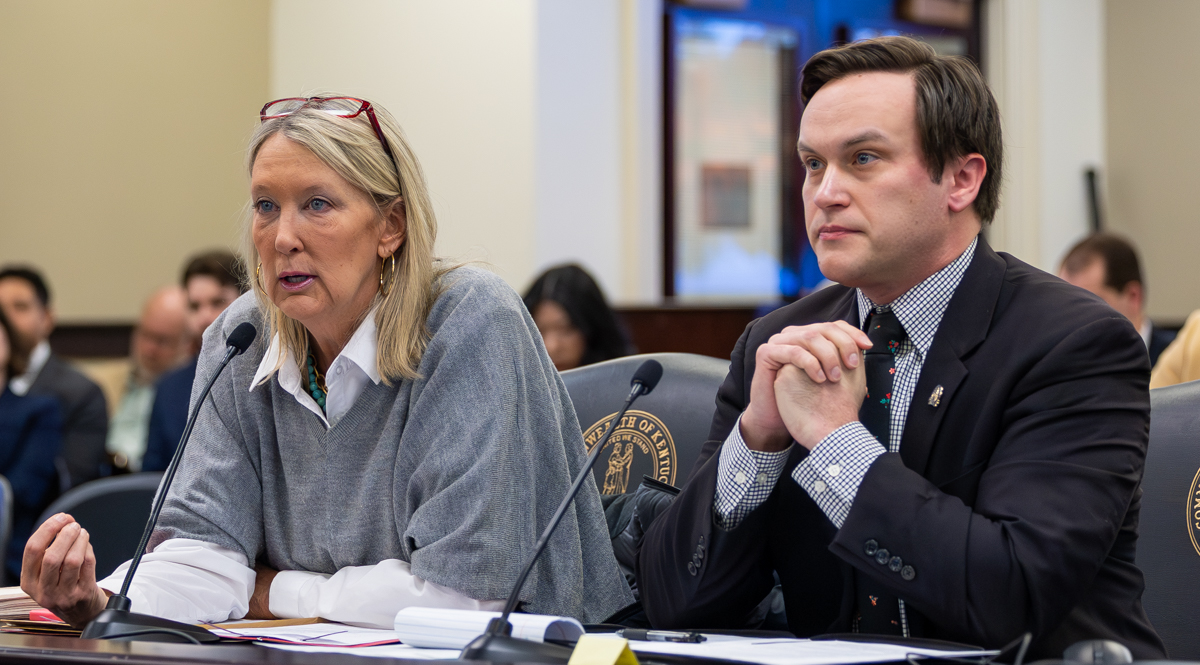
Sen. Julie Raque Adams, R-Louisville (left), speaks on Senate Bill 122 during Thursday's meeting of the Senate Judiciary Committee. Joining her is Rep. Nick Wilson, R-Williamsburg (right). A high-resolution photo can be found here.
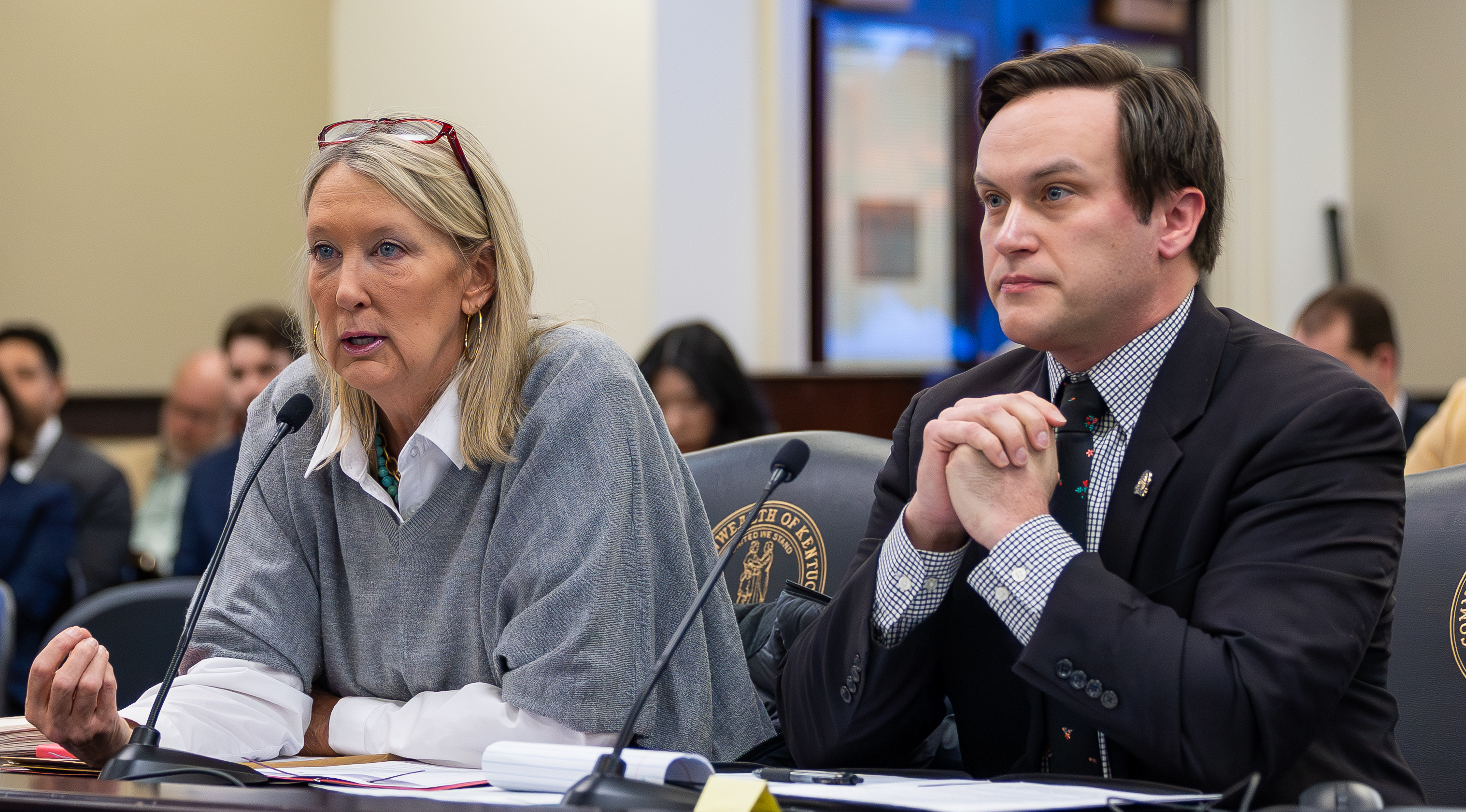
FRANKFORT — Legislation that would require Kentucky courts to consider alternative sentences for certain nonviolent felony convictions where the defendant is a primary caretaker of a dependent child advanced in the Senate Judiciary Committee on Thursday.
Senate Bill 122, sponsored by Sen. Julie Raque Adams, R-Louisville, requires courts, upon a defendant's post-conviction motion, to consider whether the defendant is a caretaker of a dependent child before sentencing for a felony. If the court finds the defendant qualifies as a caretaker, it must then consider an alternative sentence like probation instead of imprisonment.
Rep. Nick Wilson, R-Williamsburg, testifying with Raque Adams on the bill, said that the purpose of the bill is to help offenders to, while rehabilitating, keep their families together.
"This isn't for every parent," he said. "This is for a parent who's tried, who wants to be a caretaker, who wants to raise a family."
Sen. Phillip Wheeler, R-Pikeville, raised concerns that the bill might create a two-tiered system of justice between caretaker and non-caretaker felons.
"We are, somewhat, creating a two-tiered system of justice because a caretaker felon is going to be available for a program that keeps them out of the clink while a non-caretaker felon goes to jail," he said.
Wilson, in response, said that the bill would not create a two-tiered system. Rather, it gives judges another factor to consider when making their sentencing decision.
"I simply do not agree with the argument of a two-tiered system. Judges decide on a case-by-case basis all the time. This is just another factor that they are going to take into consideration," he said.
Sen. Danny Carroll, R-Paducah, after speaking with judges and representatives from the Commonwealth Attorney's office, questioned if the bill was necessary given other steps the court takes in their usual pretrial process.
"I spoke with representatives for the Commonwealth attorneys, and their overarching view for this bill was that it simply was not necessary. It was a solution to a problem that did not exist, and all of these options are already open to the court through the pre-sentence investigation," he said.
Wilson said that while judges might not think that requiring such a consideration at trial is necessary, it was necessary for the people living with this issue.
Senate Minority Caucus Chair Reginald L. Thomas, D-Lexington, said that the bill was a good step for Kentucky children.
"All of us want the very best for our children, and we should transfer that. We want to be the best for our children. People do make mistakes. Nobody's perfect. If parents want to come back and correct their mistakes, we ought to be stewards of that," he said.
One supporter who commented during the meeting, Gavin Herrington, said that the bill is needed to help future children of parents who might be incarcerated for a felony.
"This bill helps parents get help while staying connected to their kids. I am here today because my mom eventually got the help she needed, but it came too late. Other families deserve better timing," he said.
SB 122 now heads to the full Senate.
Committee advances legislation on fluoride in tap water
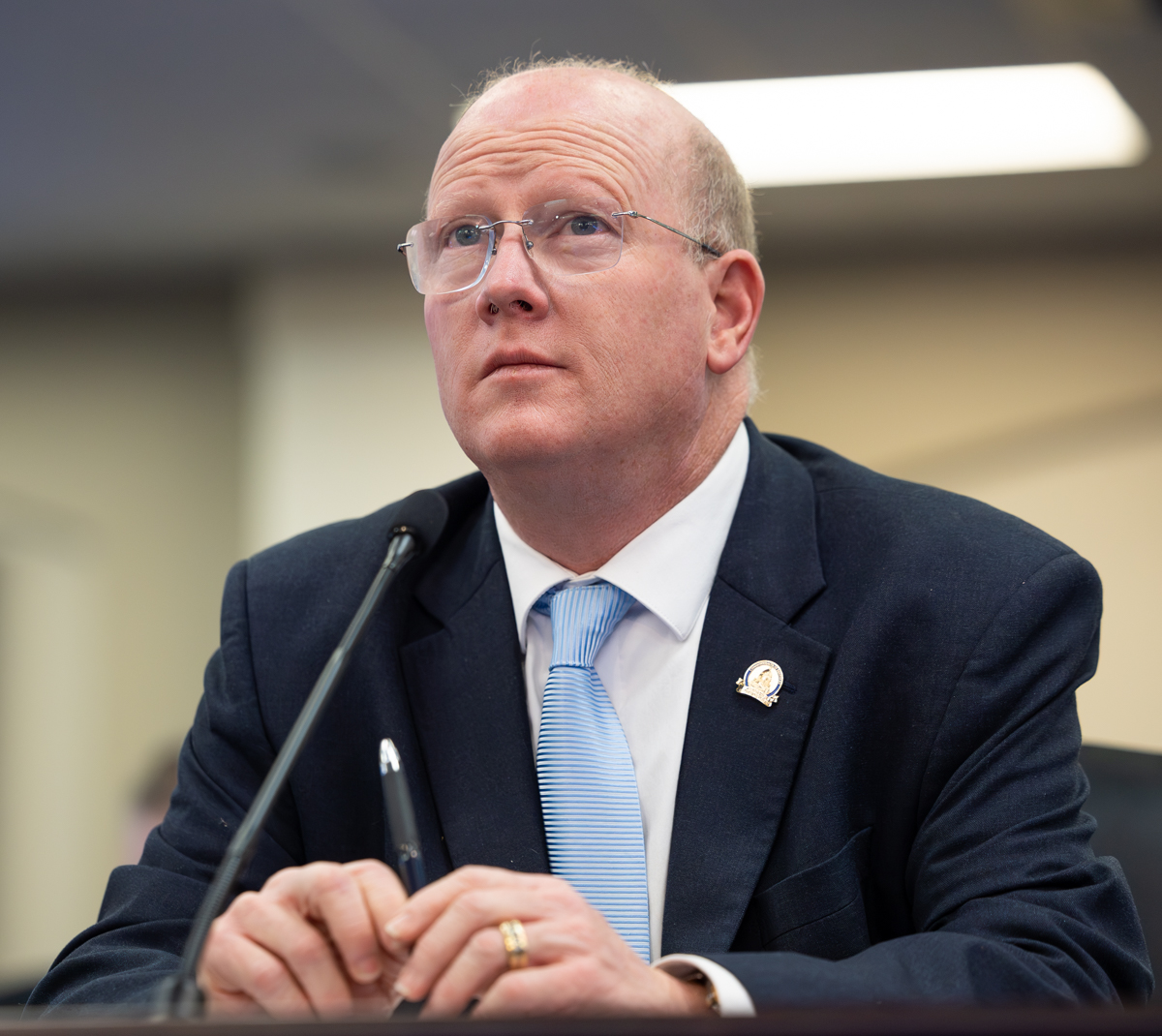
Rep. Mark Hart, R-Falmouth, speaks on House Bill 103 during Wednesday's meeting of the House of Representatives Local Government Committee. A high-resolution photo can be found here.
FRANKFORT — A bill that would shift decision-making power over fluoride in public water systems was approved by a House committee Wednesday after lengthy debate from lawmakers, dentists and public health advocates.
Rep. Mark Hart, R-Falmouth, testified that House Bill 103 would allow local water systems to decide whether to continue adding fluoride to their water supply, emphasizing the proposal does not ban fluoride.
Hart explained the bill includes an immunity clause that would protect water districts from civil lawsuits whether they choose to maintain fluoridation or discontinue it. Language was added to the bill Wednesday after discussions with legal counsel to clarify how that protection would apply, he said.
Dr. Jack Kall, a Louisville dentist and executive chair of the International Academy of Oral Medicine and Toxicology, spoke in support of the bill and cited studies on the potential negative effects of fluoride-treated water.
Kall emphasized a risk associated with fluoride consumption, saying studies "show a trend of association between lower IQ and the level of fluorides consumed by pregnant women and their infants after birth."
Rep. Sarah Stalker, D-Louisville, asked about the current standard in dentistry regarding fluoride treatment.
Kall said informed consent is central to dental care and argued that people do not have that same choice when fluoride is added to public water.
"It's a very common procedure," Kall said. "I am more cautious about it. Patients often feel that the dentist, dental hygienist or dental staff is not respectful of their personal choices. Informed consent is essential here. That's the problem we have with water fluoridation. If you don't want it, you're kind of stuck."
Rep. Rachel Roarx, D-Louisville, questioned how local boards would handle decisions traditionally guided by public health expertise and asked what medical or scientific background local water boards are required to have.
Hart said the board has requirements similar to those of a legislature.
"None of us are an expert in this field, and we are asked to make decisions without the medical knowledge," Hart said. "These executive and elected boards aren't going to have the medical knowledge either. They're going to have to seek out professionals, like I have, to help inform us."
Opponents of the bill, including some dental and public health advocates, warned that reducing fluoridation could increase tooth decay and long-term health costs.
Mary Ann Burch, a retired dental hygienist, said community water fluoridation has been proven for decades to reduce cavities and is especially important for seniors and low-income residents.
"For over 70 years, community water fluoridation has been proven safe, reliable and cost-effective," she said. "It prevents cavities by at least 25%."
She warned the consequences of reducing fluoridation would impact poorer communities, especially historically vulnerable populations in Eastern Kentucky, and drive up Medicaid costs due to increased dental.
Rep. Savannah Maddox, R-Dry Ridge asked about opponents' views on a 2024 federal court ruling in Food & Water Watch v. EPA. The court found, by a preponderance of the evidence, that recommended levels of community water fluoridation could present an unreasonable risk of injury to health, specifically citing potential IQ reduction.
Dr. Stephen Robertson, executive director of the Kentucky Dental Association, said he believes the court overreached in its decision and that the preponderance of evidence shows that fluoride has been safe.
He added that more recent research challenges claims of a link between fluoride and lower IQ and that the science has been turned into a "spin contest."
Rep. George Brown Jr., D-Lexington, voted no, saying he was not convinced fluoride poses a health risk.
"I think we're going down a slippery slope," Brown said. "It's been a standard since the 1940s, and I don't think anything has been explained here that says fluoride is a problem."
However, Rep. Ken Fleming, R-Louisville, voted in favor and explained his support for the measure.
"I'm going to trust my local water district to do the right things," Fleming said. The committee voted 13-5 to advance House Bill 103. The measure now moves to the full House for consideration
House committee approves bill to criminalize grooming of a minor
Rep. Marianne Proctor, R-Union, hopes House Bill 4 will strengthen Kentucky's sexual abuse law by criminalizing the grooming of a minor. A high-res version can be found here.
FRANKFORT — The Kentucky House of Representatives is considering a bill that would make grooming a minor a crime in Kentucky.
The House Judiciary Committee considered House Bill 4 on Wednesday. Rep. Marianne Proctor, R-Union, is the primary sponsor of the legislation. Boone and Gallatin Counties Commonwealth's Attorney Louis Kelly and Lt. Anthony Theetge with the Boone County Sheriff's Office testified alongside her.
HB 4 would criminalize grooming, which is when an adult engages in, entices, coerces, or solicits a minor to prepare them for sexual conduct, Proctor said.
The legislation defines grooming behavior as a course of conduct with a minor that is intended to establish an emotional connection with a minor through manipulation, trust-building, and influence to facilitate acts of sexual conduct or normalize or desensitize sexual acts.
Proctor said sexual abuse is on the rise, and 1 in 10 children will be the victim of sexual abuse.
"This is a gap in the law that we are hoping to close from the predatory behavior to the actual, physical sexual abuse," she said.
According to the bill, the grooming of a minor under 14 years old would be a class A misdemeanor, unless the minor is under 12 years old, then the penalty would be a class D felony.
If the adult is in a position of authority over the minor, the penalty for grooming a minor would be upgraded to a class D felony, unless the victim is under 12 years old, then the penalty would be a class C felony, the bill reads.
Rep. Nima Kulkarni, D-Louisville, said she supports the intent behind the bill, but has a few technical concerns with the language.
"Is there a carve out for communications for job-related duties for let's say a youth minister or a nonprofit that is dealing with youth and their concerns in terms of navigating sexual health and things like that?" she asked.
Kelly said the legislation includes a provision to exempt good faith, non-predatory discussions by requiring prosecutors to prove specific intent requirements.
"We think, between the statutory language and all those things, that should filter out those good faith discussions that we are not intending to include and only focus on ones that are clearly with malintent," Kelly said.
Rep. Mary Lou Marzian, D-Louisville, said she also wanted to ensure that teachers wouldn't be prosecuted for teaching sexual health curriculum.
House Majority Whip Jason Nemes, R-Middletown, read aloud the portion of the statute he believes makes it clear that teachers teaching approved sexual health curriculum would not be charged with grooming a minor.
"This statute is nowhere near that conduct," he added.
HB 4 will now go before the full House for consideration after receiving a 14-0 vote from the House Judiciary Committee. Five members chose to record a "pass" vote.
Legislature will not convene on Monday due to weather

The Kentucky General Assembly will not convene on Monday, Jan. 26, due to inclement weather.
FRANKFORT — Senate President Robert Stivers and House Speaker David W. Osborne have cancelled session activities for Monday, Jan. 26, due to inclement weather.
The Kentucky General Assembly will reconvene at 4 p.m. on Tuesday, Jan. 27. It will be at the discretion of committee chairs to hold committee meetings prior to 4 p.m. that day.
Legislative activities will continue as normal through the rest of the week.
This Week at the State Capitol
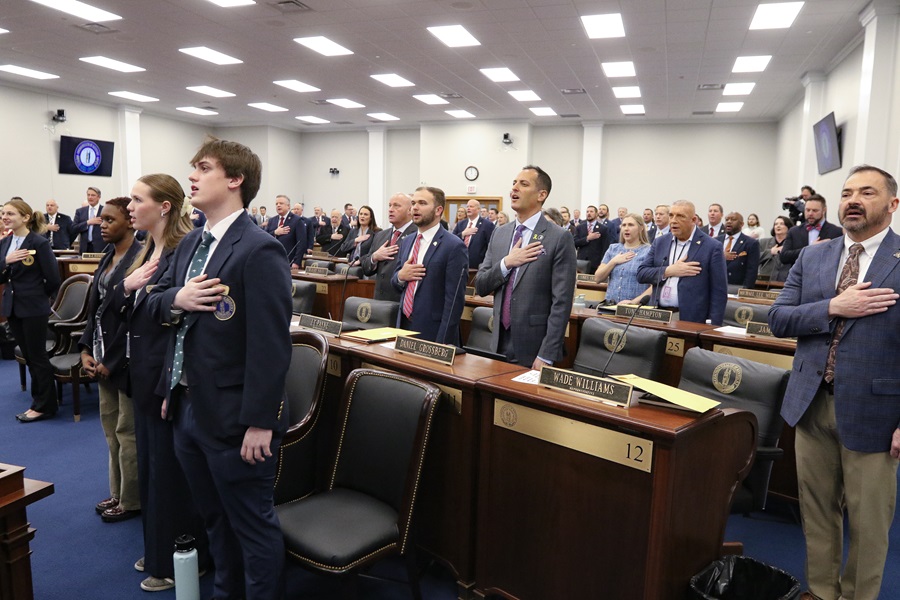
Bills on concealed carry, education, health care and human trafficking all made headway during the third week of the 2026 legislative session in Frankfort. A high-res version can be found here.
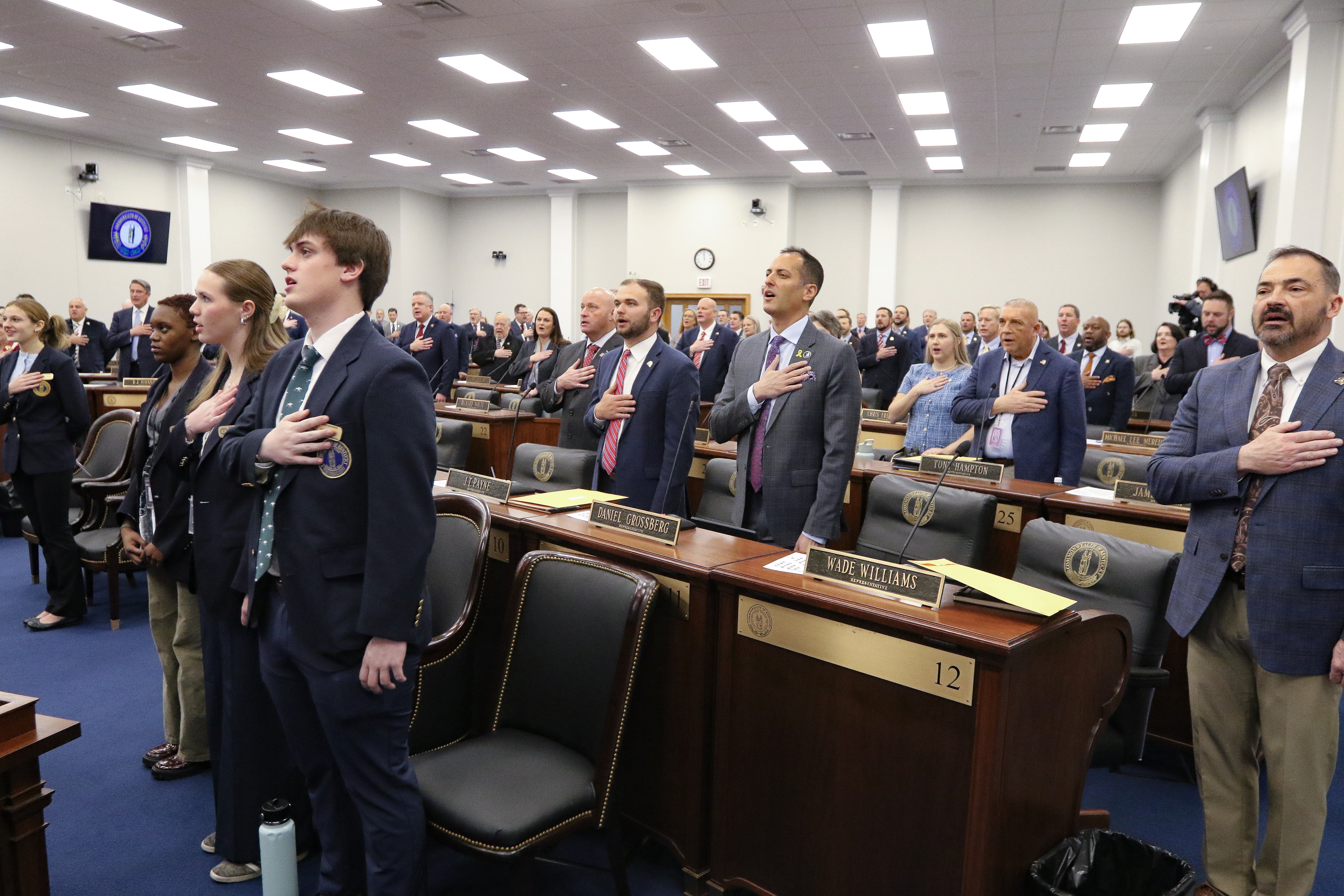
FRANKFORT — Though short, the third week of the 2026 legislative session had all the hallmarks of a general assembly in full swing – crowds in the halls, committees meeting back-to-back and bills passing in multiples off the chamber floors.
Friday marked day 13 of the 60-day session, and now that lawmakers have settled into a steady rhythm inside the new, temporary chambers of the House and Senate, all indications are pointing toward another robust year for the legislature.
More than a dozen bills moved out of committee on Wednesday – the busiest day of the session so far – and another half dozen moved on Thursday. Among them were measures on dyslexia, workplace violence, human trafficking, health care, fishing, sexual assault nurses and educational pathways for teachers.
One measure in the spotlight this week was House Bill 312 on concealed firearms. It would allow Kentuckians aged 18 to 20 years old to obtain a provisional concealed carry permit after undergoing a background check and firearms training.
The bill received approval Wednesday from the House Judiciary Committee and cleared the House floor on a 73-17 vote following nearly an hour of debate Friday.
Supporters said the measure would address inconsistencies in Kentucky gun laws for young adults who can already possess firearms but not carry them in a concealed manner. Critics argued that lowering the age limit would only increase gun violence, particularly among a vulnerable age group.
The bill now heads to the Senate.
For its part, the upper chamber acted on several bills this week related to education.
Senate Bill 181 seeks to clarify and improve an existing law adopted last year that was designed to prevent unauthorized communication between students and school personnel. The measure cleared the Senate Education Committee on Thursday.
The legislation would clarity what types of communication are considered authorized versus unauthorized and create exemptions for certain communications, such as virtual school instruction, communications that involve parent participation and phone calls from an official school telephone number, among others.
Legislators said the changes were needed to address questions that emerged in the wake of the original law, which has sought to stem inappropriate relationships between students and school employees.
Meanwhile, Senate Bill 22 is seeking to address shortages in the teaching profession by establishing educational pathways that create little to no student debt, according to supporters.
The proposal, which won support on the Senate floor Thursday afternoon, would allow school districts to establish a "grow-your-own" teacher apprenticeship program registered with the state Education and Labor Cabinet.
The Senate rounded out the week on Friday by advancing Senate Bill 76 off the chamber floor on a 28-6 vote. The measure seeks to address a recent controversy over an occupational tax increase that the Fayette County Board of Education sought to pass last year.
SB 76 would raise the population threshold required for the school board to pass such increases going forward, and during debate Friday, supporters raised concerns over public transparency and financial practices in the district.
Opponents of the bill questioned the need, arguing that the district has received clean audits and has raised graduation scores among other metrics.
Many other bills received action this week, either in committees or on the chamber floors. Here's a look at some of the measure gaining ground:
Firefighter Death Benefits – House Bill 34 would expand the list of cancers that are recognized as occupational risks for firefighters and, as a result, covered under line-of-duty death benefits. The measure cleared the House Veterans, Military Affairs and Public Protection Committee on Tuesday.
Accessibility Ramps for Veterans – House Bill 214 would create a program to help veterans with disabilities purchase accessibility ramps for their residences. The House Veterans, Military Affairs and Public Protection Committee advanced the legislation on Tuesday.
Gubernatorial Pardons – Senate Bill 10 proposes to amend the state constitution and limit the governor's ability to grant pardons and commutations for 90 days surrounding a gubernatorial election. The Senate passed the bill on Tuesday.
Distracted Driving – Senate Bill 28 seeks to curb distracted driving by limiting the use of hand-held mobile devices behind the wheel with some exceptions for navigation devices, certain types of radios and emergencies. The measure cleared the Senate on Tuesday.
Food is Medicine Initiatives – Senate Joint Resolution 23 would declare Kentucky as a "Food is Medicine" state and direct state agencies to advance Food is Medicine initiatives. The Senate Health Services Committee passed the measure Wednesday.
Dyslexia and Dysgraphia – House Bill 389 calls on the Kentucky Department of Education to annually update its guidance and evidence-based strategies for identifying and supporting students with both dyslexia and dysgraphia. The House Primary and Secondary Education Committee voted in favor of the bill on Wednesday.
Workplace Violence – House Bill 306 would strengthen laws against violence in the workplace by clarifying legal definitions and increasing penalties for repeat offenses. The House Judiciary Committee advanced the bill Wednesday.
Human Trafficking – House Bill 320 would enhance the penalty for promoting human trafficking from a class C felony to a class B felony. If the victim is a minor, the penalty would increase from class B felony to a class A felony. The legislation cleared the House Judiciary Committee on Wednesday.
Child Pornography – House Bill 366 would require someone convicted of possessing or viewing child pornography to serve 85% of their criminal sentence. The bill would also expand child pornography prohibitions to include computer-generated images of a minor. The House Judiciary Committee passed HB 366 on Wednesday.
Cremation – Senate Bill 27 would provide a cremation option for fiscal courts or local governments that are tasked with caring for the remains of indigent individuals. The Senate State and Local Government Committee advanced the bill Wednesday.
Health Insurance – House Bill 176 seeks to streamline the prior authorization process for health insurance claims by creating exceptions for certain health care providers. The bill cleared the House floor on Wednesday.
Mental Health Care – House Bill 178 aims to support the psychiatric collaborative care model, allowing primary care providers, care managers and consulting psychiatrists to work together on a patient's mental health care. The House voted in favor of the measure Wednesday.
Medicaid Delivery Model – Senate Concurrent Resolution 9 calls for a study of accountable care models used for Medicaid programs in other states. The study would also look at opportunities to implement such a model in Kentucky through a pilot program. The effort is seeking to control costs and improve health outcomes. The Senate passed the bill Wednesday.
Impaired Boating – House Bill 168 would more closely align the legal standards and penalties for boating under the influence with the standards and penalties for driving under the influence. The House Tourism and Outdoor Recreation Committee passed the legislation on Thursday.
Fishing on Private Property – Senate Bill 39 would exempt private landowners from most statewide fishing regulations while fishing on their own property, including creel and size limits. The Senate Economic Development, Tourism and Labor Committee advanced the bill Thursday.
Sexual Assault Nurse Examiners – House Bill 134 aims to expand the availability of sexual assault nurse examiners across Kentucky. It calls for a statewide coordinator to recruit nurses, facilitate training and improve collaboration between hospitals, law enforcement and rape crisis centers. The bill received approval from the House Health Services Committee on Thursday.
Homeowner Tax Exemptions – Senate Bill 51 proposes a new section of the state constitution that would exempt homeowners who are 65 and older from paying increased property taxes that result from higher assessments on their permanent residence. The bill cleared the Senate on Thursday.
The House and Senate are scheduled to reconvene on Monday. However, legislative leaders have signaled that they are monitoring a massive winter storm that will move across the state over the weekend and potentially disrupt the session calendar.
Kentuckians are urged to check the general assembly's calendar for updates. Kentuckians can track the action through the Legislative Record Webpage, which allows users to read bills and follow their progression through the chambers.
Citizens can also share their views on issues with lawmakers by calling the general assembly's toll-free message line at 1-800-372-7181.
House bill seeks to add more sexual assault nurses to hospitals
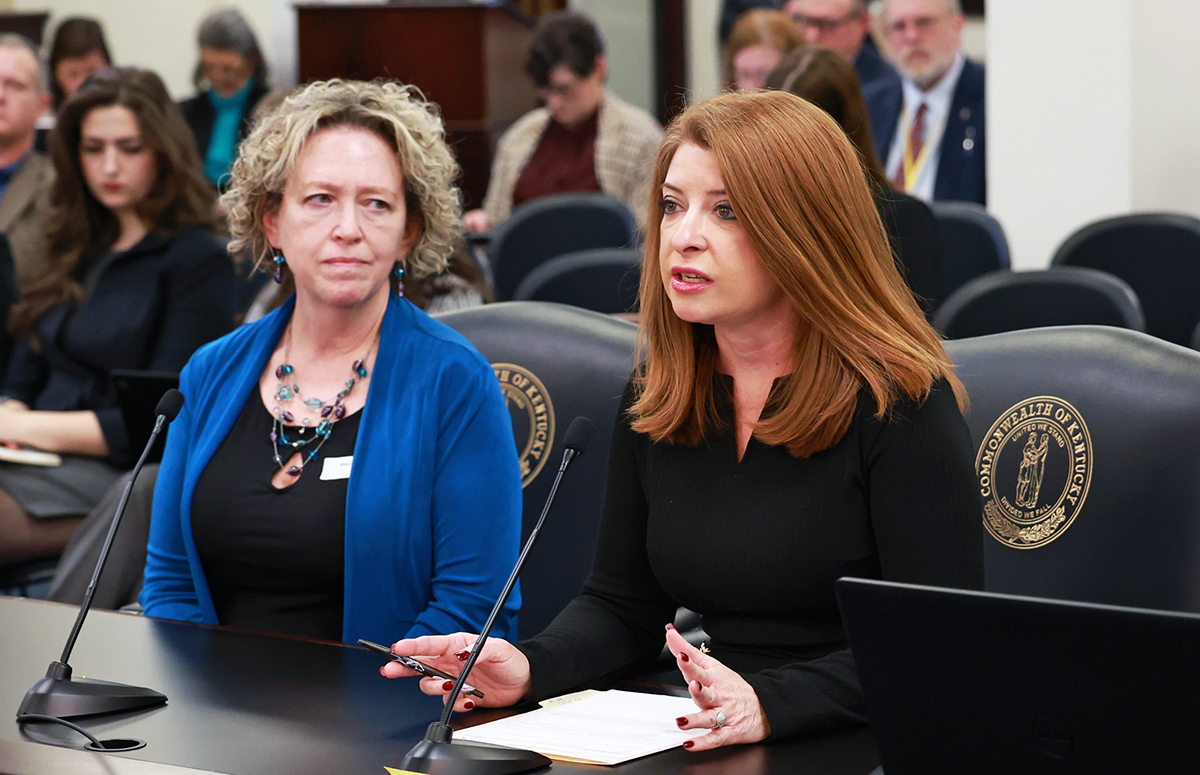
Rep. Rebecca Raymer, R-Morgantown, told the House Health Services Committee on Thursday that House Bill 134 seeks to ensure every Kentucky hospital has a sexual assault nurse examiner on staff while Kentucky nurse Melissa Gilpin looks on. A high-res version can be found here.
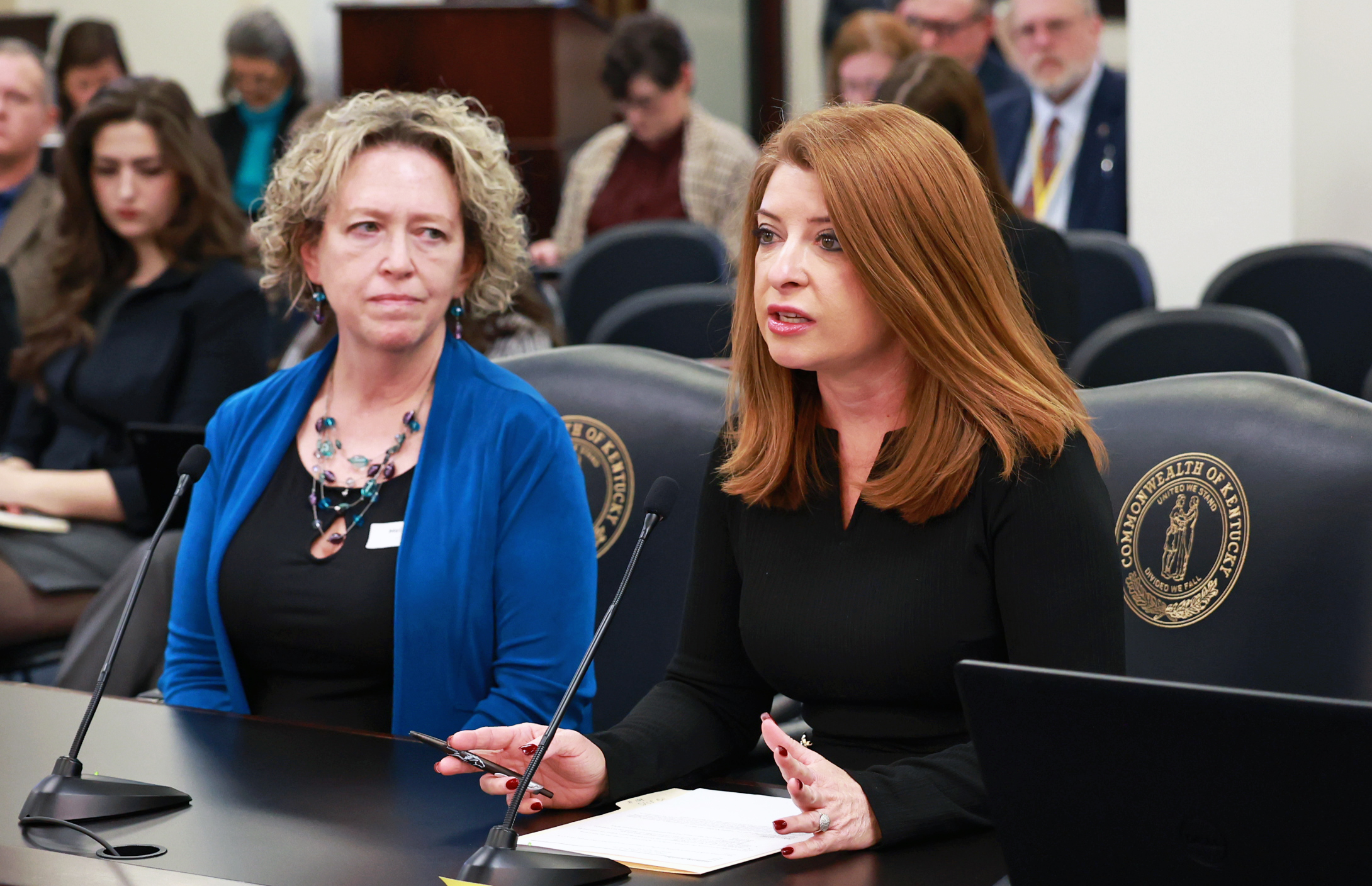
FRANKFORT — A Kentucky lawmaker told the House Health Services Committee on Thursday that 1 in 4 Kentucky women will be the victim of rape or an attempted rape in their lifetime.
Rep. Rebecca Raymer, R-Morgantown, hopes House Bill 134 will expand the availability of sexual assault nurse examiners (SANE) across the commonwealth, so survivors won't have to travel far from home to report their assault.
Raymer said she first learned of Kentucky's SANE access problem two years ago. When the issue was brought to her, only about 25 hospitals were accredited as SANE-ready.
"I heard accounts about a woman who had been a victim of a sexual assault," she said. The woman "came to a hospital and then was told there was not a SANE on staff. And unfortunately, that woman chose not to go to the other facility, and did not get the kit, and did not report the rape."
Last year, Raymer sponsored House Concurrent Resolution 20, which directed the Legislative Research Commission to study access to sexual assault nurse examiners and submit a report on its findings in December 2025.
Raymer said HB 134 is a result of that report. The legislation would direct the state Cabinet for Health and Family Services to employ a statewide sexual assault nurse examiner coordinator.
The coordinator would identify and recruit potential SANEs, organize and facilitate comprehensive SANE training programs, and establish and maintain relationships with key hospitals, law enforcement, rape crisis centers and more.
Additionally, HB 134 would require the cabinet to develop and maintain a state registry of SANEs by Dec. 1.
Rep. Mary Lou Marzian, D-Louisville, said she's aware many hospitals have faced issues when it comes to being SANE-ready.
"Would this ask every hospital to be SANE-ready?" she asked.
Raymer said the legislation's goal is to ensure every Kentucky hospital is SANE-ready.
According to the bill, the cabinet would be required to collaborate with the Kentucky Hospital Association, the Kentucky Board of Nursing, the Sexual Assault Response Team Advisory Committee, and others to develop a statewide strategic plan to ensure SANE coverage for all Kentucky hospitals.
The plan would be due to the Interim Joint Committee on Health Services by Dec. 1.
The House Health Services Committee unanimously approved HB 134. It now heads to the Kentucky House floor for consideration.
Senate committee green lights updates to school communications law
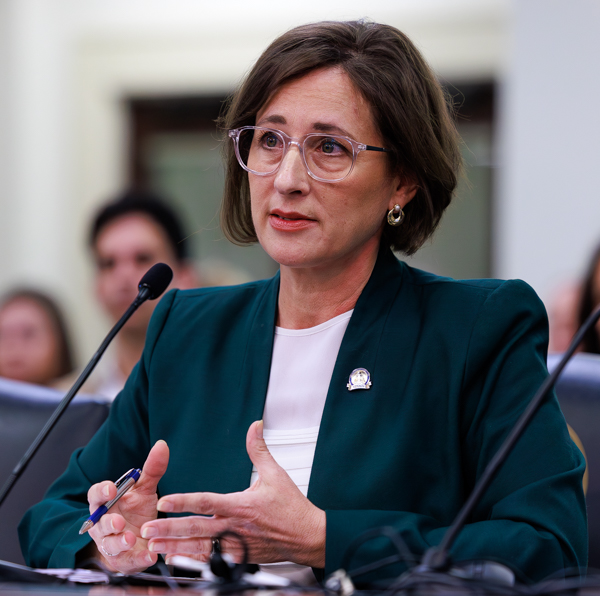
Sen. Lindsey Tichenor, R-Smithfield, speaks Thursday on Senate Bill 181 during a Senate Education Committee meeting. A high-res version can be found here.
FRANKFORT — The Senate Education Committee on Thursday unanimously green lighted a bill that seeks to clarify and improve an existing law designed to prevent unauthorized communication between students and those in authority at schools.
The bill's sponsor, Sen. Lindsey Tichenor, R-Smithfield, said multiple stakeholders – teachers, principals, superintendents, parents, family members and collective education groups – have offered suggestions and comments on the law that was adopted during the last legislative session.
Tichenor said the law creates a system on traceable communications within school districts to prevent those in a position of authority from having private communications with students. That puts necessary boundaries into place to close off the most easily accessible access points to children, she said.
"Although the grooming of children can happen outside of electronic communications, recent data shows that nearly 90% cases of sexual misconduct and grooming happen through this method," she said.
Tichenor said she has heard nothing but support for the intent of last year's law but has also worked with stakeholders on refining the language.
"We brought together a lot of ideas and were able to come up with some solutions that I think will meet the needs to make this bill effective, but not lose its intent," she said.
Senate Bill 181 seeks to provide clarity on what types of communication are considered authorized versus unauthorized. It creates exemptions for certain communications, such as virtual school instruction, communications that involve parent participation and phone calls from an official school telephone number, among others.
It also spells out mandatory reporting measures and updates the protocols related to parental consent.
Sen. Aaron Reed, R-Shelbyville, asked Tichenor about coaches and student-athletes' recruiting profiles.
"I'd like to hear a little bit more – like liking, sharing, commenting to reinforce what athletes have claimed. That's a big part of their recruiting ability, and I know there is a fine line to walk on that," he said.
Tichenor said public communication is permitted, and if there's ever an instance when it can't be public, the parents can give a consent form for that communication to the coach.
Senate Democratic Floor Leader Gerald A. Neal, D-Louisville, said he's grateful for stakeholder input.
"First of all, this seems to be a thoughtful revisit to this legislation. I'm glad to see that people are knowledgeable in the area have come together and did a relook and came up with some of options here. I support those options," he said.
Senate Minority Caucus Chair Reginald L. Thomas, D-Lexington, said boundaries are necessary not only in schools, but also at workplaces and elsewhere.
"In my view, this may not be a simple bill, but to me, it's a very simple concept. Because to me, this bill is all about boundaries," he said.
Committee Chair Sen. Stephen West, R-Paris, thanked Tichenor for her work and said it's important.
"This bill is a reaction to a very serious problem in the state of Kentucky. There's an epidemic of sexual misconduct in our school systems, and all you have to do is read the paper for the past two to three years to get an inkling of what's going on," he said.
SB 181 now heads to the full Senate.
Committee advances bill on dyslexia and dysgraphia
Rep. Samara Heavrin, R-Leitchfield, (right) speaks on House Bill 389 during Wednesday's meeting of the House Primary and Secondary Education Committee. Joining her is Rep. Tina Bojanowski, D-Louisville, (left), co-sponsor on the bill. A high-res version can be found here.
FRANKFORT — Legislation that would strengthen how Kentucky schools identify and support students with reading and writing difficulties was approved by the House Primary and Secondary Education Committee on Wednesday.
Rep. Samara Heavrin, R-Leitchfield, is sponsoring the bill. She said it seeks to expand literacy support in schools by formally recognizing dysgraphia in state education law and improving early screening, intervention and teacher preparation related to reading and writing disorders.
House Bill 389 would define dysgraphia in statute and require the Kentucky Department of Education (KDE) to annually update its dyslexia toolkit to include guidance and evidence-based strategies for identifying and supporting students with both dyslexia and dysgraphia.
The legislation would also require that literacy screeners and diagnostic tools used by school districts be approved by KDE and that districts report data on the implementation of evidence-based instructional practices.
"This bill was brought to me a few years ago by moms in my district," Heavrin said. "I really wanted to focus on the dyslexia and dysgraphia portion so that we could strengthen identification and support."
Heavrin emphasized the bill is not intended to mandate specific instructional approaches, but rather to provide clarity and consistency across districts while allowing KDE to guide best practices.
Committee members largely expressed support for the legislation, highlighting gaps in early intervention and the burden placed on families seeking services outside of their school district.
Rep. Tina Bojanowski, D-Louisville, said students with dyslexia and dysgraphia often fall through the cracks of the special education system. She is a co-sponsor on the bill.
"A child diagnosed with dyslexia may not be eligible for special education services," Bojanowski said. "It's important that we have mechanisms in place so that our kids with dyslexia and dysgraphia get the interventions and support that they need."
Rep. James Tipton, R-Taylorsville, questioned how many local school districts currently have policies addressing dyslexia and dysgraphia. Heavrin responded that 171 districts have implemented such policies under previous legislation.
Tipton also raised concerns about the quality of screening and diagnostic tools used for early detection. KDE representative Mickey Smith told the committee that approved tools meet national standards for validity and reliability.
"We've worked very hard to ensure that there is both validity and reliability in classification and accuracy on all of the approved tools," Smith said. "There won't be a lot of changes for school districts, but we will be providing additional supports around procedures and protocols."
Several lawmakers shared personal experiences from their time in education.
Rep. Timmy Truett, R-McKee, said students often receive accommodations through individualized education programs only after falling far behind academically.
"We're treating the symptoms, not the problem," Truett said. "Some of these kids with dyslexia and dysgraphia are the sharpest kids you've got, and right now parents are forced to go outside the school system to get help."
Rep. Scott Lewis, R-Hartford, echoed those concerns, saying access to services has long been a challenge for families, particularly in rural areas.
"This problem is bigger than we realize, and it's not fair to our kids," Lewis said. "This bill is long overdue."
HB 389 will now head to the full House of Representatives.
Committee approves concealed carry for young adults
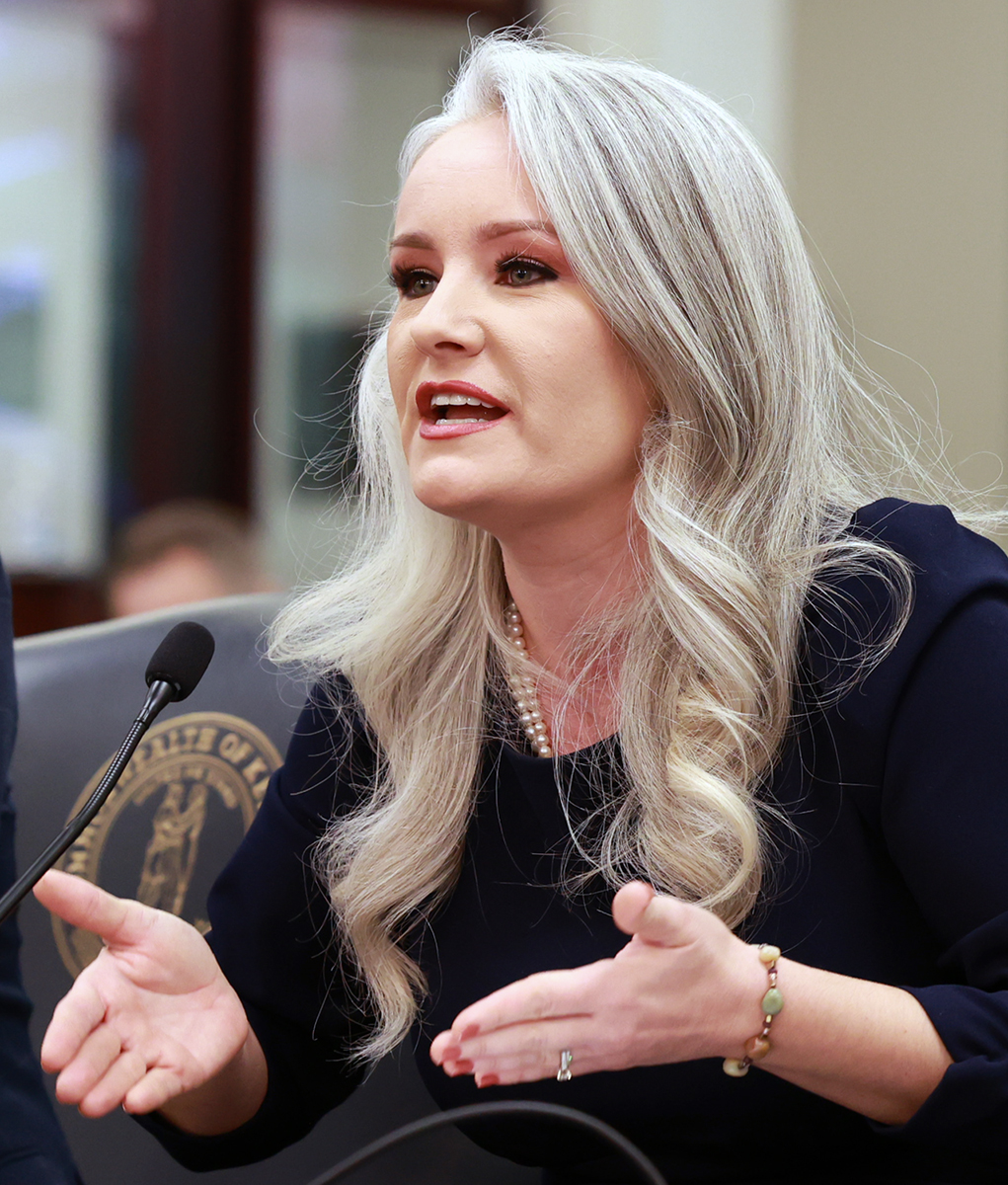
Rep. Savannah Maddox, R-Dry Ridge, advocates for House Bill 312 before the House Judiciary Committee on Wednesday. The legislation would allow 18- to 20-year-olds to obtain a provisional concealed carry license. A high-res version can be found here.
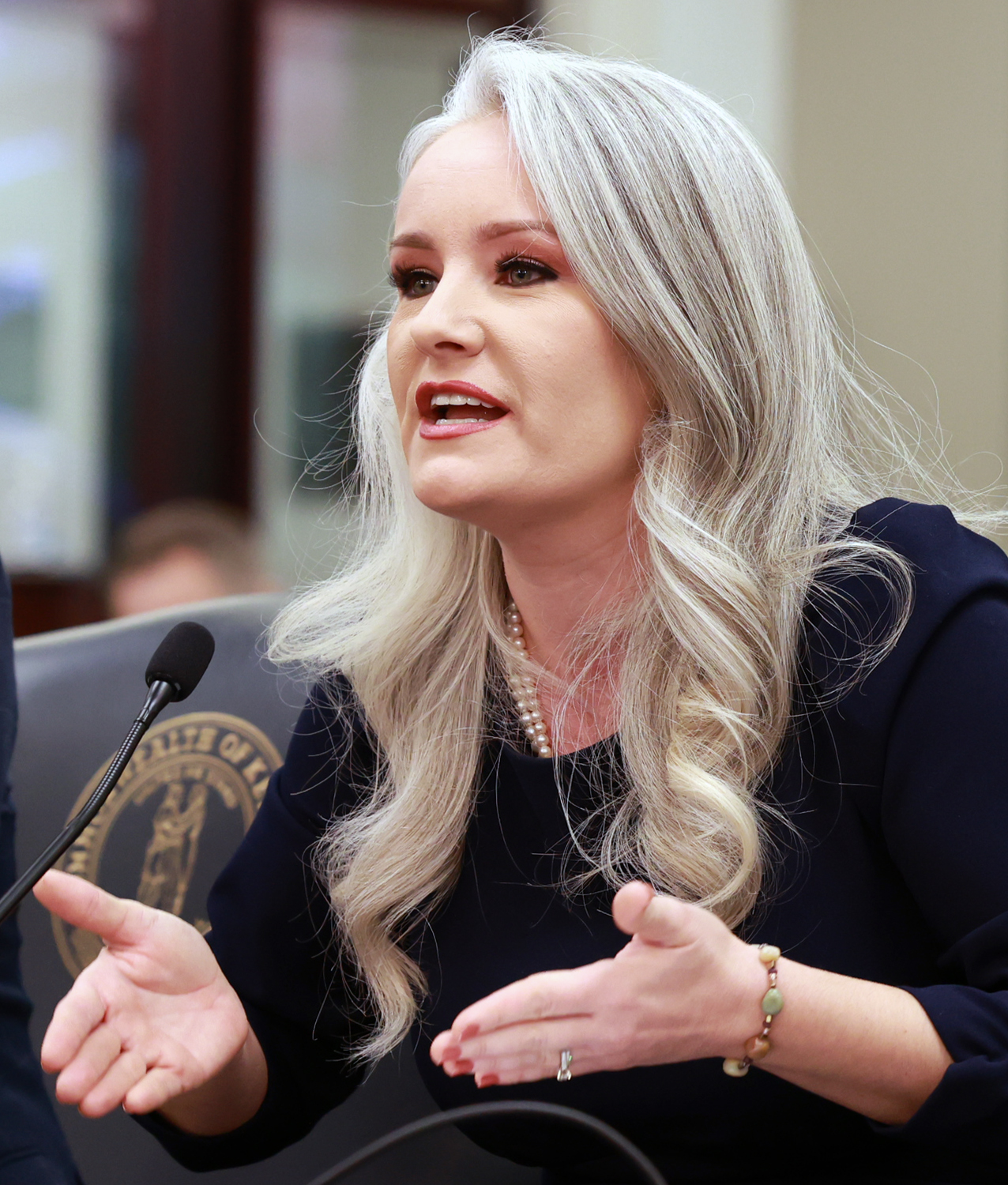
FRANKFORT — In Kentucky, 18- to 20-year-olds can possess a firearm, but cannot obtain a concealed carry license. House Bill 312 seeks to change that.
Rep. Savannah Maddox, R-Dry Ridge, is the primary sponsor of the legislation. She was joined by primary co-sponsor Rep. Josh Bray, R-Mount Vernon, to testify on the bill during Wednesday's House Judiciary Committee meeting.
"Right now, in Kentucky, citizens who are 18, 19, or 20 years old can legally vote. They can sign contracts. They can join the military, serve in combat, start a family, own a business and possess a firearm," Maddox said. "Yet, currently under the law, these same adults are prohibited from carrying that same firearm concealed for self-defense."
Under the proposed legislation, Kentucky State Police would be permitted to issue a provisional concealed carry firearm or other deadly weapons license to an 18- to 20-year-old.
Young adults would be required to undergo a background check and complete firearms training in order to qualify.
Maddox said HB 312 will "expand the ability of law-abiding citizens to exercise their constitutional rights to keep and bear arms."
If passed, Kentucky would join 25 other states that allow law-abiding citizens between the ages of 18 and 20 to conceal carry a firearm for self-defense purposes, she added.
"Our Second Amendment is clear: The right of the people to keep and bear arms shall not be infringed, and 18- to 20-year-olds are very much apart of the people," Maddox said.
Bray told the committee he agrees with Maddox's statements on the bill.
Most of the committee members shared their thoughts on the bill while explaining his or her vote.
House Minority Caucus Chair Lindsey Burke, D-Lexington, voted "no" on HB 312 due to concerns over young adults using firearms in suicide.
"I'm not even thinking about accidents or using the firearm against someone else," she said. "I think about the young people who go to college or trade school or out into the community and they kill themselves. I don't want these kids to have an easier time getting a gun."
Rep. Nima Kulkarni, D-Louisville, also expressed concerns over young adults having access to firearms.
Maddox said the bill wouldn't change access, only the ability for individuals to carry in a concealed manner.
Several other lawmakers shared they support the bill because it requires firearm safety training.
Rep. Kimberly Poore Moser, R-Taylor Mill, said she voted in favor of the legislation because she believes anytime the general assembly considers a bill on firearms, it should include provisions on safety and training.
House Majority Whip Jason Nemes, R-Middletown, said HB 312 is "a responsible approach." He believes the bill is supported by the Kentucky Constitution and that the required firearms training would protect young people instead of leading to more harm.
"I hope (the bill) makes it through to the finish line to protect our young folks and to educate them on how to use firearms," Nemes said.
HB 312 advanced from the House Judiciary Committee by a 15-3 vote. It will now go before the full House for consideration.
Senate committee advances Food is Medicine resolution
Sen. Shelley Funke Frommeyer, R-Alexandria, speaks Wednesday on Senate Joint Resolution 23 during a Senate Health Services Committee meeting. SJR 23 would declare Kentucky a Food is Medicine state and direct state agencies to advance Food is Medicine initiatives. A high-res version can be found here.
FRANKFORT — A senate joint resolution aiming to help Kentuckians prioritize nutrition advanced Wednesday during a Senate Health Services Committee meeting.
Senate Joint Resolution 23 would declare Kentucky as a "Food is Medicine" state and direct state agencies to advance Food is Medicine initiatives.
The bill's sponsor, Sen. Shelley Funke Frommeyer, R-Alexandria, said the initiatives not only bolster physical and mental well-being through food in a meaningful way, but also help farmers learn what Kentuckians are consuming while strengthening their businesses.
"This isn't just fruits and vegetables. This is protein sources. We grow some beautiful beef, pork, poultry in Kentucky as well," Funke Frommeyer said. "So, to be proudly offering that to our students would be wonderful, but of course, to our most sick Kentuckians who are in our acute care settings."
Before voting on the resolution, committee members adopted some changes to the resolution language designed to help the state receive more federal funding.
"We recognized that there are federal dollars that came from the Big Beautiful Bill that may help support our rural hospitals. So, we have a very meaningful portion of this resolution that will allow us to be more likely to pull those dollars down," Funke Frommeyer said.
Morgan Bray, who works with the Kentucky Hospital Association and the Kentucky Department of Agriculture on implementing Food is Medicine efforts, said the initiatives kicked off approximately two years ago. They have been well-received, she added.
"Today, we have 52 hospitals who have voluntarily onboarded out of the 129 that are currently in the commonwealth under the Kentucky Hospital Association," she said.
Bray said hospitals are subscribing to the initiatives on a voluntary basis, and it makes sense to put a critical lens on what patients are consuming, all while supporting local agriculture.
Dana Feldman, KDA's executive director for the Consumer and Environmental Protection Office, said the program is tailored to the needs of different organizations. Feldman and Bray have traveled throughout Kentucky to promote the initiatives.
"Everyone wants to be a part of Food is Medicine. They do see the value in it," Feldman said.
Feldman said Kentucky is a leader in the Food is Medicine efforts.
"I also want to point out that this resolution and the one that will be mirrored in the House is the first of its kind in the nation to declare a state – a Food is Medicine state – and to lay the groundwork for supporting this type of work," she said.
Funke Frommeyer said a positive aspect of Food is Medicine is helping farmers gauge demand.
Sen. Lindsey Tichenor, R-Smithfield, said she strongly supports the concept.
"Just reading through it, I think this is one of the most monumental things that we can do to get Kentucky on the right path as far as health and the impacts that this will have on health care in general," she said.
Sen. Keturah J. Herron, D-Louisville, said she's concerned about the lack of grocery stores in some neighborhoods.
"When we're talking about access, one of the biggest issues is actually brick and mortar. My district is in Louisville. I live in Old Louisville, which is a community that is a very mixed community. You have folks who are living in subsidized housing to millionaires," she said.
Herron said it's not necessarily that residents without a nearby grocery store don't want to eat healthy food; they might not have access to it. She said she's working on a bill to promote grocery store access in rural and urban areas.
Sen. Karen Berg, D-Louisville, asked the bill's supporters if they had been working with school personnel to promote healthy nutrition.
Feldman said this has been the case, and cited farm-to-school programs.
Sen. Donald Douglas, R-Nicholasville, said good nutrition needs to be taught in homes, and grocery stores will sell what people buy. He said many sources suggest that healthy food costs the same or is priced slightly lower than ultra-processed food, yet people still cling to the hope that the ultra-processed food costs less.
The resolution now heads to the full Senate for consideration.
Senate advances legislation aiming to curb distracted driving
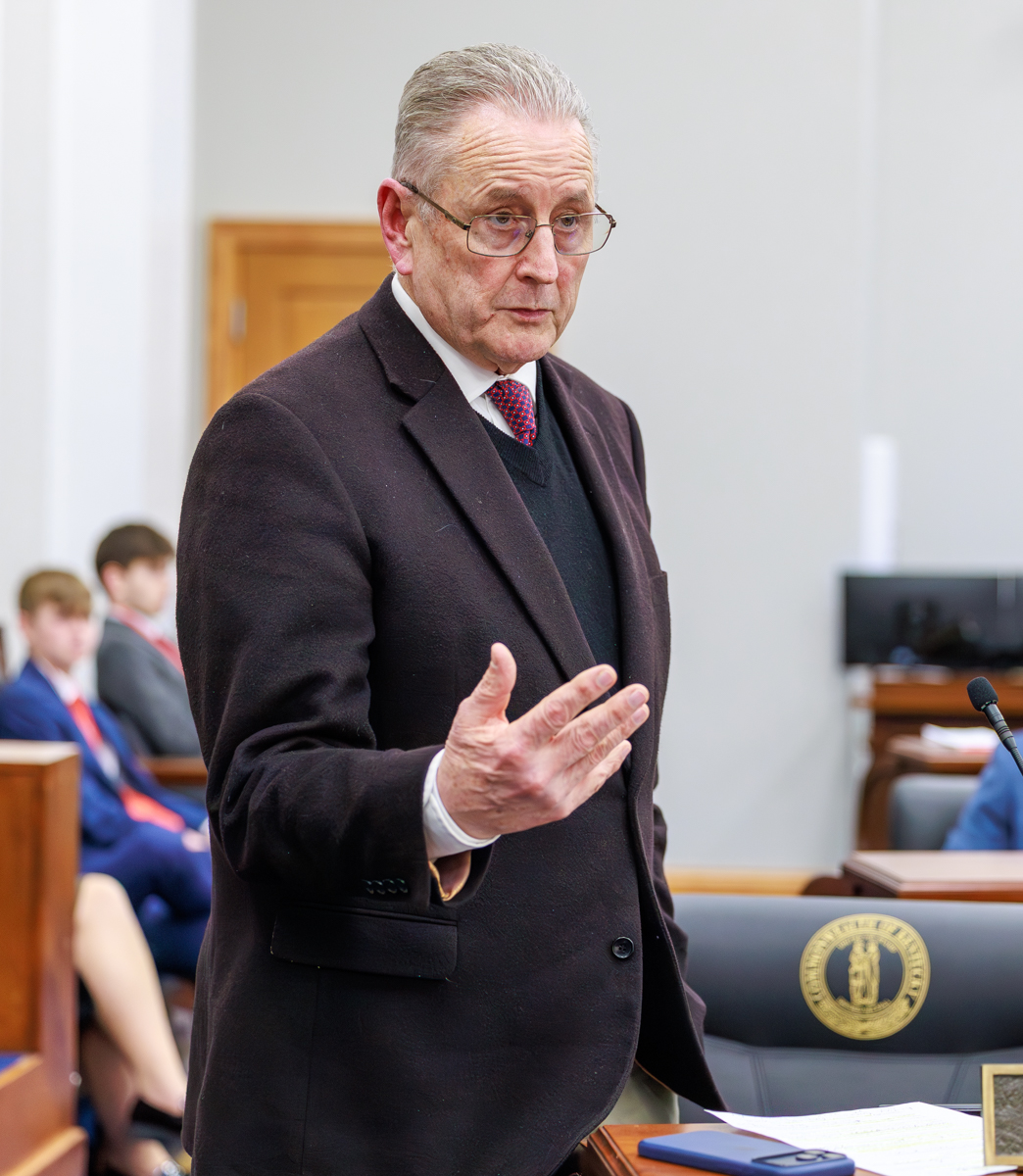
Sen. Jimmy Higdon, R-Lebanon, speaks Tuesday on the Senate floor about a hands-free bill he is sponsoring. A high-res version can be found here.
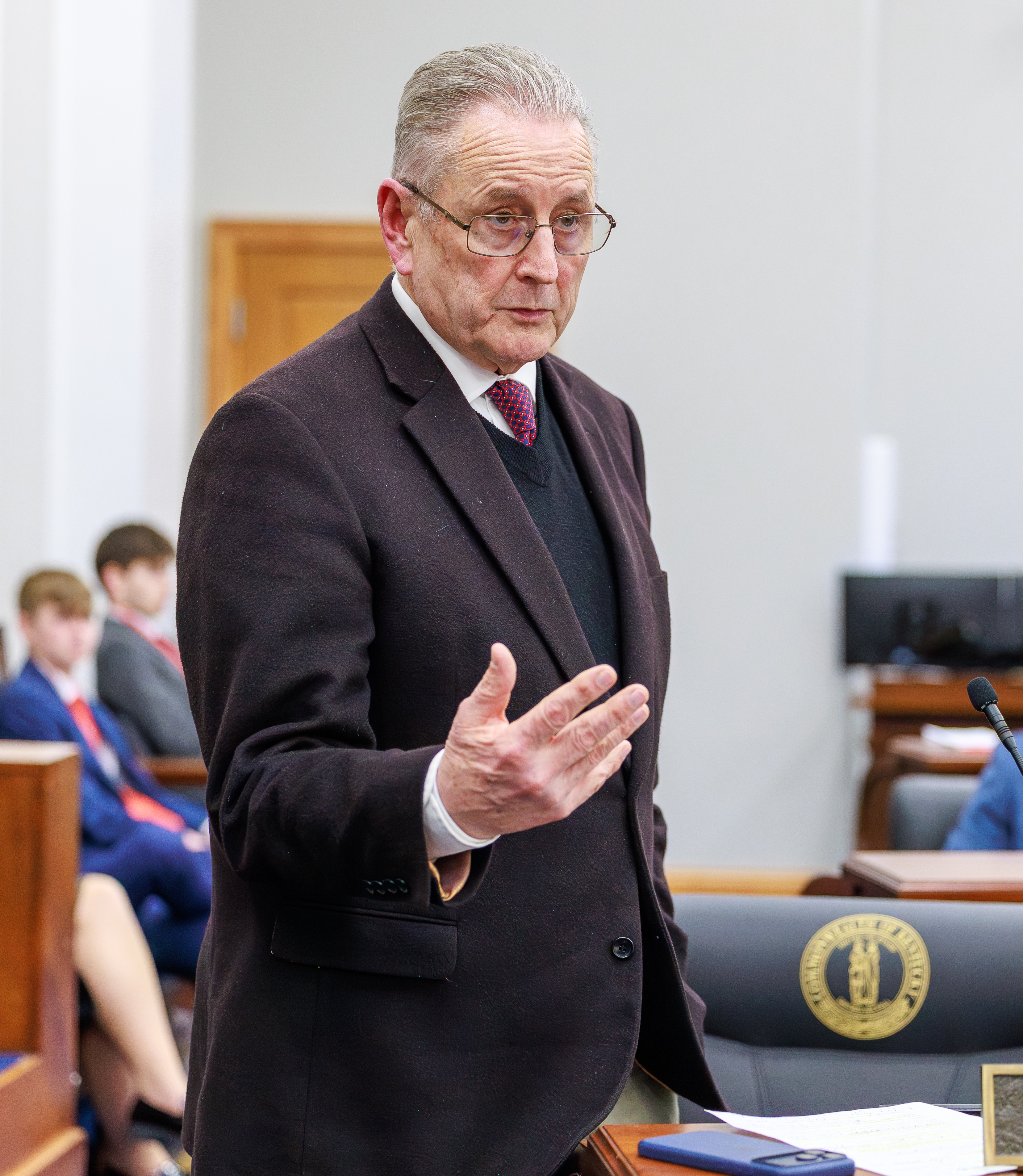
FRANKFORT — In an effort to help keep Kentucky roads safe, the Senate passed legislation Tuesday that seeks to curb distracted driving by limiting the use of hand-held mobile devices behind the wheel.
Known as "Phone-Down Kentucky Act," Senate Bill 28 would build on Kentucky's ban on texting while driving, but includes some exceptions for navigation devices, certain types of radios and emergencies.
The bill's sponsor, Sen. Jimmy Higdon, R-Lebanon, said the legislation would modernize Kentucky law to provide clarity for drivers and law enforcement personnel.
"This bill prohibits a motor vehicle operator from holding a mobile electronic device in their hand while operating a vehicle. This includes activities such as texting, typing, scrolling or watching video content," he said.
At the same time, the bill was written with common sense and balance, Higdon said.
"It is to educate, change habits and save lives. This bill clearly allows for hand-free navigation and voice-based communication. It allows emergency calls and reporting accidents or hazards. It allows the use by first responders while performing their official duties. It allows use when a vehicle is lawfully parked or stopped," he said.
The legislation does not prohibit, for example, a motorist to have a phone in hand when located at a stop light. It also does not apply to citizen band radios, amateur radios, ham radios or commercial two-way radios.
Higdon said the bill isn't about punishing drivers; it's about preventing crashes before they happen. Law enforcement personnel must have a clear visual confirmation of unlawful use of a device before initiating a stop, he said.
"They can't seize, search, view or require forfeiture of your cell phone if you're stopped for this offense," Higdon said.
The bill also calls for the state transportation cabinet to post signage statewide so drivers will understand the law before it's enforced.
If the legislation becomes law, Kentucky will join 33 other states with similar laws. It proposes a fine of $100 for violations, but points would not be assigned to the driver's record.
Higdon said the bill isn't named after a victim of distracted driving, but he said Alyssa Burns lost her young daughter in 2022 after a serious vehicular crash and has been passionate about supporting the bill.
Sen. Brandon Smith, R-Hazard, said some of his constituents are asking if a motorist travels through an area that has surveillance, could driving while holding a cell phone be added as a secondary violation.
Higdon read from the bill, which states a motorist can't be stopped unless an officer has visually observed a violation with a clear and unobstructed view.
Smith expressed concern about what officers could potentially see through a digital format. He said there is a bit of vagueness in the legislation, but he voted for the bill.
Sen. Gex Williams, R-Verona, voted against the bill, saying collision avoidance and lane centering technology in autonomous vehicles or vehicles with driver's assistance helps motorists be safe.
Senate Majority Whip Mike Wilson, R-Bowling Green, said he voted yea because he's been a motorcyclist since he was 14 years old and he's aware of distracted driver dangers.
"Motorcycle license clubs have talked to me over and over again about the dangers of people being on their telephones, and we all see it all of the time. I've been trying to be hands-free," he said.
Wilson said he agrees with motorcycle clubs and his friends who have asked for hands-free legislation for a "long time."
"So, I'm happy to vote yea," he said.
SB 28 advanced off the Senate floor following a 31-7 vote and now heads to the House.
Firefighter death benefits bill advances
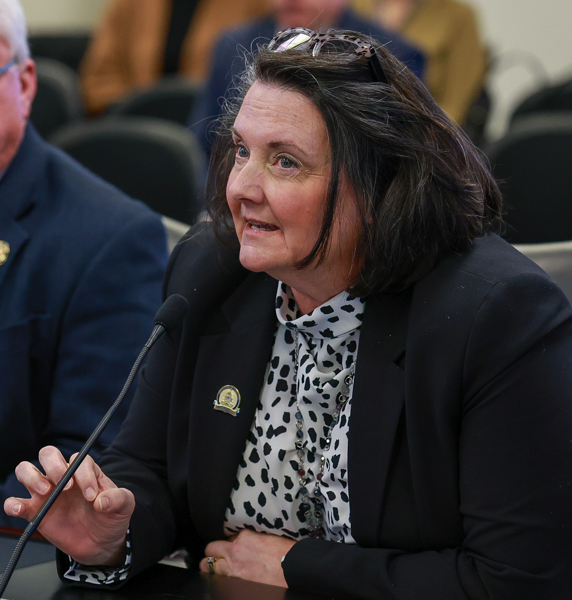
Rep. Kim Banta, R-Fort Mitchell, advocated for first responders and House Bill 34 during Tuesday's House Veterans, Military Affairs and Public Protection Committee meeting. A high-res version can be found here.
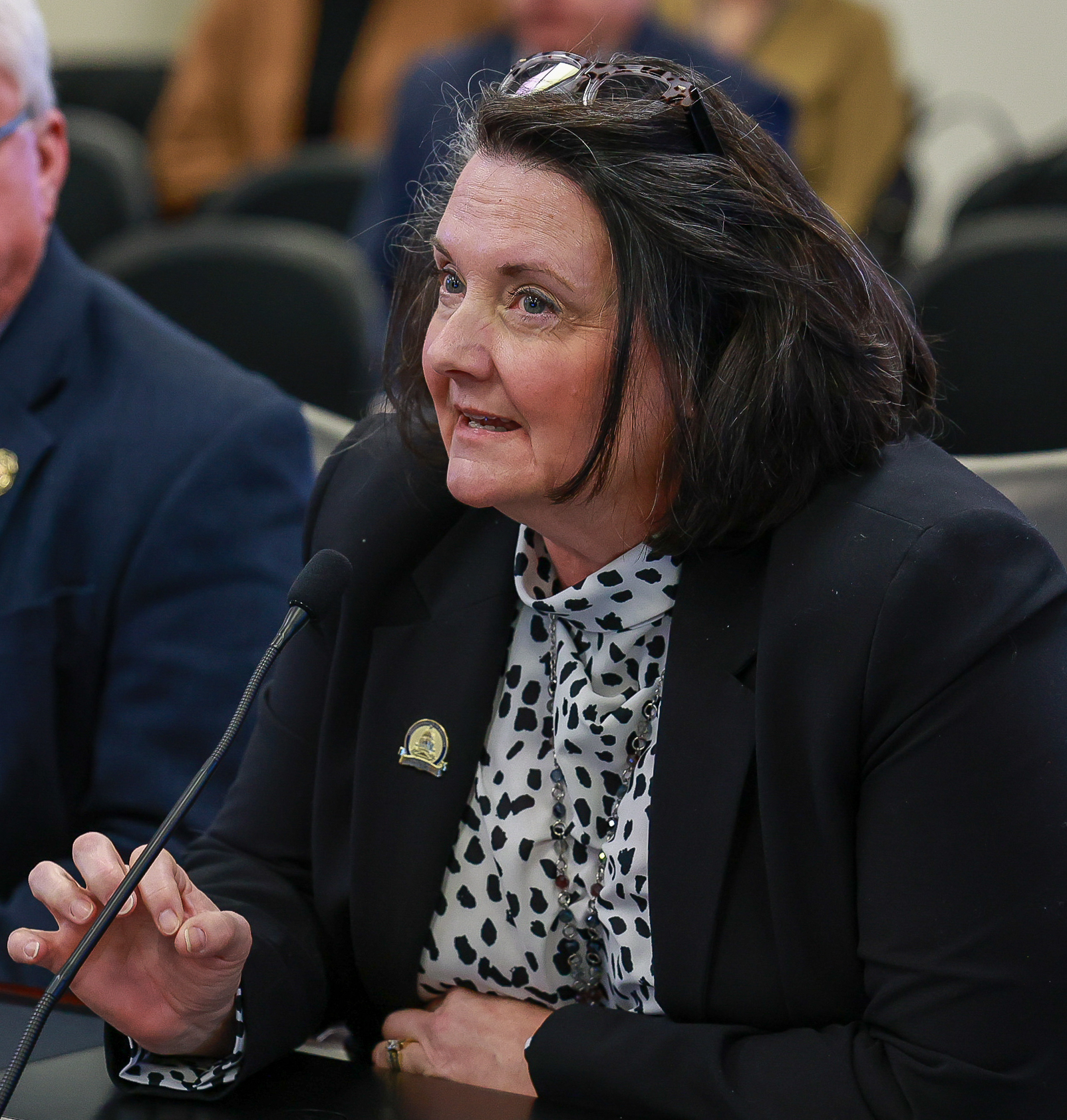
FRANKFORT — A bill to expand death benefits for Kentucky's paid and volunteer firefighters cleared its first hurdle on Tuesday.
Rep. Kim Banta, R-Fort Mitchell, is the primary sponsor of House Bill 34, which would add nine additional cancers to the list recognized as occupational cancers for firefighters.
Banta told the House Veterans, Military Affairs and Public Protection Committee it is the general assembly's responsibility to help first responders when they ask for it.
"These guys run into fires, and I think it's our responsibility to help them when something drastic happens to them because of their job," she said.
Deaths from mesothelioma, esophageal, lung, rectal, thyroid, intestinal, multiple myeloma, buccal and pharyngeal cancer would be considered line-of-duty deaths under HB 34.
Bladder, brain, colon, non-Hodgkin's lymphoma, kidney, liver, lymphatic or hematopoietic, prostate, testicular, skin, cervical and breast cancer are already covered in current statute.
Banta was joined by Jeff Taylor, the legislative and political affairs director for Kentucky Professional Fire Fighters. He told the committee cancer is the now the leading cause of line-of-duty death for firefighters.
Taylor said exposure to toxins and other carcinogens while on duty, especially during a fire, is causing the rise in cancer-related deaths for firefighters. Synthetic materials, diesel, chemicals used in turnout gear, chronic exposure to benzene, formaldehyde, heavy metals and more are to blame.
"Here in Kentucky, since 2002, we've lost more firefighters to occupational cancer than to fires, cardiac events, or other on-scene incidents combined," Taylor said.
Taylor said expanding presumptive cancer coverage is supported by modern science and medical evidence.
"(It will) provide fairness for those who risk their lives daily, reduce long term costs by enabling early detection and treatment, and ensure families receive the benefits they've earned and they deserve," he added.
Rep. DJ Johnson, R-Owensboro, said he supports the legislation.
"This question I'm going to ask is not going to impact my ‘yes' vote at all, but it's a question I think we have to ask," he said. "And that is, do you have any idea what the fiscal impact is going to be from the bill?"
Banta said the fiscal reports always come back as "indeterminable" each time she's requested one.
"Because we don't know how many are going to pass away with these cancers or these new cancers that are added," she said.
The committee unanimously voted to approve the bipartisan legislation. HB 34 is now before the full House for consideration.
This Week at the State Capitol

During the second week of this year's 60-day legislative session, lawmakers began to move bills through committee and continued to introduce new measures on the House and Senate floors. A high-res version can be found here.

FRANKFORT — The 2026 legislative session kicked into a higher gear this week as dozens of bills began moving through committee, including several measures related to driving, the state constitution and health care coverage.
Leading the pack in the Senate was Senate Bill 7, which seeks to ease the process for renewing or obtaining a duplicate driver's license, particularly for residents in rural areas.
The legislation would allow certain offices in local government – such as county clerk's and sheriff's offices – to provide renewal and duplication services for driver's licenses. Participation would be voluntary for local officials, and the bill allows those offices to collect a $25 convenience fee.
SB 7 cleared the Senate Transportation Committee on Wednesday and received a favorable vote on the floor Friday, making it the first bill to pass out of a chamber this session. It now heads to the House.
Most of the floor action in the House and Senate this week centered on continuing to introduce bills for the 60-day session, which hit day 9 on Friday.
Bills filings remained steady in both chambers, and among them were House proposals for the judicial and legislative branch budgets – both key in this year's deliberations for the next budget biennium.
The House and Senate also took time on Tuesday to memorialize the victims of United Parcel Service Fight 2976, which claimed of lives of 15 people when it crashed at the Louisville airport in November. Lawmakers stood in silence to honor the victims and commend the first responders who aided during the disaster.
In committee, the action picked up momentum on Wednesday. That's when the Senate State and Local Government Committee voted to advance two measures related to the Kentucky Constitution.
Senate Bill 10 proposes to amend the state constitution and limit the governor's ability to grant pardons and commutations for 90 days surrounding a gubernatorial election.
Senate Bill 51 proposes a new section of the state constitution that would exempt homeowners who are 65 and older from paying increased property taxes that result from higher assessments on their permanent residence.
If the bills win final passage this year, Kentucky voters would still need to ratify the amendments before they could take effect.
The House Banking and Insurance Committee also moved Wednesday to advance House Bill 176, which seeks to streamline the prior authorization process for health insurance claims by creating exceptions for certain health care providers.
Here's a look at some of the other bills that were on the move this week:
Medicaid Delivery Model – Senate Concurrent Resolution 9 calls for a study of accountable care models used for Medicaid programs in other states. The study would also look at opportunities to implement such a model in Kentucky through a pilot program. The effort is seeking to control costs and improve health outcomes. The Senate Health Services Committee advanced the legislation Wednesday.
Distracted Driving – Senate Bill 28 would expand Kentucky's ban on texting while driving to include nearly all use of hand-held mobile devices behind the wheel. The measure includes some exceptions for navigation devices, radio devices and devices used in emergencies. The Senate Transportation Committee voted in favor of SB 28 on Wednesday.
Safe Room Rebates – Senate Bill 11 would create a pilot program that helps Kentuckians build safe rooms in their homes to serve as emergency shelters during dangerous weather. The goal is to eventually provide grant-funded rebates to help cover the cost of building the rooms. The Senate Committee on Veterans, Military Affairs and Public Protection advanced the legislation on Thursday.
Dual Credit Scholarships – Senate Bill 22 would allow school districts to establish a "grow-your-own" teacher apprenticeship program as part of an effort to address shortages in the teacher profession. The Senate Education Committee advanced the measure Thursday.
Mental Health Care – House Bill 178 seeks to support the psychiatric collaborative care model, allowing primary care providers, care managers and consulting psychiatrists to work together on a patient's mental health care. The House Health Services Committee advanced the measure on Thursday.
The General Assembly will not gavel in on Monday in observance of Martin Luther King Jr. Day. But lawmakers plan to resume in the chambers on Tuesday for day 10 of the session.
Kentuckians can track the action through the Legislative Record Webpage, which allows users to read bills and follow their progression through the chambers.
Citizens can also share their views on issues with lawmakers by calling the general assembly's toll-free message line at 1-800-372-7181.
Committee advances bill on teacher apprenticeship program

Sen. Jimmy Higdon, R-Lebanon, testifies on Senate Bill 22 before the Senate Judiciary Committee on Thursday. A high-res version can be found here.

FRANKFORT — Legislation that provides Kentucky high school students a direct pathway towards teacher certification and employment within their school districts was advanced unanimously Thursday by the Senate Education Committee.
The bill, sponsored by Sen. Jimmy Higdon, R-Lebanon, gives school districts the ability to establish a "grow-your-own" teacher program, a comprehensive apprenticeship approach designed to develop new educators.
"What this program is designed to do is get those students that participate in this, when they graduate from high school, to have an associate's degree," he said. "And then go on to college in two years, they've finished their teaching certificate and hopefully return to the school that they came from to go to work."
Higdon said these apprenticeship programs would be distinct because they must be registered with the state Education and Labor Cabinet. Higdon also noted that the bill would allow for students to get their teaching certificates with little to no student debt.
"They're paid in the apprenticeship. They work, and they're paid through college. And like I said, this associate's degree is paid for through KEES scholarship money and the Work-Ready scholarship. So I think that's something that needs to be celebrated," he said.
Laura Arnold with Nelson County Schools testified with Higdon on the legislation, Senate Bill 22. She said that the bill was a positive step toward school districts finding their own way to address Kentucky's teacher shortage.
"We are grateful for you exploring this bill and are hopeful that this is the first step in incentivizing districts and communities to identify ways we can address the teacher shortage in our state," she said.
Senate Democratic Floor Leader Gerald A. Neal, D-Louisville, commented on the thoughtfulness of the legislation, and asked about the GPA requirements of the program and what would happen if a person fell behind on those requirements.
"Would it be consistent with what you're trying to do if that person took additional steps, maybe a summer school that year, and correct that?" he asked.
Higdon said he would not have a problem trying to correct that issue, but stressed that the GPA requirement was created to make sure that the students, once applying to college, would have the necessary GPA to be accepted into a postsecondary teaching program.
Senate Minority Caucus Chair Reginald L. Thomas, D-Lexington, said that he liked the program and wanted to understand the logistics of a student taking all of their apprenticeship classes and other required high school courses.
"That just seems like a lot for me for a child to take when they've got to do other courses in high school. I mean, how can they fit that all in and still take advantage of this program?" he asked.
Arnold answered that the program would be an aggressive one, and that the key would be being open and honest to parents and students that the program is accelerated, and a very rigorous path.
SB 22 now heads to the full Senate.
Prior authorization-exemption bill on the move
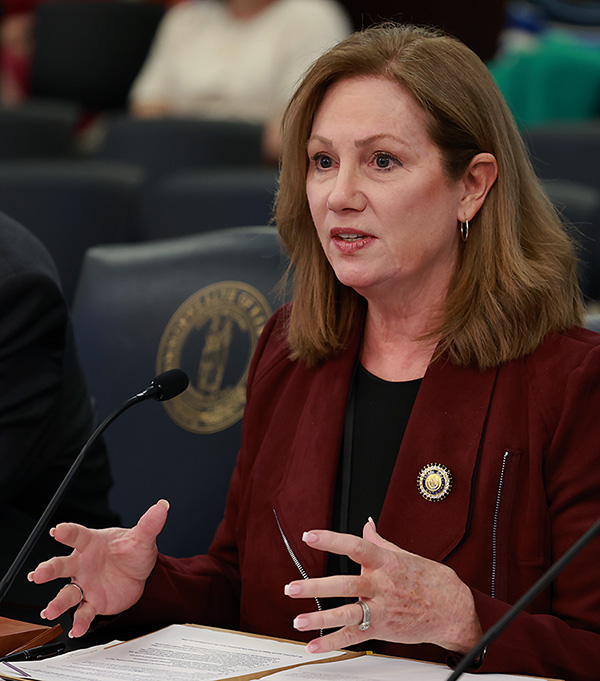
Rep. Kimberly Poore Moser, R-Taylor Mill, has spent five years working on House Bill 176, which would provide certain health care providers an exemption for the prior authorization process. A high-res version can be found here.
FRANKFORT — The House Banking and Insurance Committee advanced a bill on Wednesday that would allow certain health care providers to be exempted from the health insurance prior authorization process.
Rep. Kimberly Poore Moser, R-Taylor Mill, is the primary sponsor of House Bill 176. She told the committee the legislation would establish a framework to allow insurers to dictate the terms of prior authorization exemption for certain providers.
Moser said the current process of health care providers having to seek permission, or prior authorization, from insurers before providing care is costly and time intensive.
"It is a layer of bureaucracy that we seek to provide relief from for patients and health care providers," Moser said.
Moser said HB 176 is the result of five years of work alongside insurance companies and other stakeholders.
"We are streamlining the prior authorization process, and we're simply making it easier for Kentuckians to access the care which is prescribed for them from a health provider," she added.
Insurers would not be required to include prescriptions in the prior authorization exemption program, but could opt-in, Moser said. Behavioral health services, however, are included in the definition as a health care provider under the bill.
Moser said the bill would alleviate any dangerous or unnecessary delays in care, while still giving an insurer the ability to set the terms of the exemption program it offers within certain parameters.
Additionally, HB 176 would require the Commissioner of the Department of Insurance to produce an annual report on prior authorizations.
Rep. Chad Aull, D-Lexington, asked Moser if the legislation is like other programs in other states.
Cory Meadows, the deputy executive vice president of the Kentucky Medical Association, said HB 176 is similar to what other states are doing, and Kentucky's bill would not disrupt current existing programs.
The legislation is also Kentucky-specific, Moser added.
The committee unanimously approved HB 176. The bill will now go before the full House for consideration.
Committee green lights safe room rebate bill
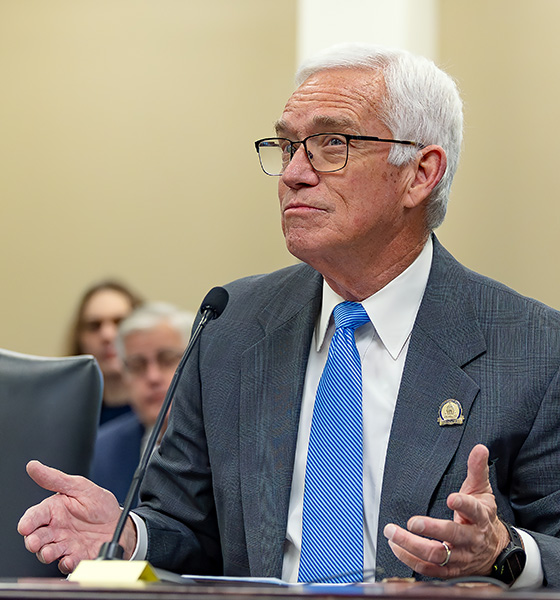
Sen. Stephen Meredith, R-Leitchfield, testifies Thursday about Senate Bill 11 during a Senate Veterans, Military Affairs and Public Protection Committee meeting. A high-res version can be found here.
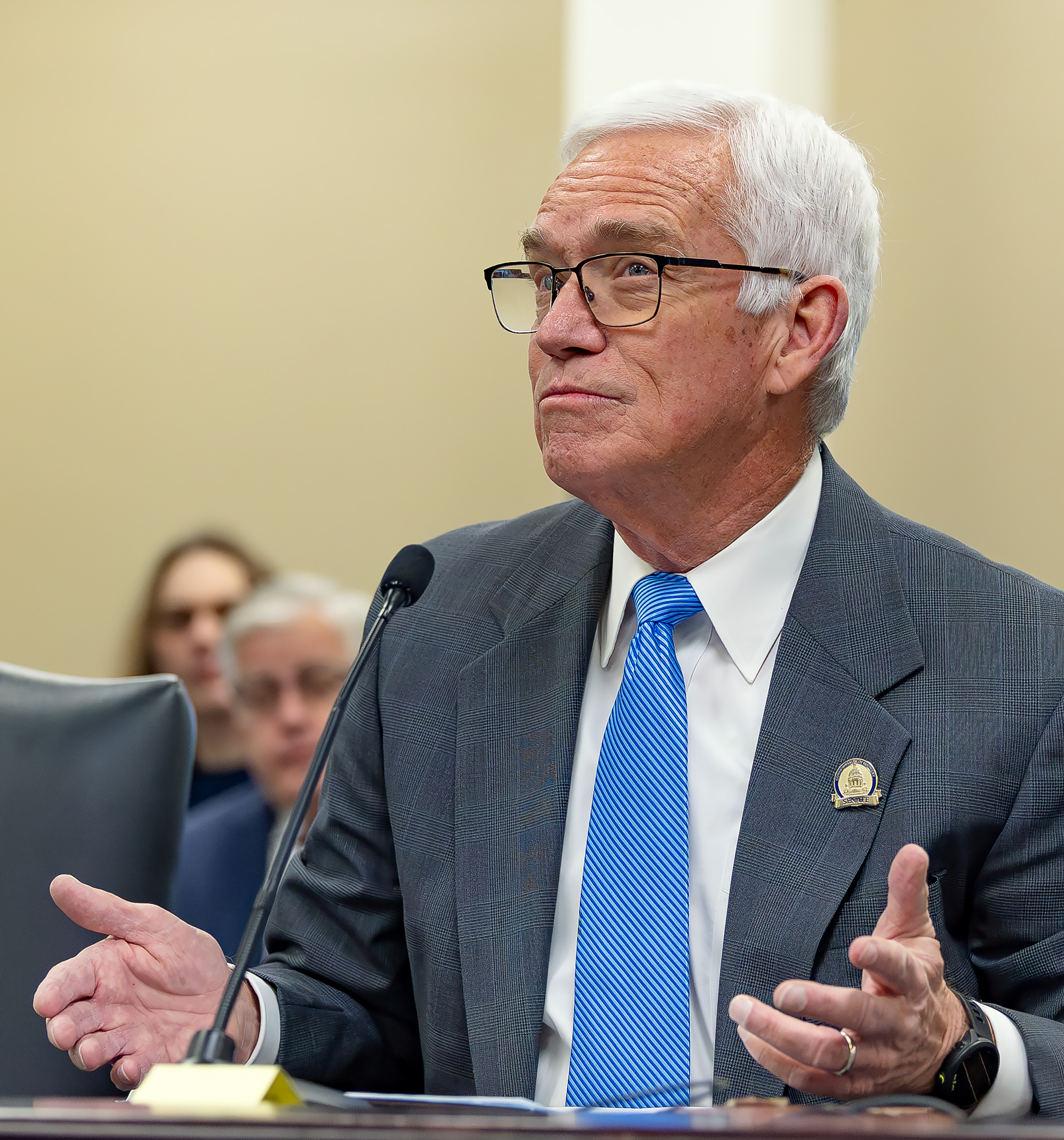
FRANKFORT — In an effort to help Kentuckians build weather-safe rooms in their homes, Senate Bill 11 was given the green light Thursday by the Senate Veterans, Military Affairs and Public Protection Committee.
The bill's sponsor, Sen. Stephen Meredith, R-Leitchfield, said the proposed residential safe room rebate program would minimize deaths associated with growing tornadic activity throughout the commonwealth.
"I think that all of us have to recognize that weather patterns have changed over the last decade, and Kentucky is now part of a tornado alley, so to speak," he said. "In fact, over the last decade we would average between 21 and 28 tornadoes a year. In 2024, we had 55 tornadoes during that period."
The legislation calls for a pilot program to help Kentuckians build residential safe rooms. It would establish a safe room rebate fund to provide rebates of 50% of the costs incurred in constructing or installing a residential safe room, not to exceed $5,000.
The rooms must meet Federal Emergency Management Agency and International Code Council standards, and they must be open to communities during emergencies.
Meredith said the mayor in Morgantown, Mayor Billy Phelps, sparked his interest in the measure. The community received a large grant for a community storm shelter, but Phelps recognized that it's difficult for some residents in rural areas to travel great distances to a community shelter.
The average residential storm shelter safety room costs approximately $10,000, and homeowners would be reimbursed for the shelters after agreeing to allow others in the area to use them. Additionally, there could be standalone shelters, Meredith said.
"If you had $200,000, you could actually build 40 storm shelters. It certainly addresses the uniqueness of rural issues – of travel distance and sparsely populated areas," he said.
Meredith said staff from the Kentucky League of Cities and the Kentucky Division of Emergency Management helped create the legislation.
Sen. Gary Boswell, R-Owensboro, said the idea behind the shelters is good, but he thinks the cost to build a shelter could exceed $10,000. He asked Meredith about the total cost of the proposal.
Meredith said it's possible an appropriation would be sought after the current legislative session, but not now.
"We're trying to set the framework to build this fund so that we can accept donations, and we even think that possibly in the future that FEMA may allow us to use the funding that has been for historically the big community rooms," he said.
Sen. Gary Clemons, D-Louisville, asked who would be responsible to ensure communities have access to the shelters, and Meredith said the Kentucky Division of Emergency Management would take the lead.
Sen. Lindsey Tichenor, R-Smithfield, asked Meredith about shelter capacity.
Meredith said the capacity number varies, but he believes it's approximately 12 people to a shelter.
Sen. Brandon Smith, R-Hazard, voted for the bill and explained his vote.
"If you have ever watched Wizard of Oz, what's everybody do; they all run to the shelter together. Something so basic that we help each other – that you would probably do on your own – all these years later, we're having to codify. But I do appreciate the work," he said.
Senate Bill 11 passed out of committee on a 10-0 vote and advances to the full Senate.
Committee advances bill on driver's license renewals
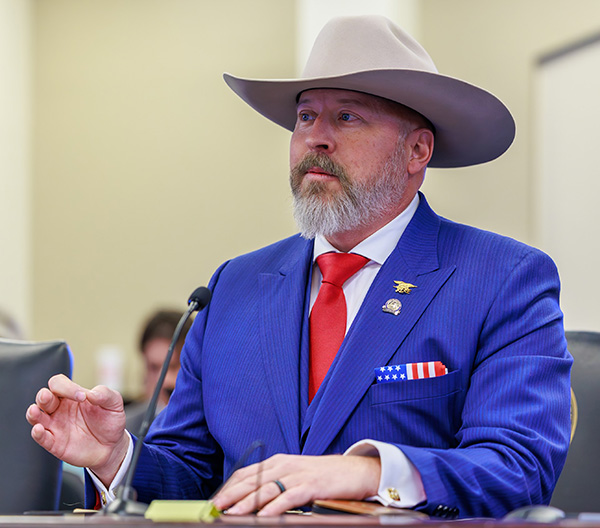
Sen. Aaron Reed, R-Shelbyville, speaks on Senate Bill 7 during Wednesday's meeting of the Senate Transportation Committee. A high-res version can be found here.
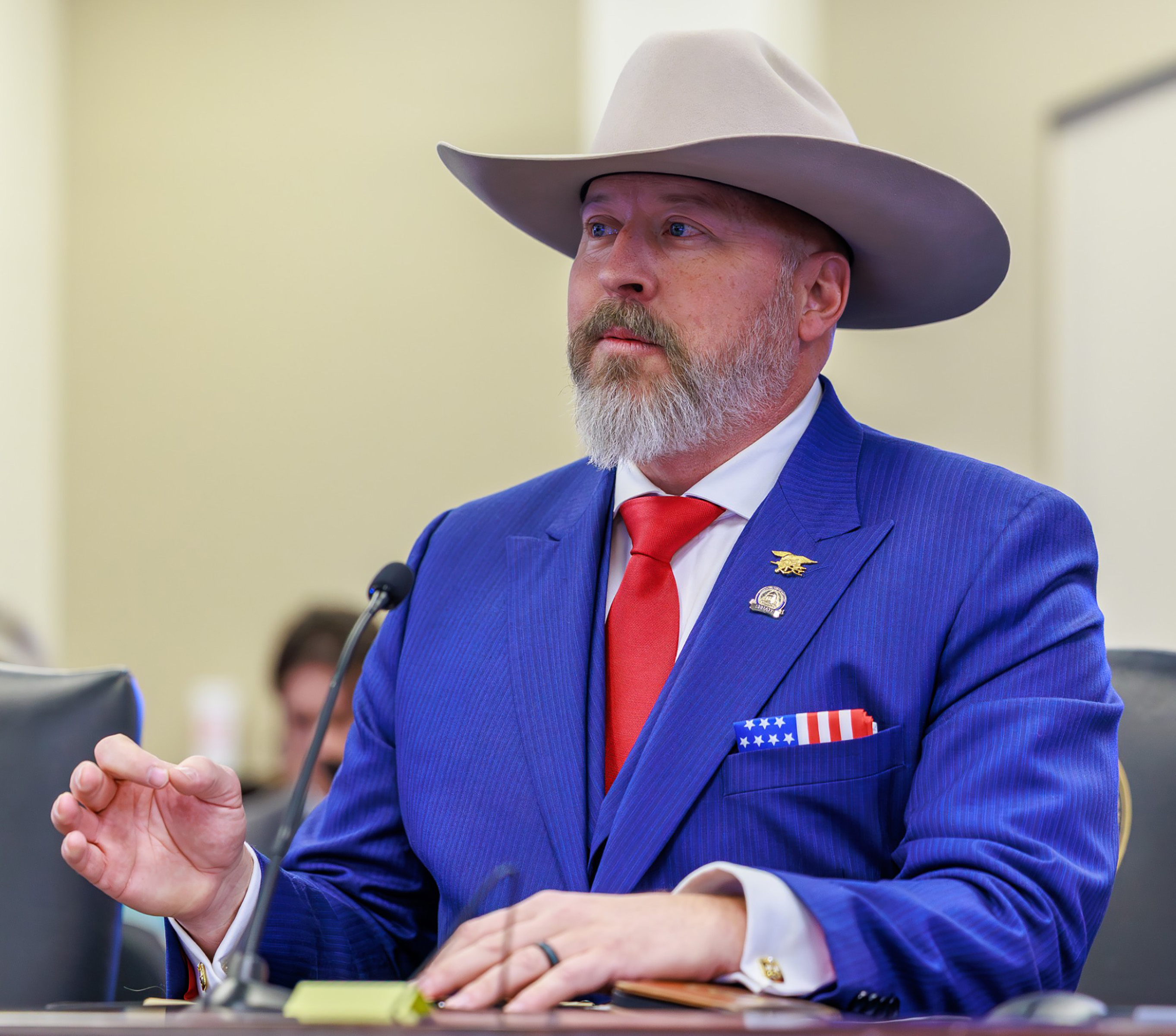
FRANKFORT — Legislation that would make it easier for some Kentuckians to renew or obtain a duplicate of their driver's licenses was unanimously advanced Wednesday by the Senate Transportation Committee.
Sen. Aaron Reed, R-Shelbyville, testified that long drives, long lines and repeated delays have caused frustration among many Kentuckians. Some residents have regional driver's licenses near their homes or workplaces, while others do not.
Under Senate Bill 7, participating county offices could only renew or duplicate a license. The bill doesn't allow first-time licensing or testing at those offices. Participation is voluntary, and no county is required to participate, Reed said.
"Unless you have a regional office in your backyard, every one of us has heard the same message from constituents that the current driver's license system is not meeting the needs of Kentucky," he said.
Reed said offering local services is a tool governments can use to better serve citizens.
"Senate Bill 7 provides a practical, conservative solution by giving counties the option to bring driver's license renewals back home. It's not a mandate. I need to stress that. It is an option," he said.
Reed said the legislation includes a $25 convenience fee that will be retained locally so counties can "break even and avoid an unfunded mandate."
Multiple constitutional offices – such as those of county clerks, circuit clerks, sheriffs, and county judge executives – would be eligible to offer the services. This would provide more possibilities for counties, and interlocal agreements would allow sharing of personnel, equipment or space.
"This bill strengthens rural access, reduces travel burdens on families, improves customer service statewide and restores accountability to local officials who already serve their communities with excellence," Reed said.
Sen. Greg Elkins, R-Winchester, thanked Reed for his work on the legislation. He asked Reed about possible fraud that could occur at the new offices.
"Do you think restoring this back to the county level will help with that fraud issue, and did you have any thoughts on that as you put this together?" he asked.
Reed said the legislation wouldn't directly affect fraud, but it could have positive outcomes because the burden would be on the locally elected officials.
Sen. Brandon Smith, R-Hazard, also commended Reed, and said Chairman Sen. Jimmy Higdon, R-Lebanon, reached out to him and most likely others to seek a solution to improve the situation.
"One thing was consistent; that people wanted something done. This has really put a lot of strain on some areas. If you have one in your area, it's not bad, but if you're in a rural area and you have any kind of health issues, whatever, it becomes a boondoggle if you will," Smith said.
Sen. Donald Douglas, R-Nicholasville, said aging Kentuckians are going to be happy to have an option when renewing or duplicating their licenses.
Sen. Gex Williams, R-Verona, described the legislation as bipartisan.
"I just want you to know you did an outstanding job getting I think 28 senators as cosponsors including the minority floor leader," he told Reed. "So, this is truly a bipartisan bill. I think maybe some others will jump on it before it's all over."
SB 7 now heads to the full Senate.
This Week at the State Capitol
Senate President Robert Stivers, R-Manchester, answers questions from the press on the Senate floor during the first week of the 2026 legislative session. A high-res version can be found here.
FRANKFORT — From the moment lawmakers gaveled into the 2026 legislative session on Tuesday, the Kentucky General Assembly was already notching a new mark on the history of state government.
No committees have held hearings. No bills have received a vote yet. But for the first time since 1910, lawmakers are convening a regular session of the general assembly outside the hallowed chambers of the Kentucky State Capitol.
A 26,000-square foot temporary building next to the Capitol Annex will play host to the general assembly over the next few years as the state Capitol undergoes extensive restoration work to preserve the landmark for future generations.
Some may have missed the marble columns and soaring rotunda of the Capitol this week when proceedings kicked-off in the chambers. But otherwise, business was moving forward in typical fashion for a 60-day budget session.
Legislators filed more than 250 bills and more than 50 resolutions on the House and Senate floors, and the proposals seek to address a full spectrum of issues – education, taxes, health care, jobs, religion, firearms, crime and privacy, among others.
Lawmakers also updated the House and Senate rules to reflect the temporary setting and remove some of the procedures adopted during the COVID pandemic.
The Senate punctuated the week by welcoming a new member to the ranks; Sen. Gary Clemons, D-Louisville, received the oath of office on Tuesday, filling a vacancy left by former senator, David Yates, who was appointed to serve as Jefferson County Clerk in October.
In other action, Sen. Cassie Chambers Armstrong, D-Louisville, has been named as minority whip in that chamber.
In the House, Rep. Lindsey Burke, D-Lexington, was named as minority caucus chair, and Rep. Joshua Watkins, D-Louisville, was named as the new minority whip.
Other leadership positions remain unchanged from last year.
The general assembly meets in 60-day sessions during even-numbered years and in 30-day sessions during odd-numbered years.
Hundreds of bills are introduced each session, and the state's biennial budget is one of the most anticipated measures that lawmakers are tasked with adopting during a "long" 60-day session.
The next spending plan will guide state appropriations through the end of fiscal year 2028 and is expected to generate as much debate as any measure this session.
Lawmakers have been crunching numbers and hearing testimony about the state's budget needs for months, and the House Majority Caucus is expected to introduce its plan within the next several weeks.
Members of the House Minority Caucus filed legislation Friday that reflects budget proposals the governor unveiled earlier this week.
The general assembly will reconvene on Monday for day five of the session.
Legislators have until March 2 to file new bills in the Senate and until March 4 to file new bills in the House. The general assembly is set to adjourn sine die on April 15.
Kentuckians can track the action through the Legislative Record Webpage, which allows users to read bills and follow their progression through the chambers.
Citizens can also share their views on issues with lawmakers by calling the general assembly's toll-free message line at 1-800-372-7181.
Stay connected to the General Assembly during the 2026 legislative session

Lawmakers are set to convene on Jan. 6 for the first day of the 2026 Regular Session of the Kentucky General Assembly.
FRANKFORT — State lawmakers return to Frankfort on Jan. 6 for the first day of the 2026 Regular Session of the Kentucky General Assembly, and Kentuckians have many ways to follow along with the action.
Kentuckians can use online resources to:
-- See the General Assembly’s daily schedule
-- Tune in to live coverage of legislative
meetings
-- Find information on their legislators
-- Contact lawmakers and offer feedback
-- Read bills and resolutions
-- Receive a notice when a bill advances
-- See how lawmakers voted on bills and
resolutions
-- View materials on committee topics and
testimony
-- Learn about the legislative process
All that and much more is available on the General Assembly Home Page: https://legislature.ky.gov/pages/index.aspx.
Due to renovation work at the Kentucky State Capitol, the General Assembly will convene in temporary chambers next to the Capitol Annex.
The public is invited to watch the Kentucky House of Representatives and the Kentucky Senate via livestream in Annex Rooms 149, 154, 169 and 171 while the legislature is in session.
Following the General Assembly’s work often begins with a daily look at the Legislative Calendar: https://apps.legislature.ky.gov/LegislativeCalendar. The calendar shows which committees are meeting and when the Senate and House will convene.
The full 2026 session calendar and the 2026 schedules for standing committees, which are subject to change, are available on the Schedules and Calendars webpage: https://legislature.ky.gov/Schedules-Calendars/Pages/default.aspx
Livestreams of legislative action can be viewed through feeds provided by Kentucky Educational Television (KET) and the Legislative Research Commission (LRC).
KET livestreams all chamber proceedings and many committee meetings. LRC provides full coverage of all committee meetings on YouTube. For links to the livestreams, go to https://legislature.ky.gov/Public%20Services/PIO/Pages/Live-Streams.aspx.
You can find each lawmakers’ contact info, biographical info, committee assignments and sponsored legislation by clicking on the “Legislators” tab near the top of the General Assembly Home Page: https://legislature.ky.gov/Pages/index.aspx. You can also look up who represents your district.
The online Legislative Record ( https://legislature.ky.gov/Legislation/Pages/default.aspx) has information on every piece of legislation introduced in the Senate and House. You can read summaries, the full text of bills, resolutions, amendments and see exactly how far each piece of legislation has advanced in the process. Bills can be looked up according to bill number, sponsor or topic. If a bill has been voted on in a chamber, you can see how each lawmaker voted by clicking “Vote History” on a bill’s summary page.
Bill Watch, a bill tracking service provided through a partnership of Kentucky.gov and LRC, sends users email notifications each time the bills they are interested in take a step forward. To sign up for Bill Watch, go to https://kentucky.gov/services/pages/billwatch.aspx.
Information about legislative committees is available at https://legislature.ky.gov/Committees/Pages/default.aspx. To view materials such as info sheets, handouts and PowerPoint presentations that are compiled for lawmakers to review at committee meetings, click on the “Meeting Materials” tab on the left side of each committee’s page.
To share feedback on an issue with lawmakers, call the General Assembly’s Message Line at 1-800-372-7181. Kentuckians with hearing loss can use Kentucky Relay by dialing 7-1-1.
A Spanish language line for legislative information will be available throughout the General Assembly’s 2023 session by calling 1-866-840-6574.
To directly reach a lawmaker’s office, call 502-564-8100. An operator will transfer the call to the office of the lawmaker you want to reach.
If you have a question about the lawmaking process or legislative resources, the LRC Public Information can be reached by calling 502-564-8100 ext. 59105.